80 Historic Mining Sites to Visit in Victoria


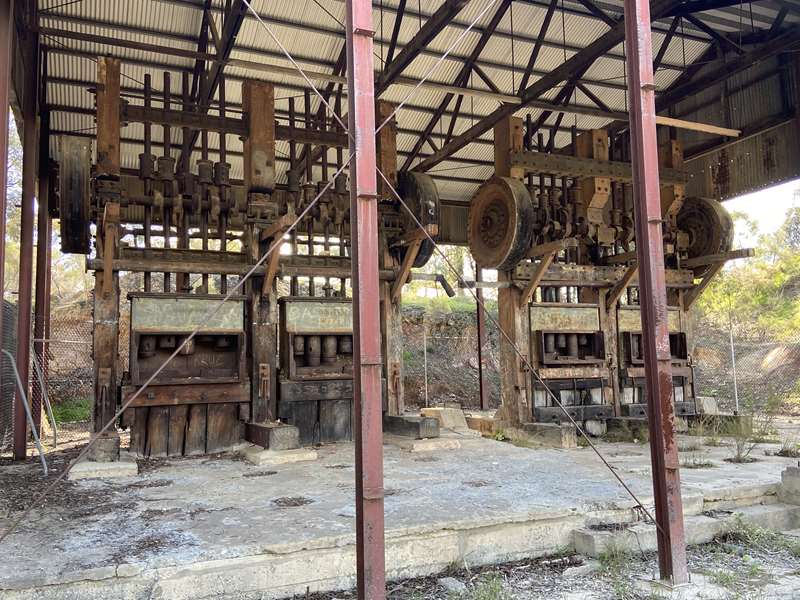
Victoria's gold rush transformed the colony almost overnight, attracting fortune seekers from around the world and leaving behind one of Australia's richest collections of mining heritage. While many towns owe their existence to the discovery of gold, the surrounding bush still hides the fascinating remains of the industry that shaped them.
Today, visitors can explore hundreds of historic mining sites across Victoria, from towering brick chimneys and impressive quartz kilns to abandoned stamp batteries, puddlers, water races and mine entrances. Some are located within well-preserved heritage parks with interpretive signs, while others require a short walk through the forest to uncover the stories of the people who once worked there.
This guide showcases some of the best historic mining sites you can visit across Victoria. Whether you're interested in history, photography, bushwalking or simply discovering unusual places, these sites provide a fascinating glimpse into the ingenuity, hardships and determination of the miners who helped build the state during the gold rush.
Best Historic Mining Sites at a Glance
- Best overall: North British Mine & Quartz Kilns (Maldon). The site has quartz kilns, mine shafts, cyanide vats, puddlers, water races, alluvial diggings, dams, picnic facilities and excellent walking tracks - all in one location.
- Best underground mine tour: Central Deborah Gold Mine (Bendigo)
- Best recreated goldfields: Sovereign Hill (Ballarat)
- Best mining landscape: Herons Reef Historic Gold Diggings (Fryerstown)
- Best alluvial gold diggings: Forest Creek Gold Diggings (Castlemaine)
- Best quartz kilns: North British Mine & Quartz Kilns (Maldon)
- Best poppet head: Victoria Hill Historic Mine Reserve Diggings (Bendigo)
- Best stamp battery: Maldon State Gold Battery (Maldon)
- Best gold dredge: Eldorado Dredge (Eldorado)
- Best hydraulic sluicing landscape: Forest Creek Gold Diggings (Castlemaine)
- Best Cornish pump house: Grand Duke Mine (Timor)
- Best mine chimney: New Beehive Mine (Maldon)
- Best puddler: Hard Hill Tourist Reserve (Wedderburn)
- Best guided heritage mine: Karrs Reef Goldmine Tours (Yackandandah)
- Best for families: Sovereign Hill (Ballarat)
- Best free attraction: North British Mine & Quartz Kilns (Maldon)
Browse by Region
Melbourne & Surrounds | Bendigo Region | Castlemaine/Maldon Region | Ballarat Region | South West Region | North East Region | Gippsland Region
Understanding Historic Gold Mining Terms
When exploring Victoria's historic goldfields, you'll often see signs referring to mining structures that can be difficult to understand. Here's a guide to some of the most common terms you'll encounter.
Puddler
A puddler (or puddling machine) was used to separate gold from clay-rich soil. Heavy clay was mixed with water in a large circular pit while a horse or steam-powered mechanism rotated heavy blades through the mixture. The clay broke apart, allowing the heavier gold particles to settle to the bottom while lighter material was washed away. Today, puddlers often appear as large circular depressions or stone-lined rings in the landscape.
Quartz Kiln
A quartz kiln was used to heat gold-bearing quartz before it was crushed. Heating the rock made it more brittle, allowing it to be broken down more easily in crushing machinery. Roasting also helped remove sulphur and other minerals that could interfere with gold extraction. Many surviving kilns are built from brick or stone and are among the most impressive mining relics in Victoria.
Battery (Stamp Battery)
A battery, also known as a stamp battery, was a crushing mill used to pulverise gold-bearing quartz. Heavy iron stamps repeatedly rose and fell onto the rock until it became a fine powder. This powder was then washed over mercury-coated copper plates or processed further to recover the gold. The rhythmic pounding of stamp batteries could be heard for kilometres and became a defining sound of many gold mining towns.
Boiler
A boiler generated steam to power mining machinery such as stamp batteries, winding engines, pumps and ore crushers. Early boilers were fuelled by wood, while later operations often used coal. Today, you may see the rusting remains of large cylindrical boilers at former mining sites.
Cyanide Vats
By the late 1800s, many mines began using cyanide vats to recover tiny particles of gold that earlier methods had missed. Crushed ore was soaked in a weak cyanide solution, which dissolved the gold. The gold was then recovered from the solution through a chemical process. Although highly effective, cyanide processing required careful handling. The surviving concrete vats found at some historic sites are reminders of the increasingly industrial nature of gold mining.
Adit
An adit is a nearly horizontal tunnel driven into the side of a hill or mountain to reach an underground ore body. Unlike a vertical mine shaft, an adit allowed miners to walk directly into the mine while also providing natural drainage and ventilation. Many adits can still be seen today, but they are often unstable and may contain hidden hazards. They should always be viewed from outside.
Mine Shaft
A mine shaft is a vertical or steeply inclined passage that provided access to underground workings. Shafts allowed miners to reach deep gold reefs and transport miners, ore and equipment. Many historic shafts have been capped or fenced for safety, while others may be difficult to spot beneath vegetation.
Mullock Heap
A mullock heap is a pile of waste rock removed while digging a mine. Since most excavated material contained little or no gold, it was dumped beside the mine, forming distinctive mounds that remain visible today. These heaps are among the most common features at abandoned mining sites.
Tailings
Tailings are the finely crushed waste left after gold has been extracted from ore. Depending on the processing method used, tailings may appear as flat grey mounds, sandy deposits or large embankments near old batteries and processing plants. Some tailings were later reprocessed when improved technology made it possible to recover additional gold.
Sludge Pond
A sludge pond was built to collect muddy water and mining waste produced during ore processing. These ponds prevented sediment from flowing directly into nearby creeks and rivers, although many waterways were still heavily polluted during the gold rush. Some former sludge ponds have since become wetlands.
Whim
A whim (or horse whim) was a horse-powered winding device used to raise ore, waste rock and buckets of water from mine shafts. Horses walked in circles, turning a large drum around which a rope was wound. Although the timber machinery has usually disappeared, circular earthworks sometimes mark the location of former whims.
Headframe (Poppet Head)
A headframe, often called a poppet head in Australia, was the tall structure built over a mine shaft to support the winding gear used to lift miners and ore. Timber poppet heads were common during the gold rush, while larger mines later constructed steel versions. Very few original timber poppet heads survive today, making any remaining examples particularly significant.
Water Race
A water race is a man-made channel that carried water to mining operations. Water was essential for washing gold-bearing soil, powering machinery and supplying steam boilers. Some races stretched for many kilometres and represented major engineering achievements. Many water races are now walking tracks through Victoria's forests.
Cornish Pump House
A Cornish pump house was a substantial stone or brick building that housed a large steam engine used to pump water from deep underground mines. As mines became deeper, groundwater constantly flooded the workings, making powerful pumping engines essential to keep them dry and safe for miners. These engines, developed in Cornwall, England, were among the most efficient steam engines of their time and were introduced to Victoria by experienced Cornish miners during the gold rush. The engine drove long timber pump rods that extended down the mine shaft, lifting water to the surface. Today, many of the steam engines have disappeared, but the impressive stone arches, towering walls and engine foundations of Cornish pump houses remain among the most recognisable mining relics in Victoria.
These historic structures illustrate how gold mining evolved from simple alluvial methods using pans and cradles to sophisticated industrial operations capable of processing thousands of tonnes of quartz. Understanding what these features were used for adds another layer of appreciation when visiting Victoria's historic mining sites.
Map of Historic Mining Sites to Visit in Victoria
MELBOURNE & SURROUNDS
Gold Heritage Walk (Warrandyte)
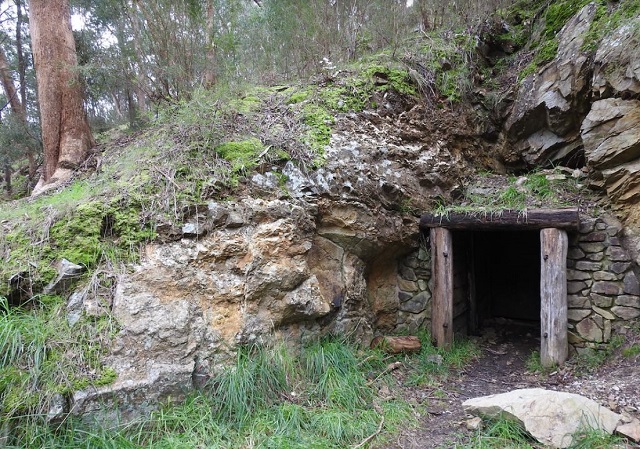
The 3.3km loop walk takes you around historic landmarks and remnants of yesteryear when those down on their luck sought riches from the gold-laden hills of Warrandyte.
BENDIGO REGION
North Deborah Quartz Gold Mine (Bendigo)
The site has a steel poppet head (a rare type of construction), sets of concrete engine beds, an intact brick chimney stack and remnants of flues and boiler setting. There is no entry to the site but there are good views from beside Eve Street.
Deborah Company Quartz Gold Mine (Bendigo)
The site consists of a steel poppet head, sets of concrete engine beds, concrete foundations of a workshop and a 20-head crushing battery.
Central Deborah Gold Mine (Bendigo)

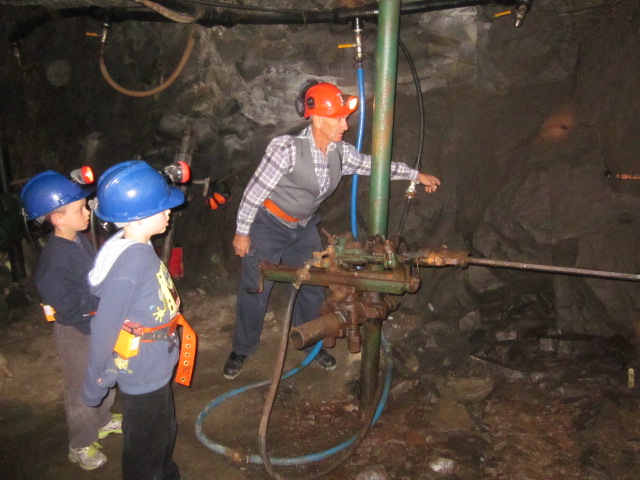
The site has Australia's deepest underground mine tour, self-guided surface tour and a museum.
New Prince of Wales Poppet Head (Bendigo)
The site has a steel poppet head, foundations, mullock heaps, dam and ruins set in bushland.
Hustlers Reef Gold Mining Reserve (Bendigo)
There is a walking track with information signs where you can learn about the history of one of Bendigo's richest underground mines and also the site of the town's worst mining accident. The site has a Miners' memorial.
White Hills Sediments Geological Reserve (Bendigo)
2.5km of walking tracks displaying the remnants of many Chinese mines, two sediment ponds, geological features, flora and fauna.
Victoria Hill Historic Mine Reserve Diggings (Bendigo)
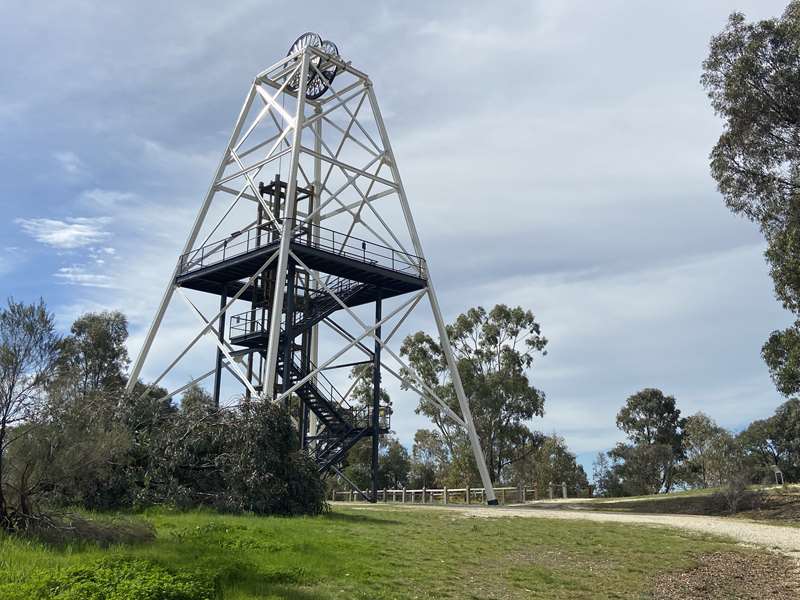
Fantastic site to explore with a poppet head lookout, stamp battery, mining relics, information signs, walking tracks and picnic facilities.
Dead Dog Alluvial Gold Workings (Bendigo)
Area showing evidence of alluvial gold mining with a generally dry gully running through it.
Central Nell Gwynne Poppet Head (Bendigo West)
Restored poppet head and foundations of a stamp battery.
Bulldog Reef Mine Shafts (Moliagul)
Area with lots of open mine shafts (which are fenced off). This is near the site of the Welcome Stranger nugget, the biggest gold nugget ever found in the world.
Monument for Poverty Mine (Tarnagulla)
A tribute to the mining history of the Poverty Reef (discovered by New Zealanders from Poverty Bay) with a miniature poppet head which symbolises the winding gear that once stood over the mine shaft.
Tarnagulla State Battery Site (Tarnagulla)
Remains of the State Battery including cyanide vats, machinery foundations and stamp battery relics.
Wedderburn State Gold Battery (Wedderburn)
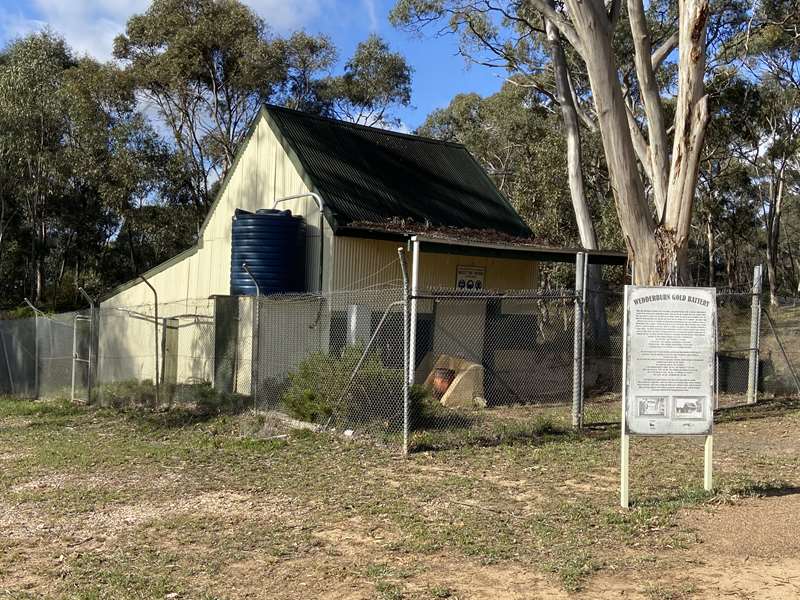
The Wedderburn Gold Battery is a five head stamp battery which was known as "New Hope". The battery was paid for by the government and opened in 1905 in the hope that it would lead to a revival of mining in the Wedderburn area.
Hard Hill Tourist Reserve (Wedderburn)
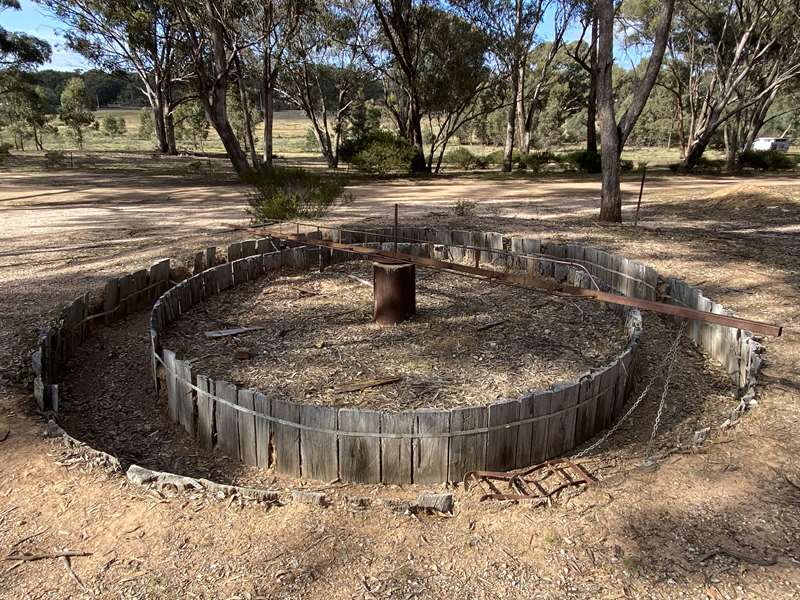
An RV friendly reserve with free camping, walking tracks, facilities, reconstructed gold puddler, stamp battery and locked mine adit. There is a Eucalyptus stew pot which operates four days a week.
Balaclava Mine (Whroo)
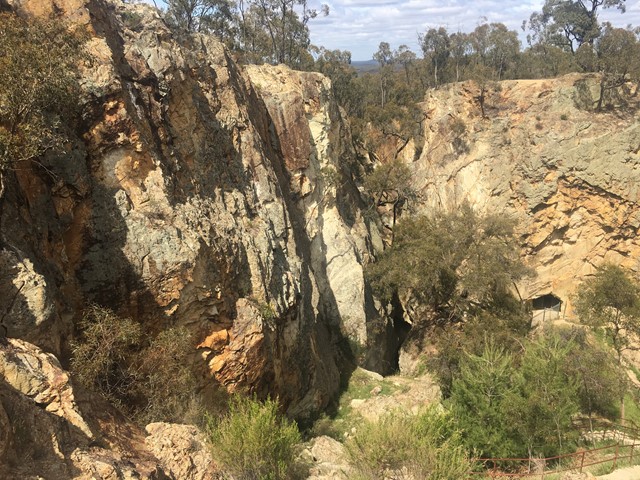
Large open cut mine with lookout points. The area also has a puddling machine.
Old Tom Mine (Greater Bendigo National Park, Whipstick)
Fenced open cut, gold puddler, water race and remains of a cyanide plant, sluicing and battery.
Wilsons Hill Mine and Cyanide Works (Wilsons Hill)
Cyanide vats, dam and water race.
Blind Creek Chilean Mill (Kooyoora State Park, Brenanah)
Rare Chilean crushing mill at a historic ochre mine.
Union Reef Mine (Kooyoora State Park, Kingover)
Remains of the Union Reef open cut mine and a puddler. Nearby is a stone lined well that was used by Cobb & Co to water their animals.
Pink Cliffs Geological Reserve (Heathcote)
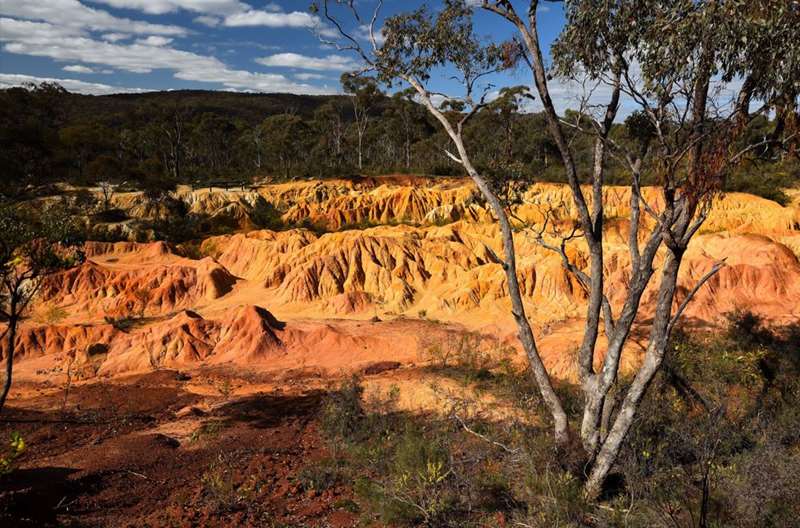
Hydraulic sluicing occurred at this site in the 1870's - 80's under the direction of James Hedley who pioneered the development of sluicing and dredging in Victoria. This mining activity washed away the top layer of earth and revealed the stunning, colourful cliffs you can see today. There is a short walk around the area with information signs and lookout points.
CASTLEMAINE/MALDON REGION
Specimen Gully Hut and Gold Memorial (Barkers Creek)
Explore the evocative ruins of the home of Bridget Worley, one of the first women on the goldfield, and the memorial to her husband and his colleagues who were the first Europeans to discover gold in the Castlemaine area.
Alma Lead Cyanide Works (Bowenvale)
The historic mine and cyanide plant site has mullock heaps, cyanide vats and closed shafts.
Garfield Water Wheel (Chewton)
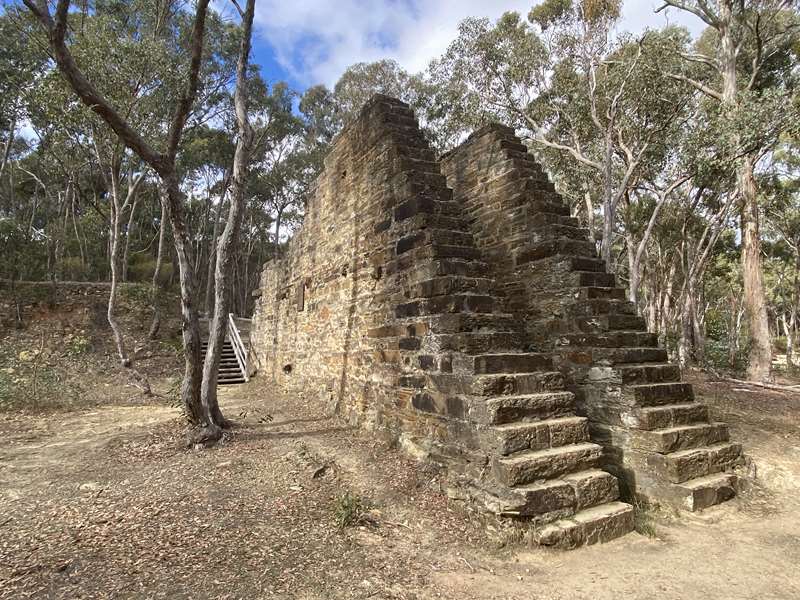
Ruins of the Garfield Company Mine including the huge stone structure which supported an enormous 21m diameter water wheel.
Eureka Reef (Chewton)
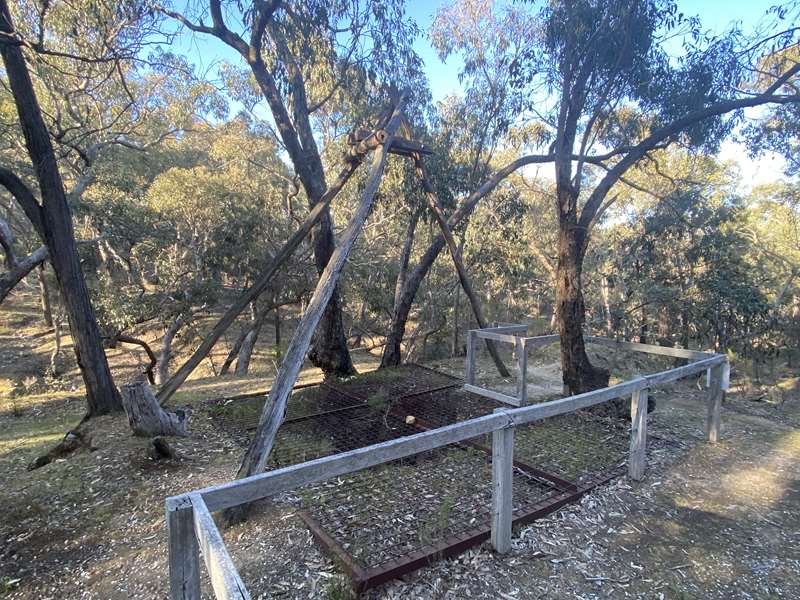
This section of the Castlemaine Diggings National Heritage Park has a 1.8km self-guided walk in bushland which takes you back through 140 years of mining history. The area has extensive remnants from the mining era including an open cut mine, adit, water race, cyanide vats, mine shaft with a headframe and building ruins.
Kings Birthday Powder Magazine (Goldsborough)
Intact brick powder magazine and some mining relics and cyanide works.
South German Mine (Maldon)
Stamp battery foundations, picnic facilities and scenic dam.
Union Hill Gold Mine Lookout (Maldon)
There is an easily reached lookout point with views over the current mining operations of the Union Hill mine.
North British Mine & Quartz Kilns (Maldon)
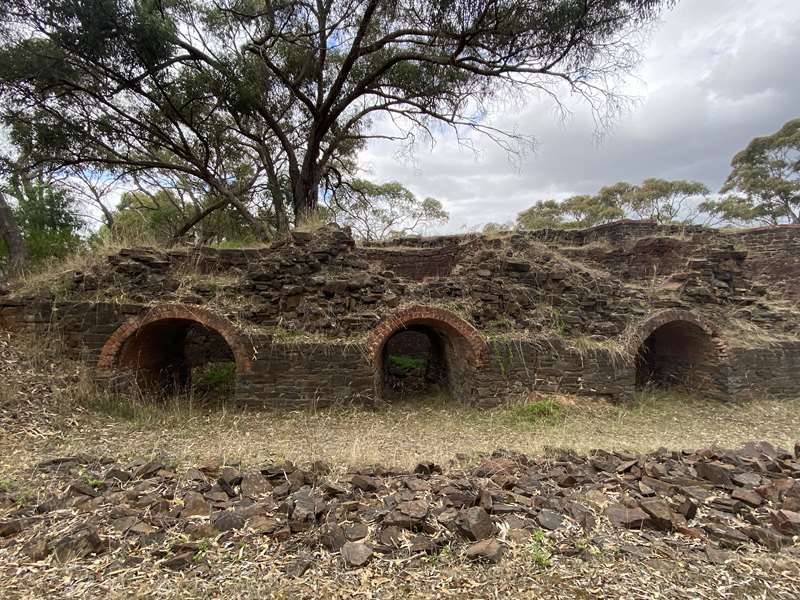
One of the best historic gold mines to explore, with well-preserved quartz kilns, machinery foundations and mine shaft. At the car park there are picnic facilities. You can explore the mine complex along the short walking trail or take the longer Parkins Reef Walking Track (2.3km return). This passes cyanide vats, sand and tailings heaps, puddling machines, dams, water races and alluvial diggings.
Mt Tarrengower Tunnelling Company Tunnel (Maldon)
This tunnel (which is now blocked) was commenced in 1865 and was extended 300m into the hill before being abandoned in 1869 without yielding significant gold. The first rock drill used in Australia was introduced by this company in 1868.
Grand Junction Quartz Kilns (Maldon)
Remains of three quartz kilns from the Grand Junction Company mine.
Whim Platform (Maldon)
A well preserved whim platform, mine shaft and mullock heaps.
Maldon State Gold Battery (Maldon)
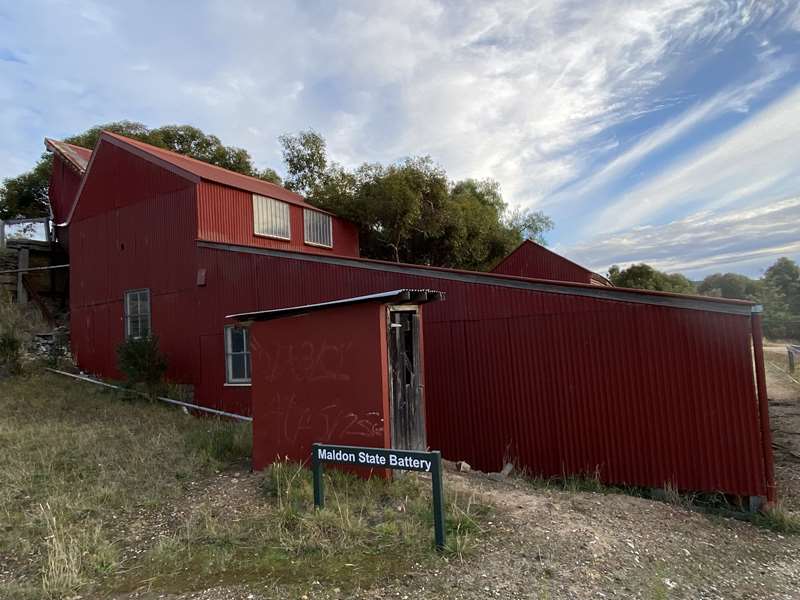
The site has the former State Battery buildings and machinery, Alliance mine Shaft, machinery foundations and the site of Joe Jenkins, the Welsh Swagman's house.
Porcupine Flat Gold Dredge and Dragline (Maldon)
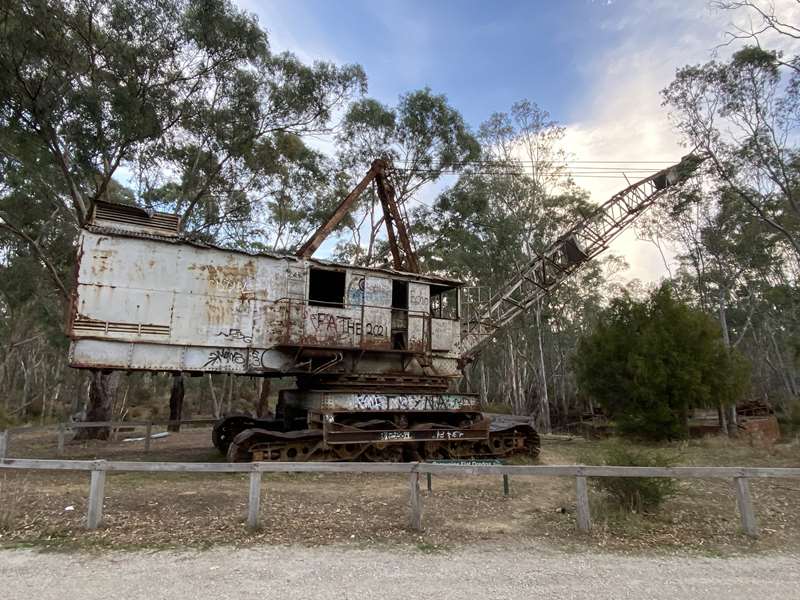
The remains of a gold dredge and dragline used during the twentieth century to rework alluvial gold deposits. The site provides an insight into the large-scale mechanical methods used to recover gold long after the original gold rush had ended.
Red White and Blue Mine (Muckleford)
An extensive historic mine site with a poppet head, mine shaft, mullock heaps, machinery foundations and dams. There are picnic facilities and an easy 5km walk through box-ironbark forest to Dunn's Reef.
Dunn's Reef (Muckleford)
Extensively mined, large open cut mine from an outcrop of quartz. An interesting loading ramp which has mostly collapsed.
Forest Creek Gold Diggings (Castlemaine)
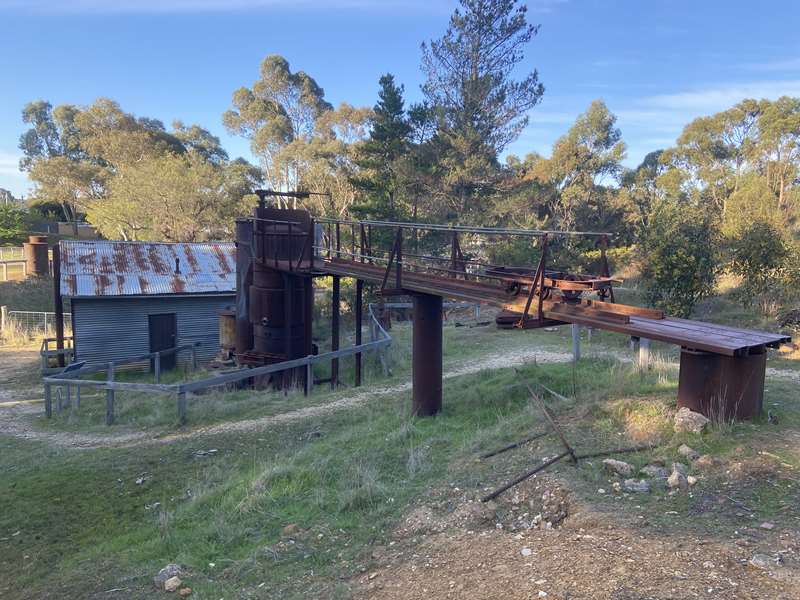
Extensive relics from alluvial gold mining along Forest Creek. The landscape shows the impacts of various types of alluvial gold mining including shaft sinking, tunnelling and hydraulic sluicing. There is a 400m circuit self-guided walk with interpretive signs and picnic facilities.
Grand Duke Mine (Timor)
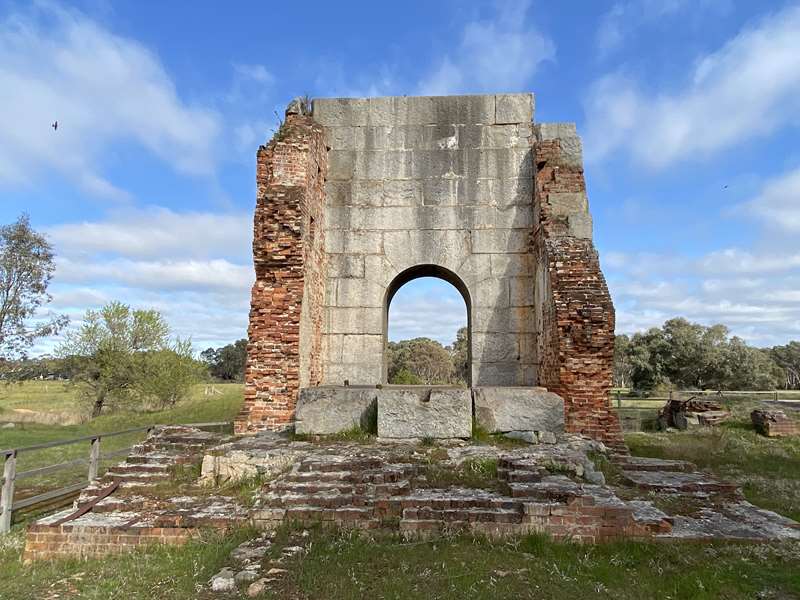
The site features the impressive stone arch of the former Cornish pump house and is surrounded by mullock heaps and filled mine shafts.
New Beehive Mine (Maldon)
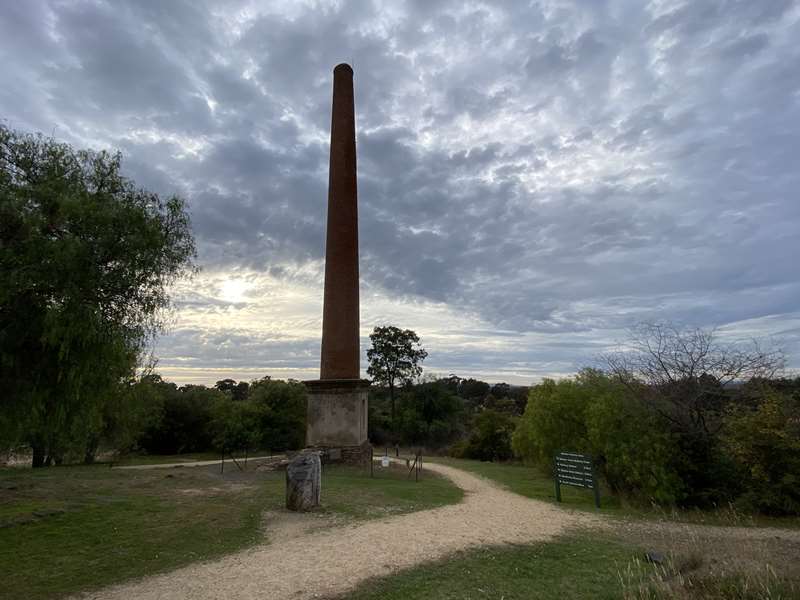
The main feature remaining is the large chimney, completed in 1863, which stands 30 metres high and is the only one of its age and size still standing in Victoria. Adjacent to the chimney there are some stone and brick substructures for the boilers and steam engine that provided the power for the mine.
Bull Gully Battery Dam and Distillery (Craigie State Forest, Daisy Hill)
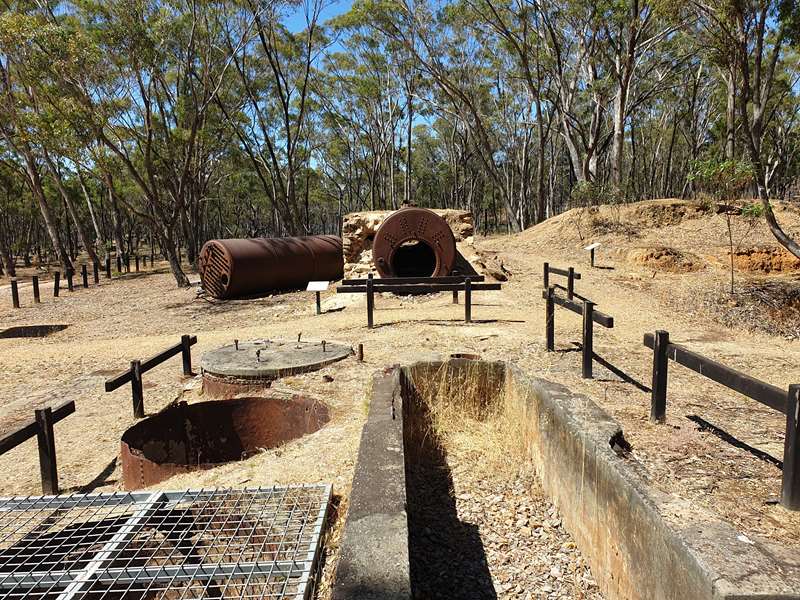
The area was used during the gold rush to crush and process quartz from local mines in the area and later some of the equipment was adapted to be used for a eucalyptus distillery. Relics include a puddler, Cornish boilers and cyanide vats.
Tunnel Hill Mine (Talbot)
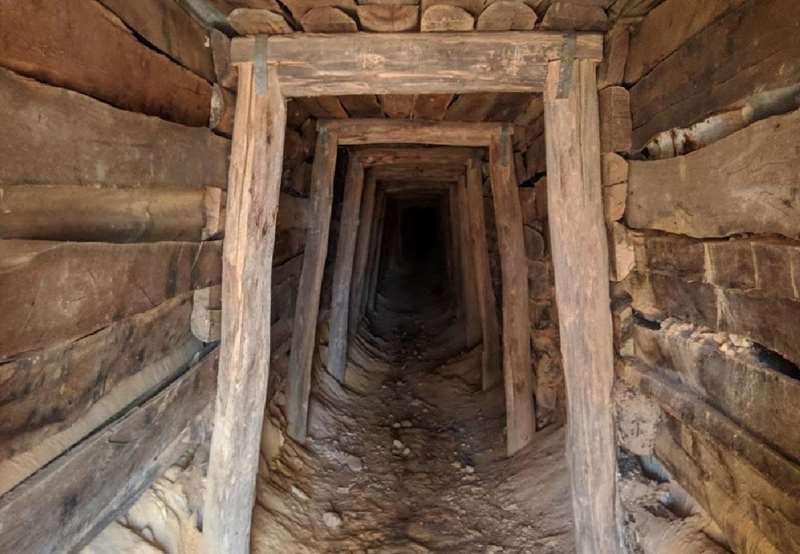
An abandoned gold mine tunnel which runs under a small hill in a straight line with an opening at each end. There are locked gates at each end but good views into the tunnel.
Herons Reef Historic Gold Diggings (Fryerstown)
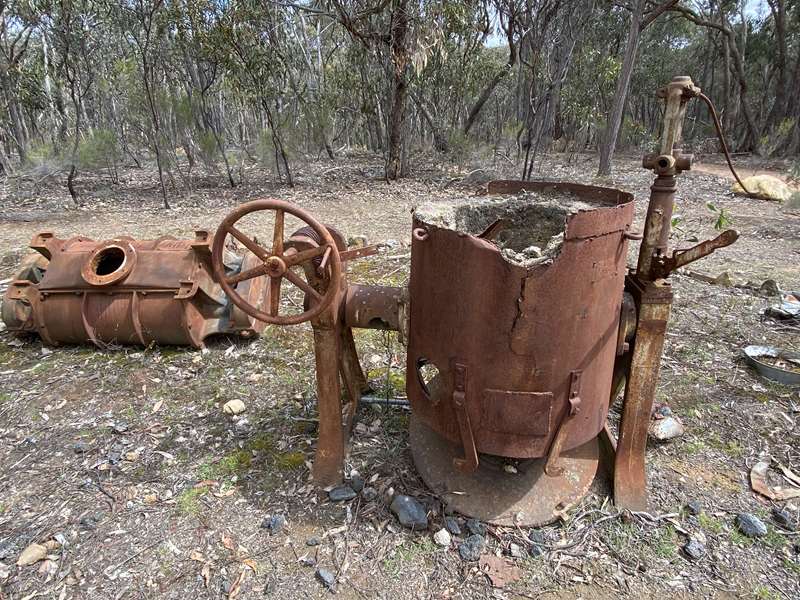
The site has relics of every known method of gold extraction used during the early history of gold mining - bank sluicing, mud surface sluices, incline and deep lead mining, puddling, opencuts, battery sites and adits. There is also a remarkably intact Cornish miner's cottage and another cottage close by.
Mopoke Gully Water Wheel (Campbells Creek)
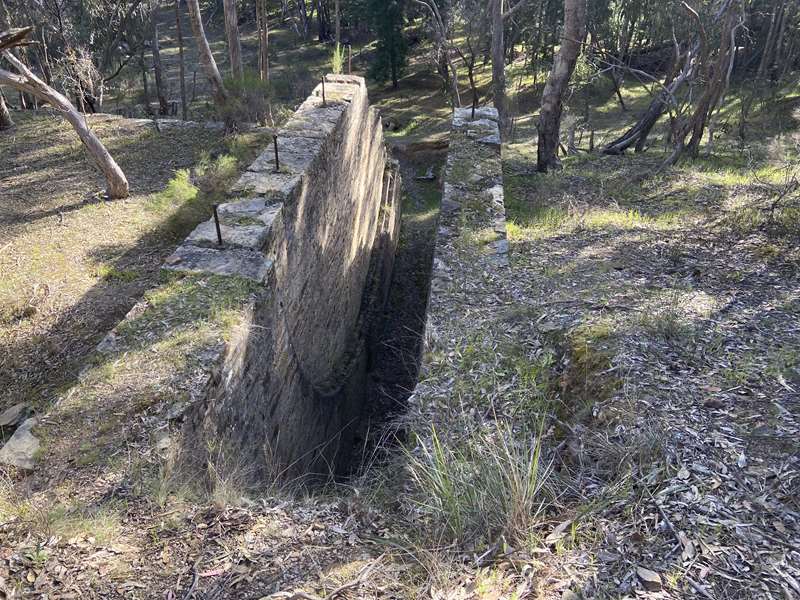
The site includes two massive stone abutments set into the side of a hill for a water wheel.
Red Knob Gold Mining Landscape (Vaughan)
Dramatic cliffs which are the result of hydraulic sluicing operations in the mid 20th century.
Mount Greenock Geological Reserve (Dunach)
A significant geological site with an extinct volcano and the site of the historical Union Mine.
Cambrian Mine (Maryborough)
Large mullock heaps, abandoned mine shafts and several adits remain.
Cemetery Precinct Gold Puddling Machine (Maryborough)
Well preserved gold puddling machine.
Bluchers Reef Whim Platform (Maryborough)
A well-preserved whim platform, a device used for hauling ore up a shaft using horses.
Duke Of Cornwall Engine House (Fryerstown)
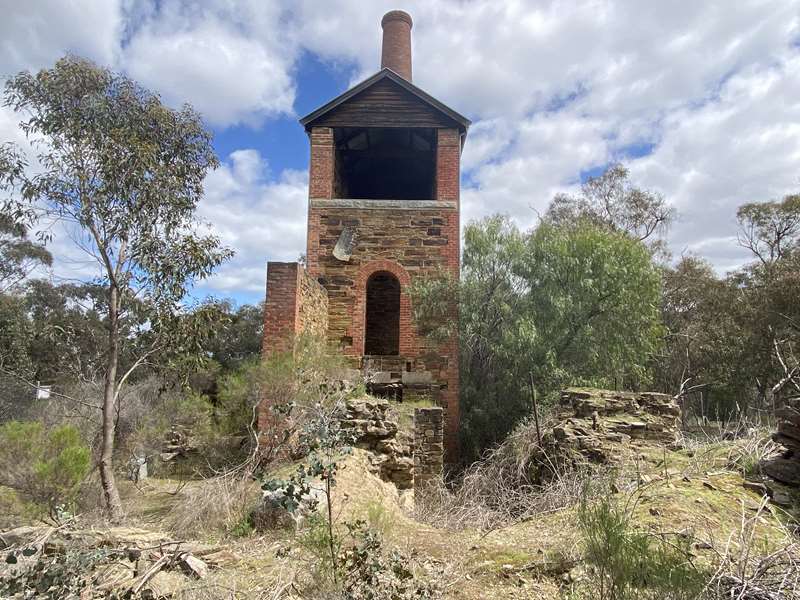
Impressive ruins of the Duke of Cornwall Engine House.
Chalks Junction Mine (Carisbrook)
On private property. A large mullock heap can be viewed from the road.
Talisman Mine (Carisbrook)
Remnants from the mining period including machinery foundations, multiple shafts (filled in), large mullock heaps and an adit (mostly caved in).
Kong Meng Historic Reserve (Majorca)
Many mullock heaps and gullies and there are walking tracks and 4WD tracks through the reserve.
Quartz Mountain Geological Reserve (Lillicur)
Massive quartz outcrop with a deep mine shaft and adit from mining times.
Seaham Mine Bushland Reserve (Alma)
Many large mullock heaps, some dams and a track which passes through the reserve.
Trompf's Mine (Adelaide Lead)
The site has rubble from machinery foundations, open stopes and mullock heaps.
Trompf's Battery Site (Adelaide Lead)
The site has the remains of a loading ramp for a stamp battery, open cut workings and a large (but dry) dam and tailings pond.
BALLARAT REGION
Sovereign Hill (Ballarat)
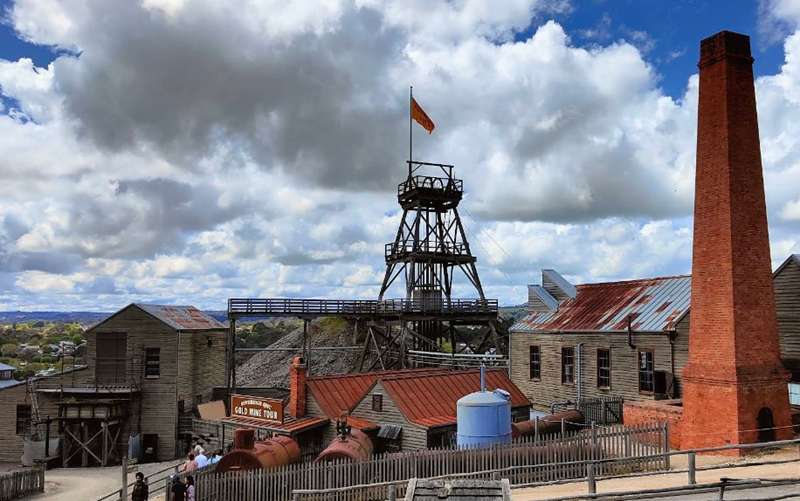
A huge recreated goldfields township to discover what life was like during Ballarat's 1850's gold rush. The town has buildings, stores, traditional craftsmen at work, Red Hill Gully diggings where you pan for real gold, an underground mine to explore, costumed characters and many working horses including Clydesdales.
Black Hill Reserve (Ballarat)
Remnants of open cut and shaft mining as well as recreational facilities such as a mountain bike park, walking tracks, lookout and picnic facilities.
Blackwood Gold Stamp Battery (Blackwood)
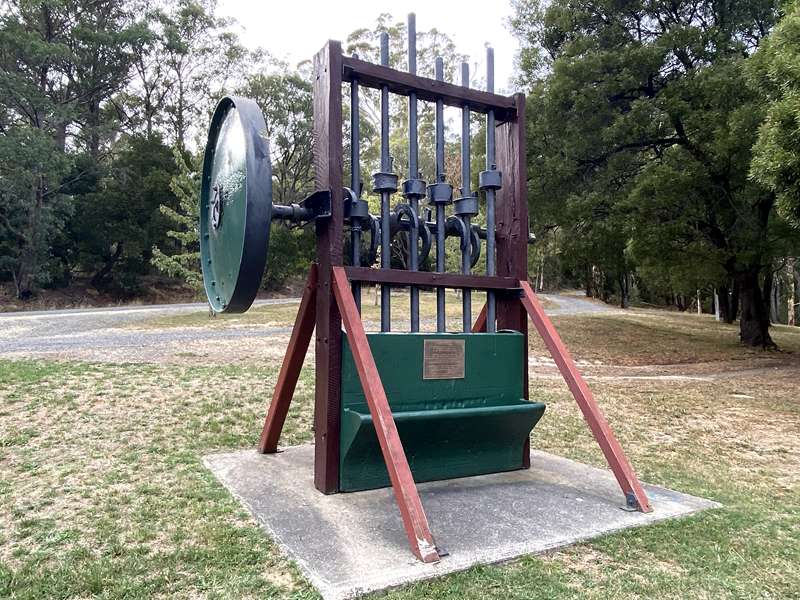
A 19th century gold stamp battery is on display in a local park. It was originally used in the late 1800's to crush gold bearing rock at the Rip Van Winkle mine where it was driven by a thirty foot water wheel.
South Clunes Mine Historic Site (Clunes)
Former mine site with mullock heaps.
Port Phillip Mine (Clunes)
Informative sign about mining history at the site which is one of the stops on the Clunes Creek Walk.
Drapers Load Antimony Mine (Coimadai)
-embed07.jpg)
An 8.4km return walk which includes a wire mesh bridge crossing over a creek to the remains of the Draper's Lode antimony mine which has mulllock heaps, ruins of a building, old metal rails, adits, old equipment and substantial equipment foundations.
New Australasian No 2 Gold Mine (Creswick)
The site of Australia's most tragic underground mining accident. There is a memorial and information signs.
Australasian No 1 Gold Mine (Creswick)
Water from these old workings flooded into the nearby Australasian No. 2 mine in one of Australia's worst underground mining disasters. Mullock heaps and a large gravel area remain here.
Creswick State Gold Battery (Creswick)
The 1902 battery is housed within a shed with a stone monument commemorating the 1851 discovery of gold in Creswick Creek nearby.
Long Point Flora Reserve (Creswick)
Former historic mine site in a bushland reserve with a walking track.
Cornish Hill (Daylesford)
There is a heritage walk through the reserve with a lookout, various mine shafts, adit, water race and puddler.
Iron Mine and Blast Furnace (Lal Lal)
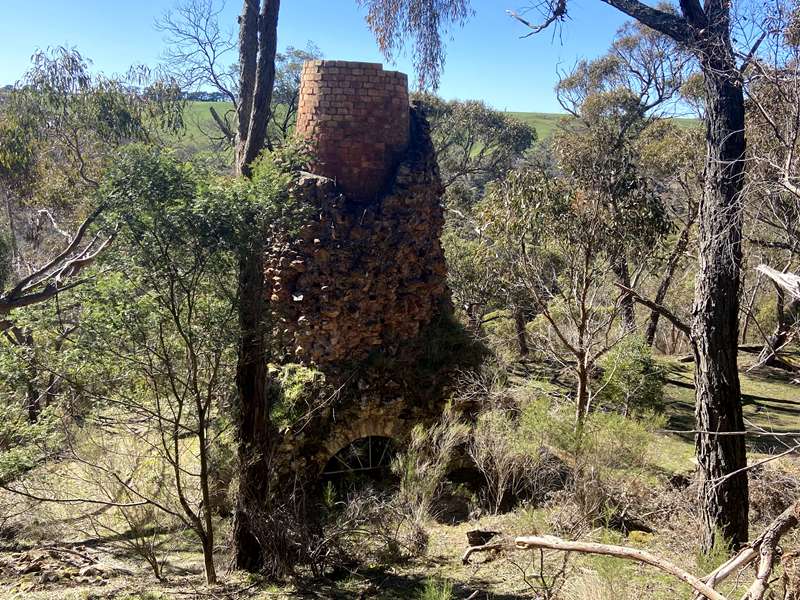
Remains of an historic iron mine which includes a blast furnace.
Berry No. 1 Deep Lead Gold Mine (Lawrence)
Ruins of a brick pump house and mullock heaps which can be viewed from the roadside.
Mount Egerton State Gold Battery (Mount Egerton)
A restored five head stamp battery which resides within a shed and is enclosed by a security fence. The site is sometimes open to the public for demonstrations.
Jubilee Mine (Staffordshire)
Extensive ruins of the Jubilee Company Quartz Gold Mine including old cyanide vats, mullock heaps, water races, engine foundations, mine shafts and battery foundations.
Boxing Reef Mine Shafts (Steiglitz Historic Park, Steiglitz)
Some fenced old mine shafts in the historical town of Steiglitz.
United Albion Mine (Steiglitz)
Ruins of brick engine foundations and mullock heaps of the United Albion Mine.
SOUTH WEST REGION
Union Jack Mine (Percydale)
Large open cut (which is fenced off) plus shafts, adits, battery site and cyanide works.
NORTH EAST REGION
Beechworth Historic Park (Beechworth)
Evidence of gold mining can be seen at Spring and Reids Creeks, the Powder Magazine (built in 1860 to store the gunpowder used in gold mining), Rocky Mountain Tunnel, which lowered water levels to expose previously inaccessible gold-bearing ground, and along the walk from Lake Sambell to Lake Kerferd.
Bright State Gold Battery (Bright)
Historic gold ore crushing machine and museum which was built by the Department of Mines in 1957 to assist local gold prospectors.
Eldorado Dredge (Eldorado)
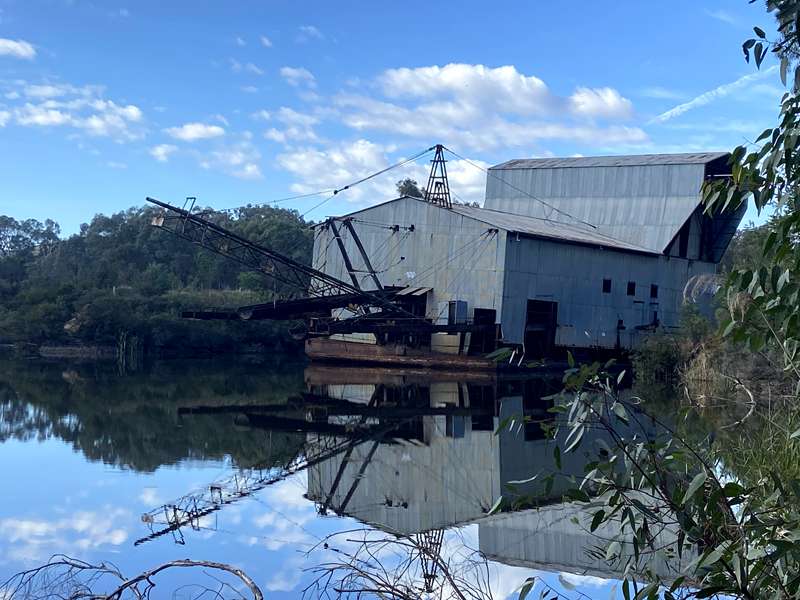
The huge bucket dredge began production in 1936 and it worked the alluvial gold and tin until 1954. It was the largest dredge in the Southern Hemisphere, a floating monster weighing 2,142 tons and pulling the third most amount of power from the State Electricity Grid after Melbourne and Geelong.
Star of The West Gold Mine Walk (Kevington)
Mullock heaps, adits, shafts and furnaces.
Rutherglen Gold Battery (Rutherglen)
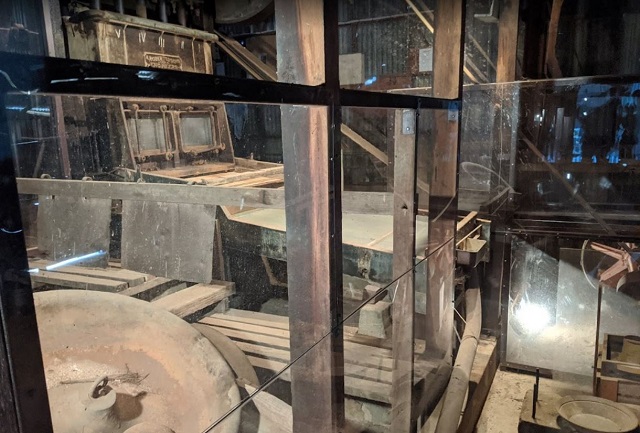
Restored gold battery which is available for public viewing.
Karrs Reef Goldmine Tours (Yackandandah)
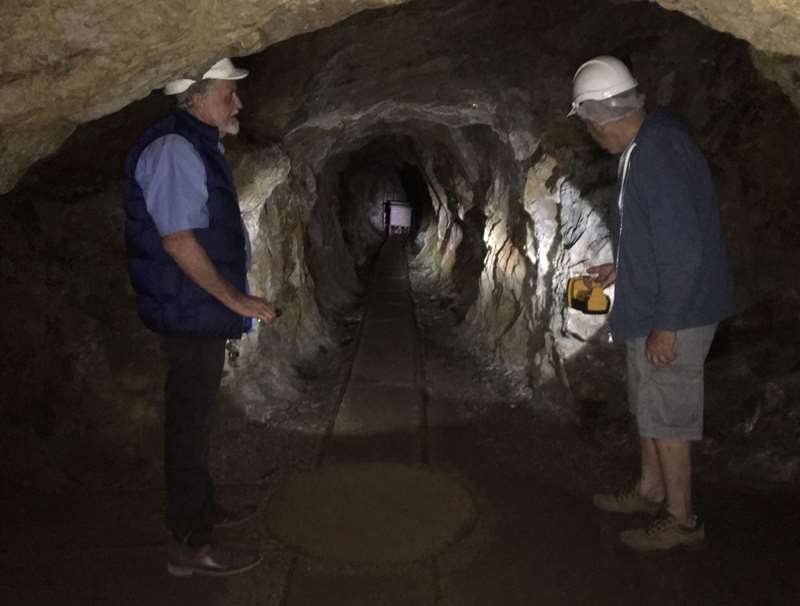
One of Victoria's most authentic gold mining experiences, this guided tour takes visitors into an original quartz gold mine that operated from 1867 to 1884. You'll learn about both alluvial and reef mining before walking 150 metres into the heritage-listed mine where original pick marks, black-powder drill holes and the exposed quartz reef provide an insight into nineteenth-century mining methods.
GIPPSLAND REGION
Long Tunnel Extended Mine (Walhalla)
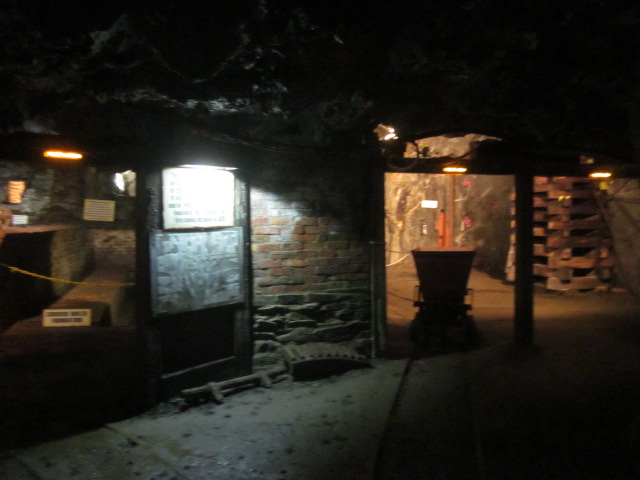
There are underground tours of this historic mine site which takes visitors 300 metres underground into a machinery chamber hewn from the solid rock over a century ago. Old mining methods are discussed and a large outcrop of the famous Cohens Line of Reef can be seen from inside the mine.
Cassilis Historic Area (Swifts Creek)
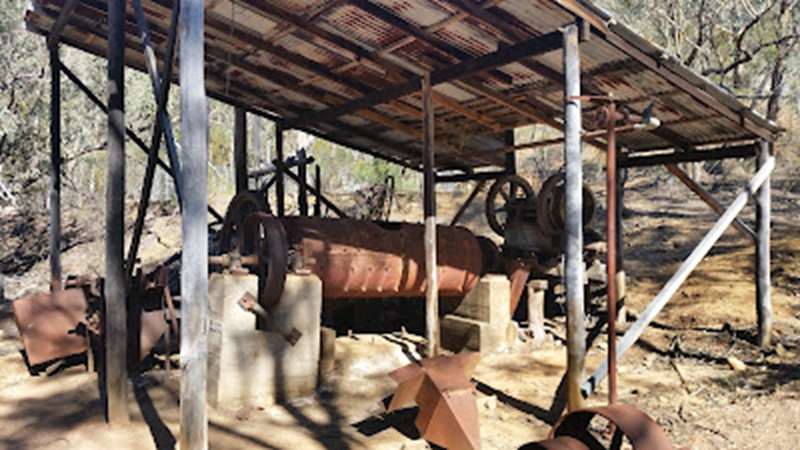
Contains extensive treatment works, mine relics and the remarkable Jirnkee Water Race, the longest in the southern hemisphere.
Oriental Claims Historic Area (Omeo)
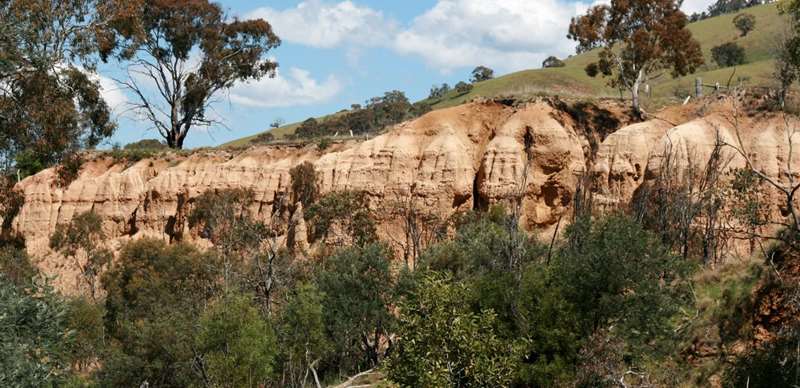
The dominant feature are the rugged cliff faces, up to 30 metres in height, formed by hydraulic sluicing.
Maude And Yellow Girl Mining Site (Glen Valley)
Area was mined from the 1890s until 1967. The treatment plants historic area has signage which makes for a nice picnic spot.
Staying Safe Around Historic Mining Sites
Victoria's historic mining areas are fascinating places to explore, but they can also contain hidden dangers. Many of the structures and excavations date back more than 150 years and were never designed to be tourist attractions. Always take care and respect warning signs and barriers.
Never Enter Mine Shafts or Adits
Old mine shafts and adits can be extremely dangerous. They may contain unstable rock, hidden vertical drops, poisonous gases, low oxygen levels or flooded passages. Even if an entrance appears stable, conditions underground can change without warning. Enjoy these features from a safe distance and never attempt to enter abandoned mine workings.
Stay on Formed Tracks
Where possible, remain on marked walking tracks and designated viewing areas. Dense vegetation can hide open shafts, uneven ground, collapsed tunnels and deep excavations. Avoid climbing over fences or barriers, which are there for your safety.
Watch Your Footing
Historic mining landscapes are often covered with loose rocks, tailings, uneven ground and old earthworks. Wear sturdy footwear with good grip and take extra care after rain, when surfaces can become slippery.
Leave Historic Structures Alone
Old boilers, batteries, stone walls, chimneys and other mining relics may look solid but can be unstable. Avoid climbing on structures or removing artefacts, as this can damage important heritage sites and place you at risk.
Be Aware of Wildlife
Many abandoned mine workings provide habitat for native wildlife, including bats, reptiles and other animals. Observe wildlife from a distance and avoid disturbing their homes.
Carry the Essentials
Many mining sites are in remote bushland where mobile phone reception may be limited. Before setting out:
- Tell someone where you're going.
- Carry plenty of drinking water.
- Wear appropriate clothing and sun protection.
- Take a fully charged mobile phone.
- Carry a paper map or download offline maps if travelling into remote areas.
Help Protect Victoria's Goldfields
Historic mining sites are protected heritage places. Please leave everything as you find it - don't remove relics, disturb ruins or use metal detectors unless permitted. By treating these sites with care, you help preserve Victoria's remarkable gold mining history for future generations.
From towering poppet heads and Cornish engine houses to underground tours and enormous gold dredges, Victoria preserves one of the world's richest collections of historic mining heritage. Whether you're interested in engineering, history, bushwalking or simply discovering unusual places, these sites offer a fascinating glimpse into the industry that transformed the state during the gold rush.
Web Links
→ Location of State Gold Batteries
→ Buried Rivers of Gold Self-Guided Tour (Creswick)
→ Guide to Recreational Prospecting in Victoria
→ Guide to Gold Fossicking / Prospecting / Panning Tours in Victoria
→ Ballarat Gold Trail
→ Indigo Gold Trail


