Self-guided Cemetery Tours in Melbourne and Regional Victoria


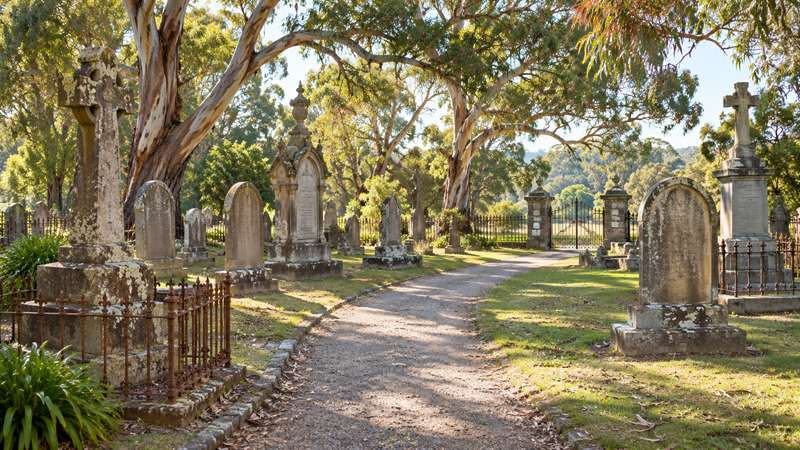
Historic cemeteries offer a fascinating way to discover the people and events that shaped Melbourne and regional Victoria. A self-guided cemetery tour can reveal stories of gold rush pioneers, early settlers, local identities, wartime prisoners and families whose lives are remembered through elaborate monuments and simple headstones.
Some cemeteries have numbered graves, printed trail cards or walking maps, while others can be explored independently at your own pace. Many of these visits are suitable for families with older children who enjoy history. They are also rewarding for anyone interested in heritage, genealogy, sculpture and the meanings behind nineteenth-century gravestone symbols.
Melbourne
Epping Cemetery Walk (Epping)
This easy historical walk explores one of the area's oldest cemeteries, with graves dating back to the mid-nineteenth century. The cemetery is also remarkable for its nationally significant remnant native grassland and grassy woodland, offering a glimpse of the landscape before European settlement. Walk along formed gravel and mown grass paths, read the inscriptions and look for native wildflowers and birdlife in spring.
Will Will Rook Pioneer Cemetery (Broadmeadows)
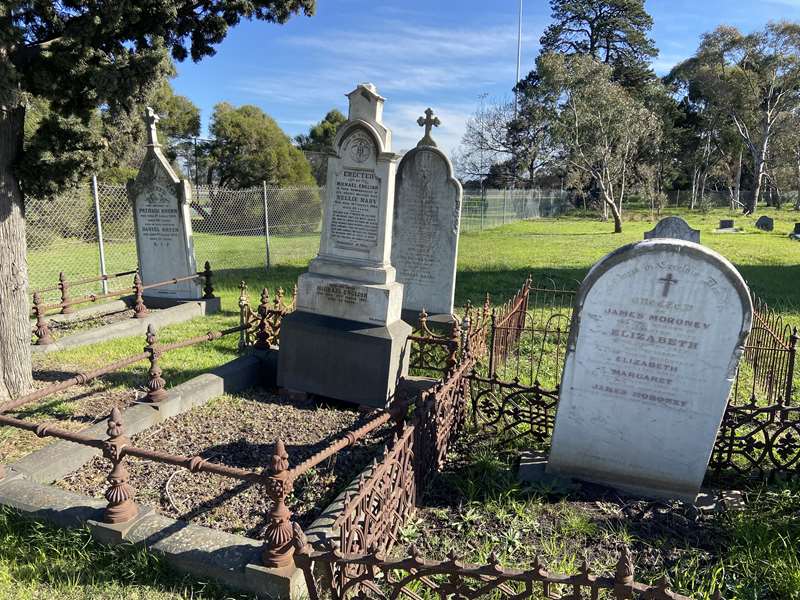
Established in the early 1850s, this historic cemetery is associated with pioneer families from Broadmeadows, Craigieburn, Essendon and surrounding districts. Many people buried here have no surviving headstone, making the remaining memorials particularly poignant. It is a worthwhile place to explore local history independently, although a numbered self-guided trail is not provided.
Regional Victoria
Blackwood - Self-Guided Cemetery Tour
Blackwood Cemetery dates from the gold rush era, with burials beginning in 1855. Its graves tell stories of miners and families who arrived in search of gold, including members of the Chinese community. The self-guided tour uses numbered white posts to identify significant graves, with laminated trail cards available from the rotunda. Return the cards after your visit. One of the most touching memorials belongs to Josephine Rowan, affectionately known as Little Doaty.

Camperdown - Cemetery Self-Guided Tour
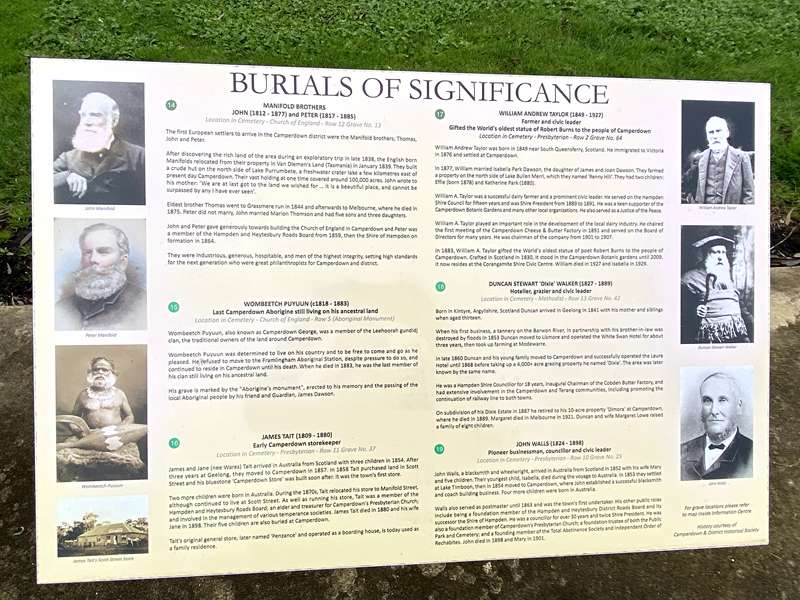
Explore the history of Camperdown and its surrounding district using a cemetery map, numbered grave locations and interpretive panels describing significant burials. The cemetery has been in use since 1854 and contains the graves of early settlers, pastoralists, civic leaders and other local identities. A particularly significant memorial is the granite obelisk erected by James Dawson in honour of his Aboriginal friends, including Wombeetch Puyuun (Camperdown George). Begin at the Ian Davis Information Centre near the Cemetery Road entrance.
Chewton - Pennyweight Flat Cemetery Walk
Distance: 6.5 km loop, Grade 3, approximately 2-2.5 hours.
This is a longer bushwalk that combines goldfields history with a visit to Pennyweight Flat Cemetery. Starting from the Garfield Water Wheel Trailhead, the route passes former mining sites, historic ruins and sections of the Goldfields Track before reaching the cemetery. Expect gravel and earth tracks, gentle hills and some uneven ground. It is best suited to families with older children who are comfortable on a moderate bushwalk.
Daylesford - Visit the Pioneers at Daylesford Cemetery
Follow the cemetery's plot map to discover the graves of people who helped establish Daylesford during the gold rush and beyond. The tour introduces early councillors, hotelkeepers, miners, business owners and other colourful local figures. Many of the historic graves are relatively close together, making this an interesting cemetery to explore at your own pace.
Graytown - POW Camp, Gold Diggings and Cemetery Walk
Distance: 3.5 km loop.
This unusual history walk combines three important chapters of Graytown's past: the nineteenth-century gold rush, the town cemetery and a Second World War prisoner-of-war camp. The route passes the former camp site, continues through Heathcote-Graytown National Park to the cemetery and returns past the old gold diggings. It is an especially interesting choice for visitors who enjoy both bushwalking and historical interpretation.
Hamilton - Old Hamilton Cemetery Walk
Time: Approximately 45 minutes to 1 hour.
Old Hamilton Cemetery contains an extraordinary record of the district's early history, with around 11,000 burials and approximately 2,500 surviving headstones. The self-guided walk begins at the ornate entrance gates off Coleraine Road and leads visitors past notable memorials, including those associated with early Hamilton residents. Look closely at the carved symbols and epitaphs, which reveal Victorian-era beliefs about life, death and remembrance.
Hindmarsh - Cemetery Drive
This is a self-guided driving itinerary rather than a single cemetery walk. The route highlights 20 cemeteries and pioneer burial sites across the Hindmarsh district, from established town cemeteries to isolated graves that recall the region's early settlement. Use the route map in the linked listing to plan your drive and stop at the locations that interest you most.
Kerang - Cemetery Self-Guided Walk
The self-guided walk at Kerang Cemetery introduces pioneering families, local identities and some unusual stories from the district's past. Its interpretive material includes an explanation of headstone symbolism, early burial practices and the hardships faced by nineteenth-century residents. The cemetery dates from 1862, and a numbered guide helps bring the graves and their occupants to life.
Maldon - General Cemetery
Maldon's historic cemetery offers an absorbing look at life in a prosperous goldfields town. Use the cemetery map in the rotunda to find notable graves and explore the pioneer section, Chinese burial area and historic funerary monuments. The impressive entrance gates date from 1890, while the former caretaker's cottage was built in 1866. The linked listing includes a detailed guide to significant graves and their stories.

Tatura - German War Cemetery
This solemn memorial cemetery is connected with the German civilian internees and prisoners of war who died while detained in Australia during the First and Second World Wars. Graves are arranged in orderly rows and marked with bronze plaques. The cemetery is an important place for quiet reflection and learning about Australia's wartime internment history. It can be visited independently, although it is not presented as a numbered walking tour.
Wangaratta - Cemetery Self-Guided Tour
Wangaratta Cemetery has a self-guided brochure and map identifying graves of significant local personalities, including bushranger Daniel 'Mad Dog' Morgan. White marker posts help visitors locate featured graves, although they may need to be checked carefully against the map. This tour provides a fascinating insight into the people, events and sometimes extraordinary stories associated with Wangaratta's past.

Tips for Cemetery Visits
Historic cemeteries are places of remembrance as well as heritage attractions. Keep to established paths, never walk over graves, avoid touching fragile monuments and supervise children closely. Take suitable footwear, especially at older cemeteries with uneven ground, and be mindful that some sites have limited facilities. Check the individual Melbourne Playgrounds listings for maps and access information before setting out.


