Visitor Guide to Lighthouses in Victoria

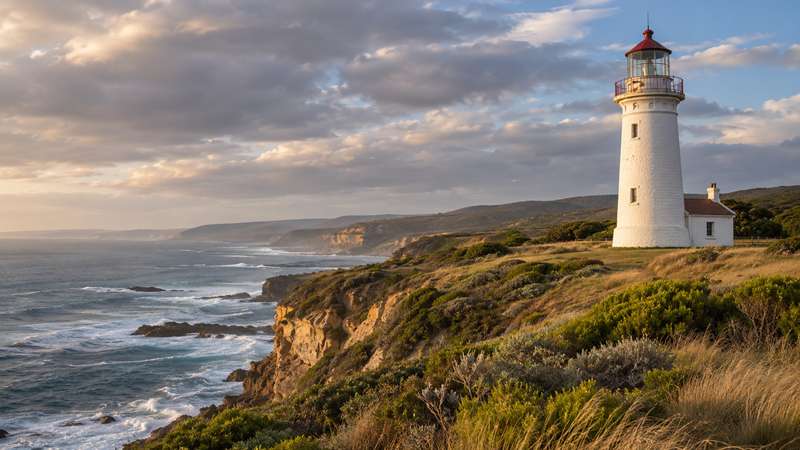
Lighthouses are often located in magnificent coastal settings, perched high on cliffs, standing on rocky headlands or rising from remote islands. Victoria's lighthouses stretch along the coastline from Cape Nelson near Portland in the west to Gabo Island near the New South Wales border.
Historically, lighthouses warned ships of dangerous coastlines, shoals and reefs, guided vessels through shipping channels and provided vital navigation landmarks. Many are among Victoria's most interesting maritime heritage sites, with some dating back to the nineteenth century.
Today, some lighthouses can be explored on guided tours, while others can only be viewed from outside. Several historic lightstations offer accommodation in former lighthouse keepers' cottages. Many are also surrounded by spectacular coastal walks, beaches, rock pools and wildlife viewing opportunities.
The following guide covers Victoria's major historic lighthouses, including visitor access, tours and accommodation. Some are located offshore or within restricted areas and cannot be visited by the general public. Check current opening conditions before travelling.
Map of Victorian Lighthouses
Explore the locations of lighthouses around Victoria using the interactive Lighthouse Map maintained by Lighthouses of Australia. Select Victoria to find lighthouses along the coast and around Port Phillip Bay.
Far West Coast
Cape Nelson Lighthouse (Portland)

Standing on a dramatic headland overlooking the Southern Ocean, Cape Nelson Lighthouse has been guiding ships since 1884. The lighthouse is surrounded by coastal heathland and spectacular scenery, with walking tracks and opportunities to spot whales offshore during the migration season.
Address: Cape Nelson Lighthouse Road, Portland West (approximately 13 km south of Portland)
Access: The lighthouse grounds are generally accessible throughout the year. The tower can be entered on a guided tour.
Tours: Guided lighthouse tours are currently advertised daily at 11:30am. See Cape Nelson Lighthouse Tours for bookings and current details.
Accommodation: Restored historic lighthouse keepers' cottages offer boutique accommodation. See lighthouse accommodation.
Whalers Bluff Lighthouse (Portland)

Overlooking Portland Harbour, Whalers Bluff Lighthouse was originally built in 1859 at Battery Point and relocated stone by stone to its present position in 1889. The lighthouse provides an interesting historical stop with views across Portland Bay.
Address: 2 Lighthouse Avenue, Portland (approximately 1.5 km from the town centre)
Access: The surrounding grounds are publicly accessible, but the lighthouse tower is closed to visitors.
Tours: None.
Accommodation: None.
Griffiths Island Lighthouse (Port Fairy)
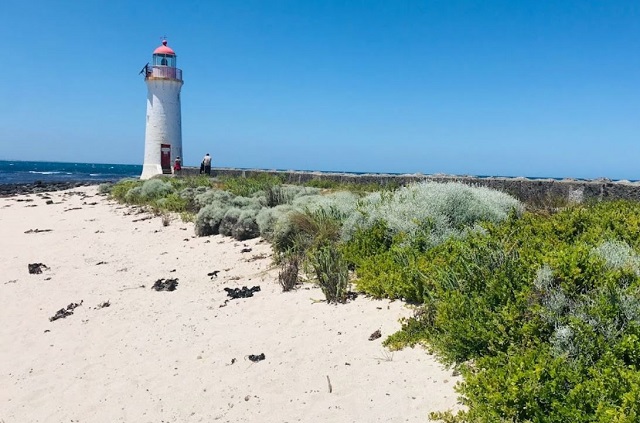
Built in 1859, the picturesque white lighthouse stands at the eastern end of Griffiths Island. The island is a popular destination for coastal walks, with views across the Southern Ocean and opportunities to observe seabirds, including short-tailed shearwaters during their breeding season.
Address: Griffiths Island, Port Fairy
Access: The island is reached on foot via a causeway from Port Fairy. Visitors can walk to the lighthouse along the island's walking tracks. The tower is not normally open.
Tours: Lighthouse tours are occasionally offered for special events.
Accommodation: None.
Lady Bay Upper Lighthouse (Warrnambool)
The Lady Bay Upper Lighthouse is part of the historic lighthouse complex at Flagstaff Hill Maritime Museum and Village. Originally built on Middle Island in 1859, it was dismantled and relocated to Flagstaff Hill in 1871. The lighthouse is a highlight of the maritime village, which recreates the atmosphere of a nineteenth-century coastal port.
Address: Flagstaff Hill Maritime Village, 89 Merri Street, Warrnambool
Access: Entry to the lighthouse precinct requires admission to Flagstaff Hill Maritime Village.
Tours: Visitors can explore the historic lighthouse complex and climb the Upper Lighthouse when access is available. See Flagstaff Hill Maritime Village.
Accommodation: The nearby historic Lighthouse Lodge provides accommodation overlooking Lady Bay. See Lighthouse Lodge.
Lady Bay Lower Lighthouse (Warrnambool)
The Lady Bay Lower Lighthouse stands within the Flagstaff Hill Maritime Village precinct and forms a pair with the Upper Lighthouse. The two lights historically helped guide vessels entering Warrnambool Harbour.
Address: Flagstaff Hill Maritime Village, 89 Merri Street, Warrnambool
Access: The lighthouse can be viewed within the maritime village precinct, but the Lower Lighthouse itself is not open to the public.
Tours: No tours of the Lower Lighthouse are available.
Accommodation: Lighthouse Lodge is located nearby.
Great Ocean Road
Cape Otway Lighthouse (Cape Otway)

Built in 1848, Cape Otway Lighthouse is the oldest surviving lighthouse on mainland Australia. Perched above the Southern Ocean, the historic lightstation is one of the most significant maritime heritage attractions along the Great Ocean Road. The precinct includes historic buildings, displays and sweeping coastal views.
Address: 1140 Lighthouse Road, Cape Otway
Access: Paid admission is required to enter the historic precinct. The lighthouse tower is currently closed for conservation works, with no tower climbs or interior access available.
Tours: Historical talks and other heritage experiences are available within the precinct. Check the current opening hours and access restrictions.
Accommodation: Historic lightkeeper accommodation is available, although conservation works from September 2026 into 2027 have reduced the available options. See Cape Otway Lightstation accommodation.
Split Point Lighthouse (Aireys Inlet)

Affectionately known as the White Queen, Split Point Lighthouse was built in 1891 and stands on a dramatic headland overlooking Eagle Rock and the surrounding coastline. It is also famous for appearing in the Australian children's television series Round the Twist.
Address: 24 Federal Street, Aireys Inlet
Access: The surrounding reserve and coastal walking paths are freely accessible.
Tours: Lighthouse tower tours are available on advertised dates. Children must be at least five years old and able to climb the stairs independently. See Split Point Lighthouse Tours.
Accommodation: No accommodation within the lighthouse itself.
Melbourne, Port Phillip Bay and Mornington Peninsula
The entrance to Port Phillip Bay and the busy shipping channels around Melbourne have several important historic lighthouses and navigation lights. Many can be visited easily from public parks and coastal walking paths, although entry to the towers is generally restricted.
Point Lonsdale Lighthouse (Point Lonsdale)
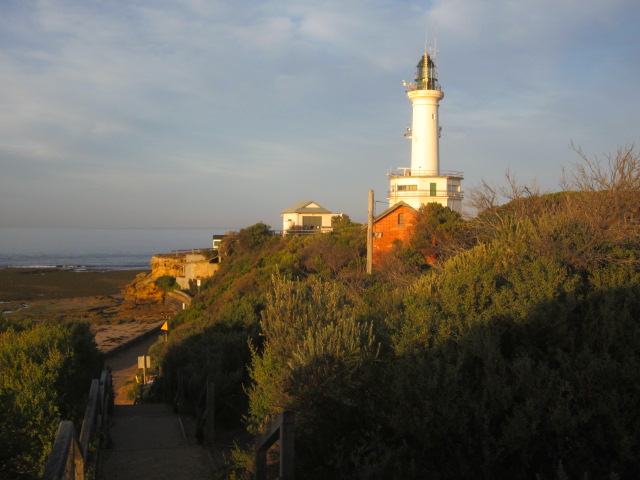
Overlooking the entrance to Port Phillip Bay, Point Lonsdale Lighthouse is one of Victoria's most recognisable coastal landmarks. Visitors can watch large ships navigating the narrow and sometimes treacherous waters of the Rip. The surrounding area also has walking paths, rocky platforms and coastal views.
Address: 1 Point Lonsdale Road, Point Lonsdale
Access: The grounds surrounding the lighthouse are publicly accessible.
Tours: Queenscliffe Maritime Museum conducts guided tours on Sundays, generally between 9:30am and 1pm, with last entry at 12:30pm. Bookings are essential. Children must be at least five years old and 90 cm tall. See Point Lonsdale Lighthouse Tours.
Accommodation: None.
Queenscliff White Lighthouse (Queenscliff)
Also known as Queenscliff Low Light, this white-painted bluestone lighthouse stands near Shortland Bluff overlooking the entrance to Port Phillip Bay. It works in conjunction with the Black Lighthouse to guide vessels through the shipping channel.
Address: Near Hesse Street and Shortland Bluff, Queenscliff
Access: The lighthouse can be viewed from the surrounding public reserve. The tower is closed to visitors.
Tours: No tower tours are available.
Accommodation: None.
Queenscliff Black Lighthouse (Queenscliff)
The Black Lighthouse, also known as Queenscliff High Light or Shortland Bluff Lighthouse, is a rare example of a lighthouse constructed from dark bluestone. Built in 1862, it stands within the grounds of the historic Fort Queenscliff and is one of the area's most unusual maritime landmarks.
Address: Fort Queenscliff, 1 King Street, Queenscliff
Access: The lighthouse is within an active Defence site. Access to the fort grounds is by organised guided tour only.
Tours: Fort Queenscliff tours allow visitors to see the exterior of the lighthouse, but the lighthouse tower itself is not open. See Fort Queenscliff Tours. Photo identification is required for entry to the fort.
Accommodation: None.
West Channel Pile Light (Port Phillip Bay)
Constructed in 1881, the West Channel Pile Light stands offshore in Port Phillip Bay, near the Bellarine Peninsula. The distinctive timber structure was built to guide ships through the West Channel, one of the important shipping routes into the bay.
Location: Offshore in Port Phillip Bay, towards St Leonards
Access: The lighthouse is offshore and cannot be accessed by the general public. It may be viewed from a boat at a safe distance.
Tours: No lighthouse tours are available.
Accommodation: None.
Williamstown Lighthouse (Timeball Tower) (Williamstown)
Standing in Point Gellibrand Coastal Heritage Park, the historic Timeball Tower was originally constructed as a lighthouse before later being used to help ships' captains accurately set their marine chronometers. The restored timeball mechanism is a reminder of Williamstown's important role in Melbourne's maritime history.
Address: Point Gellibrand Coastal Heritage Park, Battery Road, Williamstown
Access: The surrounding park is publicly accessible, but the tower is not open to visitors.
Tours: None.
Accommodation: None.
Gellibrand Pile Light (Williamstown)
The original Gellibrand Pile Light stood offshore near Williamstown and helped vessels navigate safely around the reef at Point Gellibrand. Built in 1906, it was severely damaged when struck by the ship Melbourne Trader in 1976 and the structure was subsequently destroyed. Surviving components have been preserved and are now displayed at Seaworks in Williamstown.
Address: Seaworks, 82 Nelson Place, Williamstown
Access: The historic lighthouse display can be viewed at Seaworks, subject to museum access and opening arrangements.
Tours: No tours of the original lighthouse are possible. See Seaworks opening hours for museum visits.
Accommodation: None.
Port Melbourne Front Lighthouse (Port Melbourne)
The Port Melbourne Front Light is one of two historic navigation lights built in 1924 to guide vessels along the Port Melbourne shipping channel. The distinctive structure stands beside the foreshore walking and cycling path.
Address: Bay Trail, Port Melbourne foreshore
Access: The exterior can be viewed from the public foreshore.
Tours: No tower tours are available.
Accommodation: None.
Port Melbourne Rear Lighthouse (Port Melbourne)
The Rear Light stands approximately 500 metres inland from the Front Light and was designed to work with it to mark the centre of the shipping channel. The concrete tower is now a heritage landmark within the Beacon Cove residential area.
Address: Beacon Vista, Port Melbourne
Access: The lighthouse exterior can be viewed from the surrounding public parkland.
Tours: No tower tours are available.
Accommodation: None.
Eastern Lighthouse (McCrae)
The unusual iron lighthouse at McCrae is one of the most distinctive navigation landmarks in Port Phillip Bay. Also known as the McCrae Lighthouse, it was erected in 1883 and stands approximately 33.5 metres tall. It formerly worked with the South Channel Pile Light to guide ships through the bay and was decommissioned in 1994.
The lighthouse is located beside the Mornington Peninsula Bay Trail.
Address: Point Nepean Road, McCrae
Access: The lighthouse is fenced off, but visitors can view it from the surrounding foreshore reserve.
Tours: None.
Accommodation: None.
South Channel Pile Light (Port Phillip Bay)
Built in the nineteenth century, the South Channel Pile Light is a historic timber lighthouse standing in the waters of Port Phillip Bay. It originally helped vessels navigate the South Channel and once housed lighthouse keepers above the water.
The structure was relocated as part of its preservation and is now situated approximately three kilometres offshore from Rye.
Location: Offshore from Rye, Port Phillip Bay
Access: Public access to the lighthouse structure is prohibited. It may be viewed from a boat at a safe distance.
Tours: No tours of the lighthouse are available.
Accommodation: None.
Cape Schanck Lighthouse (Cape Schanck)

Built in 1859, Cape Schanck Lighthouse stands on a spectacular headland at the southern end of the Mornington Peninsula. The surrounding reserve offers coastal walks, dramatic cliff views and access to the boardwalk leading towards Pulpit Rock.
Address: 420 Cape Schanck Road, Cape Schanck
Access: The surrounding public reserve is accessible to visitors. Entry to the lighthouse tower is available only on organised tours.
Tours: Guided tours are offered by licensed operators on advertised dates. See Cape Schanck Lighthouse Reserve for visitor information.
Accommodation: No bookable lighthouse accommodation has been confirmed through Parks Victoria.
South Gippsland and East Gippsland Coast
Cape Liptrap Lighthouse (Tarwin Lower)

Cape Liptrap Lighthouse stands on a remote clifftop overlooking Bass Strait. The original light was established in 1913, while the present concrete lighthouse was built in 1951. The isolated coastal setting provides impressive views of the surrounding rocky coastline.
Address: Cape Liptrap Road, Tarwin Lower
Access: The lighthouse is reached by road through the Cape Liptrap Coastal Reserve, via Walkerville. Visitors can access the surrounding reserve and view the lighthouse exterior.
Tours: None.
Accommodation: None.
Citadel Island Lighthouse (Wilsons Promontory)

Citadel Island is a remote rocky island off the western side of Wilsons Promontory. A lighthouse was established in 1913, but the original lighthouse equipment was later replaced with an automated navigation light.
The original lantern was removed and restored for display at the Gippsland Regional Maritime Museum (Port Albert), providing an opportunity to learn about this remote lighthouse's history without travelling to the island.
Location: Citadel Island, west of Wilsons Promontory
Access: The island is remote and not open for ordinary public lighthouse visits.
Tours: None.
Accommodation: None.
Wilsons Promontory Lighthouse (Wilsons Promontory)
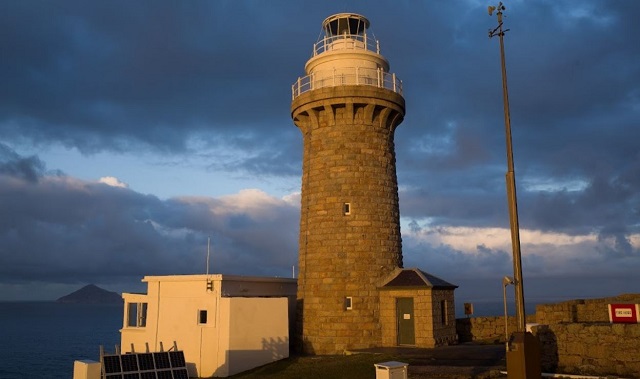
Built in 1859, Wilsons Promontory Lighthouse stands on South East Point, overlooking the wild waters of Bass Strait. The remote lightstation is one of Victoria's most memorable lighthouse destinations, offering rugged coastal scenery and a fascinating glimpse into the lives of former lighthouse keepers.
Reaching the lighthouse requires a demanding hike, making it best suited to experienced walkers rather than a casual family outing.
Location: South East Point, Wilsons Promontory National Park
Access: The lighthouse is accessible only on foot. The walk from Telegraph Saddle is approximately 19.1 km one way, with another route available from Tidal River via Oberon Bay.
Tours: No regular public tower tour schedule is advertised. Check current arrangements with Parks Victoria.
Accommodation: Overnight accommodation is available in historic lightstation cottages, subject to seasonal opening and advance booking. See Wilsons Promontory Lightstation accommodation.
Cliffy Island Lighthouse (Wilsons Promontory)
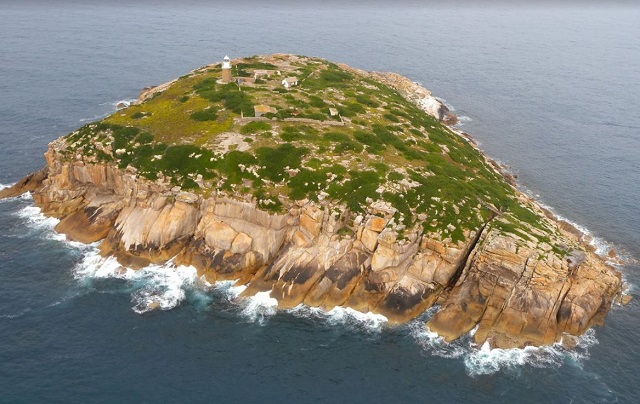
Built in 1884, Cliffy Island Lighthouse stands on a remote rocky island east of Wilsons Promontory. The island's steep cliffs made the construction and operation of the lighthouse extremely challenging. Lighthouse keepers and supplies once had to be raised up the cliffs using specialised lifting equipment.
Location: Cliffy Island, east of Wilsons Promontory
Access: The island is not open to ordinary public visits. Authorised access is by helicopter.
Tours: None.
Accommodation: None.
Point Hicks Lighthouse (Tamboon)
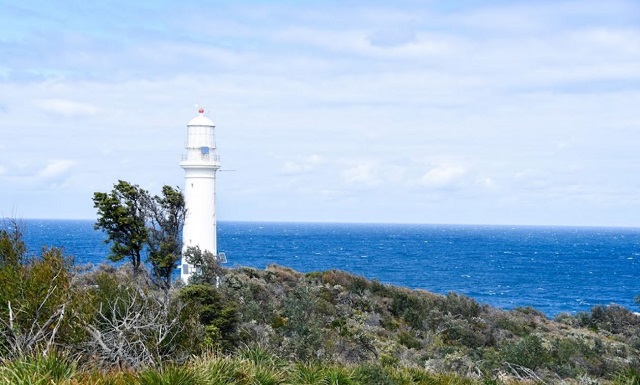
Point Hicks Lighthouse stands on a remote headland in East Gippsland, surrounded by the spectacular wilderness of Croajingolong National Park. The lighthouse was completed in 1890 and has a fascinating history associated with maritime navigation along Victoria's far eastern coastline.
The area is known for its rugged coastal scenery, secluded beaches and opportunities to observe migrating whales.
Location: Point Hicks Road, Tamboon, Croajingolong National Park
Access: Access to the Point Hicks Lighthouse and lightstation precinct is currently closed while restoration works continue. Check Parks Victoria for current conditions before travelling.
Tours: Lighthouse tours are currently unavailable.
Accommodation: The historic lighthouse cottages remain closed until further notice because of damage associated with the 2019-20 bushfires and subsequent impacts. See Point Hicks Lighthouse visitor information.
Gabo Island Lighthouse (Mallacoota)

Gabo Island Lighthouse is one of Victoria's most impressive maritime landmarks. Built from distinctive pink granite quarried on the island, the present lighthouse was completed in 1862. At approximately 47 metres high, it is the second-tallest lighthouse in Australia.
The island is also known for its remarkable coastal scenery, rocky shoreline, birdlife and marine wildlife.
Location: Gabo Island, approximately 14 km from Mallacoota
Access: The island is accessible by charter boat from Mallacoota or licensed commercial aircraft from Merimbula, subject to weather conditions and visitor arrangements.
Tours: Day visitors must arrange lighthouse tours through a licensed tour operator. Bookings are required.
Accommodation: The historic Assistant Lightkeeper's residence has three bedrooms and is available for overnight stays. See Gabo Island Lighthouse accommodation.
Important: Parks Victoria has announced that Gabo Island will close to public access and accommodation bookings during winter 2027 for conservation works.
Planning a Lighthouse Visit
Many Victorian lighthouses can be enjoyed without entering the towers. The surrounding coastal reserves often provide the best opportunities for photography, short walks, whale watching and exploring maritime history.
For families, the more accessible lighthouse destinations include Split Point Lighthouse at Aireys Inlet, Cape Nelson Lighthouse near Portland, Point Lonsdale Lighthouse, Cape Schanck Lighthouse and the historic lighthouse complex at Flagstaff Hill Maritime Village in Warrnambool.
Visitors interested in staying overnight at a lighthouse can explore accommodation at Cape Nelson, Cape Otway, Wilsons Promontory and Gabo Island, subject to availability and current access restrictions.
Offshore lighthouses such as Cliffy Island, Citadel Island and the South and West Channel Pile Lights are primarily of historical interest and should not be treated as normal visitor attractions.
Before travelling, check current information about lighthouse tours, conservation works, weather conditions, walking tracks and accommodation. Lighthouse tower access and guided tour schedules can change at short notice.
Web Links
→ lighthouses.org.au/vic


