Guide to Historic Huts in Victoria


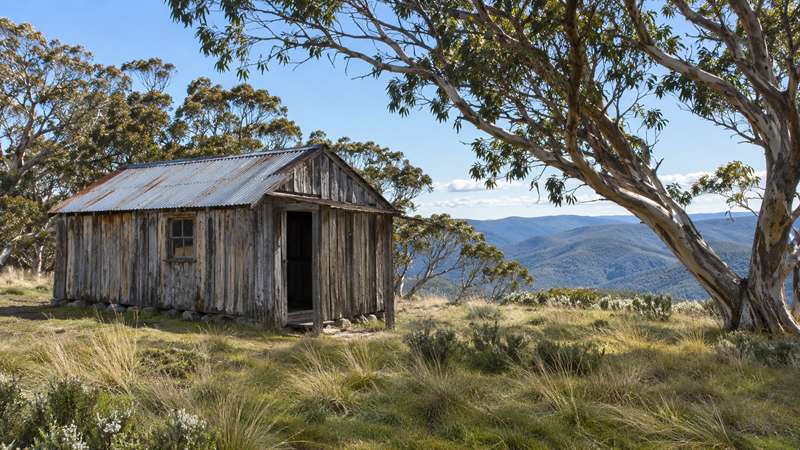
Victoria's historic huts tell stories of cattlemen, gold prospectors, early skiers and the people who travelled and worked in some of the state's most isolated landscapes. Some are original timber buildings that have survived for more than a century. Others have been carefully rebuilt after bushfires, while a few were constructed for Australian films and have since become landmarks in their own right.
From easy walks among the snow gums to challenging full-day hikes, these huts are rewarding destinations for families who enjoy history and the outdoors. The short walks to Wallace Hut, Cope Hut and Fry's Hut are good places to start. More remote huts require bushwalking experience, suitable equipment and careful planning.
Bogong High Plains and Falls Creek
The Bogong High Plains have one of Victoria's best-known collections of historic mountain huts. Several can be reached from the Bogong High Plains Road during the snow-free season, while others involve longer walks across exposed alpine country.
Wallace Hut (Falls Creek)
Built in 1889 from snow gum slabs and timber shingles, Wallace Hut is generally regarded as the oldest surviving hut on the Bogong High Plains. Its weathered timber walls and quiet setting among twisted snow gums make it one of the most atmospheric and photogenic historic huts in Victoria.
Access: Approximately 1.5 km return, about 45 minutes, from the Wallace Hut car park beside Bogong High Plains Road. A relatively short, well-graded walk, although the alpine weather still needs to be taken seriously.
Cope Hut (Falls Creek)
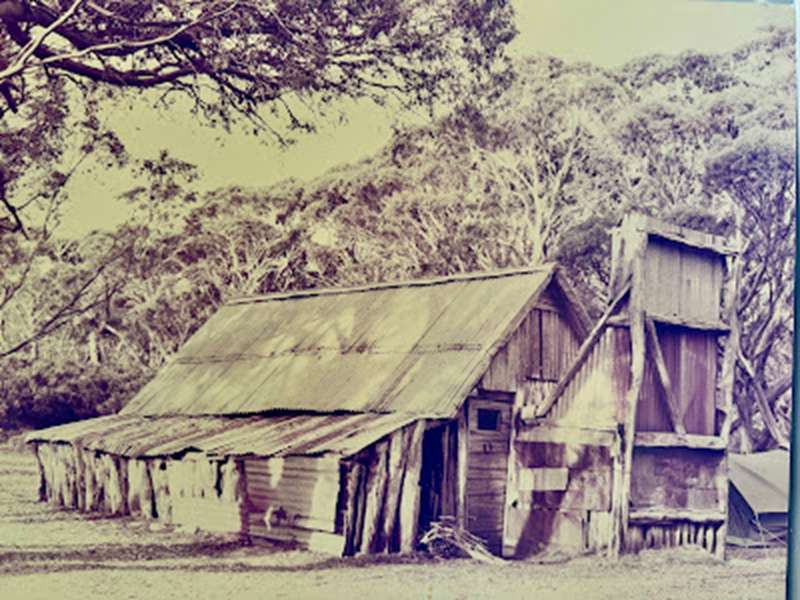
Cope Hut was built in 1929 by the Ski Club of Victoria during the early growth of recreational skiing. Its comparatively substantial construction earned it the nickname "The Menzies of the High Plains". It is an excellent companion visit to Wallace Hut and offers a different chapter of alpine history.
Access: Approximately 500 m return, about 15 minutes, from a trailhead farther along Bogong High Plains Road.
Wallace to Cope Heritage Trail (Falls Creek)
For those wanting more than two short strolls, this scenic heritage walk links Wallace Hut and Cope Hut through snow gum woodland, open high plains and sections of the Australian Alps Walking Track. It also passes near the historic Rover Scout Chalet.
Access: Approximately 6 km return, 2.5 hours, Grade 3. Start at the Wallace Hut car park. This walk is above the snowline.
Fitzgerald Hut and Kelly Hut (Falls Creek)
These two huts make an appealing destination for a longer walk through old snow gums and alpine grasslands. Fitzgerald Hut was rebuilt in 1993 after the original was destroyed by fire in 1991. Together the huts offer an insight into the cattle-grazing history of the High Country.
Access: Approximately 10 km return, about 4 hours, following tracks and snow-pole routes from the Bogong High Plains. Best for experienced walking families with older children.
Tawonga Huts (Falls Creek)
The Tawonga Huts sit in an alpine clearing beneath the rocky Jaithmathang peaks. The walk crosses open high-country terrain with wide views towards Mount Hotham, Mount Feathertop and the West Kiewa River valley. The huts are reminders of the region's former summer cattle-grazing activities.
Access: Approximately 8 km return, around 3.5 hours, from Pretty Valley Pondage via the Fainter Fire Track. Check road access before travelling.
Roper Hut (Bogong High Plains)
Roper Hut is a much more remote destination near the edge of the high plains. The hut was destroyed during the 2003 bushfires and subsequently rebuilt. Reaching it involves exposed alpine walking with extensive views across the mountains.
Access: Approximately 10 km one way from Bogong High Plains Road via the Australian Alps Walking Track, making this a demanding full-day return walk or part of a longer expedition. Not a casual family outing.
Mount Stirling, Mount Buller and Howqua Hills
The Mansfield High Country combines famous film locations, restored cattlemen's huts and riverside shelters. Some places have short family-friendly approaches; others depend on seasonally open mountain roads or long hiking tracks.
Craig's Hut (Mount Stirling)
One of Victoria's most photographed huts, Craig's Hut sits on a grassy ridge with tremendous views across the surrounding ranges. Unlike the original cattlemen's huts, it was built in 1982 as a film set for The Man from Snowy River. It was destroyed in the 2006 bushfires and rebuilt, so its significance is primarily cinematic and cultural rather than as an original pastoral building.
Access: A 3 km return walk from the Circuit Road Picnic Area, or access by suitable 4WD along Clear Hills Track when open. The mountain roads close seasonally.

Razorback Hut - Woollybutt Loop Walk (Mount Stirling)
The Woollybutt Loop passes through alpine forest to the original cattleman's Razorback Hut, as well as King Saddle Shelter. It offers a quieter alternative to Craig's Hut, with winding tracks among eucalypts and the opportunity to appreciate the practical simplicity of early mountain shelters.
Access: Approximately 5 km loop, around 2 hours, starting at Telephone Box Junction on Mount Stirling Road. An intermediate shared walking, cycling and horse-riding trail.
Mount Stirling Summit Interpretive Loop - King Spur, GGS and Bluff Spur Huts
This substantial circuit passes King Spur Hut, GGS Hut and Bluff Spur Hut as well as the summit of Mount Stirling. Interpretive signs explain the area's alpine environment, and the route gives walkers a look at several different mountain shelters in one outing.
Access: Approximately 12.3 km return, around 7 hours, starting from King Saddle Shelter. A demanding day for fit, well-prepared walkers despite its intermediate trail grading.
Fry's Hut (Howqua Hills)
Built by bushman Fred Fry around the late 1930s to early 1940s, this simple split-timber hut stands beside the Howqua River at Fry's Flat. The surrounding Howqua Hills Historic Area also preserves evidence of gold mining, settlement and the once-busy river valley. This is a particularly rewarding choice for families wanting a historic hut together with a gentle heritage walk.
Access: The approximately 3 km return Howqua Hills Heritage Track follows the river from Sheepyard Flat to Fry's Flat, passing historic relics and interpretive panels. Vehicle access to Fry's Flat may be seasonally restricted. Overnight stays inside Fry's Hut are not permitted.

Bluff Hut, King Hut and Ritchie's Hut (Mansfield High Country)
These huts offer three very different remote High Country experiences. Bluff Hut stands high in the Alpine National Park and has been rebuilt following the 2007 bushfires. King Hut, near the King River, is associated with the old mountain stock routes and is reached by remote 4WD tracks when open. Ritchie's Hut nestles beside the Howqua River and is reached on foot.
Access: Remote mountain roads and walking tracks. Do not assume a normal car can reach any of these huts. Verify current route conditions and travel times before leaving Mansfield.
Mount Hotham and Dinner Plain
The huts near Mount Hotham reflect the area's history of prospecting, early skiing and mountain travel. Some structures are original, while others commemorate later events or were built for film productions.
Spargo's Hut, Derrick Hut and Silver Brumby Hut - The Huts Walk (Mount Hotham)
Spargo's Hut was constructed by prospector Bill Spargo in 1927-28 and is one of the area's oldest surviving buildings. Derrick Hut was built in 1967 in memory of cross-country skier Charles Derrick. Silver Brumby Hut is a replica of a film-set hut, rather than an original pioneering shelter. The Huts Walk links these distinctive stories through beautiful alpine scenery, with views across the surrounding ranges.
Access: The full Huts Walk is around 15 km point-to-point or 18 km as a circuit with hut detours, taking approximately 7 hours. Grade 4, with steep sections and alpine exposure. Suitable for experienced hikers; shorter sections are possible with route planning.
JB Hut (Dinner Plain)
The old cattlemen's post at JB Plain is a reminder of the era when livestock were moved to mountain pastures in summer. The surrounding snow gums and open plains make this an attractive stop when exploring the walking and cycling trails between Dinner Plain and Mount Hotham.
Access: Along the Brabralung Trail linking Dinner Plain and Mount Hotham. The full trail is approximately 12 km one way, but shorter visits can be planned from suitable access points.
East Gippsland and Nunniong State Forest
The forests of East Gippsland contain some remarkable huts associated with gold mining, forestry and early settlement. Several are reached by remote forest roads rather than walking trails.
Moscow Villa (Nunniong)
Moscow Villa is one of Victoria's most distinctive historic bush huts. It was built in 1942 by Bill Ah Chow, a local fire tower operator and bushman, using logs and stone. The unusual name and the story behind its construction add to its appeal, while the surrounding Bentley Plain offers beautiful forest walks, alpine grasslands and picnic opportunities.
Access: On Bentley Plain Road in Nunniong State Forest, reached on the scenic Nunniong Forest Drive from the Swifts Creek and Ensay area. The nearby Bentley Creek Walk is a 1.7 km loop. Check forest road conditions and seasonal restrictions before travelling.
Wilson's Hut (Bendoc)
Built in 1916 by Alfred and Irene Wilson using local forest materials, this rare surviving slab hut served a family who supplied produce and timber to the local gold-mining community. It is an excellent example of how resourceful settlers adapted to the remote forests of far East Gippsland.
Access: In Bendoc State Forest, near the Bendoc Historic Loop Drive. A remote forest destination usually visited as part of a 4WD trip. Picnic facilities are available at the hut.
Mount Buffalo and Lake Eildon
Historic huts are not confined to the open alpine plains. Two other places combine an old shelter with attractive lakeside bushland.
Lake Catani Stone Hut (Mount Buffalo)
The historic stone shelter at Lake Catani Campground is a distinctive contrast to the timber cattlemen's huts elsewhere in the High Country. With fireplaces, benches and tables, it recalls an earlier era of mountain recreation. The lake, snow gum forest and nearby walking trails add to the visit.
Access: In the Lake Catani Campground area of Mount Buffalo National Park. Campground access and facilities change seasonally; the 3.45 km Lake Catani circuit offers an additional walk.
Stones Outstation (Lake Eildon National Park)
This restored timber outstation hut sits near Stone Bay, with old stockyard remains nearby. The wooded lakeside setting gives the place a very different feel from the exposed alpine huts. The hut was restored in 2011 and 2017, and the walk takes in views of Lake Eildon, forest and traces of the district's working past.
Access: Approximately 9.7 km via the Wallaby Bay walking track, starting at the Wallaby Bay car park in the Fraser Block. A longer bushwalk rather than a brief roadside stop.

Goldfield and Pioneer Huts
Some of Victoria's most interesting huts are connected with gold mining rather than alpine grazing.
Miners Hut - Gold Heritage Walk (Warrandyte)
Hidden within the gold-mining landscape of Fourth Hill, this modest miners hut is thought to date from the 1950s. One corner incorporates a living tree trunk, a practical solution that saved work and materials. The walk also visits mine workings and other reminders of Warrandyte's goldfields.
Access: The approximately 3.3 km Gold Heritage Walk loop begins in the Whipstick Gully Road area. Some sections are steep and can be slippery after rain.
Miners Hut - Old Gippstown (Moe)
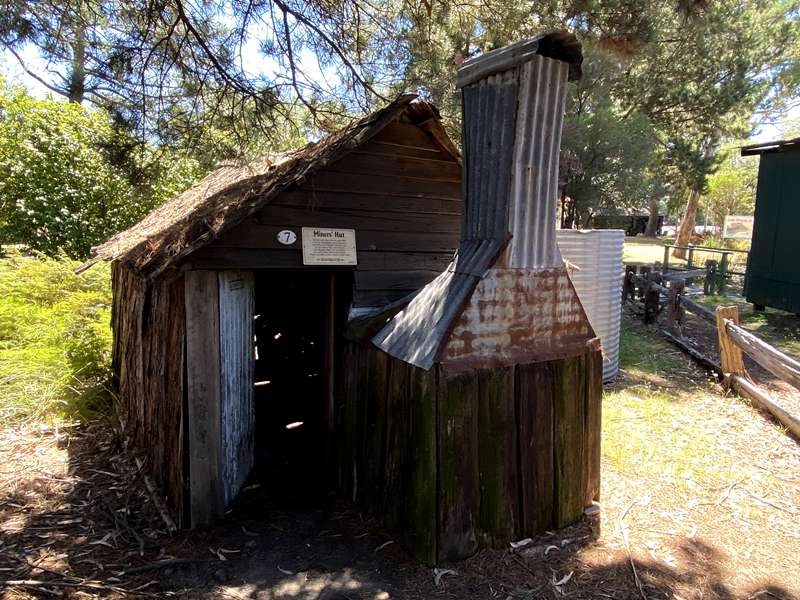
Old Gippstown displays a genuine miners hut that once stood in the Tanjil goldfields near Moe, where two miners lived around 1900. The simple interior, earth floor and modest construction reveal just how basic living conditions could be. The hut was relocated and restored as part of this heritage park, making it an accessible way to see an authentic building without a mountain hike.
Access: Within Old Gippstown heritage park in Moe. Check the attraction's current opening arrangements and admission details before visiting.
Other Historic State Forest Huts
The Victorian state forest network contains many more rustic shelters worth discovering, particularly for visitors who enjoy four-wheel-driving and remote camping. Several have been rebuilt after bushfires, so they are heritage sites rather than untouched original structures.
Tomahawk Hut (Mansfield State Forest)
Originally built in 1927 as a base for road-building crews, Tomahawk Hut was rebuilt in 2007. The simple timber hut and surrounding picnic area make it a pleasant heritage stop in the forest north of Mount Buller.
Access: Forest road access in Mansfield State Forest. Check road conditions before setting out.
Upper Jamieson Hut (Barkly River State Forest)
This hut was built by renowned bushman Fred Fry in the late 1930s and restored in the 2000s. The riverside location recalls the work of cattlemen and bushmen who moved through the remote valleys around Mount Buller and the Jamieson River.
Access: Remote state forest tracks, generally suited to a properly equipped 4WD trip.
Keppels Hut (Rubicon State Forest)
The original hut was built in the 1880s. It has been reconstructed more than once following bushfires and is now associated with a picnic and horse-riding stop in the rugged Rubicon State Forest.
Access: Four-wheel-drive access only.
Mugwamp Hut (Mount Cole State Forest)
Dating back to its origins as a forest worker's shelter in the 1890s, Mugwamp Hut provides a fascinating contrast to the cattlemen's shelters of the alpine north-east. Tall eucalypts and grassy clearings surround this historic site, which is also used for picnicking and camping.
Access: Mount Cole State Forest, with nearby opportunities to explore sections of the Beeripmo Walk.
Jorgenson Hut, Junction Hut, Store Point Hut and Goonans Hut (Aberfeldy)
The old gold-mining country around Donnellys Creek and the Aberfeldy River contains several heritage hut sites. Jorgenson Hut began as a prospectors' shelter in the 1950s, while Junction Hut, Store Point Hut and Goonans Hut reflect later mining and bush recreation history. The huts were damaged or destroyed in the 2013 bushfires and subsequently restored or rebuilt.
Access: On remote tracks connected with the Aberfeldy Backroad 4WD Tour, north of Walhalla. Visit only with a suitable vehicle and up-to-date knowledge of forest track conditions.
Planning a Historic Hut Visit
For an easier family visit: Wallace Hut, Cope Hut and Fry's Hut are good starting points, subject to the season and access conditions. Craig's Hut is another popular family destination when Circuit Road is open and the approach walk suits your group.
For longer hikes: Fitzgerald and Kelly Huts, Tawonga Huts, the Mount Stirling summit circuit, Stones Outstation and the Mount Hotham Huts Walk demand more time, fitness and preparation.
Seasonal access: Many High Country roads and tracks close through winter and sometimes into spring. Snow and severe weather are possible even outside winter. Check the Parks Victoria conditions and closure information before travelling, and follow local signs and restrictions.
Protect the huts: These buildings are fragile reminders of Victoria's past, not regular holiday accommodation. Respect signs, leave the interiors and surrounding sites as you find them, take rubbish away and do not rely on huts as your planned overnight shelter. Carry suitable clothing, food, water and navigation equipment for the route you choose.


