Moe - Old Gippstown (Gippsland's Heritage Park)


Step back in time to the 1850s and enjoy a visit to Old Gippstown, Gippsland's Heritage Park, Moe. This complete Historical Township is filled with authentic heritage buildings set in 8 acres of parkland. There are relocated heritage and National Trust classified buildings housing century old artefacts. Old Gippstown is also renowned for it's Coach house which contains one of Victorias' best collections of horse drawn vehicles.
The beautiful garden settings are perfect for picnics and barbeques. You can also see a large variety of agricultural and industrial machinery ranging from horse drawn, steamdriven or manually operated, and the blacksmiths forge, in which many were manufactured.
The general store and dressmaking shop contain displays of original implements used around the home in the 1850s.
Opening Hours:
Opening Hours
Cost:
Admission Prices
Summary of Displays
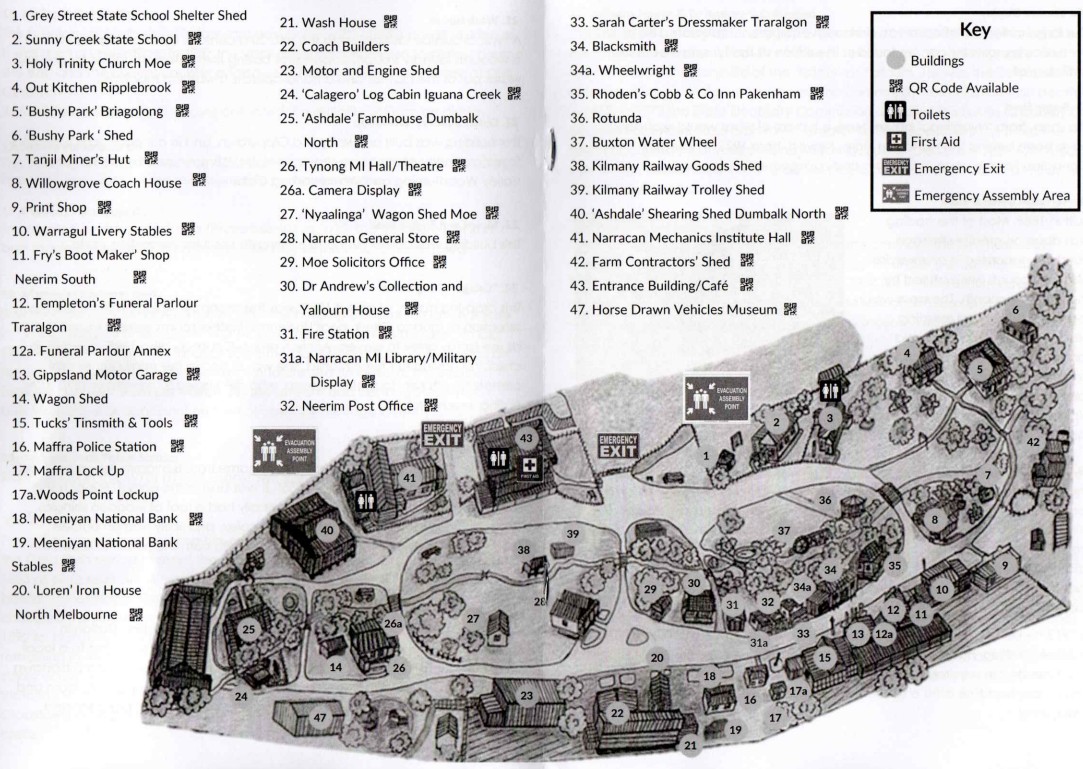
Note: A map and guide is provided as part of the entrance cost.
1. Shelter Shed
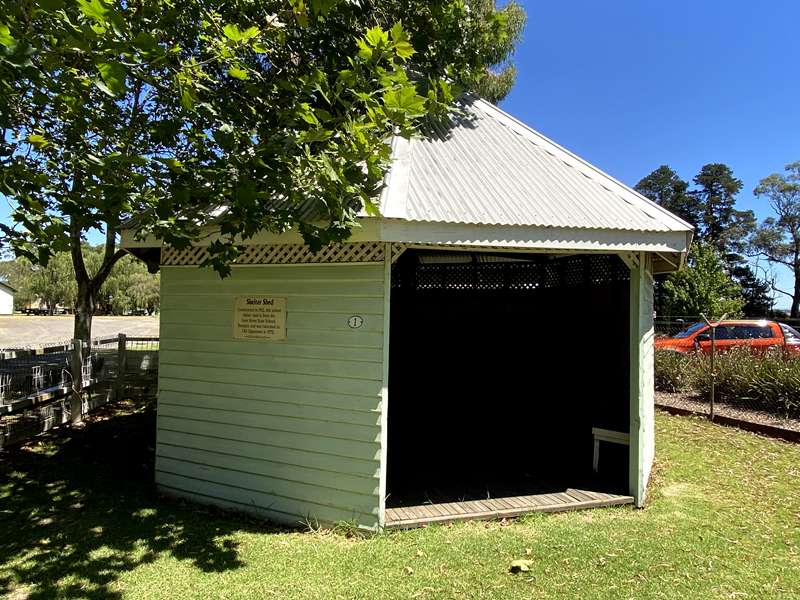
Constructed in 1912, this shelter shed is from the Grey Street State School Traralgon and was relocated to Old Gippstown in 1972. The street lighting in this section was specially made by the State Electricity Commission, copied from an early electric light found on a building in Fitzroy, Melbourne.
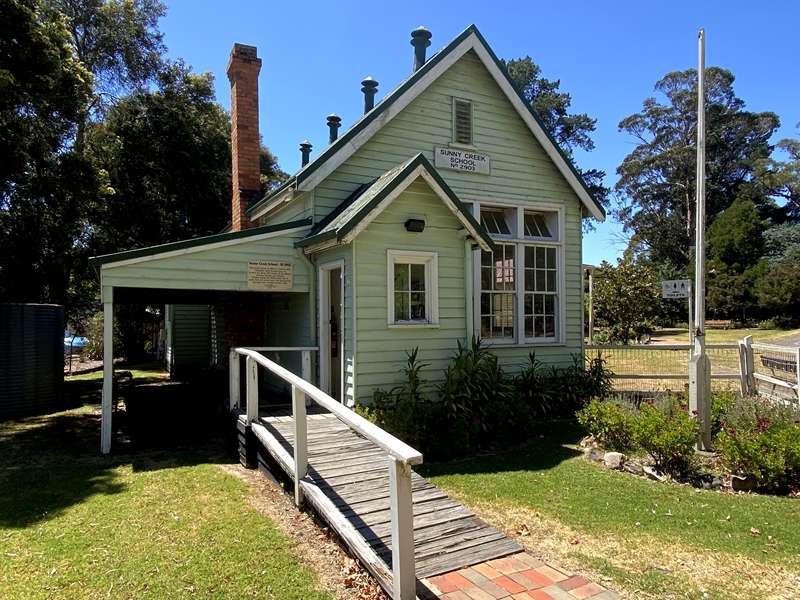
2. Sunny Creek School - SS 2903
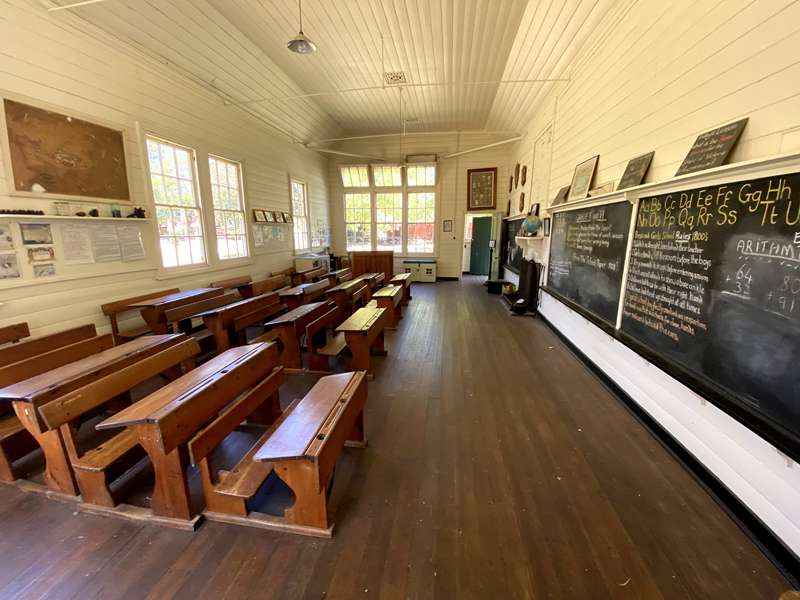
This school opened in 1889 and closed in 1966. Originally called Yarragon East, its location was about 300 metres off the highway between Yarragon and Trafalgar. Exhibits include the WW1 honour roll of pupils from the school, (on the Victorian War Heritage Inventory), early class photos and wooden teacher's desk.
Watch Video of Sunny Creek School
3. Holy Trinity Anglican Church, Moe
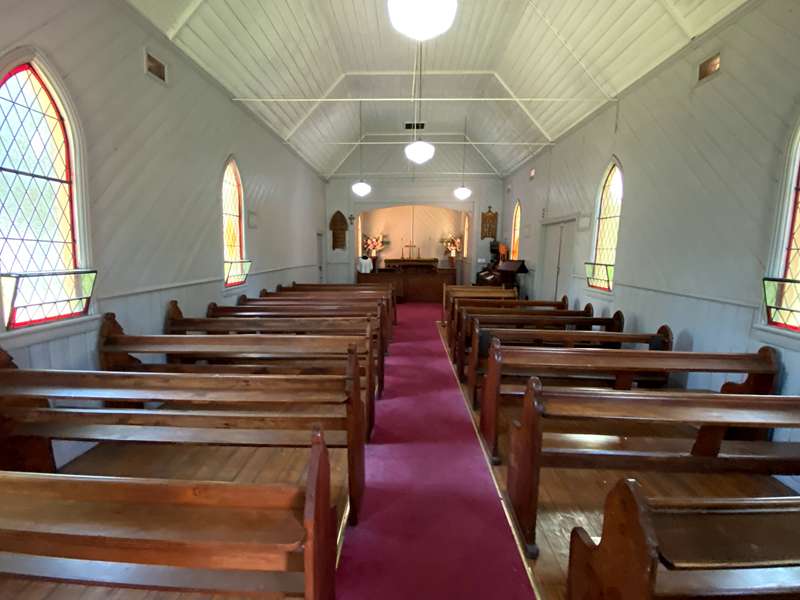
Dedicated on 3 December 1895 by Archdeacon Langley and deconsecrated in 1968 after a new church was built. Items on display include organs, altar, lectern and list of former rectors. In the porch is a stained-glass window: all that remains from St James Church, Delburn, near Mirboo North. The bell is from the Presbyterian church at Boolarra.
Watch Video of Holy Trinity Church
Note: There are toilets near here.
Churchyard: Pause for a moment at the headstone for Joseph and Bessie Haigh, early residents of the Moe area. The wooden headstone commemorates an early accidental death.
4. Out Kitchen
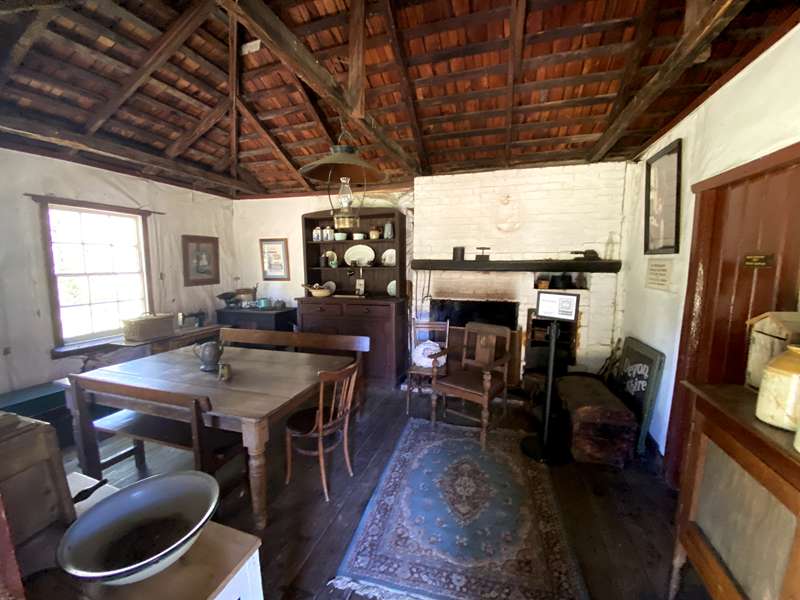
A slab construction cottage built in Ripplebrook in 1880 as a home for a single female landowner, and later relocated to Labertouche. It was donated by the Mason-Brook Pastoral Co. of Labertouche. Here it represents the kitchen where farmhands and servants would have eaten their meals.
Watch Video of Out Kitchen
5. "Bushy Park" Homestead
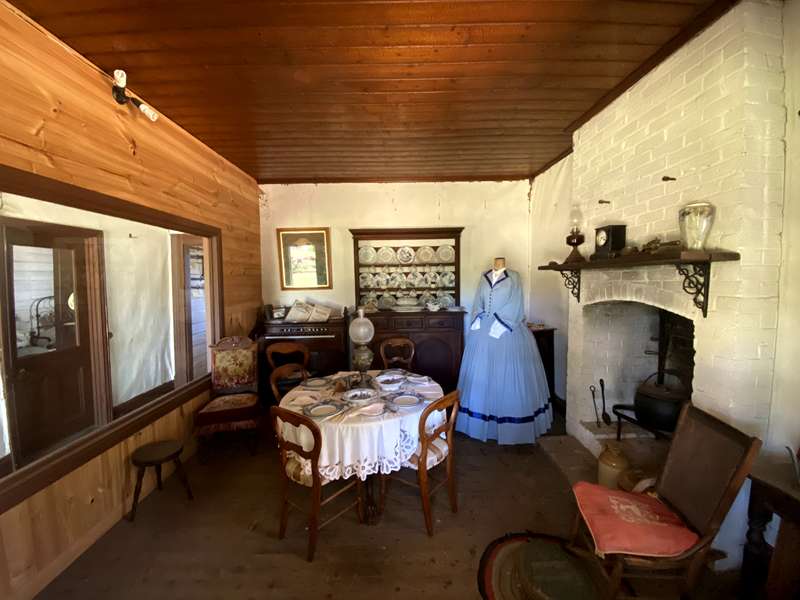
Built in the late 1840s on the Avon River between Boisedale and Briagolong , Bushy Park homestead has National Trust of Australia 'C' classification. Bushy Park was moved to Old Gippstown in 1969 and another section to Metung. One derelict section of the extended homestead still remains on the bank of the Avon River. Some of the pit-sawn timber, with its criss-cross lines, can be seen immediately to the right of the front door.
Watch Video of Bushy Park
6. "Bushy Park" Shed
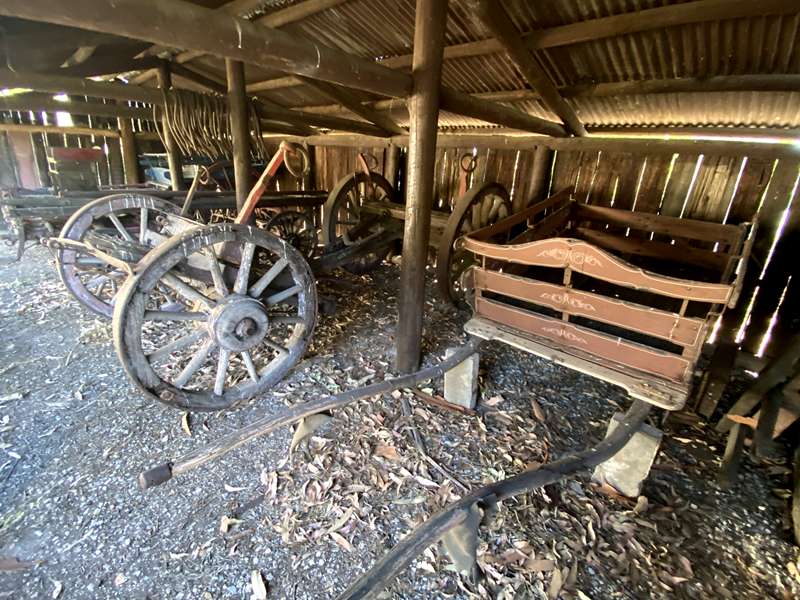
Built around 1972 at Old Gippstown to represent one of the outbuildings.
7. Miners' Hut
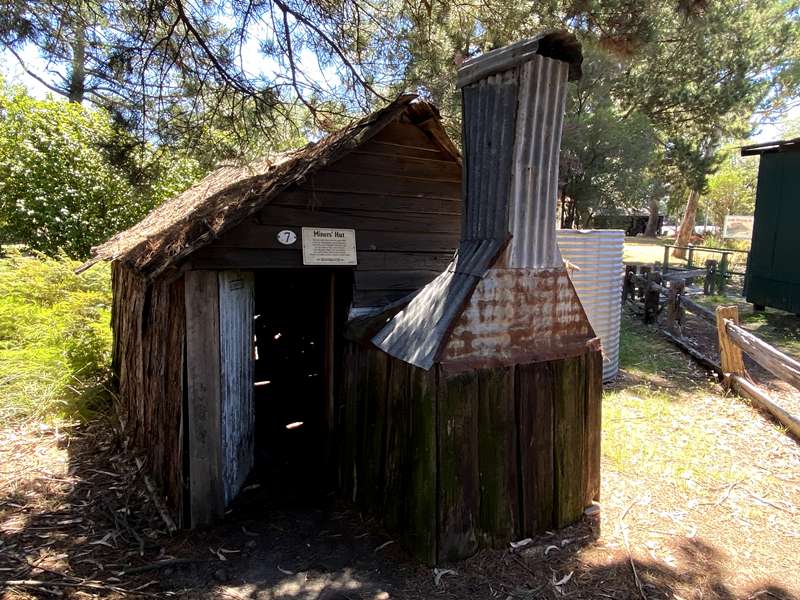
Two gold miners lived in this but around 1900 at the old Tanjil goldfields, only ten kilometres from Moe on the Tanjil River. The bark on the roof was replaced when it was restored at Old Gippstown. Miners' huts were very primitive, very cold in the winter and very hot in the summer. This sort of building served as a home for many settlers. Items on display include a hessian bed. Note the earth floor.
Watch Video of Miner's Hut
8. Coach House
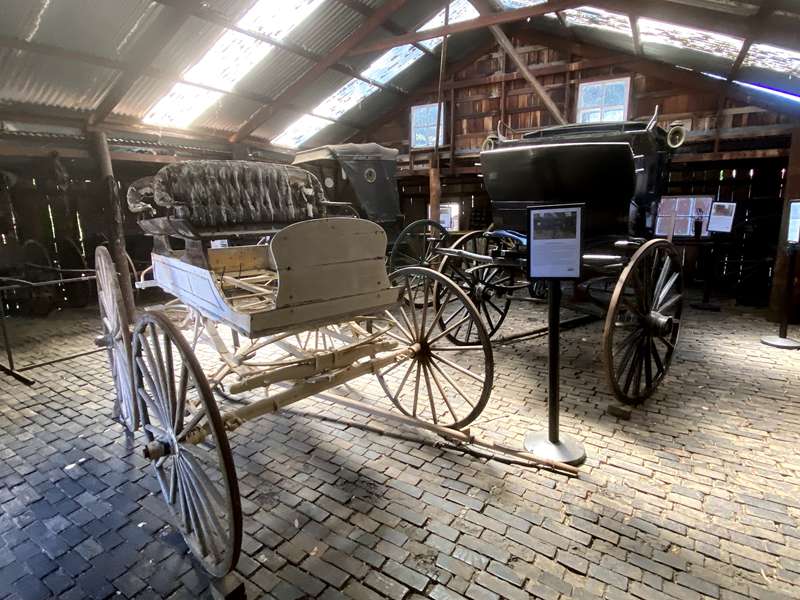
Built by Tom Fowler in the 1920s on his farm at Willow Grove, a few kilometres north of Moe, as a barn. Items on display include the impressive 1885-1890 Double Brougham Town Coach, 1890 Canoe-Front Wagonette, Hooded Tray Buggy, Baker's and Butcher's Carts, Whitechapel Buggy, Coal Box Buggy and Jinkers. Also visit our new Horse-Drawn Vehicles Museum at the other end of the park - all part of one of the largest collections of horse-drawn vehicles on public display in Victoria.
Watch Video of Coach House
9. The Print Shop
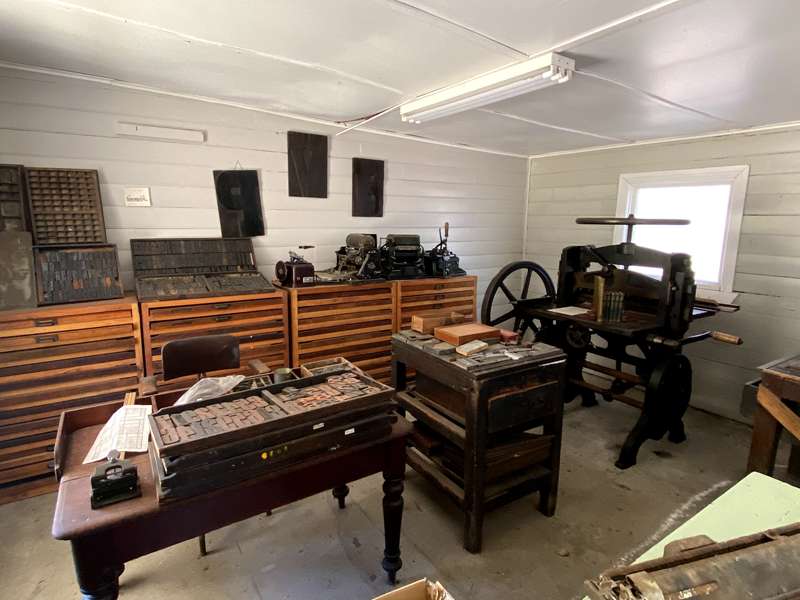
A collection of printing equipment, some still in operating order. It includes an 1870s Wharfdale flatbed cylinder press used to produce the Mirboo North Times from 1880s to 1973, an 1890 Chandler and Price Platen Press and an 1870 Olmesdahl Platen Press, Klug Motorised Platen Press, guillotines and typesetting equipment.
Watch Video of Print Shop
10. Livery Stables
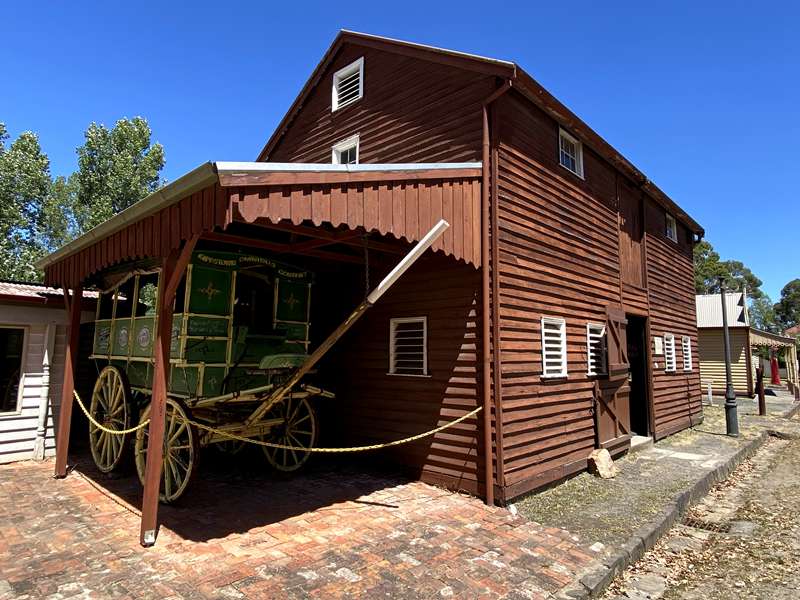
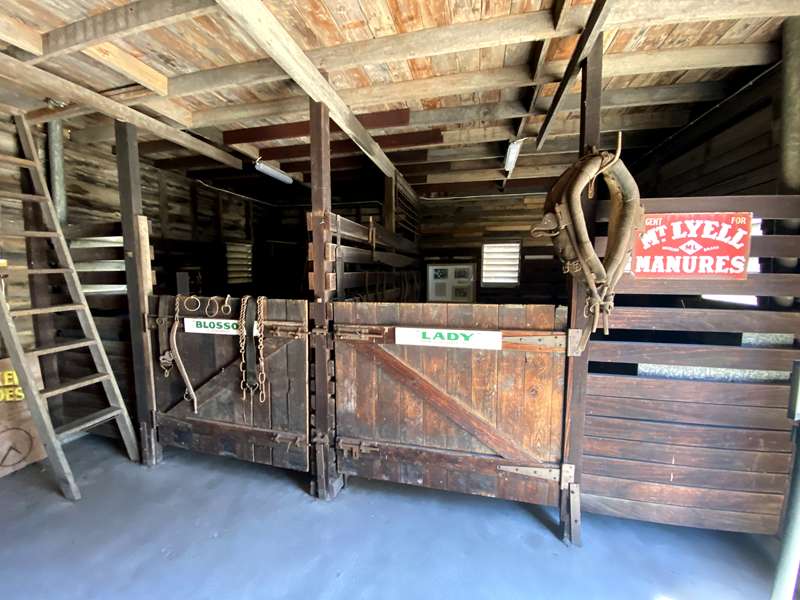
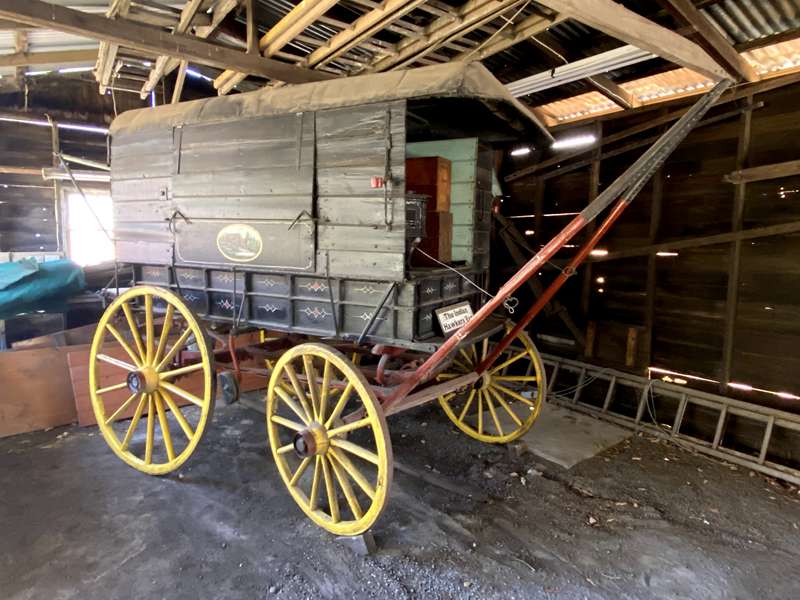
Originally located at Warragul and used by general carriers from the late 1880s. Skillions added to the left side of front and rear by Old Gippstown. This display includes historical signage, vintage horse equipment, old horse stalls/old saws.
Watch Video of Livery Stables
11. Bootmaker and Saddlers Shop
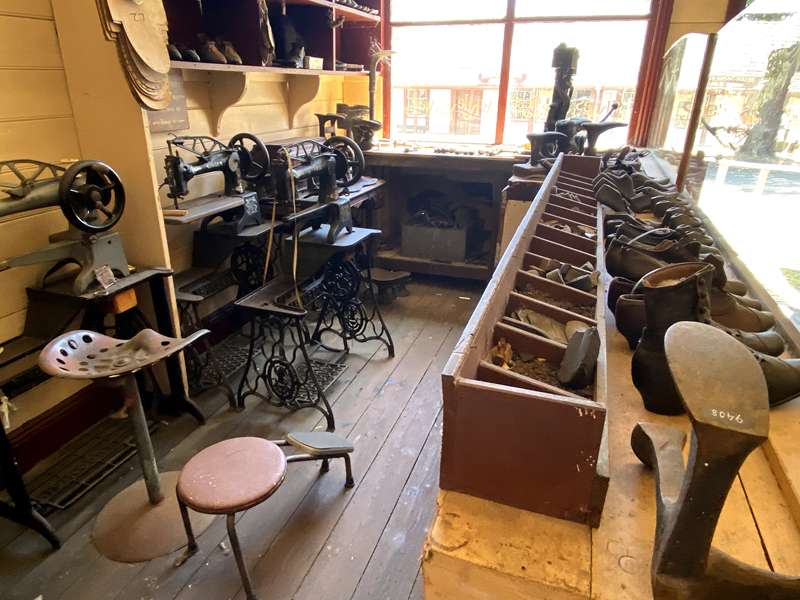
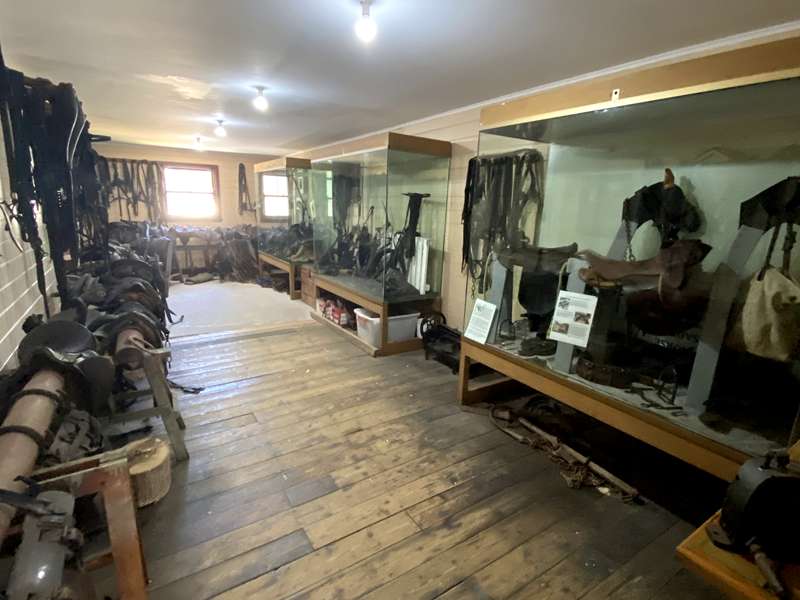
Samuel Fry established his business at Neerim South in 1906. Exhibits include early boots and shoes, heavy duty leather working machines and the Saddlery Collection, including WW1 Lighthorse and Ladies' Side Saddles. Many of the tools belonged to Harry Coombs, who was Moe's bootmaker from 1910 -1966.
Watch Video of Boot Maker
12. Funeral Parlour
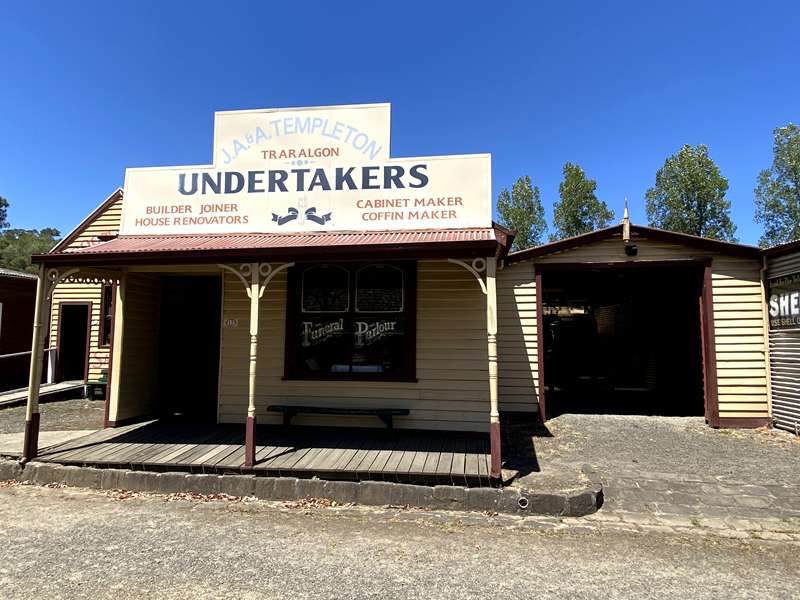
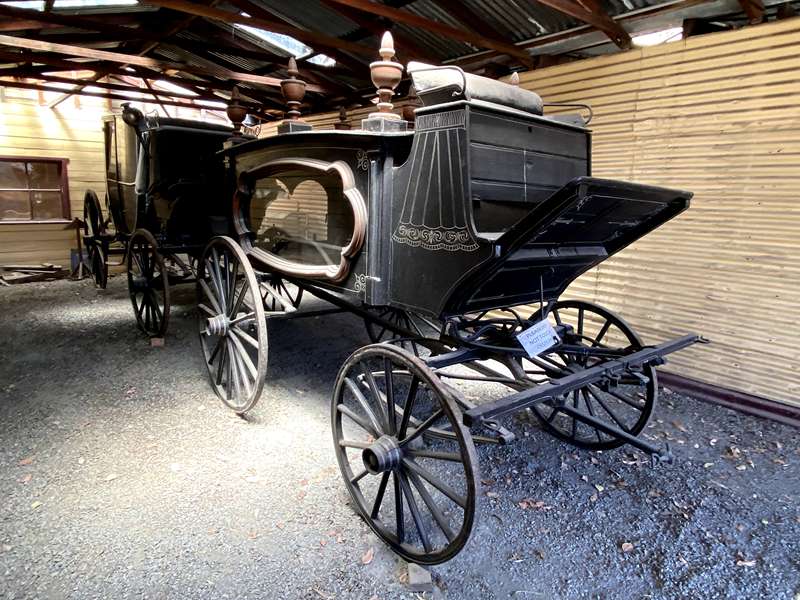
This building was obtained from Arch and Andy Templeton of Traralgon. They established their own funeral business in 1940 near Lafayette street, and Arch was the first to drive the Hudson Hearse in our collection, which is located in the motor garage. There is also a horse-drawn hearse and mourning coach, similar to what would have been used at the time, in the annexe to the side of the building.
Watch Video of Funeral Parlour
13. Gippsland Motor Garage
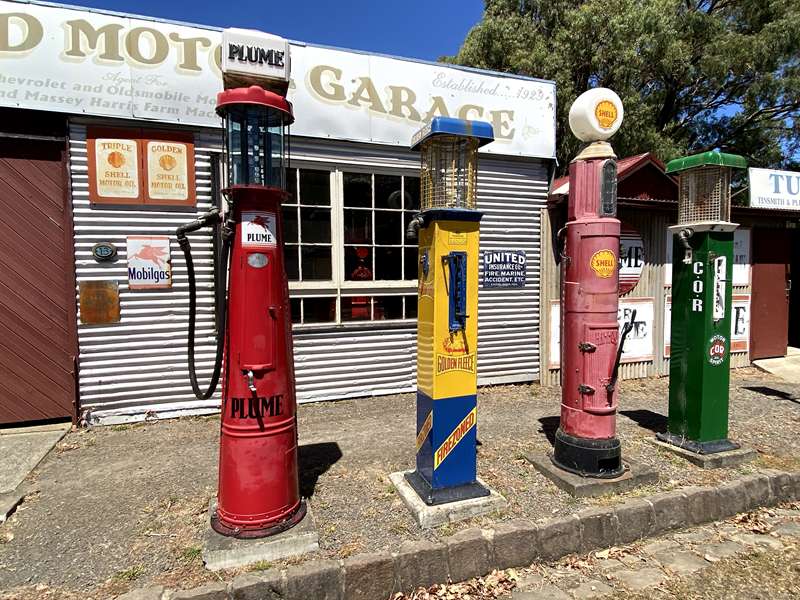
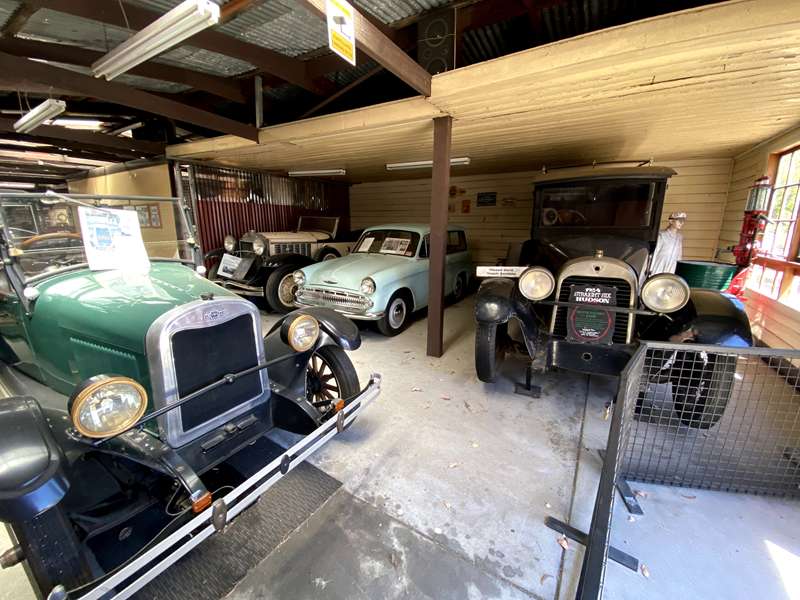
This building was constructed onsite in 1972 and was named after a garage established in 1929 in Maffra by W.0 Fulton, a blacksmith and garage proprietor and state parliamentarian (later Minister for Health). It sold Chevrolet and Oldsmobile cars and Massey Harris farm machinery. Exhibits include a 1926 Packard Tourer/Stanley Steamer, a 1927 Buick Hearse, a 1925 Chevrolet Tourer and a 1924 Hudson that was converted to a motor hearse in 1930, the first motor hearse in Traralgon. The petrol pumps include 1920s Plume Texaco, Shell, COR and a chariot type Plume mobile petrol pump.
Watch Video of Motor Garage
14. Wagon Shed
Purpose built onsite to house some of our horse drawn vehicle collection.
15. Tuck Collection of Tinsmithing/Plumbing
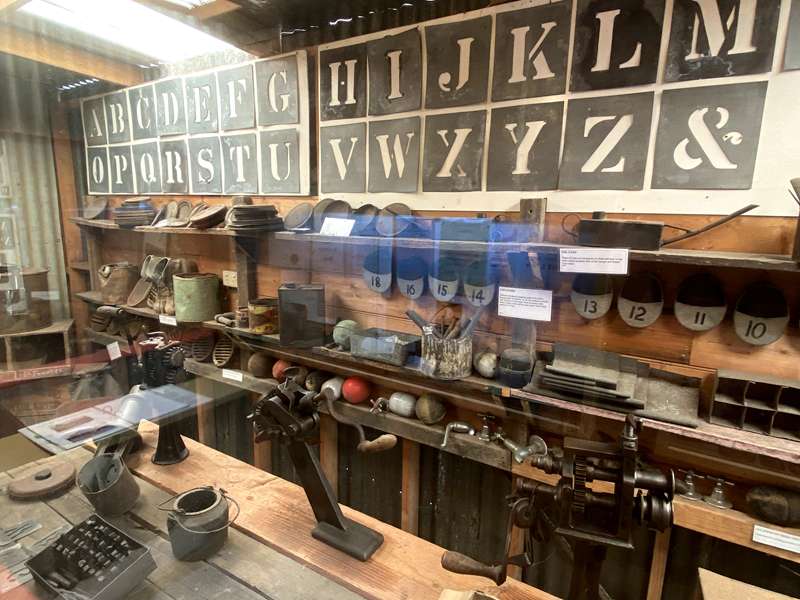
Our Tuck display is a rare collection of tinsmithing and plumbing artefacts spanning four generations of the Tuck family. On display are many tools and stencils that were used by Tuck tinsmiths, sheet metal workers and plumbers, who first settled in Australia in 1853. The patriarch, Thomas James Tuck (1820-1894) was actually a baker and confectioner, but his sons identified the strong demand for tinsmiths and plumbers as the population exploded during gold mining times.
Watch Video of Tuck's Tinsmith and Tools
16. Maffra Police Station
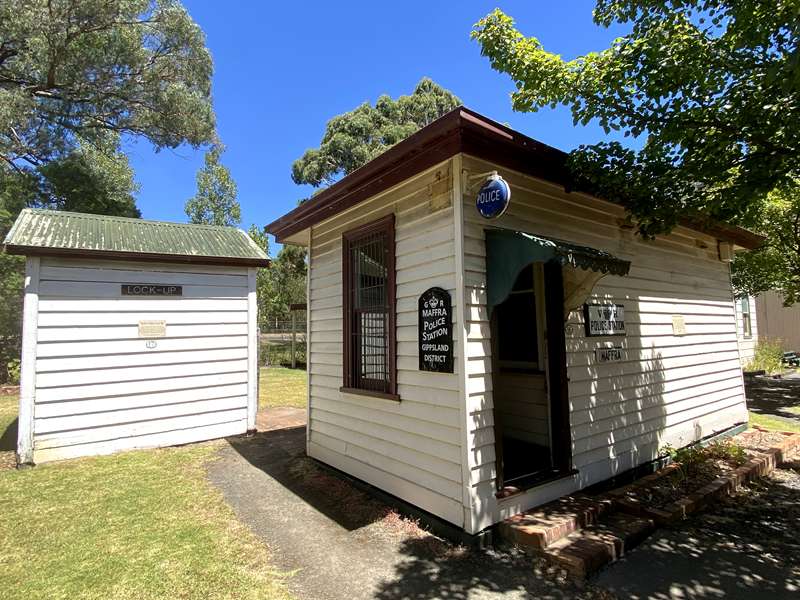
His building originally stood in the yard beside the 1882 Maffra police residence. It was then a small office. In 1937 this small office was extended to almost double the size, and the current counter added - the building that you now see at Old Gippstown. Retired Police Inspector N. Crowe collected the majority of items on display.
Watch Video of Maffra Police Station
17. Maffra Police Lock Up
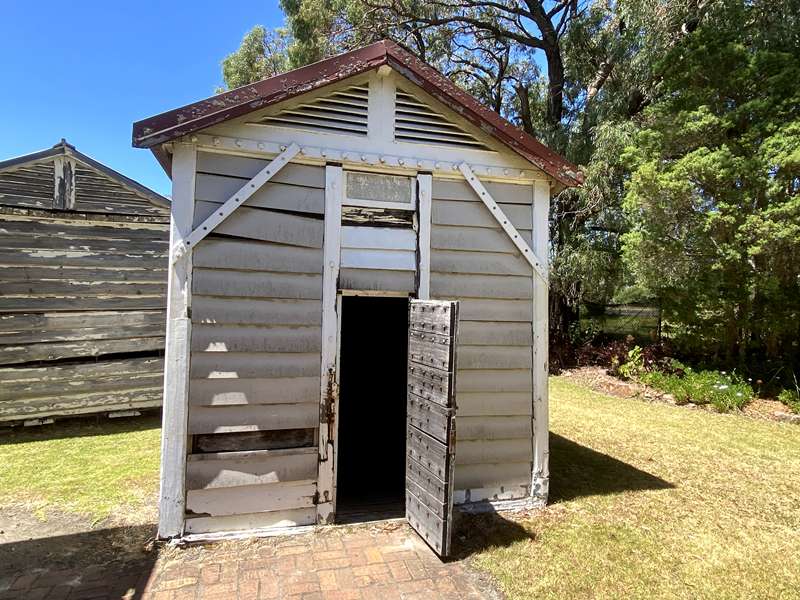
This building was transferred from Rosedale to Maffra in 1869. These police cells, imported from England were designed to be transportable.
17A Woods Point Lock Up
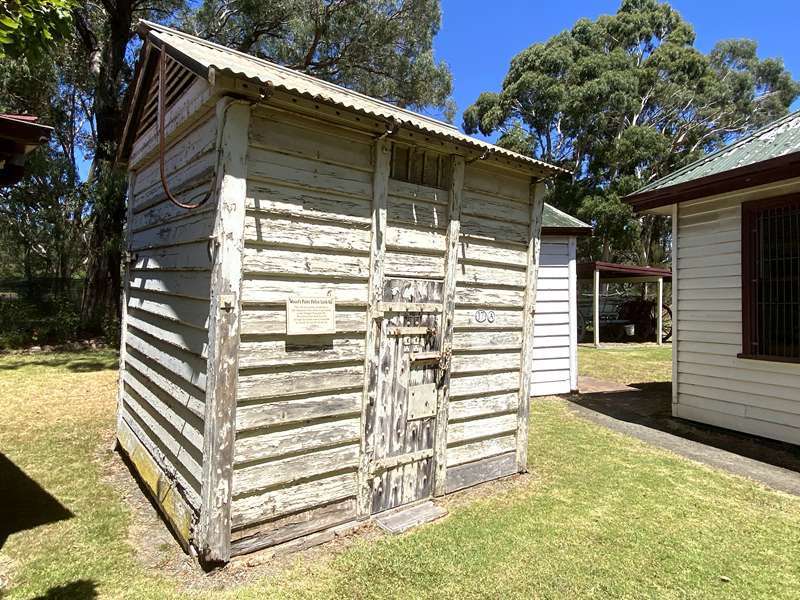
Transported here from Trafalgar/Thorpdale RSL in 2015. The framework of iron bars made it impossible to breach the security of the cell. To be restored.
18. Meeniyan National Bank
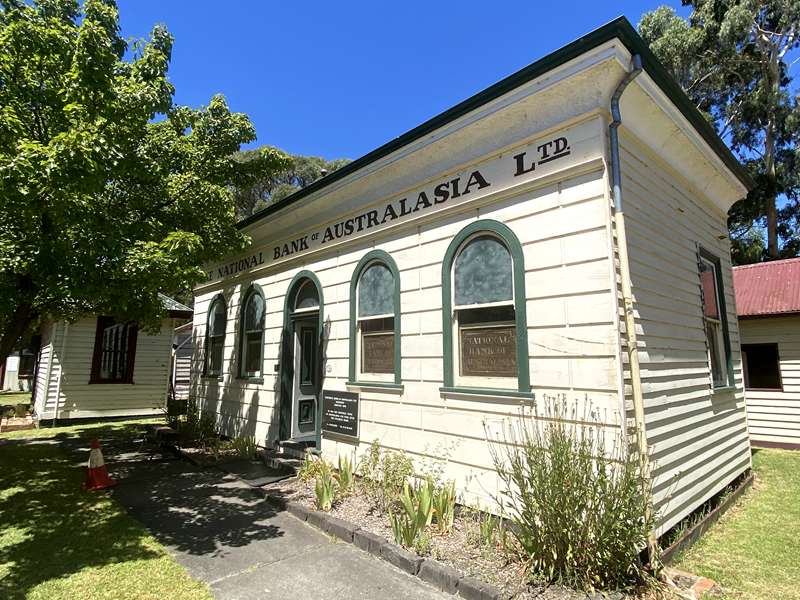
Built for Colonial Bank of Australia in 1889, this building became a National Bank in 1914. Its first manager was Mr. H.D McKay. The building was donated to Old Gippstown in 1969 by the National Bank. The bank has a mock stone design on the timbers at the front of the buildings and pressed tin ceilings. The interior features a collection of old National Bank furniture and banking items. The building is listed as Significant on the Latrobe City Heritage Overlay.
Watch Video of Meeniyan National Bank
19. National Bank Police Stables
Replica built in the 1970s by Old Gippstown from recycled materials.
20. "Loren" Iron House
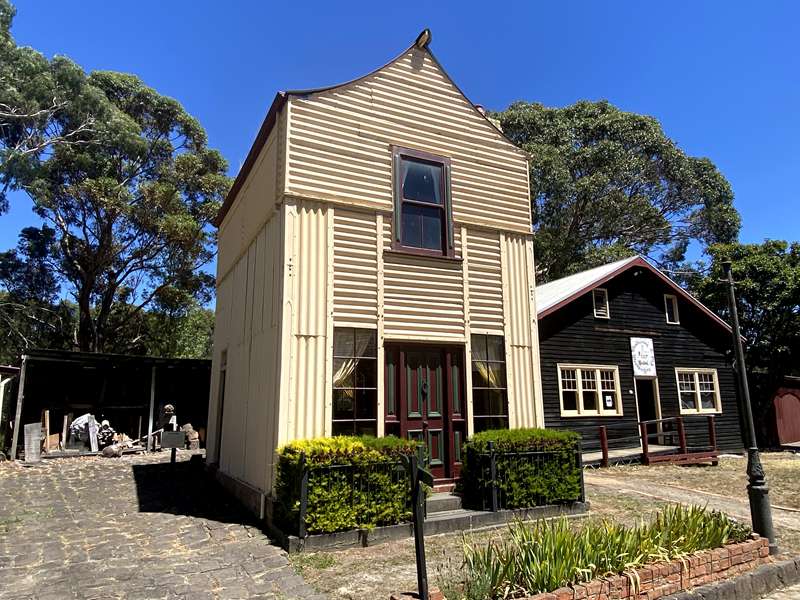
"Loren" is a pre-fabricated iron house imported from the United Kingdom during the Gold Rush period to meet the strong demand for housing. It was erected in 1853 at 62 Curzon Street, North Melbourne for builder James Hogg. The Sheppard family occupied the house for the longest period from 1892 to 1935. It is one of the few examples remaining in Australia of a pre-fabricated two-storey house and consequently is listed on the Victorian Heritage Register. It was moved to Old Gippstown in 1968: this was the first building onsite.
Watch Video of Loren Iron House
21. Wash House
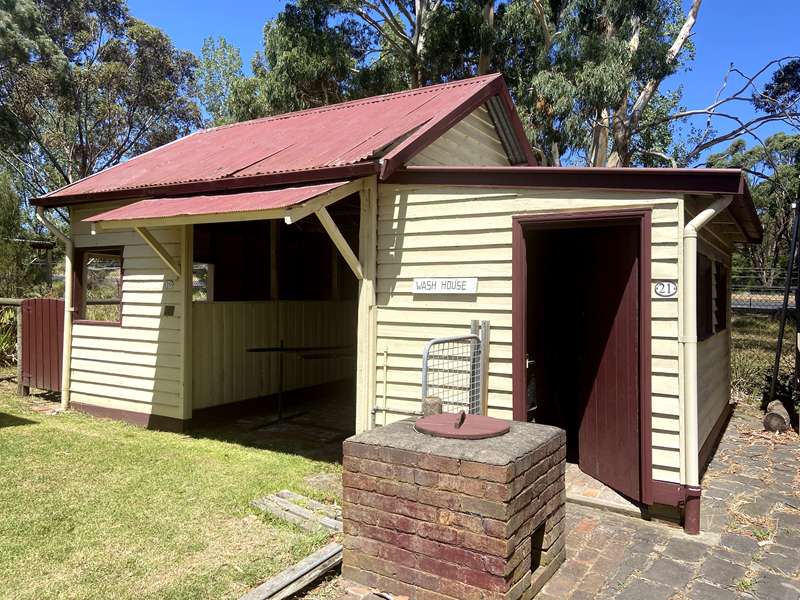
A typical outside laundry up to the mid 20th century. Items on display include a wooden laundry trough, coppers for boiling the clothes, mangles for pressing water out of the clothes and a hand-operated washing machine.
Watch Video of Wash House
22. Coach Builders' Workshop
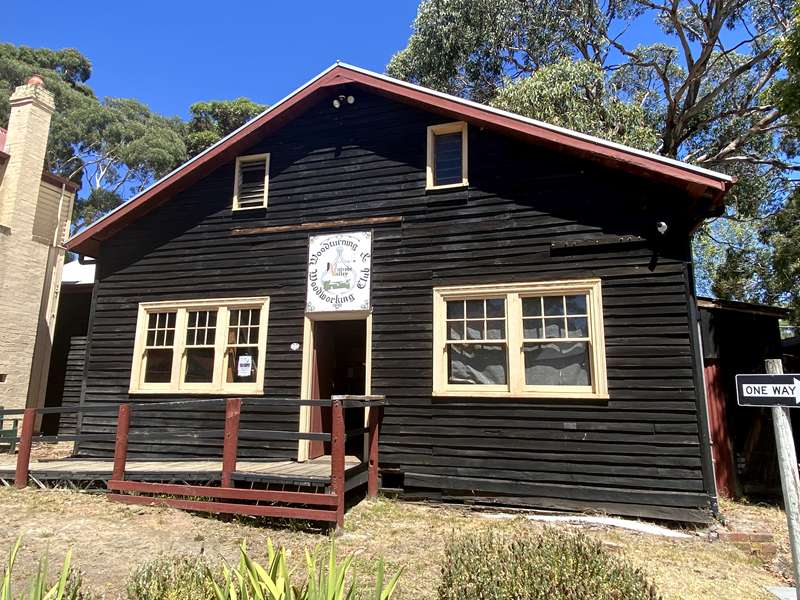
This building was built on site by Old Gippstown, and in our early days was used to restore many of our horse-drawn vehicles. It is now used by the Latrobe Valley Woodturning and Woodworking Club.
23. Motor and Engine Shed
This building was built on site and is currently used for restoration works.
24. "Calagero" Log Cabin
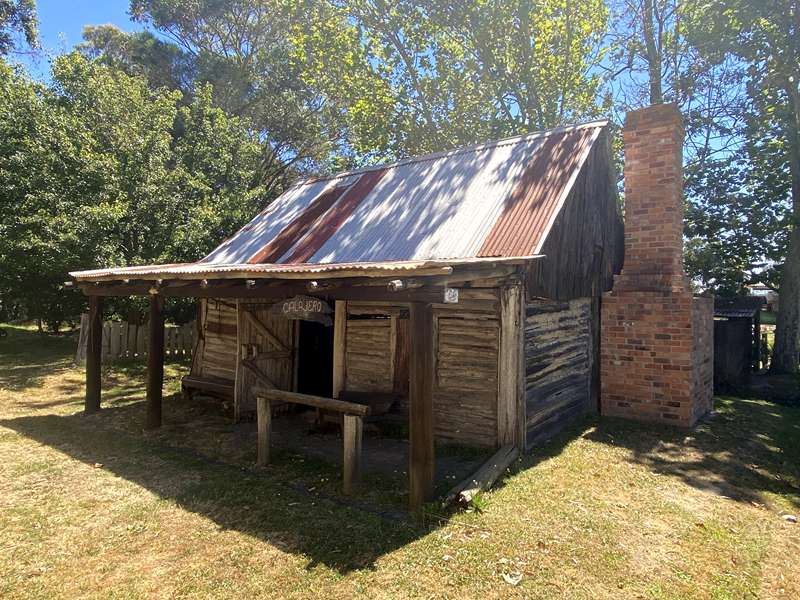
This drop-log cabin, of about 1880, was the second building on the Caughey selection at Iguana Creek, near Lindenow. Further rooms were built on later, as the family grew to eleven. Annie Morgan-Caughey died 1895, aged 49 in childbirth having her twelfth child. She was buried in the small Glenaladale cemetery with her daughter, Alberta, who died aged 21 months in 1890 after eating wax matches.
Watch Video of 'Calagero' Log Cabin
25. "Ashdale" Farm House
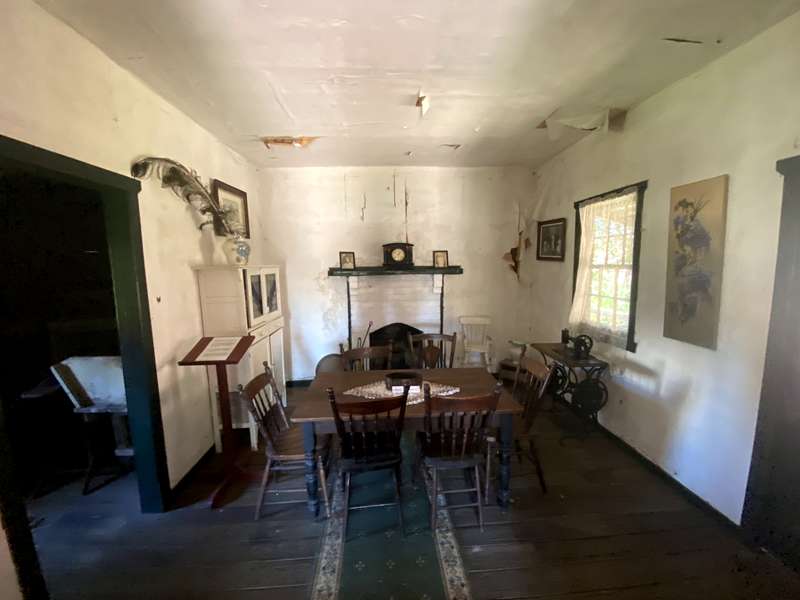
"Ashdale", from Dumbalk North, takes its name from Benjamin Ashenden (1863 - 1938) and Elizabeth Dale (1871-1955). It was built in the early 1890s of hand-split blue gum weatherboards and originally had a root of wooden shingles. The building became part of a larger complex, and likely had an outside laundry and a semi-detached kitchen separate from the house to lessen the potential impact of any fires.
Watch Video of 'Ashdale' Farm House
26. Tynong Mechanics' Institute Hall/Theatre
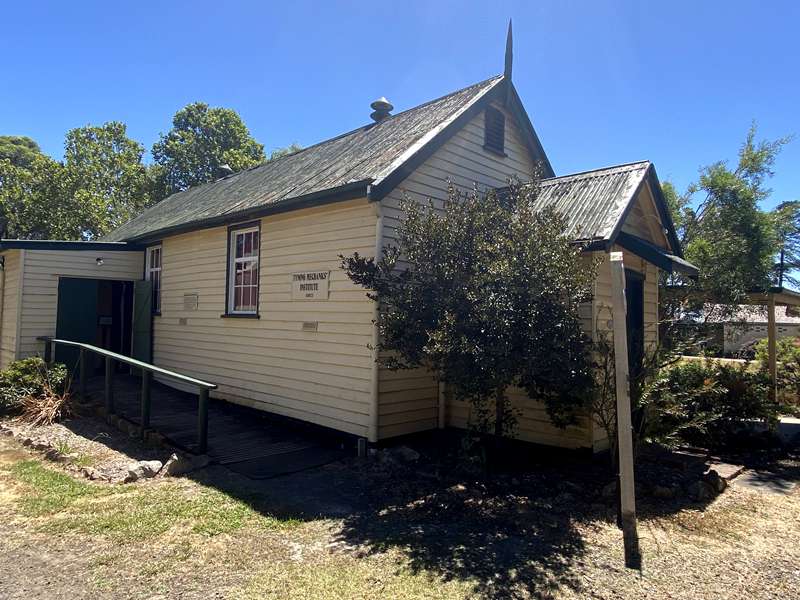
One of the earliest buildings in Tynong, it was used as a polling station in February 1886 and was probably built the previous year. Relocated to a local orchard around 1928 when a new hall was built, and moved to Old Gippstown in 1978 where it was refurbished as a cinema, with an adjoining storeroom and skillion extension. It is now used as a cinema to show films for pre-arranged tours and school groups.
Watch Video of Tynong Mechanics' Institute Hall
26a Camera Display
Our large collection of cameras, darkroom equipment, associated items, and the Yallourn projector can be found in the skillion of the Tynong Mechanics' Institute Hall.
27. Buggy Shed
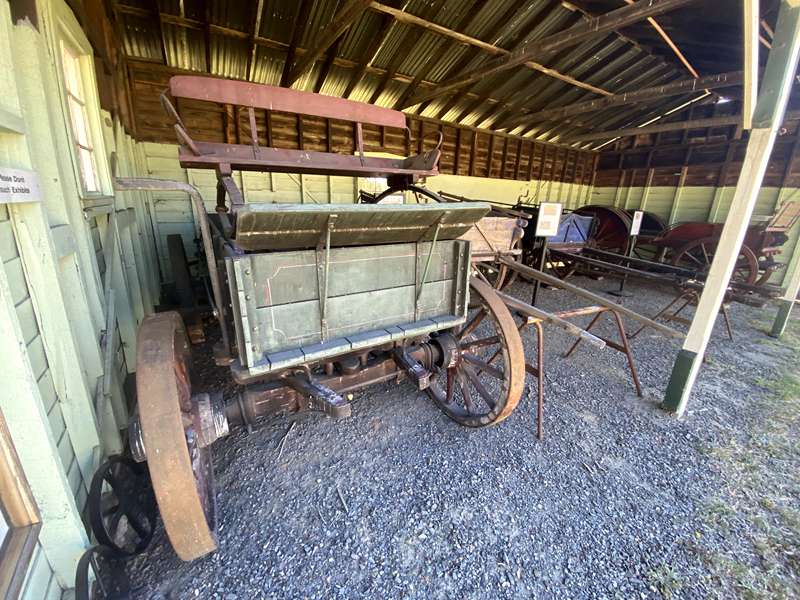
This shed, from 'Nyaalinga' house, Moe, is typical of what would probably have been behind the Narracan Store. Moved here 1977, it houses a Canadian Farm Wagon, 2 tip drays and a four wheeled wagon.
28. Narracan General Store
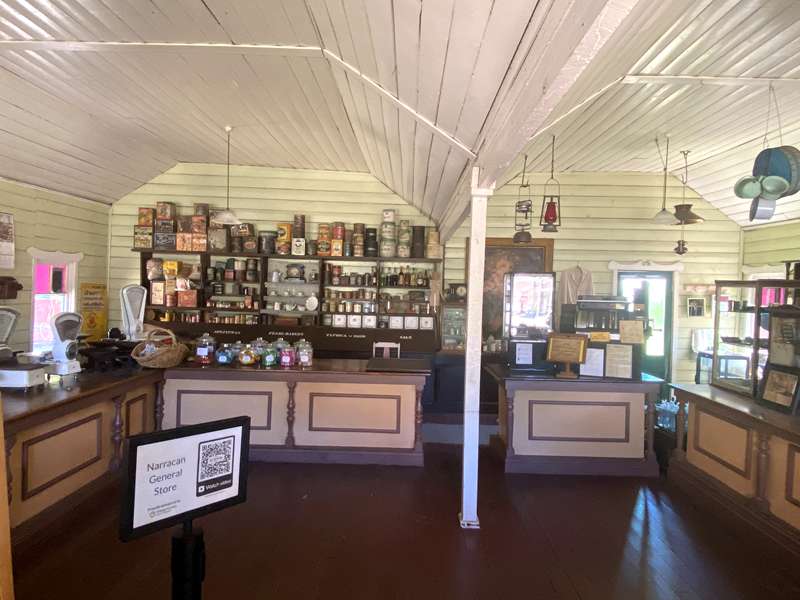
Built in 1889. Most of the trading was done on credit with each purchase recorded in an exercise book. Accounts were settled by the following month. The store was regarded as a social meeting place for the locals. Items sold ranged from groceries, medicines, confectionary, household and farm hardware, tools, crockery, clothes, Manchester, animal feed and more, mainly delivered by rail from Moe.
Watch Video of Narracan General Store
29. Solicitor's Office, Moe
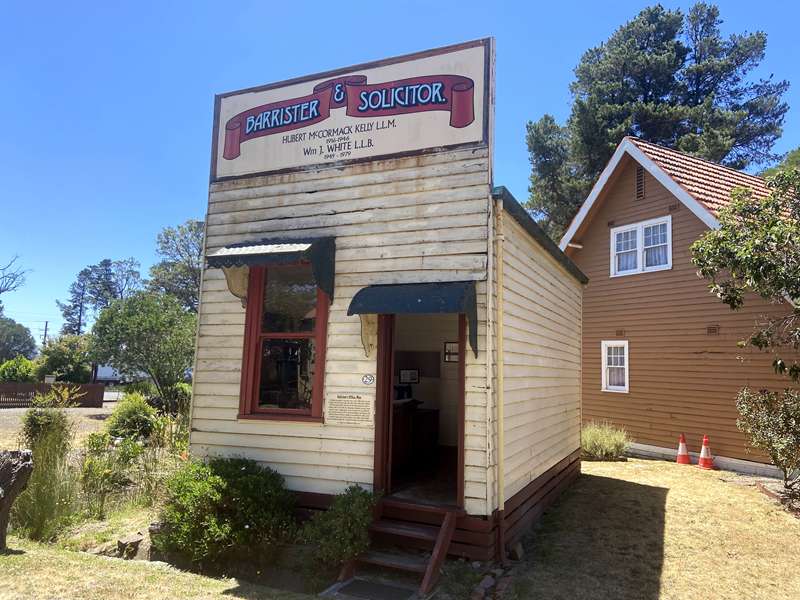
The building was originally in Lloyd Street, Moe as early as 1922, when it was used by solicitor. Hubert McCormack Kelly. After Kelly's death in 1946, solicitor William 1. (Bill) White acquired Kelly's office when the Moe Hotel announced it would be removed to build a new bar. Bill saw its preservation as important, and had it moved around the corner to Langford Street, running his practice from it until 1969 when he was working from home. The back room has a display of antique office machines. In 1973 he donated the building to Old Gippstown. Bill White was famous for his habit of whistling. He was well known for helping youths in trouble and being a good courtroom solicitor. ('Local solicitor defeats Galbally' was the local newspaper headline after a successful win against Frank Galbally in Melbourne).
Watch Video of Solicitor's Office
30. Yallourn House & Dr Andrew's Collection
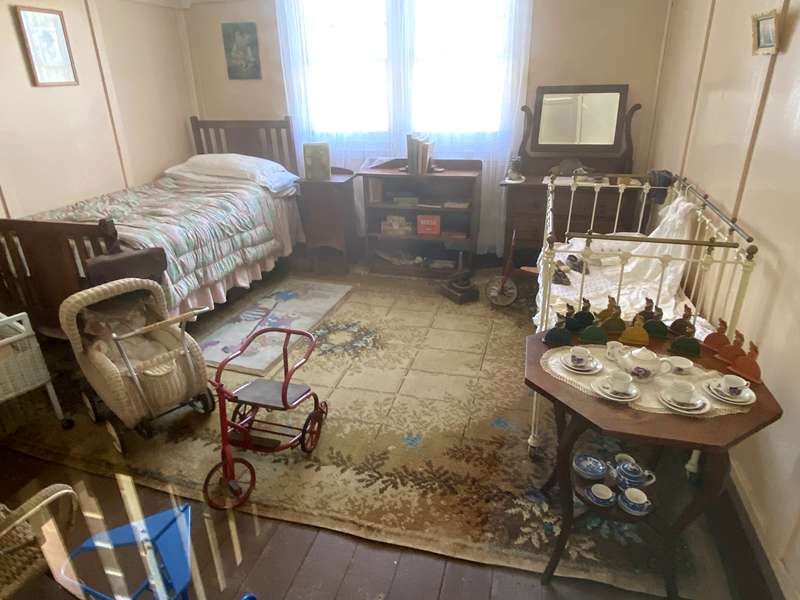
Old Gippstown is very fortunate to have received in 1972-1973 a donation of a comprehensive collection of Dr Andrew's furniture, books, photographs, and artefacts that reflect the life of the 'father' of Yallourn. He was the first resident medical officer at Yallourn and served the community from 1926 until his death in 1972. In 1975 the State Electricity Commission donated this house to display Dr Andrew's collection and paid for its removal to Old Gippstown. This is not the house occupied by Dr Andrew and his family. Built in 1930, it is a Type 62A Attic-style house, usually situated on a corner block, and was originally located at 14 Fernhill Street, Yallourn.
Watch Video of Dr Andrew and Yallourn House
31. Fire Station
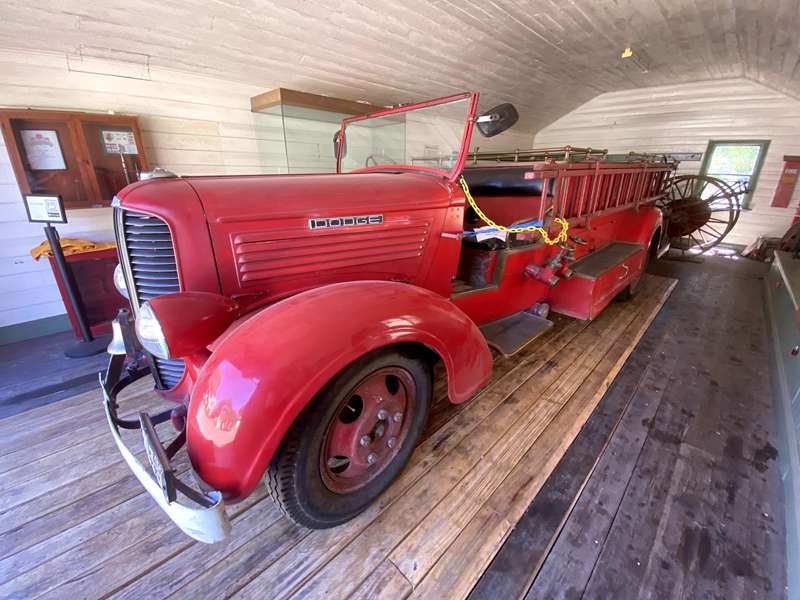
The fire station was originally a tennis pavilion from Moe. The two hose reels date from 1900-1915. The 1938 Dodge fire engine, under the administration of the Country Fire Authority, was in use in the 1944 fire in the Yallourn open cut mine. It was last stationed at the Moe Fire Station, and in use up until it was decommissioned in 1971, but is still in working order. A Furphy Water Cart is on display on the western side.
Watch Video of Fire Station
31a Narracan Mechanics' Institute Library
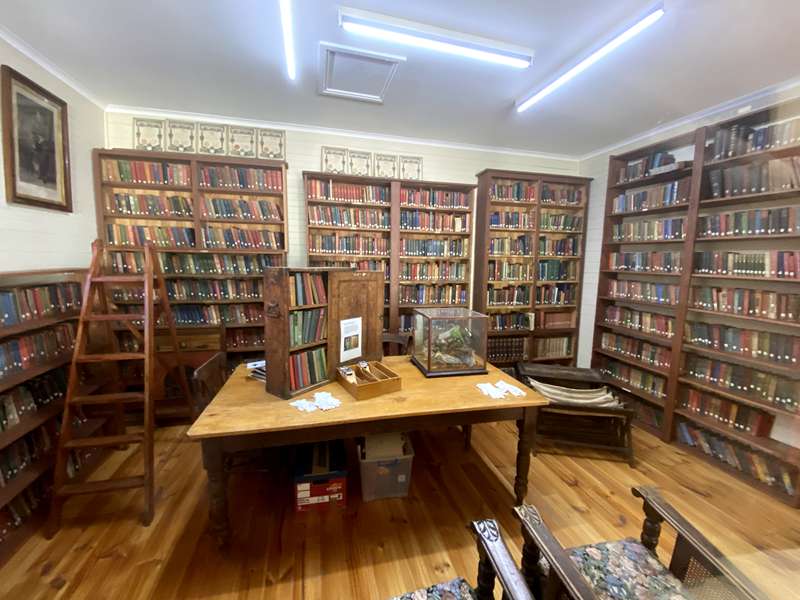
Although removed from their original site in the Narracan Mechanics' Institute hall on site at Old Gippstown, this collection of over 2,300 library books still has some original shelves (all the ones on the back wall including their original labels). The collection was started in the 1880s and has books from the 1840s-1960s. These books can be viewed or accessed on our catalogue database, by appointment. The Melbourne Public Library Travelling Book Box (on the table) is lhe only one of its kind and contains over forty original books.
Watch Video of Narracan Mechanics' Institute Library and Military Display
Military Display
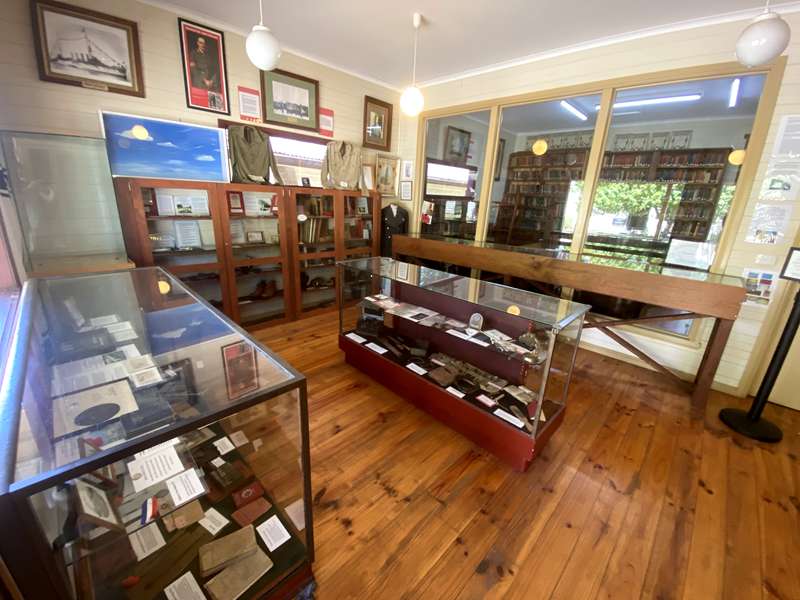
To honour the sacrifices made by so many, this comprehensive display includes a Boer War plaque, WWI honour roll, showcases with WWI and WW1I memorabilia, books, photographs and pictures, military books and uniforms. The original WWI SMS Emden steam whistle, which is of national significance, stands proudly on display. Exhibits include artefacts and stories of Gippsland servicemen and women. A WWI Mark VI Field Ambulance and a WWI General Service Wagon plus a Furphy Water Cart are now on display in our new Horse-Drawn Vehicles Museum (building no. 47).
WWI Mark VI Field Ambulance
This model of ambulance was in use from 1910 until 1946. In World War I these ambulances were used on both active and home service. This period also saw the introduction of motor ambulances, and in the 1939-45 war, the horse drawn Mark VI and the earlier models were used only in home service.
WWI General Service Wagon
The main means of transport in all areas for British and Commonwealth Armies, supplemented by wagons, limbers and pack animals, until they were superseded by motor transport. This G.S Wagon (along with the field ambulance) was loaned to Burrowes Dixon Productions for 12 weeks from September 1984 for the filming of the mini-series 'Anzacs' which was shot in Sunbury.
32. Neerim Post Office
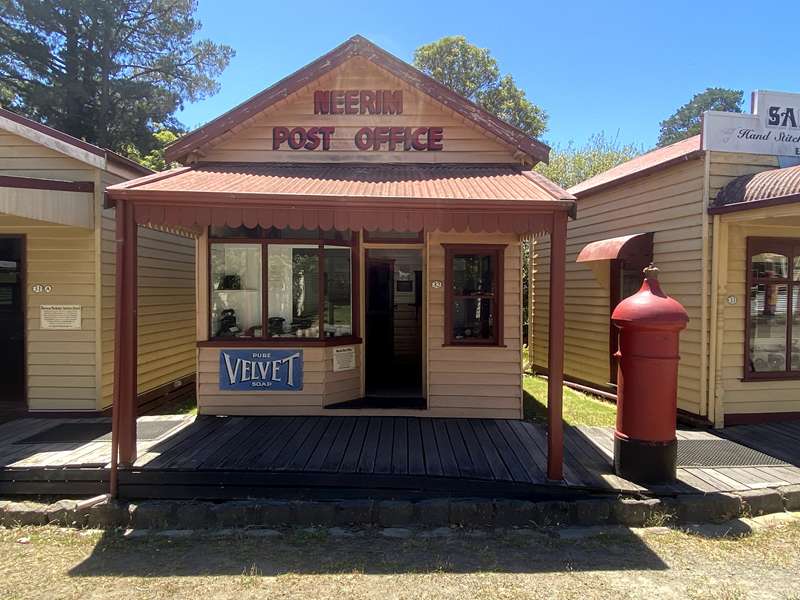
Joseph and Ethel Callow built this shop about 1917-1918 in Neerim. Ethel sold sweets and school/stationery supplies in the front section and the post office operated from the rear of the shop. From 1922 Joe Callow was Registrar of Births, Deaths and Marriages (known for his perfect handwriting) and he also operated from the rear of the premises as a blacksmith. Displays include old radios and telephones, a telephone switchboard and postal equipment.
Watch Video of Post Ofiice
33. Dressmaking Shop
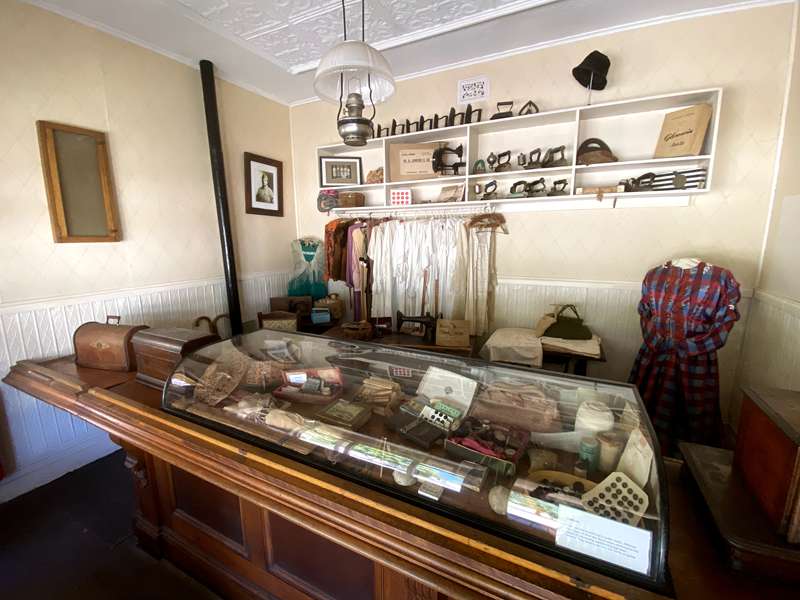
Sarah Carter, a young widow, established her dressmaking shop at Traralgon in 1895. Items on display include her own 1924 Singer sewing machine, as well as the 1871 Wilcox and Gibbs Chain Stitcher sewing machine in the corner. This building came as a shop from Traralgon some time prior to 1972. It was not Sarah Carter's original shop. Dresses, dressmaking equipment and haberdashery items on display.
34. Blacksmith Shop and 34a. Wheelwright Display
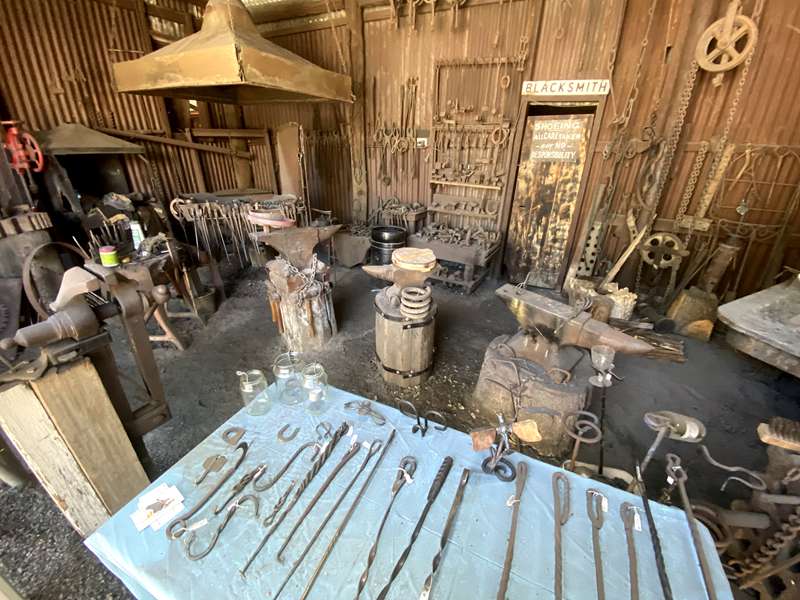
The blacksmith shop was built onsite by Old Gippstown and was created under the supervision of Jim Mayze, a retired blacksmith from Traralgon to replicate his father's workshop. It contains many of his donated original tools and implements, as well as business registers for 1899-1920. Items on display include a large bellows and forge. We also have a resident blacksmith operating the forge and demonstrating his metalworking skills.
Watch Video of Blacksmith
Watch Video of Wheelwright
35. Rhoden's Cobb & Co Inn
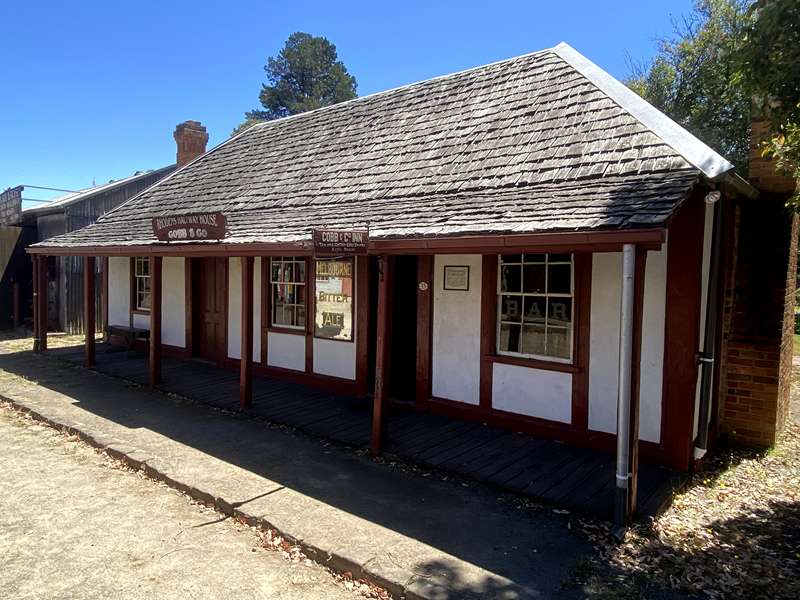
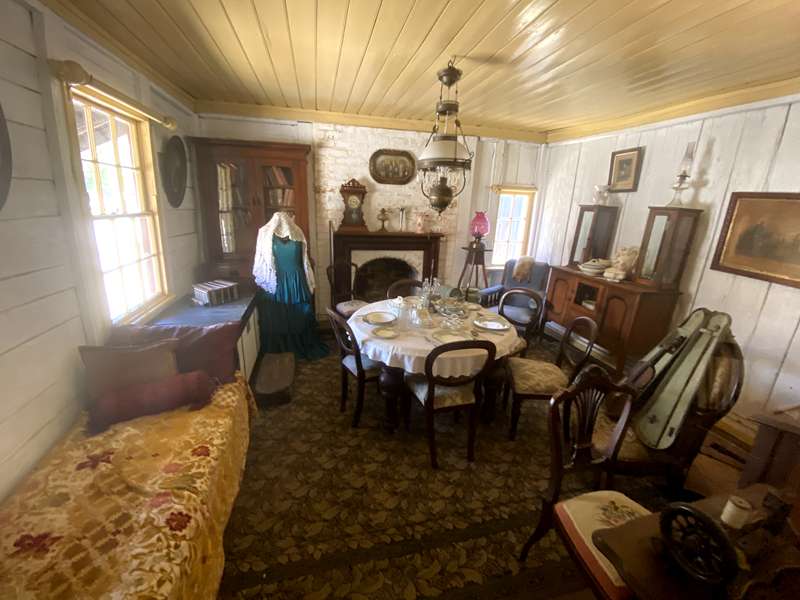
This drop slab and plaster inn was built by David O'Connor near Pakenham in 1863 for Cobb & Co. It served as a refreshment stop and horse change on the coach road from Dandenong to Sale until it was de-licensed in 1899. The original wooden fastenings can be seen under the verandahs and the leather window catches outside. Press the button on the left of the entry for more history. Around the back (mind your head) are two more rooms - a kitchen and bedroom, and an old well. The three gas lights in this section of the street are early lights imported in 1974 from the City of Westminster, London.
36. Rotunda
The Rotunda, built in 1973, is a replica of the Yallourn Bandstand that was demolished when the town was razed to make way for the open cut mine.
37. Water Wheel
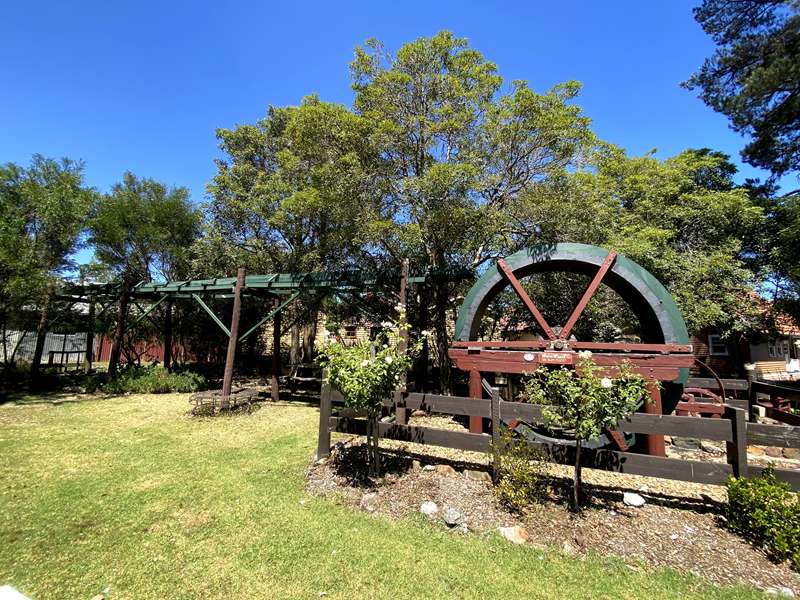
This Water Wheel was originally from Buxton. It was used to generate electricity for a boarding house.
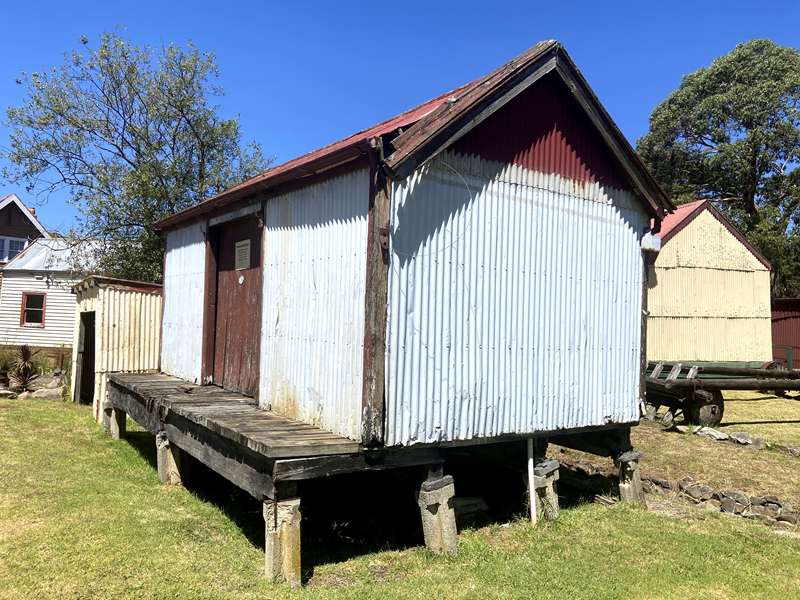
38. Railway Goods Shed - Kilmany
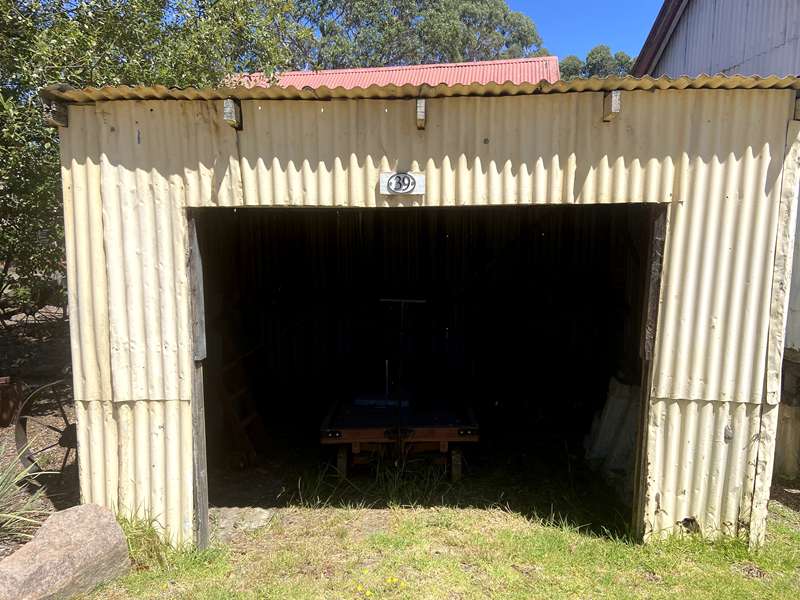
39. Railway Trolley Shed - Kilmany
40. "Ashdale" Shearing Shed
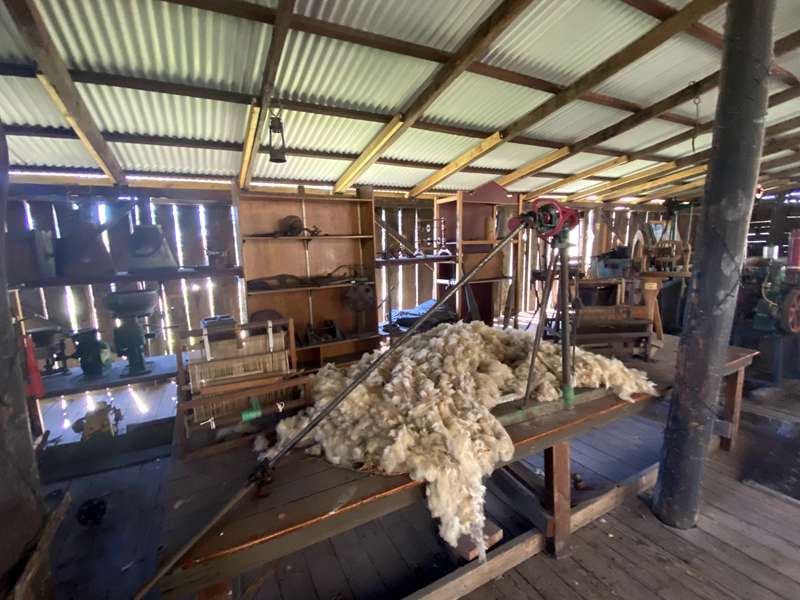
This shearing shed (sometimes called a woolshed) was part of the 'Ashdale' farm complex from Dumbalk North. It now contains a display of farm tools and wool presses, as well as early mechanical shearing equipment.
Watch Video of 'Ashdale' Shearing Shed
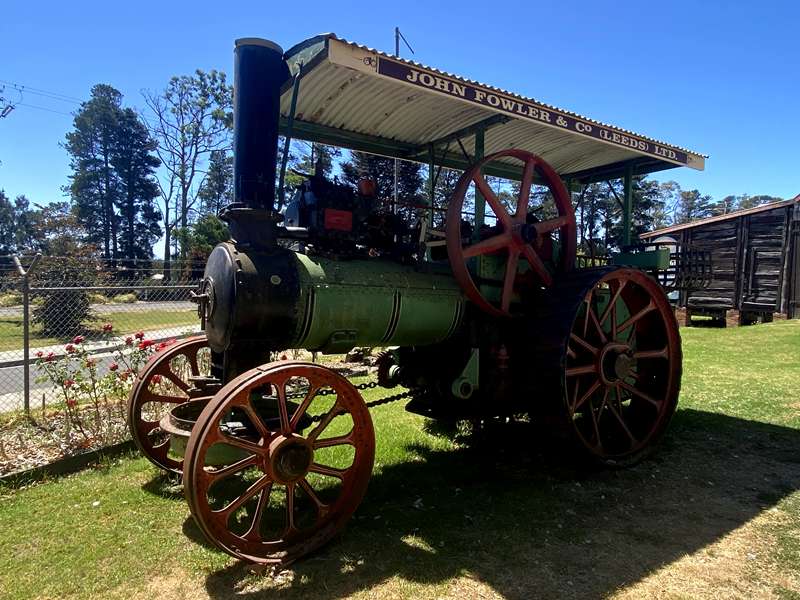
Between the shearing shed and 'Ashdale' farm-house is the Fowler Steam Traction Engine - a 1909 Fowler Traction engine, used around the Bundalaguah/Myrtlebank area with James Hammill's con-tract threshing machine. It was collected from Boisdale in 1970. Old Gippstown has a number of portable engines in its collection, including two Clayton & Shuttleworth engines, now housed at the other end of the Park.
41. Narracan Mechanics' Institute Hall
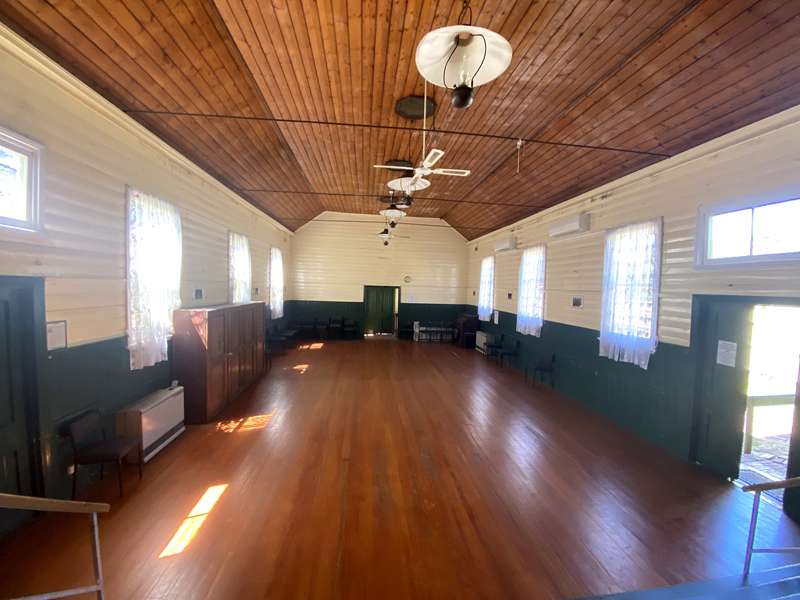
This hall was built in 1905 to replace an earlier hall that was built in 1878. It was also known as the Narracan East M.I. Hall. This hall was used extensively for many years for a wide variety of community functions. It was moved to Old Gippstown in 1978 and is now used by community groups and for private functions. The door to the left of the stage originally housed the Narracan Mechanics' Institute Library.
Watch Video of Narracan Mechanics' Institute Hall
42. Farm Contractors' Shed
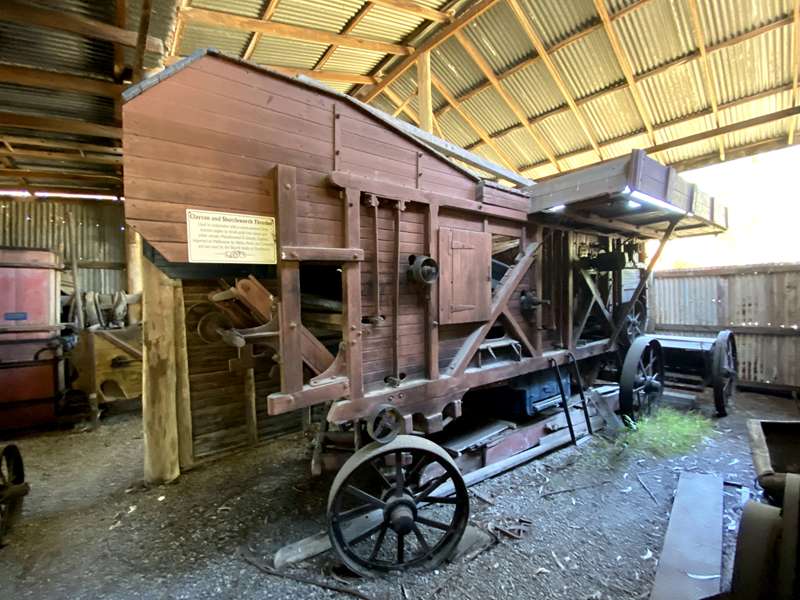
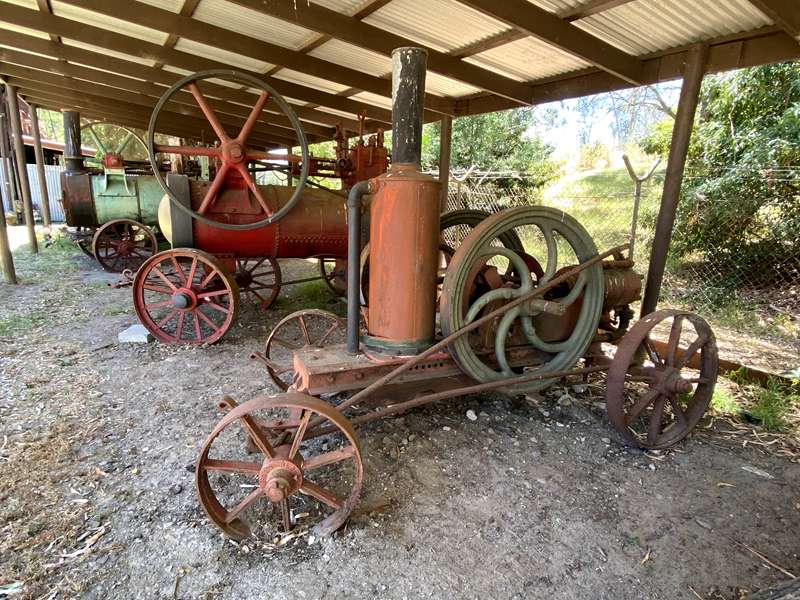
Constructed in 1971 by Old Gippstown from materials on hand, this shed includes a variety of farm equipment, including the massive Clayton and Shuttleworth thresher from Hazelwood and a Sunbeam Harvester.
Watch Video of Farm Contractors' Shed
Next to the shed is the Horseworks - a primary drive unit worked by one or more horses and used to power some of the many mechanical devices on the farm. These included winnowers, threshers, pumps and chaff cutters. Behind the Horseworks is a collection of Stationary Engines.
47. Horse-Drawn Vehicles Museum
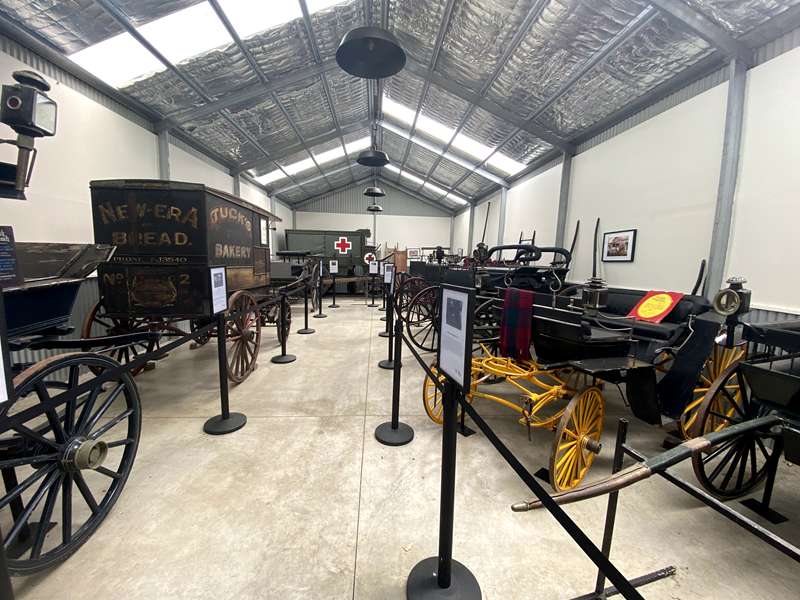
Housing a collection of unique, over a century-old, horse-drawn vehicles in-cluding Station Express Cart, 1880 Pony Phaeton, 1880 American Speed Cart, 1900 Governess Car, 1915 Farmer's Dog-Cart, Coal Box Buggy, 1890 Glass-Fronted Landau Town Coach, Tuck's Baker's Van, 1910 Adelaide Express, WWI 1916 General Service Wagon, WWI 1916 Mark VI Ambulance, and a Furphy Water Cart.
Watch Video of Horse-Drawn Vehicles Museum
Review:
A wonderful place to visit for anyway with an interest in history. It is possible to go inside the buildings which are filled with interesting artefacts. For the kids there is also a playground near the Horse-Drawn Vehicles Museum.
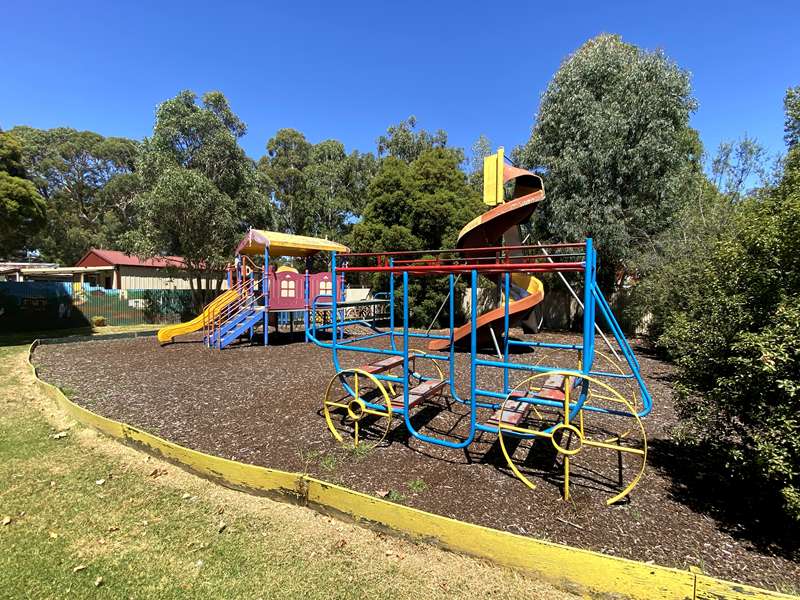
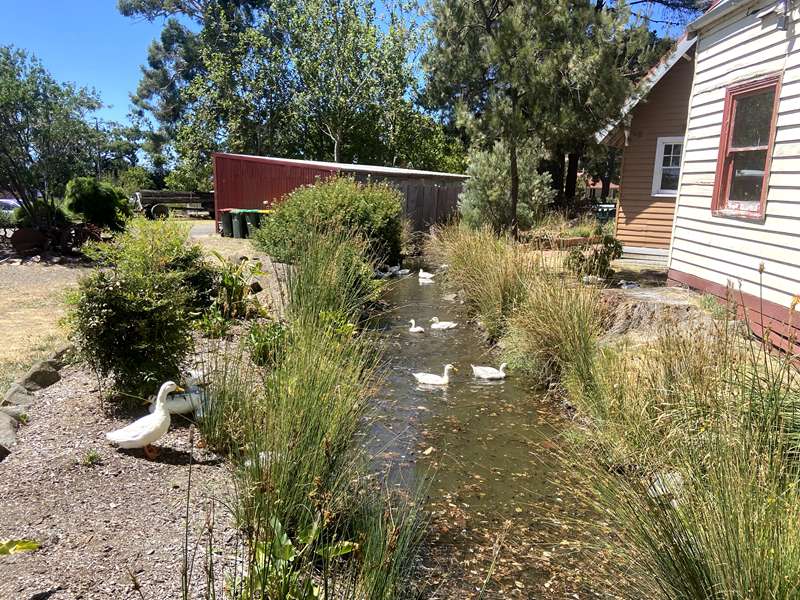
Old Gippstown contains waterways so please be responsible and watch children at all times. It is possible to buy food at the main building to feed the ducks.
Photos:
Location
211 Lloyd Street, Moe 3825 View Map
✆ (03) 5127 3082
Email Enquiry
Web Links
→ www.oldgippstown.com.au
→ Old Gippstown on Facebook
→ www.buildingsofoldgippstown.com.au


