Aboriginal Cultural Experiences and Heritage Sites in Regional Victoria

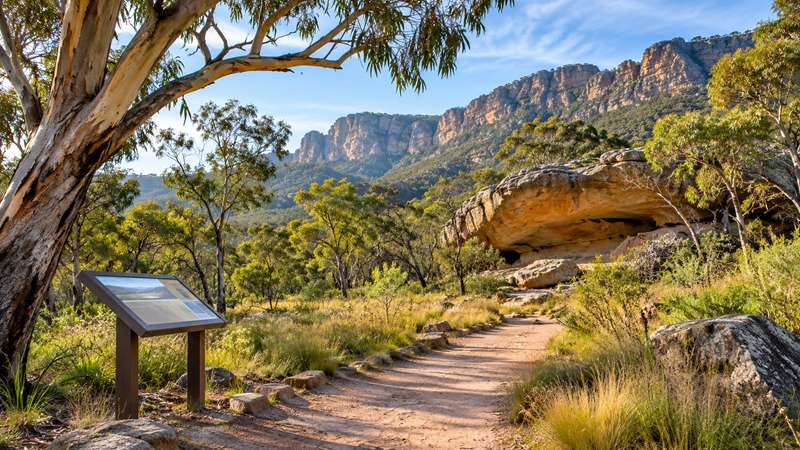
Victoria's regional landscapes hold an extraordinary record of Aboriginal history, knowledge and living culture, stretching back tens of thousands of years.
Families can discover this heritage through Aboriginal-owned cultural centres, guided tours, interactive exhibitions, art galleries, ancient rock art shelters and walks through culturally significant landscapes.
From the remarkable Gunditjmara aquaculture systems of Budj Bim to the rock art of Gariwerd, the Djaara stories of Castlemaine and Gunaikurnai art in Gippsland, these places provide opportunities to learn about the traditions, creativity and continuing connections to Country of Victoria's First Peoples.
Some experiences are led by Traditional Owners, while others are self-guided visits to protected cultural sites. The following guide concentrates on regional Victoria, with links to Melbourne Playgrounds listings wherever available.
For experiences closer to the city, see Aboriginal Cultural Experiences and Heritage Sites in Melbourne.
Grampians, Gariwerd and Western Victoria
The Grampians and surrounding ranges are home to some of Victoria's most important publicly accessible Aboriginal rock art sites. Many places hold deep cultural significance for the Djab Wurrung and Jardwadjali peoples and other Traditional Owners connected to the region.
Brambuk Cultural Centre (Halls Gap)
277 Grampians Road, Halls Gap VIC 3381Brambuk is an important place for learning about the Aboriginal cultural heritage of Gariwerd and the surrounding region.
The distinctive cultural centre building was designed to resemble a cockatoo, and its architecture reflects the communities involved in establishing Brambuk.
The surrounding grounds and cultural landscape provide an opportunity to learn about local plants, wildlife and connections to Country.
Families can combine a visit with nearby bushwalks and the spectacular scenery of Grampians National Park.
Visitor facilities, exhibitions and organised cultural activities have changed over time, so check current arrangements before travelling.
Grampians and Stawell Aboriginal Rock Art Shelters (Grampians and Stawell)
Various locations across Gariwerd and the Black Range near StawellThe Grampians region contains an exceptional collection of Aboriginal rock art sites, with several shelters historically accessible to visitors along marked walking tracks.
The main sites featured in the Melbourne Playgrounds guide are:
- Billimina Shelter: A large rock shelter with extensive red ochre markings associated with Jardwadjali cultural heritage.
- Manja Shelter: An important rock art site in the western Grampians.
- Ngamadjidj Shelter: Known for its distinctive white painted figures.
- Gulgurn Manja Shelter: A culturally significant shelter featuring Aboriginal handprints.
- Bunjil's Shelter: Near Stawell, featuring a rare painted depiction of the ancestral creator Bunjil.
Access conditions can change because of conservation work, cultural management and park closures. Check current Parks Victoria advice before travelling, and never touch the artwork or rock surfaces.
Lar-ne-jeering Aboriginal Rock Art (Buangor)
Langi Ghiran Track, Buangor VIC 3375Lar-ne-jeering is a culturally significant Aboriginal rock art shelter in Langi Ghiran State Park.
The approximately 1.8 km return walk leads through eucalypt woodland and past large granite boulders to the protected rock art site.
The shelter is important to the Djab Wurrung people and provides visitors with an opportunity to appreciate the spiritual significance of the surrounding landscape.
The walking track has uneven surfaces, roots and some uphill sections. Children should be supervised, and visitors must stay outside the protective barrier around the artwork.
Budj Bim and South-West Victoria
The Budj Bim Cultural Landscape is one of the most remarkable Aboriginal heritage areas in Australia. Its ancient volcanic landscape contains an extensive Gunditjmara aquaculture system of channels, weirs and fish traps used to manage and harvest kooyang, or short-finned eels.
The cultural landscape is recognised on the UNESCO World Heritage List and remains part of the living culture of the Gunditjmara people.
Budj Bim National Park (Macarthur)
Mount Eccles Road, Macarthur VIC 3286Budj Bim National Park protects part of an ancient volcanic landscape that has enormous cultural importance to Gunditjmara people.
The park includes Lake Surprise, lava canals, volcanic caves and unusual rock formations created by ancient eruptions.
Families can explore walking tracks, enjoy picnics and discover how volcanic activity shaped the landscape and supported Aboriginal communities over thousands of years.
A guided Gunditjmara cultural experience provides a deeper understanding of the area's history and the relationship between the volcanic landscape and traditional aquaculture systems.
Budj Bim Indigenous Audio Tour (Budj Bim region)
Various locations around Budj Bim, south-west VictoriaStorytowns offers a self-guided Budj Bim Indigenous audio tour as part of its collection of Victorian audio experiences.
This provides an additional way to discover the region's cultural landscape and stories while travelling through the area.
Check the current audio tour coverage and access conditions before visiting individual sites.
Moyjil / Point Ritchie (Warrnambool)
Point Ritchie Road, Warrnambool VIC 3280Moyjil is a culturally significant coastal landscape at the mouth of the Hopkins River.
The area contains ancient shell middens and archaeological evidence associated with Aboriginal occupation of the coast.
Visitors can walk along designated paths to lookouts overlooking the river mouth, rocky shoreline and Southern Ocean.
Interpretive information introduces the heritage of the site and its continuing cultural importance.
Moyjil is protected under an Ongoing Protection Declaration. Visitors must remain on marked paths, respect fencing and avoid disturbing shells, rocks, soil or other cultural material.
Heywood Water Tower Art (Heywood)
29 Hunter Street, Heywood VIC 3304The spectacular Heywood Water Tower mural honours five Gunditjmara servicemen and celebrates Aboriginal culture and connections to Country.
The portraits include the Lovett brothers and Captain Reginald Saunders, the first Aboriginal Australian commissioned as an officer in the Australian Army.
The artwork also incorporates imagery inspired by Budj Bim, traditional eel traps and possum-skin cloaks.
The mural combines an important historical story with a striking example of contemporary public art and makes an interesting stop when exploring Gunditjmara Country.
Central Victoria and Goldfields
Central Victoria has a rich Aboriginal cultural heritage, including the living culture of the Djaara people and important sites connected to Aboriginal history, knowledge and language.
Boorp Boorp Boondyil (Castlemaine)
Castlemaine Historic Market Building, 44 Mostyn Street, Castlemaine VIC 3450Boorp Boorp Boondyil is an interactive exhibition exploring Djaara culture, Country and community.
The exhibition's name means 'passing knowledge on to our children', making it especially appropriate for families.
Visitors can discover Dja Dja Wurrung language, local stories and cultural knowledge through engaging digital installations and artworks.
Highlights include:
- A virtual Welcome to Country experience.
- Interactive Dja Dja Wurrung language activities.
- Immersive sounds of local birds and wildlife.
- Information about bush foods and traditional plant uses.
- Displays about waterways, weaving and connections to Country.
Admission is free.
Langi Ghiran State Park (Warrak)
Langi Ghiran Track, Warrak VIC 3377Langi Ghiran State Park is a spectacular landscape of granite peaks, forests and ancient cultural significance.
The name Lar-ne-jeering is associated with the Djab Wurrung language and refers to the home of the black cockatoo.
The park has several walking tracks, including the route to the Aboriginal rock art shelter.
Families can explore the natural landscape while learning about the cultural importance of the mountain and surrounding Country.
The park is also known for its historic reservoir and walking routes through granite country.
North-East Victoria
North-east Victoria contains significant Aboriginal cultural landscapes, including rock art, traditional food-gathering areas and places associated with the history of local Aboriginal communities.
Yeddonba Aboriginal Cultural Site Walk (Chiltern)
Yeddonba Road, Chiltern VIC 3683Yeddonba Aboriginal Cultural Site is located at the base of Mount Pilot in Chiltern-Mount Pilot National Park.
The approximately 750-metre circuit introduces visitors to Aboriginal cultural heritage through a rock shelter, red ochre artwork, interpretive signs and a traditional bush-tucker area.
One of the paintings has been interpreted as depicting a thylacine, or Tasmanian tiger.
The site is culturally significant and should be approached with care and respect.
The route includes walking tracks and boardwalk sections, making it an interesting family heritage walk. Check park conditions before visiting.
Chiltern-Mount Pilot National Park (Chiltern and Beechworth)
Various entrances around Chiltern and Mount Pilot, north-east VictoriaThis national park protects extensive box-ironbark forest, wildlife habitat and culturally significant places.
The Yeddonba Aboriginal Cultural Site is one of its most important heritage attractions.
Families can combine a visit to Yeddonba with walks, wildlife spotting and a broader exploration of the park's natural environment.
Gippsland and East Gippsland
Gippsland is home to the Gunaikurnai people, whose continuing connections to Country extend across the region's forests, wetlands, lakes, rivers and coast.
Contemporary Aboriginal art galleries and cultural spaces provide opportunities to appreciate this living culture and support local artists.
GLaWAC Aboriginal Art Gallery (Morwell)
235 Princes Drive, Morwell VIC 3840The GLaWAC Aboriginal Art Gallery is located within the Gunaikurnai Land and Waters Aboriginal Corporation's Morwell Office and Community Hub.
The gallery showcases artwork by Aboriginal artists living and working across Gippsland, including contemporary works inspired by Country, cultural knowledge and community life.
Visitors can appreciate a selection of artworks and handcrafted items, with some pieces available for purchase.
The gallery supports Aboriginal artists and businesses while providing an accessible introduction to Gunaikurnai culture.
Admission is free.
Additional Aboriginal-Led Cultural Experiences
Several other regional experiences provide excellent opportunities to learn directly from Traditional Owners. These do not all have independently verified dedicated Melbourne Playgrounds listings, so the links below lead to the operators' current information.
Tae Rak Aquaculture Centre and Café (Breakaway Creek)
Vaughans Road, Breakaway Creek VIC 3303Situated beside Tae Rak (Lake Condah), the Aquaculture Centre provides an excellent introduction to the Gunditjmara cultural landscape.
Visitors can discover the significance of kooyang, or short-finned eels, explore cultural displays and enjoy food incorporating native ingredients at the café.
The centre has a live eel display tank, retail space and information about Gunditjmara cultural tours.
Entry to the centre is free, but guided tours have a separate charge.
To see the ancient fish traps and remains of stone houses, visitors must book a guided cultural tour. These significant sites cannot be explored independently from the centre.
See Tae Rak Aquaculture Centre visitor information.
Budj Bim Cultural Landscape Tours (South-West Victoria)
Tae Rak Aquaculture Centre, Vaughans Road, Breakaway Creek VIC 3303Gunditjmara-guided cultural tours explore the remarkable Budj Bim Cultural Landscape.
Depending on the tour, visitors may discover ancient fish traps, stone house remains, wetlands, volcanic features and traditional food-production practices.
Tours offer an opportunity to hear directly from Gunditjmara guides about the importance of the landscape and its living cultural traditions.
Shorter walks and longer tours are available, with advance bookings recommended.
See Budj Bim cultural tours and visitor information.
Winda-Mara Budj Bim Tours (Tyrendarra)
Tyrendarra Indigenous Protected Area, Taylors Road, Tyrendarra VIC 3285Winda-Mara Aboriginal Corporation offers guided visits to the Tyrendarra Indigenous Protected Area.
The tours explore the remarkable Gunditjmara aquaculture landscape and explain the cultural importance of the ancient eel-farming systems.
The operator advertises two-hour tours on selected days.
See Winda-Mara Budj Bim Tours for current departures and bookings.
Tips for Visiting Aboriginal Cultural Sites with Children
Aboriginal cultural experiences offer children an opportunity to discover the remarkable history, knowledge and continuing traditions of Victoria's First Peoples.
A little preparation will help make these visits more rewarding:
- Choose Aboriginal-led tours when available, particularly at sites with deep cultural significance.
- Explain to children that Aboriginal cultures are living cultures, not simply part of Australia's distant past.
- Stay on marked tracks and respect signs, barriers and restricted areas.
- Never touch rock art, engravings or protected cultural objects.
- Do not remove stones, shells, artefacts or other material from heritage sites.
- Check opening hours, tour dates and age suitability before travelling.
- Carry water, suitable footwear and sun protection when exploring outdoor sites.
- Respect requests not to photograph particular places, objects or cultural activities.
- Support Aboriginal-owned businesses, artists and cultural organisations wherever possible.
Exploring these places offers families a valuable opportunity to learn about the extraordinary depth and diversity of Aboriginal culture, appreciate ancient knowledge and discover the continuing relationships between people, culture and Country across regional Victoria.


