Don Valley - Haining Farm Conservation Park


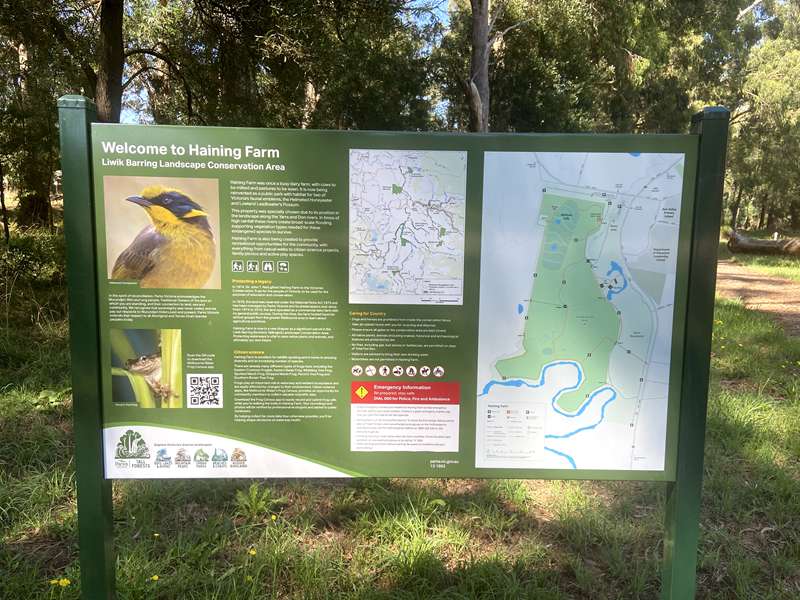
Haining Farm was once a busy dairy farm, with cows to be milked and pastures to be sown. It is now being reinvented as a public park with habitat for two of Victoria's faunal emblems, the Helmeted Honeyeater and Lowland Leadbeater's Possum.
This property, almost 60 hectares, was specially chosen due to its position in the landscape along the Yarra and Don rivers. In times of high rainfall these rivers create broad-scale flooding, supporting vegetation types needed for these endangered species to survive.
Haining Farm is also being created to provide recreational opportunities for the community, with everything from casual walks to citizen science projects, family picnics and active play spaces.
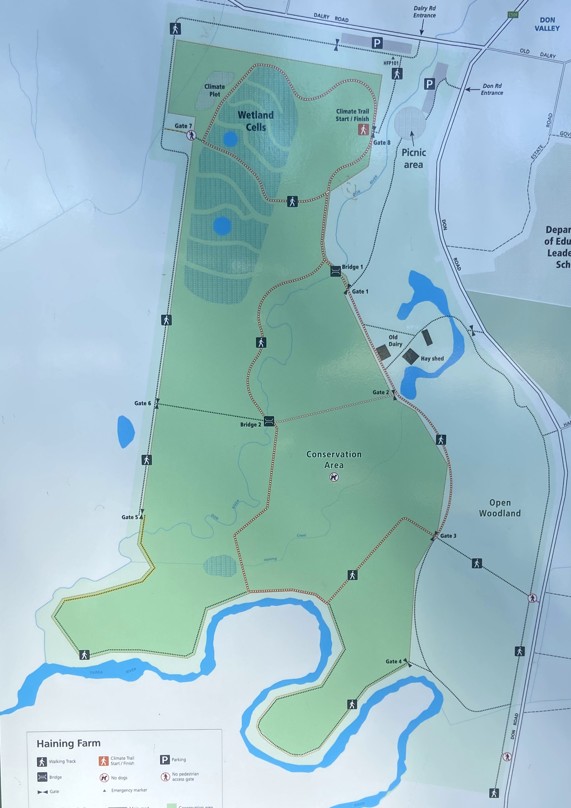
Haining Farm Conservation Park Map
Haining Farm is excellent for wildlife-spotting. Already the park has an amazing diversity and abundance of wildlife including Wedge-tailed Eagles, many types of frogs and an array of reptiles. Precious populations of Lowland Leadbeater?s Possum and Helmeted Honeyeater, both faunal emblems of Victoria, will be gradually introduced into Haining Farm over the next decade.
Haining Farm also boasts both young and mature stands of eucalypts, which are particularly magnificent along the park?s two rivers. These are special habitats for the possums and honeyeaters who will make their homes here.
Walking tracks wind throughout the site with lovely glimpses of both the Don and Yarra Rivers. Open grass areas are perfect for picnics and children can witness nature in action as this former dairy farm transforms into precious habitat.
Access for Dogs:
Dogs are not permitted.
Regulations:
There is no camping, fires prohibited, no littering and no shooting.
Information Signage:
Restoring the flow
Lowland Leadbeater's Possum and Helmeted Honeyeaters both inhabit swampy eucalypt forests with thick shrub mid-storeys and a dense sedge understory that require very specific water regimes to survive.
The plants within this ecosystem are very sensitive - too much or too lithe water can be detrimental to their life cycle and adversely impact their survival. As a result of a changed water regime due to land clearing and past land practices, these natural floodplain landscapes have greatly diminished throughout Victoria.
Haining Farm provides the perfect opportunity to recreate swampy eucalypt forests as it includes two rivers, the Yarra and Don, which deliver the water regime this ecosystem requires. Additionally, a 10Ha artificial wetland has been created to maximise the future habitat for the Leadbeater's Possum and Helmeted Honeyeater.
Helmeted Honeyeater
Don't be fooled by their name; even though the honeyeaters' favourite foods may be sweet treats such as nectar, honeydew and sap, they also feed on insects and spiders as a healthy source of protein.
Helmeted Honeyeaters are selective and only live in swampy forests, along rivers and streams, where they build cup-shaped nests in dense shrub thickets underneath the canopy of eucalyptus trees.
This species was once found in locations locations from Healesville to South Gippsland but have declined so significantly that they are now confined to a single location; Yellingbo Nature Conservation Area, roughly 12km south west from Haining Farm.
Thanks to a recovery program supported by strong partnerships with Parks Victoria, Zoos Victoria, government agencies, universities and community groups, the population has tripled since 2013, when monitoring indicated there were less than 60 birds left in the wild.
Leadbeaters Possum
Once thought to be extinct, the Leadbeater's Possum was rediscovered in 1961.
Weighing an average of 100 - 165 grams, these agile forest fairies speed through the treetops during the night, feeding on saps, gum, honeydew and insects.
Leadbeater's Possums find shelter in old hollow bearing trees and use long ribbons of bark to build nests. They require dense shrub thickets to navigate the forest and avoid predators such as owls.
Endemic to Victoria, there are two genetically distinct groups, the highlands population that live in the tall Mountain Ash Forest in the Central Highlands, and the lowland population that is supported by Lowland Swamp Forest.
Although both populations are listed as critically endangered, the lowland population of Leadbeater's Possum consisted of less than 40 individuals in 2019, which is why Haining Farm is so important for the species' survival.
Review:
There are two carparks near the corner of Don Road and Dairy Road. One carpark is along Dairy Road and the other carpark is along Don Road.
A huge conservation area is being fenced with a number of entrance gates. There are paths from the carparks to entrance gates. Beside the path from the Don Road carpark is a shelter with two tables and some unshaded tables. The area is not very well sign-posted apart from at the carparks.
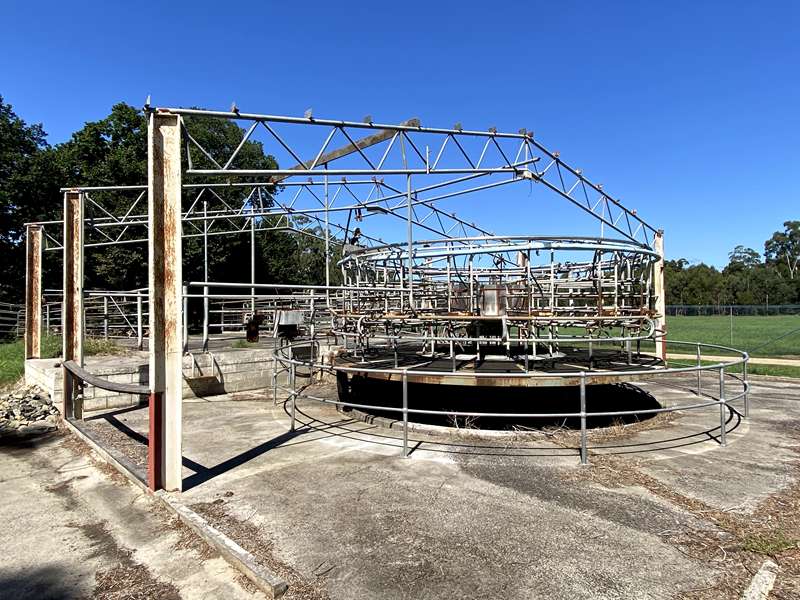
An interesting area is the milking area from the former dairy which has a rusty milking machine and some ponds with a few waterbirds.
Generally we found the park more suited to Leadbeater's Possums than humans but that is OK by us.
Photos:
Location
2 Old Dalry Road, Don Valley 3139 View Map
Web Links
→ www.parks.vic.gov.au/places-to-see/parks/haining-farm


