The Best Locations for Stargazing in East Gippsland

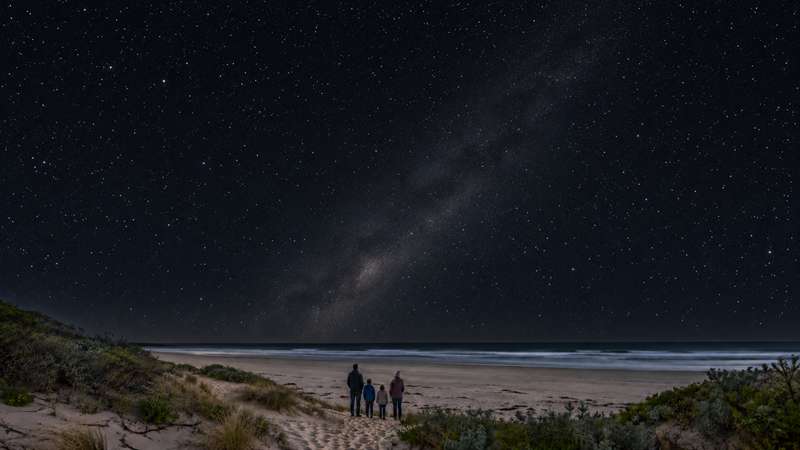
East Gippsland is one of Victoria's best regions for stargazing, with remote beaches, peaceful river valleys, alpine landscapes and vast areas with very little artificial lighting.
On a clear night, visitors can enjoy spectacular views of the stars, planets and Milky Way. Some coastal locations also offer opportunities to see the Aurora Australis, or Southern Lights, when conditions are favourable.
Stargazing is a wonderful activity for families, particularly when combined with a camping holiday or an overnight stay in one of East Gippsland's country towns.
There are excellent locations stretching from Bruthen and Buchan to the remote coastline around Mallacoota and Point Hicks.
Best Stargazing Locations in East Gippsland
Tambo River and Rail Trail (Bruthen)
Near Bruthen Caravan Park and the Tambo River bridge, BruthenBruthen is an appealing location for families wanting to experience stargazing without travelling far from a country town.
The recommended viewing area is near the Tambo River and Bruthen Caravan Park, where the surrounding countryside provides darker skies than the town centre.
A short walk from the upper end of town, across the bridge, leads towards the river and East Gippsland Rail Trail.
The open skies above the river valley provide opportunities to observe stars and the Milky Way on clear nights.
Bruthen is particularly convenient for families camping locally, although visitors should remain on accessible paths and avoid unlit sections of the riverbank.
Buchan Caves Reserve (Buchan)
Caves Road, BuchanBuchan combines beautiful mountain scenery, limestone caves and peaceful surroundings with excellent opportunities for stargazing.
The relatively small township and surrounding countryside have limited artificial lighting, making the area suitable for viewing the night sky.
Two recommended locations are:
- Fairy Cave Entrance: Buchan Caves Reserve, Caves Road
- The Bluff Reserve: Lousadas Road, Buchan
Visitors staying in the Buchan Caves Reserve campground can also enjoy stargazing from suitable open areas within the campground.
The combination of daytime cave tours and nighttime stargazing makes Buchan an excellent destination for an overnight family visit.
Cann River Riverfront (Cann River)
Near Cann River Rainforest Caravan Park, Cann RiverCann River is a small town at the junction of the Princes and Monaro Highways, surrounded by extensive forest and relatively remote countryside.
The recommended stargazing location is along the Cann River, beyond the bridge near Cann River Rainforest Caravan Park.
The river frontage has lower levels of artificial lighting than the main commercial area, providing better conditions for observing the stars.
Families staying locally can enjoy a short evening outing to appreciate the night sky.
Choose a safe, publicly accessible viewing position away from the water's edge, particularly when visiting with younger children.
Cape Conran Coastal Park (Cape Conran)
East Cape Road, Cape ConranCape Conran Coastal Park offers some of East Gippsland's most impressive coastal stargazing opportunities.
With extensive ocean beaches, coastal heathlands and very little artificial lighting, the park has exceptionally dark skies on clear nights.
The wide coastal horizons make it particularly appealing for observing stars and the Milky Way.
Visitors staying at one of the park's campgrounds can combine a day of swimming, beachcombing and exploring with an evening under the stars.
For families, the safest approach is to choose an established, accessible open area rather than attempting to explore remote beaches, rocky headlands or coastal walking tracks after dark.
Red Bluff Viewing Platform (Lake Tyers Beach)
Red Bluff Road, Lake Tyers BeachLake Tyers Beach is an excellent coastal location for stargazing, with wide ocean views and relatively low levels of artificial lighting.
The recommended viewing location is Red Bluff Viewing Platform, which provides an elevated outlook towards the coast.
On clear nights, visitors can enjoy views of the stars and Milky Way above the ocean.
Lake Tyers is also known as a location where the Aurora Australis has been observed when atmospheric and geomagnetic conditions are favourable.
The Southern Lights are unpredictable, however, and should be regarded as a possible bonus rather than something visitors can expect to see.
Families should remain in designated viewing areas and take particular care around cliffs, beach access paths and uneven ground after dark.
Betka Beach and Betka River Estuary (Mallacoota)
Betka Road, MallacootaMallacoota is one of the standout destinations for stargazing in East Gippsland.
Its remote position near the New South Wales border, extensive coastline and relatively low levels of artificial lighting provide excellent opportunities for viewing the night sky.
The recommended location is Betka Beach and the Betka River Estuary, within Mallacoota Coastal Reserve.
Situated away from the main township, Betka Beach offers expansive views of the sky above the ocean and surrounding coastal landscape.
On a clear, moonless night, the Milky Way can be particularly impressive.
Families can explore the area during daylight hours before returning in the evening to a familiar, safely accessible viewing location.
For more information about the coastal area, see the Mallacoota Coastal Walk.
Snowy River Estuary (Marlo)
Marlo-Conran Road and Marlo foreshore, MarloMarlo is a peaceful coastal village where the Snowy River reaches the ocean.
Its estuary, beaches and relatively undeveloped surroundings create excellent conditions for viewing the stars.
Recommended stargazing areas include the Marlo foreshore and suitable viewing points along Marlo-Conran Road, looking east across Frenches Narrows.
The Snowy River Estuary Walk provides scenic river and coastal views during daylight hours.
Families can enjoy a daytime walk and return to an accessible foreshore viewing point after sunset.
There is no need to complete the longer estuary walk after dark. A safe viewing area close to parking is a more practical option for families.
Nowa Nowa Gorge Lookout (Nowa Nowa)
Bruthen-Nowa Nowa Road, Nowa NowaNowa Nowa is a small village surrounded by forest, waterways and scenic bushland.
The recommended stargazing destination is Nowa Nowa Gorge Lookout, in the Boggy Creek Gorge area.
The walking route begins near the Nowa Nowa Community Complex and continues towards the gorge and reserve.
Away from the main township lighting, the surrounding area offers good opportunities to observe the stars.
However, reaching the lookout involves a substantial walk, which requires additional preparation after dark.
Families should inspect the route during daylight hours and consider whether the distance, uneven ground and lack of lighting are suitable for their children.
A torch, suitable walking shoes and warm clothing are essential. Families with younger children may prefer an accessible open location closer to the village.
Livingstone Park (Omeo)
Creek Street, OmeoOmeo offers a very different stargazing experience from East Gippsland's coastal destinations.
Located in the Victorian High Country, the town is surrounded by hills and mountain landscapes, with dark skies and opportunities for impressive views of the Milky Way.
Livingstone Park, accessed from Creek Street, is one of the recommended locations.
The park provides open areas where visitors can look towards the night sky without travelling far from the town centre.
Another suggested viewing location is the area around the football oval on the hill near the Hilltop Hotel.
Omeo can become extremely cold after sunset, particularly during winter, so warm clothing is essential.
Families visiting during the day can also explore the Omeo Town Walks, including the Livingstone Park walking circuit.
Forest Park and Newmerella (Orbost)
Nicholson Street, Orbost / Princes Highway, NewmerellaOrbost and nearby Newmerella provide convenient stargazing opportunities close to the Snowy River.
Forest Park, on the edge of Orbost, is one suggested location for viewing the night sky.
The park has open recreational areas and is close to the Snowy River, although some locations may be affected by lighting from the township.
For darker conditions, the Newmerella area west of Orbost is another recommended option.
Stargazing Gippsland identifies the Newmerella Rest Area on the Princes Highway and also refers to Newmerella Recreation Reserve as a location with lower levels of artificial lighting.
Visitors should confirm their intended stopping place and choose a safe, publicly accessible area away from vehicle movements.
For information about Forest Park and the surrounding riverfront, see the Orbost Snowy River Walk.
Point Hicks and Croajingolong National Park (Point Hicks)
Point Hicks Road, Croajingolong National ParkPoint Hicks is one of the most remote stargazing destinations in East Gippsland.
Situated within Croajingolong National Park, the surrounding wilderness has exceptionally low levels of artificial lighting.
The combination of coastal scenery, open ocean horizons and dark skies creates excellent conditions for viewing stars and the Milky Way.
Point Hicks is also recognised as a possible location for viewing the Aurora Australis during suitable geomagnetic conditions.
This is best suited to families already camping in the area or experienced visitors who are comfortable travelling in remote locations.
Access is via a long section of unsealed road, and the surrounding environment has limited services.
Important access information: Access to the Point Hicks Lighthouse precinct via Thurra River Campground has been restored, but the lighthouse itself remains closed to visitors. Lighthouse tours and accommodation are unavailable.
Check Parks Victoria's current Point Hicks access information before travelling.
Avoid attempting unfamiliar coastal walks or driving remote roads after dark solely to reach a stargazing location.
Tips for Stargazing with Children
A little preparation can make stargazing a much more enjoyable experience for the whole family.
- Choose a clear night: Cloud cover can obscure even the brightest stars.
- Check the moon: A new moon or a night with little moonlight generally provides darker skies and better views of faint stars and the Milky Way.
- Allow your eyes to adjust: Spend approximately 20 to 30 minutes away from bright lights to improve your night vision.
- Bring a torch: A torch with a red-light setting is useful because it helps preserve night vision.
- Wear warm clothing: Even summer evenings can become cool, particularly near the coast or in the High Country.
- Bring a picnic rug or reclining chairs: Looking upwards is much more comfortable when seated or lying down.
- Use a stargazing app: Mobile astronomy apps can help children identify constellations, planets and bright stars.
- Stay in safe areas: Avoid unlit cliff edges, waterways, rocky beaches and unfamiliar bush tracks.
- Respect wildlife: Keep noise and artificial lighting to a minimum.
- Check access conditions: National parks and remote roads may be affected by closures, flooding, fire danger or other hazards.
What Can You See in the Night Sky?
Depending on the season, weather and viewing conditions, visitors may be able to observe:
- Milky Way: A spectacular band of stars and dark dust clouds stretching across the sky.
- Southern Cross: One of the most recognisable constellations in the southern sky.
- Planets: Bright planets such as Venus, Jupiter, Mars and Saturn, depending on their positions.
- Satellites: Moving points of light travelling steadily across the sky.
- Meteors: Occasional shooting stars, with greater activity during some meteor showers.
- Aurora Australis: Coloured displays near the southern horizon during suitable geomagnetic activity.
When Is the Best Time to Go Stargazing?
The best conditions are generally on clear nights with little or no moonlight.
A moonless night makes it easier to see faint stars and the Milky Way, although the appearance and position of the Milky Way change throughout the year.
Winter often provides longer nights, while warmer months can be more comfortable for families with younger children.
Plan to arrive before sunset where possible so that you can identify safe paths, parking areas and suitable viewing positions in daylight.
For families visiting East Gippsland, even 20 to 30 minutes of stargazing can be a memorable holiday experience.
Web Links
→ stargazinggippsland.au/locations


