Apollo Bay - Maits Rest Rainforest Walk and Glow Worms


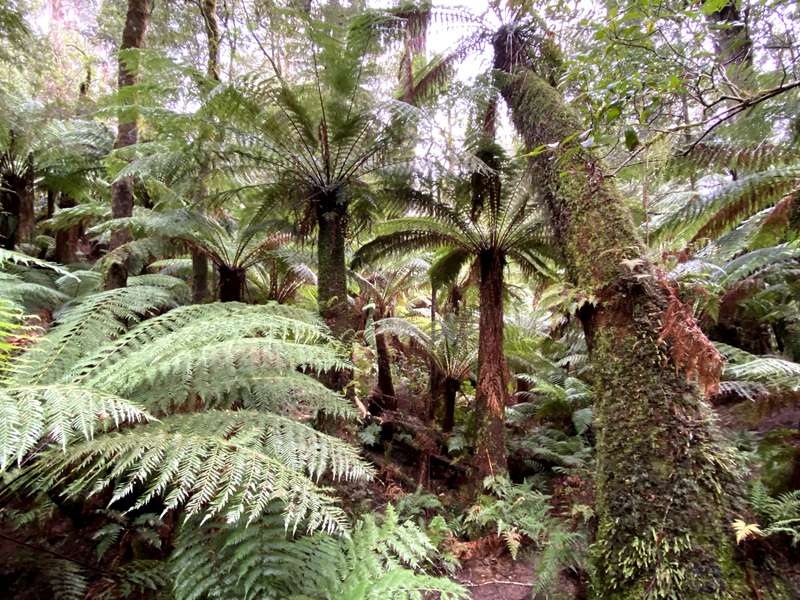
Take the self-guided rainforest boardwalk at Maits Rest in the Otways and see beautiful fern gardens and giant rainforest trees up to 300 years old. Maits Rest is an easy walk located 17km to the west of Apollo Bay on The Great Ocean Road.
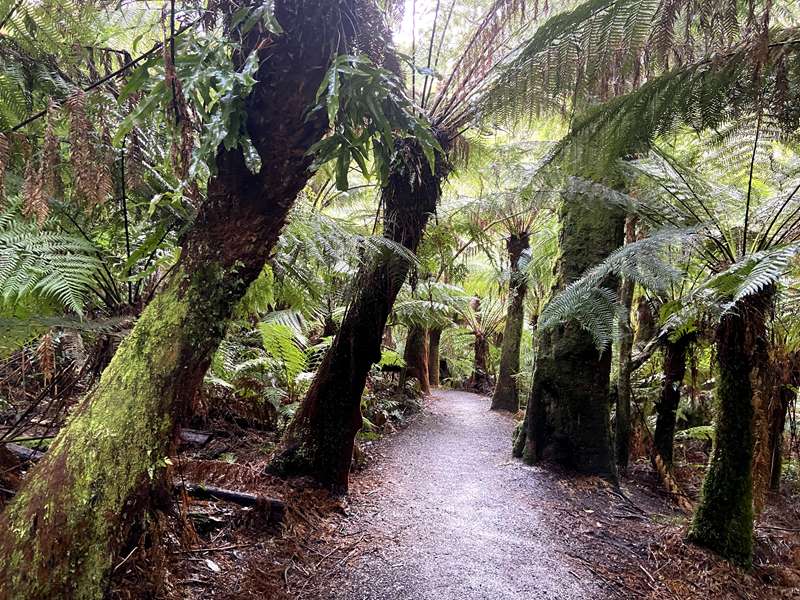
A wooden boardwalk has been built over the tree-fern gullies and moss-covered roots of ancient rainforest trees, protecting the delicate ecosystem while providing visitors with unique views of the forest. Maits Rest is one of the few remaining pockets of un-logged Cool Temperate Rainforests that once grew throughout the Otways.
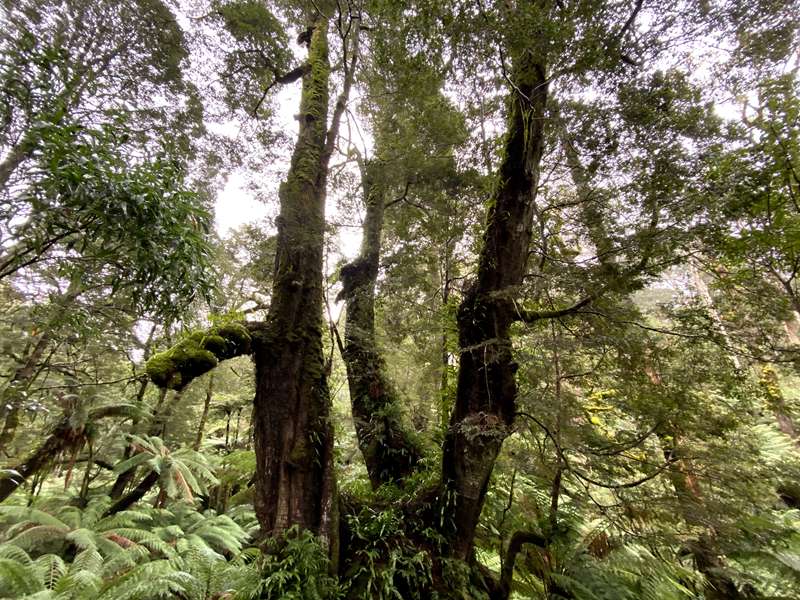
The walk is named after Maitland Bryant one of the regions first foresters. The walk takes you through spectacular temporate rain forest. One of the biggest items of interest is the 300 year old Myrtle Beech tree, actually 2 or 3 trees combined. The tree is National Trust registered.
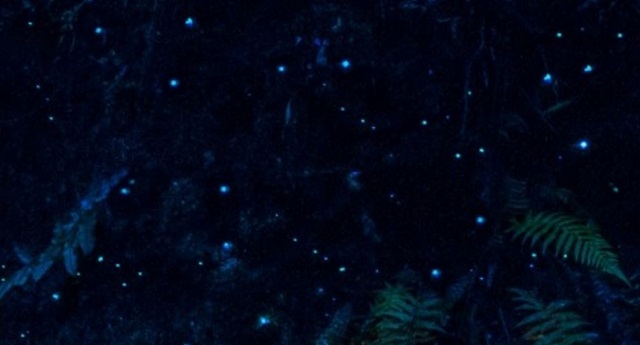
At night look out for the glow worms along the soil banks beside the track.
Glow worms are actually bioluminescent i.e. glowing in the dark, maggots of a mosquito like fly. But whatever they really are, there's no denying that a walk through Glow Worm territory at night can be a magical sight.
Glow worms like wet and warm environments and the most likely time of the year to find them is during the warmer months of the year, between December to March but it is possible to see them most of the year although the display may be less impressive at these times.
Length: 800 metres
Walk: 30 minutes return
Track: Good
Grade: Gentle
Start: Maits Rest car park
Finish: Maits Rest car park
Access for Dogs:
Maits Rest is located within the Great Otway National Park and dogs are not permitted.
Getting There:
From Apollo Bay, follow the Great Ocean Road for 17 km and look out for the brown and white tourist signs. Mait's Rest will be on the left.
There are no picnic or toilet facilities. The closest are at Apollo Bay or the Aire River Camping area.
Review:
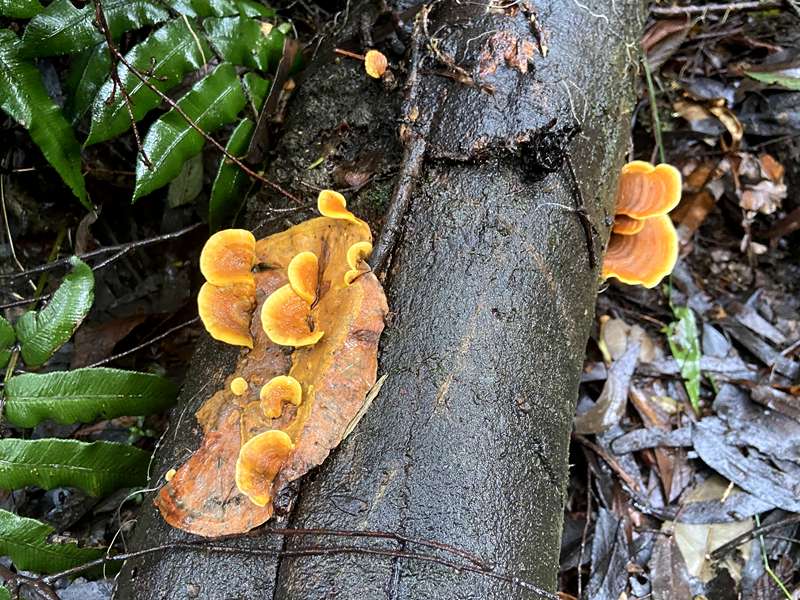
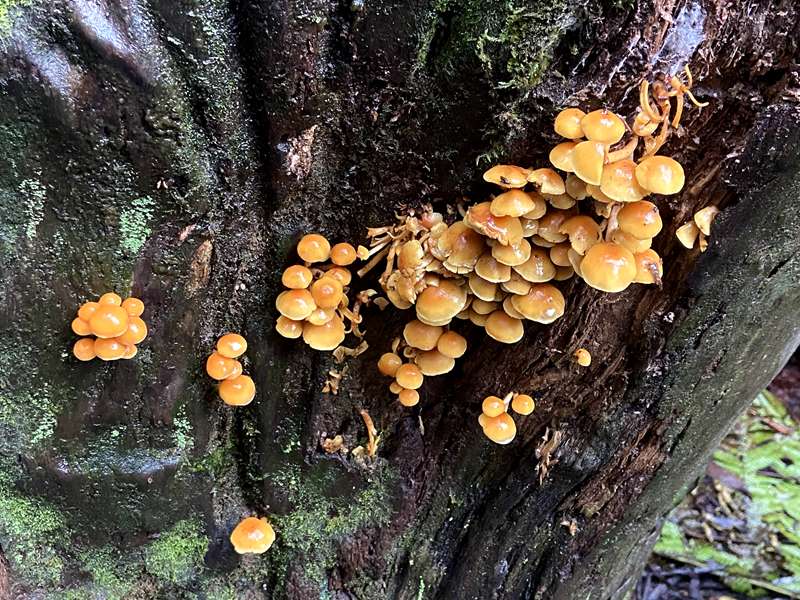
A truly wonderful place to immerse yourself in. The environment is dominated by tree ferns, Myrtle Beech and Mountain Ash and is covered in mosses and lichen with some beautiful fungi to be found on logs and trees. The track is a little muddy but easily negotiated.
Places to See Glow Worms in the Otways
There are four places to see glow worms in the Otways. They are:
- Lake Elizabeth (near Forrest, 89km from Geelong)
- Kennett River (108km from Geelong)
- Melba Gully (near Lavers Hill, 135km from Geelong)
- Maits Rest (near Apollo Bay, 138km from Geelong)
Glow Worm Facts
Glow-Worms are not worms but rather the larvae of fly like insects called fungus gnats.
Tips on how to help protect Glow-Worms. As glow-worms prey on small insects, it is best not to wear insect repellent and to refrain from smoking or lighting fires in the 'Glow-Worm's' environment.
Larvae produce threads of sticky silk, their glow attracts prey which are then ensnared by the sticky threads.
The light "goes out" if disturbed in any way, For example: torch light or noise will turn out the light for up to 15 minutes.
Life Cycle. The adult Fungus Gnat lays up to eighty eggs, which hatch after 2-3 weeks. The larvae (Glow-Worms) grow over a period for up to nine months, they pupate for nine days after which the adult stage is reached. Only about 1.5 cm long in length, nocturnal, sluggish and harmless, the adult Fungus Gnat lives for only a short period (48 to 72 hours). When in flight they make a buzzing noise.
The adult fly has an uncontrollable light, with the female being brighter than the male until fertilised.
Where does the light come from? The end of the abdomen is luminous. The light is actually emitted from tiny tubes (malpighian tubules) which open into the gut of the larvae and are visible through transparent skin at the end of its body.
Glow-Worms are very shy! Please look, but don't touch. Glow-Worms are sensitive to disturbance and will 'switch off' their lights and retreat into a crack if they or their snares are touched.
Tips on how to help protect Glow-Worms. Glow-worms are nocturnal and rely on sunlight to set their daily rhythm. Shining torches on the insects signals them to 'switch off' their bioluminescence. To get the most out of a Glow-Worm display, make sure your torchlight is directed towards the ground.
Glow-Worms are found in dark damp places, often on soil banks with overhanging ledges.
Tips on how to help protect Glow-Worms. As well as residing in caves and under rocky overhangs, Glow-Worms can also be found along creek embankments and beside walking tracks. For this reason it is important to remain on designated walking tracks to prevent stepping on them.
Many thousands may live in large colonies, giving a spectacular effect.
Information Panels on Site
Dinosaurs in the Otways
A fossilised claw of a carnivorous (meat-eating) dinosaur Australovenator meaning "southern hunter" that lived in the area 110 million years ago was found at Cape Otway by researchers and volunteers from Museums Victoria in 2014.
Volcanic rocks and sediments from this period contain the remains of plants, dinosaurs and early mammals. Australovenator and Leaellynasaura remains washed into the floodplains and became fossilised.
Time Lords on Myrtle Beech
Moss bugs (Peloridiidae), are small, rarely seen and belong to an ancient group of insects originating about 153 million years ago in Myrtle Beech forests.
These tiny, 2 to 4 mm long, but very special Otway creatures live in moss on Myrtle Beech and provide evidence for the formation of the ancient super-continent called Gondwana.
So, how does a flightless, minute bug and a rainforest tree currently occur on continents on both sides of, and on islands across the Pacific Ocean?
The answer is simple – they were once all together on the same land mass called Gondwana.
Gondwana proceeded to break up about 100 million years ago when the continents including India, Australia, South Africa and South America were formed.
1850s - the working forest
The 1850s was a time of rapid growth for Victoria.
The discovery of gold kick-started rapid immigration to Australia and the demand for land to grow food and supply timber for building and energy boomed.
Apollo Bay's first saw mill opened in 1852 as a thriving native hardwood industry grew. Within 100 years of the discovery of gold nearly all existing giant native Mountain Ash trees had been logged in the Otway Ranges.
A forest in transition
Native hardwood forest trees were being logged faster than they could grow even though most of the earlier native forest giants were felled manually by hand-held axe and cross-cut saw.
Some giant trees were left by loggers as regal tributes for future generations to enjoy a century later.
Many of the walks and visitor areas in the park are named after or use historic sites (e.g.. timber tramway cuttings) from the early logging days.
Today the forests of the Great Otway National Park provide millions of people with places to escape and connect with nature in the great outdoors.
World's tallest flowering plants
Growing from a tiny seed the size of a grain of sand, Mountain Ash (Eucalyptus regnans) can grow to become the tallest flowering plants in the world.
The tallest recorded Australian Mountain Ash is named Centurion. Possibly 400 years old Centurion stands 110 m tall and has similar sized cousins here in the Great Otway National Park.
Meat eating land snails live here
While on the walk be carefully where you tread! The endangered Otway Black Snail (Victaphanta compacta) lives here. It is the only carnivorous land snail endemic to the Otway Ranges.
This snail is quite striking with its thin, black, glossy shell measuring up to 25 millimetres in diameter.
They are carnivorous and are amongst the largest species of carnivorous snails found in southern Australia. Their diet includes other snails, slugs, earthworms and insect larvae.
The Otway Ranges are home to a number of native species, which play an important role in the ecology of our forests and bushland.
The nature of this place
This pocket of Cool Temperate Rainforest protects ancient (Gondwana) Myrtle Beech.
Tall Mountain Ash, Blackwood and other massive gumtrees shelter ground ferns, tree ferns, mosses and lichens and a myriad of insects and fungi in the rich, moist humus below.
Thanks to the early foresight of locals Maits Rest became one of the first areas to be protected in the Otway Ranges prior to the declaration of Cape Otway National Park and more recently the Great Otway National Park (2010).
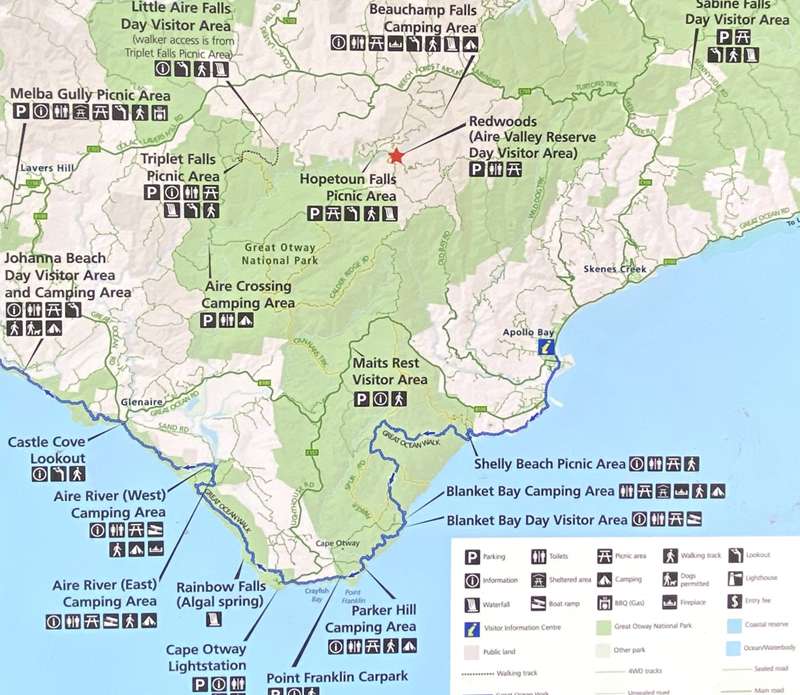
Otway Attractions Map
Photos:
Location
Great Ocean Road, Apollo Bay 3233 View Map


