Winchelsea Heritage Walk


An intriguing insight into the town's rich history and its people. The trail commences at the Winchelsea Visitor Centre and includes features such as the Globe Theatre, Barwon Mansion, the Barwon River and heritage listed triple arched bluestone bridge to name a few historic sites.
Winchelsea is an attractive rural town by the banks of the picturesque Barwon River, steeped in the rich history of Victoria's Western District including Barwon Park Mansion and eight other national trust listed properties in the area.
The Barwon River is framed by historic churches and a series of reserves, picnic and BBQ areas as it flows through the centre of Winchelsea. A heritage trail takes in the town's older buildings and points of interest.
Name Origins
Winchelsea was originally called Austin's Ford and then, "The Barwon". Despite its inland location, the town was eventually named after the old English port of Winchelsea on the southeast coast of England. The first Europeans to reside in the area were squatters who established grazing runs here in 1837. The town developed around the Barwon Hotel and a general store, both of which were established in 1842 on the coaching route between Geelong and Warrnambool.
Winchelsea Heritage Walk Map
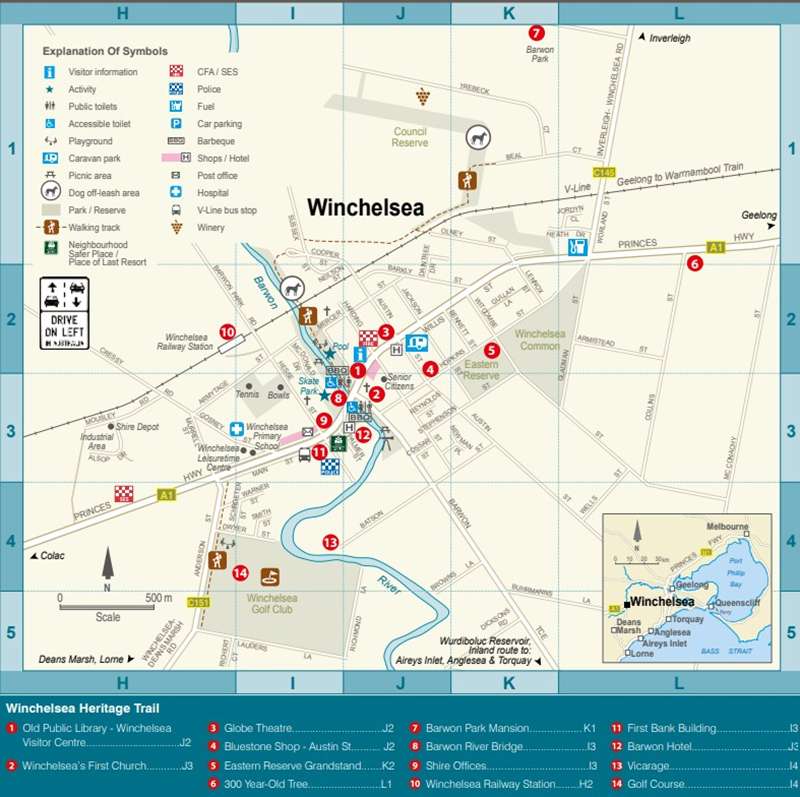
Heritage Locations
1. Old Public Library - Winchelsea Visitor Centre (J2)
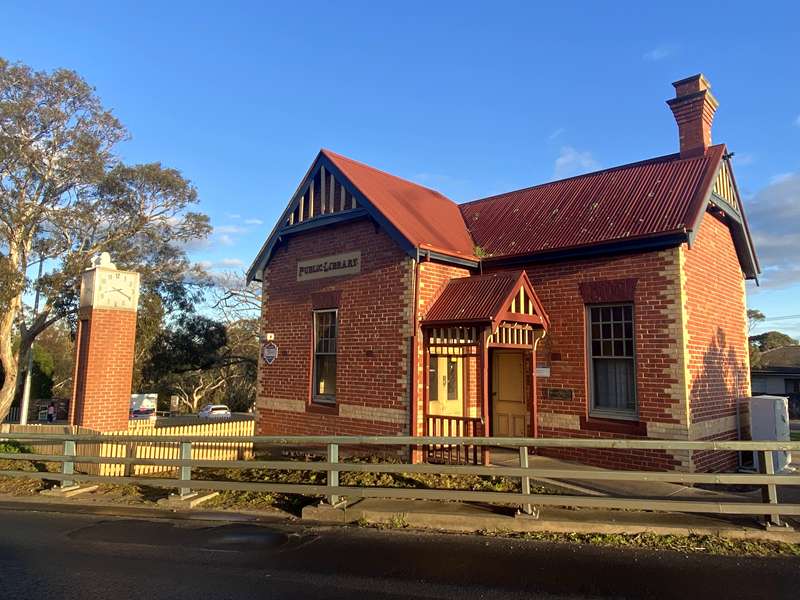
Originally built as Winchelsea's public library, this attractive historic building now serves as the Winchelsea Visitor Information Centre. It provides information on the town's history, attractions and the heritage walk, while preserving one of Winchelsea's important civic buildings.
2. Winchelsea's First Church (J3)
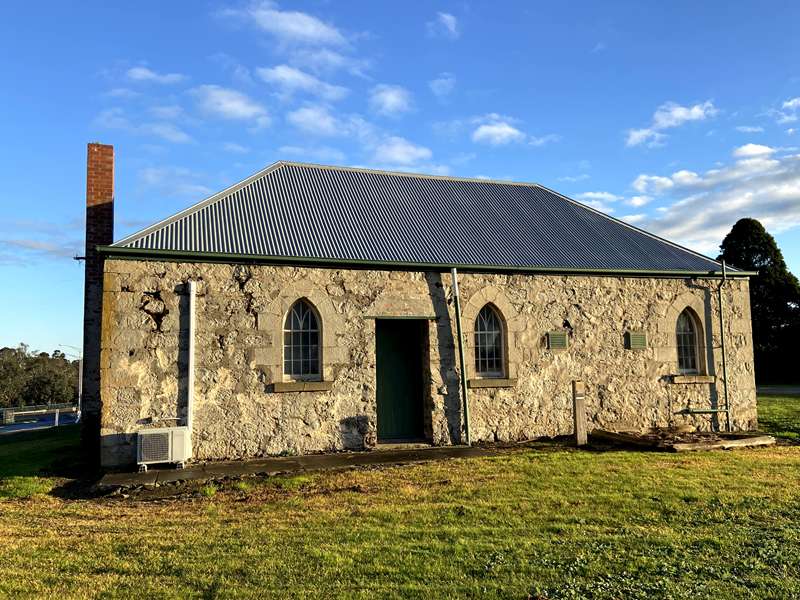
School during the week, sermons on Sunday - In 1846, Thomas Austin, Prosper Trebeck and Charles Beal helped finance the first Winchelsea church, now part of the hall. It was also the first school. Beside the chimney, a stone protrudes from the wall. Here ladies mounted their horses side saddle.
3. Globe Theatre (J2)
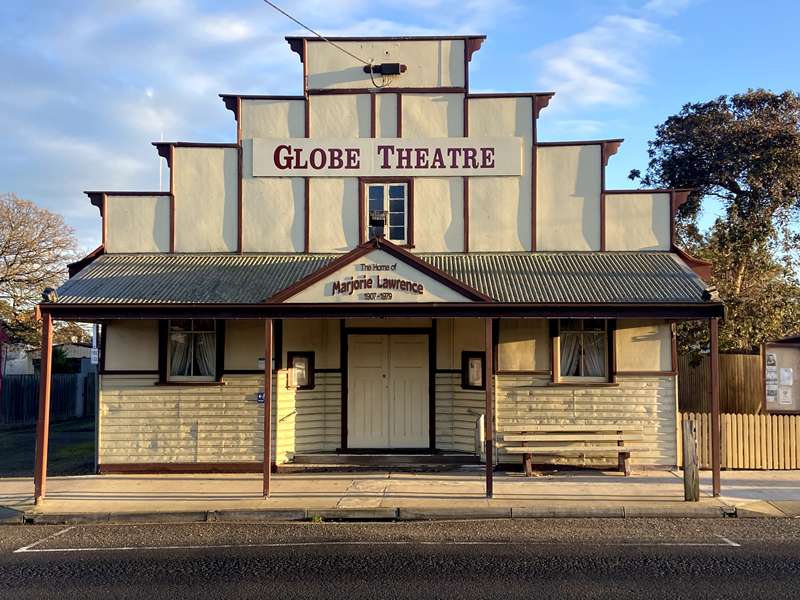
This building is called the Globe Theatre and was built as a theatre and concert hall for Marjorie Lawrence and her siblings in 1926-27 by her father and members of the Winchelsea and Deans Marsh Community. Marjorie Lawrence was an internationally famous soprano Opera singer.
Some interesting facts about Marjorie Lawrence:
- Marjorie was born 17th February 1907 and died 13th January 1979. Aged 71.
- She was born at Deans Marsh, which is halfway between Winchelsea and Lorne.
- The house where Marjorie was born is still being lived in today.
- Marjorie's mother died when she was only 2 and was reared by her paternal grandmother.
- She was educated at local schools.
- From the age of 10, was a regular soloist.
- Marjorie's interest in opera was sparked by listening to gramophone recordings by Nellie Melba.
- At the age of 18, despite her father's opposition, she left for Melbourne with her brother Cyril in search of work.
- She was forced to return home due to lack of money.
- In 1928 Marjorie won the Sun Aria contest and gave her farewell concert at the Globe Theatre prior to moving to Paris.
- Marjorie made her debut at Monte Carlo in 1932.
- She performed in New York in 1935.
- Marjorie visited Australia on several occasions, the first in 1939 and she kept her promise to perform in Winchelsea.
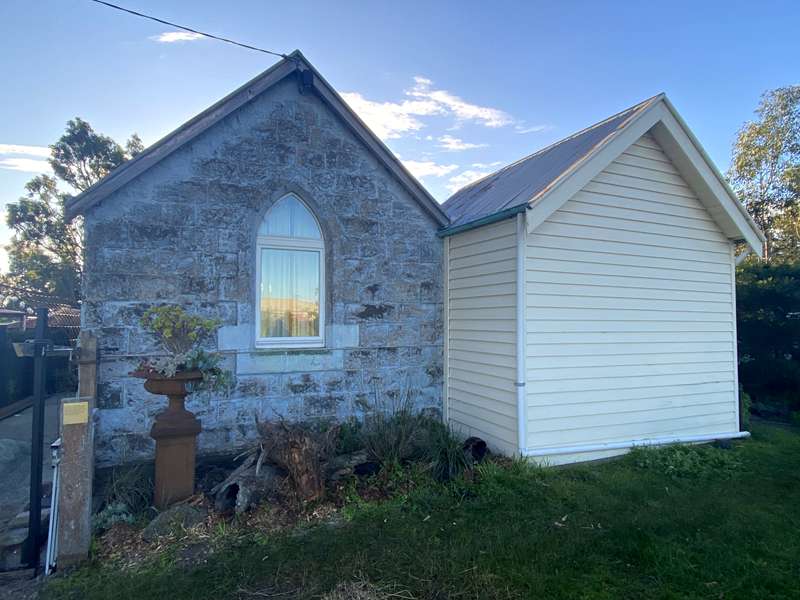
Beyond these walls... In this former Wesleyan chapel, Mr E. Carse set up a school in opposition to other local schools. The bluestone and timber complex was used as a school for 12 years from 1867.
5. Eastern Reserve Grandstand (K2)
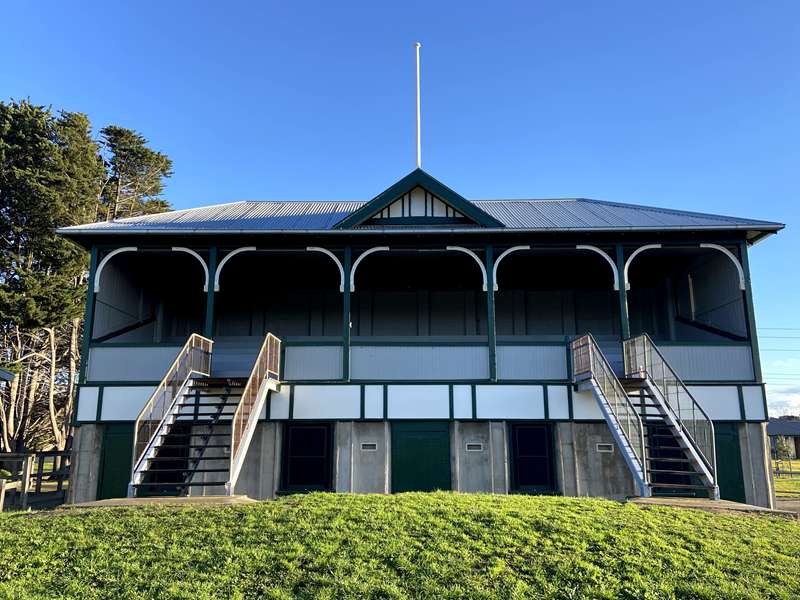
The historic grandstand at Eastern Reserve has overlooked local sporting events and community gatherings for generations. It represents the long tradition of country football, cricket and recreation that has played an important role in Winchelsea's social life.
6. 300 Year-Old Tree (L1)
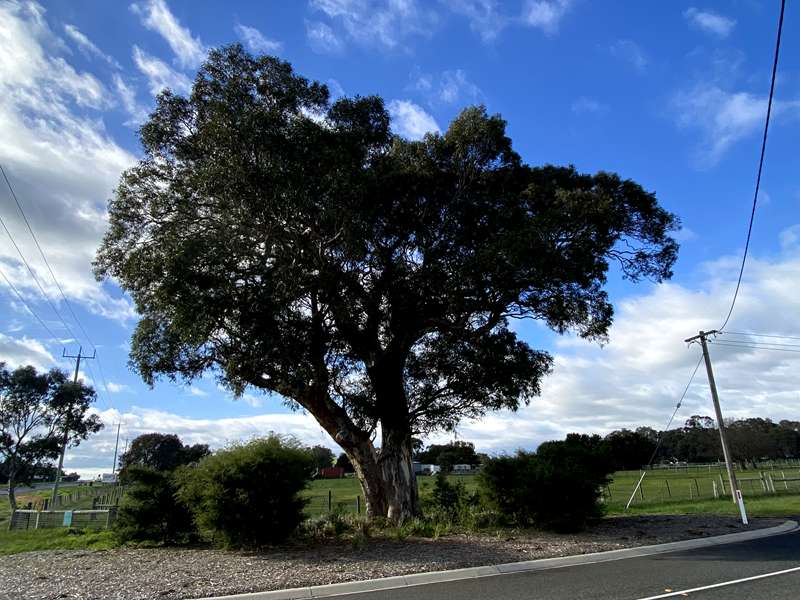
This magnificent River Red Gum predates European settlement by centuries and is one of Winchelsea's oldest living landmarks. Estimated to be around 300 years old, it provides a glimpse of the landscape encountered by the district's Traditional Owners and early settlers, and remains a striking feature of the heritage walk.
7. Barwon Park Mansion (K1)
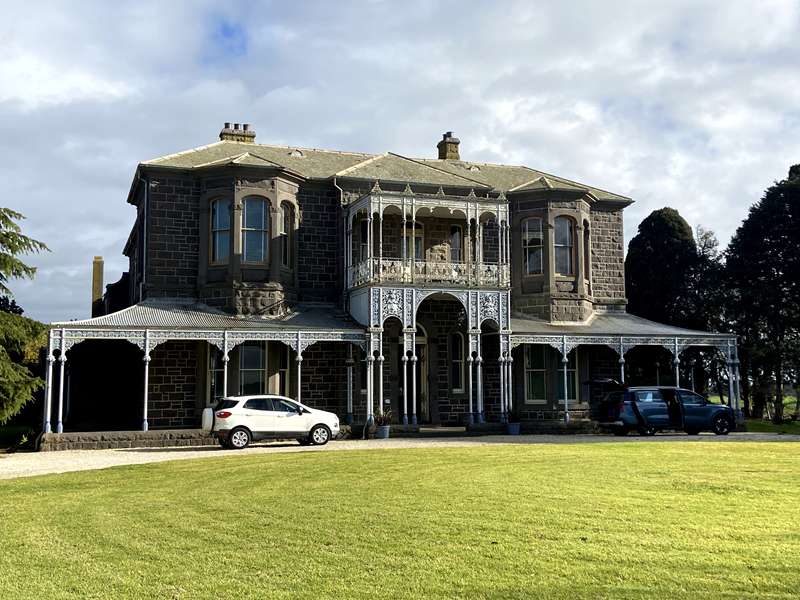
This majestic 42-room bluestone National Trust mansion and stables is largely in its original condition, resonating with the glory of Victoria's pastoral heritage.
The mansion was built for Thomas and Elizabeth Austin (founder of the Austin Hospital) who had lived in the Western District at Barwon Park since their marriage in 1845. Barwon Park at Winchelsea, when completed in 1869, was the finest and most celebrated mansion house in western Victoria and, having established the reputation of architects Davidson and Henderson, survives as perhaps the most notable homestead designed by this prolific practice. At Barwon Park, Thomas Austin, royal host, public figure, eminent pastoralist and leader of the Acclimatisation Society, who was the first to introduce rabbits to Australia, an achievement now universally condemned.
Barwon Park is 3 km north of town on Inverleigh Road and is signposted off the Princes Highway.
8. Barwon River Bridge (I3)
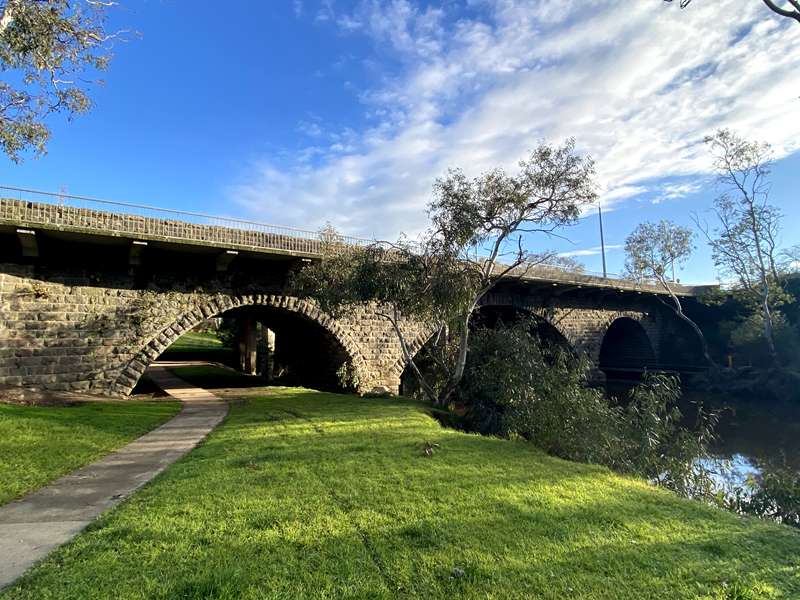
Near the hotel is a three-span bluestone arch bridge (1867) over the Barwon River which is considered one of the most impressive stone structures in Victoria. There are a number of picnic spots beside the river. A platypus has frequently been spotted on early mornings close to the bridge.
9. Shire Offices (I3)
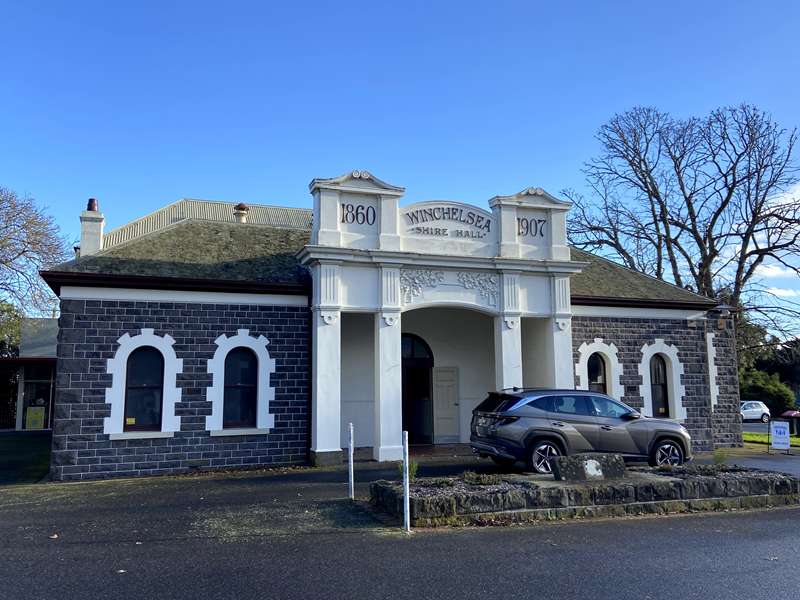
The former Shire Offices were the administrative heart of the Winchelsea Shire for many decades. The building reflects the town's importance as a regional centre and stands as a reminder of local government before council amalgamations in the 1990s.
10. Winchelsea Railway Station (H2)
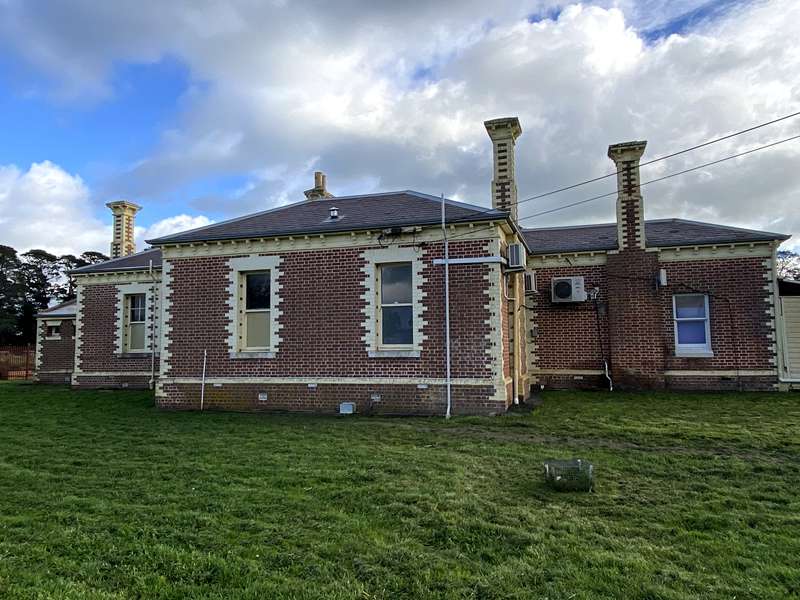
Opened in 1876 as part of the Geelong–Warrnambool railway, Winchelsea Railway Station transformed the town by improving transport for passengers, livestock and agricultural produce. The station remains an important transport link and a reminder of the railway's role in the district's development.
11. First Bank Building (I3)
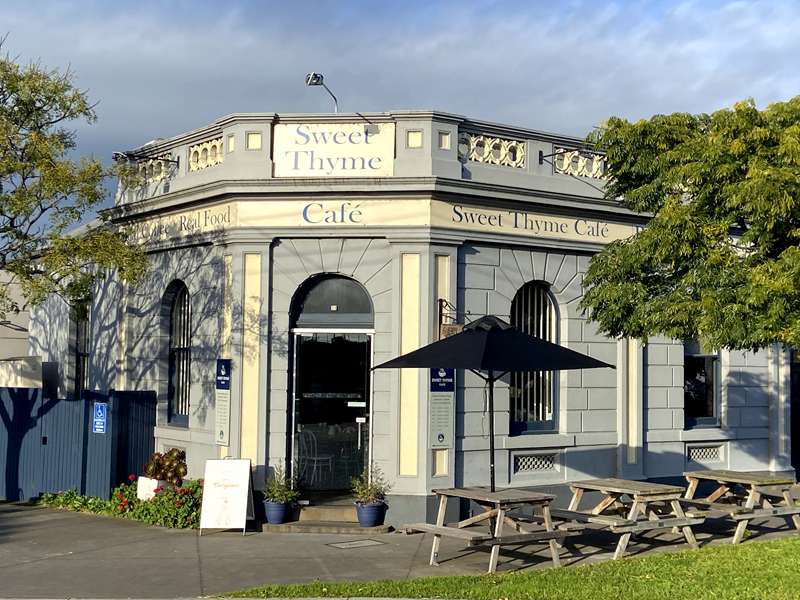
This handsome former bank building reflects Winchelsea's prosperity during the late nineteenth and early twentieth centuries. Banks were an essential part of country towns, supporting local farmers, businesses and the growing pastoral industry.
12. Barwon Hotel (J3)
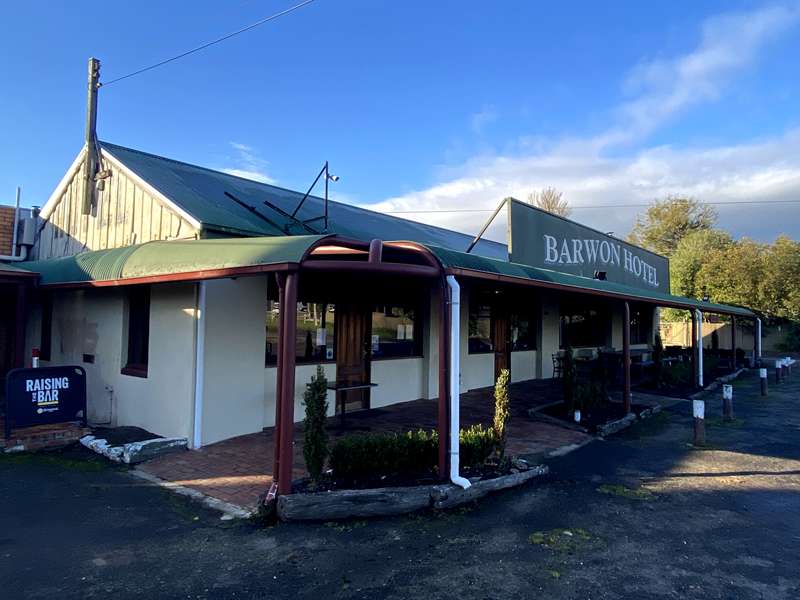
All things to all people - When only 20 years old, two founding fathers, Prosper Trebeck and Charles Beal, built the Barwon Hotel in 1842. This hotel has served, at times, as a post office, bank, library, general store and a stop for the Cobb and Co carriage service.
13. Vicarage (I4)
The historic vicarage provided accommodation for the local Anglican minister and forms part of Winchelsea's religious heritage. Together with the nearby church, it reflects the important role churches played in the social and community life of early rural settlements.
14. Golf Course (I4)
Winchelsea Golf Club has been part of the community for many years, providing recreation and social opportunities for local residents. The course also offers attractive views across the surrounding countryside and Barwon River valley.
Photos:
Location
28 Hesse Street, Winchelsea 3241 View Map


