Trentham - Wombat Trail


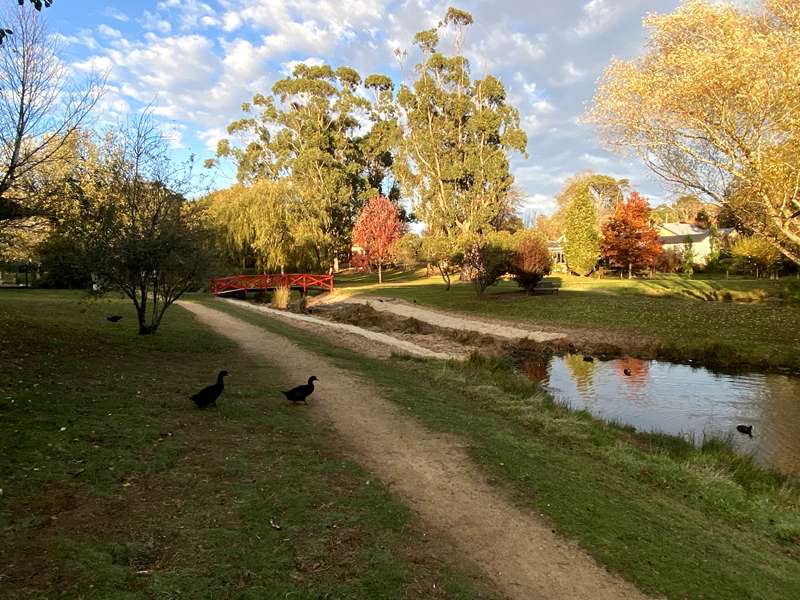
Starting at Quarry Street Reserve in Trentham, this walk takes you through the historic town and forest to discover the old horse racing track and the Wombat State Forest. Follow interpretive signage along the trail to explore the area's gold mining and forestry past.
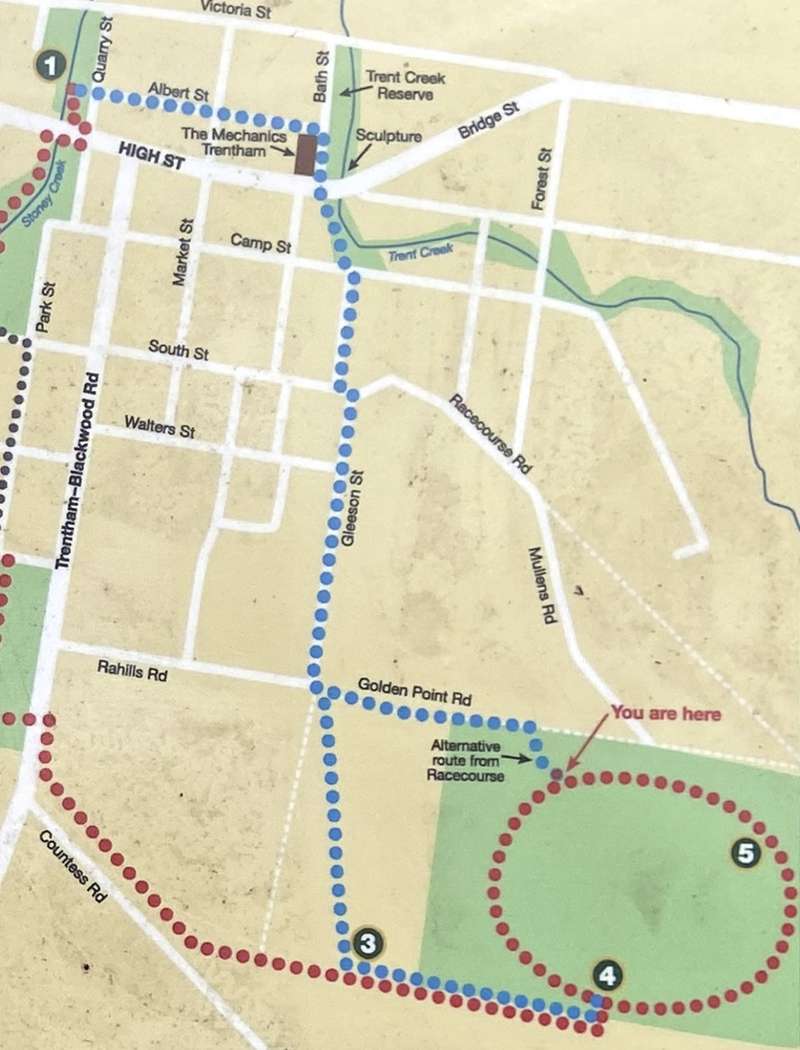
Map of Walk Route
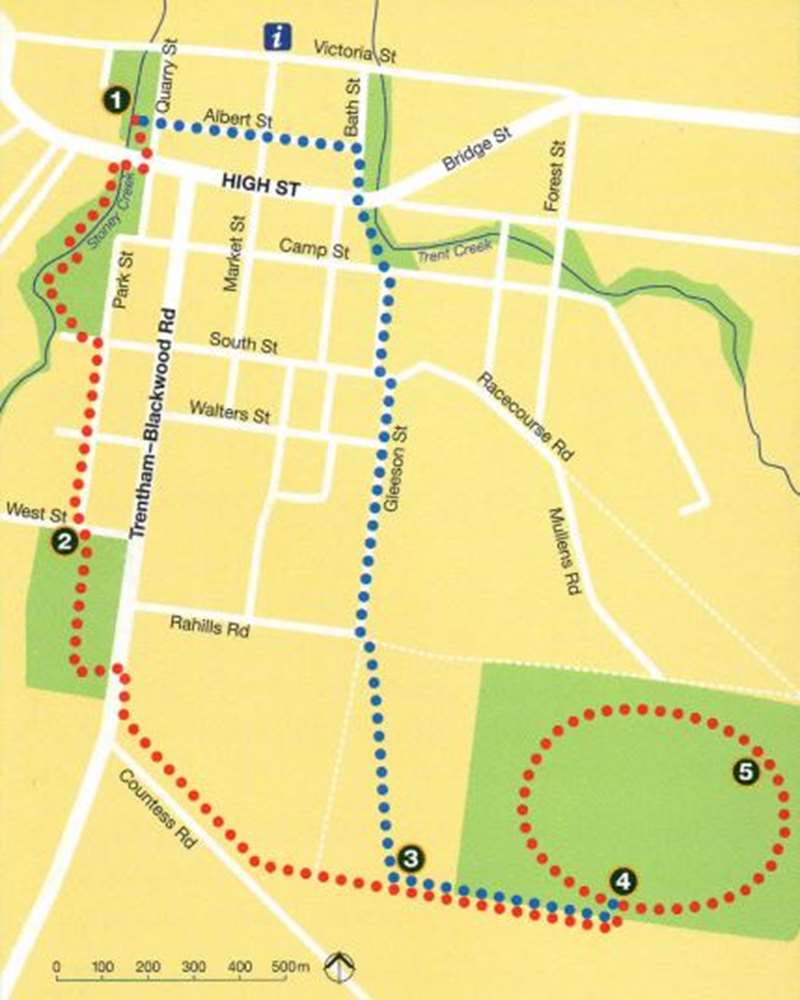
Points of interest on the map are: Quarry Street Reserve (1), Trentham Cemetery (2), Walk Signage (3) and Old Racecourse (4,5).
The Wombat Trail is an easy 7.4km walk which takes approximately two hours to complete. It links the Quarry Street, Stoney Creek and Bath Street Reserves in the township of Trentham with the old Trentham Racecourse Reserve in the Wombat State Forest.
The walk takes in new paths which have been developed over recent years, together with long-standing former logging and vehicle access tracks, with the major part of the trail being within the Wombat Forest.
The trail starts and finishes in the Quarry Street Reserve and provides a link to both the early history and the more recent changes as Trentham evolves. At Quarry Street Reserve there is a fenced and shaded playground, huge shelter with tables and BBQs, toilets, water tap, grassy areas and unshaded tables and seats next to a lake with waterbirds. This area is particularly beautiful in Autumn.
Follow the directional signs (a wombat sign) from this point, taking care where the trail crosses High Street and the Trentham-Blackwood Road, until you reach the old Trentham Racecourse.
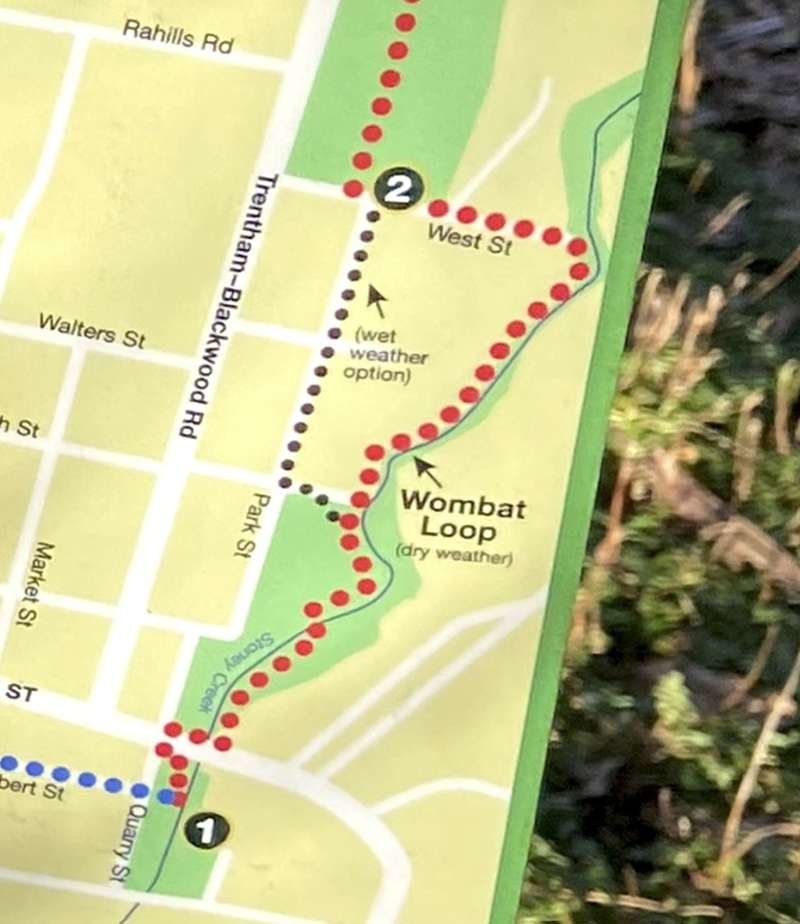
Alternative Wombat Loop Section between points (1) and (2)
The Wombat Loop, approximately 500m long, takes you alongside Stoney Creek and through some remnant bushland as far as West Street. West Street can then be followed and you will be able to rejoin the Wombat Trail at the Trentham Cemetery. Note that this track may not be usable during winter months as the path can be inundated with water from Stoney Creek. An alternative route is along Park Street. See route map below:
2. Trentham Cemetery
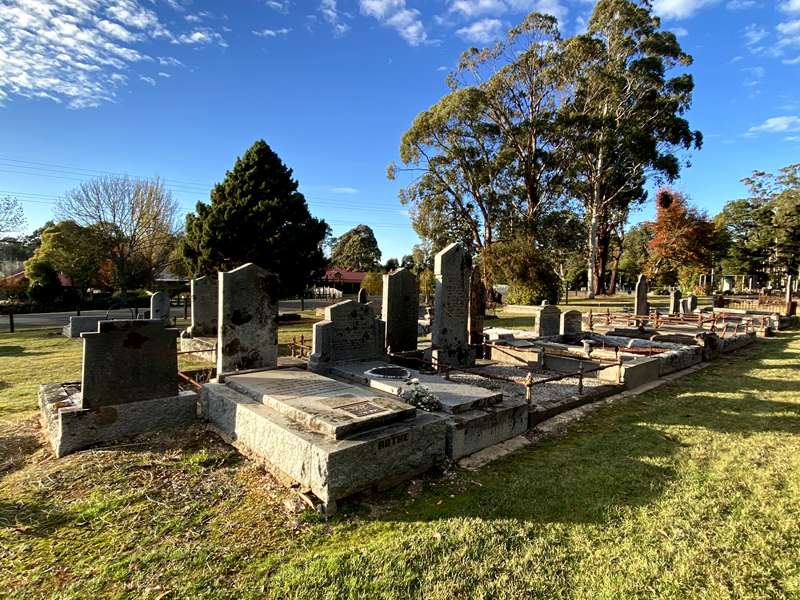
The cemetery was established in 1870 on this site which was known as the Dry Diggings, this being a reference to the gold mining which had occurred here at an earlier time. The area is approximately eight acres, half of which remains uncleared.
The first recorded burial was that of Isaac Bennett in June 1870. Bennett having been killed by a falling tree at Blue Mount. The cemetery was divided into two sections, Catholic to the south and Protestant to the north.
The grave of Dr Gweneth Wisewould is located in the last row, approximately 65 metres from this sign. Her headstone faces towards the forest as she had requested. The legendary Dr Gweneth Wisewould was the town’s longest-serving medical practitioner.
3. Alternative route
If desired, an alternative shorter walk back to Quarry Street Reserve is possible before reaching the Racecourse Reserve - look for the details on sign 3. This shorter walk takes approximately 75 minutes to complete.
At this point you have walked 2.6 km and have the choice of proceeding on to the old Trentham Racecourse Reserve, or returning back to town via an alternative route.
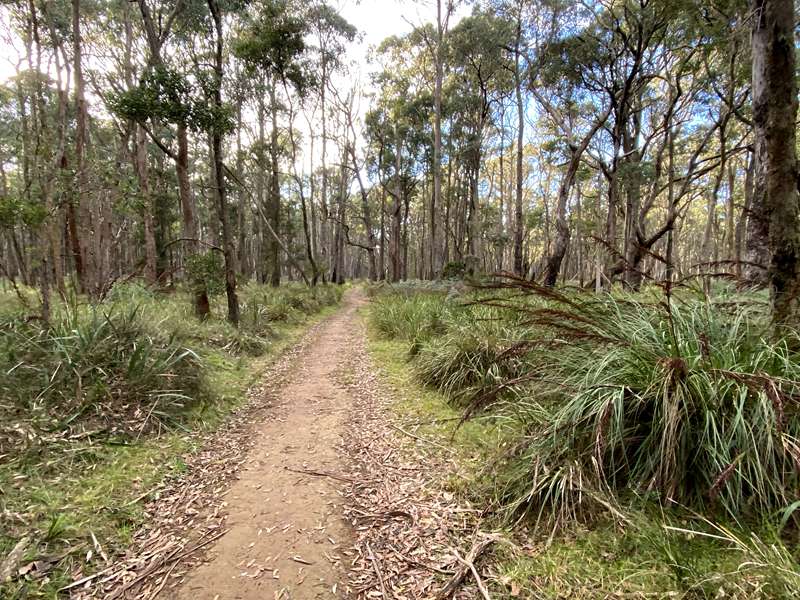
The entry into the old racecourse is 950 m from here (approximately 3.75 km to walk from this point, circumnavigate the racecourse and then return). There is little evidence left of the racecourse today, and the bush is reclaiming the area at a considerable rate.
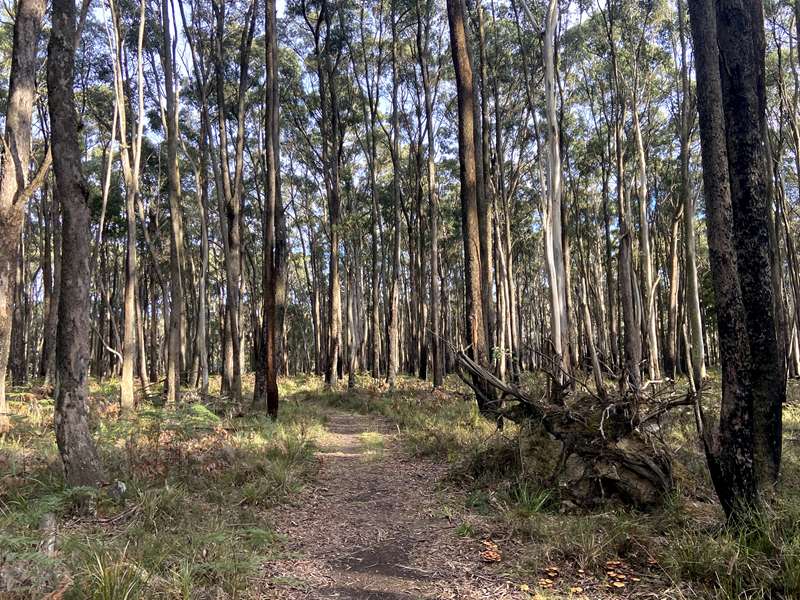
The alternative route is to your left. Follow the directional signs back to Quarry Street Reserve via a number of quiet residential streets and then alongside Trent Creek and Bath Street Reserve, a distance of 2.7 km.
As you walk along this track back into the Trentham township, look for the distinctive silver banksia (Banksia marginata), seen on each side of the track about 100–150 metres from this sign.
These shrubs have a distinctive leaf, silver on the underside, and yellow flowers, which in autumn become long-lasting cones.
They are very attractive to nectar-feeding birds, insects and mammals and to large seed-eating birds such as the yellow-tailed black cockatoo.
Take care crossing High Street (opposite the Mechanics Institute building). Look to your right at that point and you will see the second part of Trentham’s Avenue of Honour.
Walk around the original racecourse in an anti-clockwise direction (as the horses ran) until you can return along the same path.
4. Trentham Racecourse
Trentham Racecourse was gazetted as a recreation reserve in 1880. The course was laid out that year, and was immediately in regular use.
The admission charges (sixpence at first) were put towards the construction of a grandstand, built about 1889, and a saddling paddock which was added in 1891.
Race day was Monday, and special meetings were held on Boxing Day, New Year’s Day and other public holidays.
By 1882, the local papers judged the Boxing Day meeting as a complete success, and in December 1888 an attendance of ‘over 3000’ was recorded. On both these occasions the program included men’s foot running and a tug of war as well as horse races.
By the start of World War One all this racing activity had declined. The Trentham Racecourse had not been used since 1907, and the buildings fell into disrepair. The Racing Club disbanded but horse training continued for many years after. The Committee of Management for the Racecourse Reserve continued to be elected on a three-year rotation, and suggestions to sell the land were all rejected. The Committee exists to this day.
The track is one mile (approximately 1600 m) in length and you are entering at the halfway point. Walk to your right towards sign 5 which is where the finish line and old grandstand were located. Continue on until you come back to this point. You can then follow the trail signs to return to Trentham township.
5. Trentham Racecourse
Trentham Racecourse was gazetted as a recreation reserve in 1880. The course was laid out that year, and was immediately in regular use.
The admission charges (sixpence at first) were put towards the construction of a grandstand, built about 1889, and a saddling paddock was added in 1891.
This is the location of the finishing post and grandstand. The grandstand measured approximately 17 m x 6 m and the mounting or saddling yards were positioned directly to the rear.
The buildings were dismantled and plans made to re-erect them at the Trentham Falls.
The Trentham Cup was held on Boxing Day. This was an important social event which gave an opportunity for the whole community to participate in all the social features of a daytime outdoor event with a picnic atmosphere.
A publican’s booth, luncheon booth and fruit stall were provided and two mounted police constables were on duty on these occasions. Continue on from this point back to sign 4.
From the Trentham Advertiser, 18 November 1880:
TRENTHAM RACECOURSE. Our correspondent writes: As a hot day is blowing today, a considerable quantity of liquor is necessary to stimulate the heart’s action, it is therefore almost impossible for me to forward a long report - preferably impossible. I would, however, wish to mention that the volunteers who turned out yesterday, Wednesday, to clear the racecourse and recreation reserve, acted in a most energetic and praiseworthy manner. It is surprising what strong arms, strong bullocks, and willing minds, can accomplish.
Only a jockey
Whilst riding in the Open Hurdle Race at East Trentham races on Saturday last, Richard Casey met with an accident, which unfortunately resulted in the loss of his life.
Casey getting away behind his field came into the straight in a cloud of dust, and the horse which he was riding, apparently not seeing his hurdle, ran straight into it, throwing his rider on his head in front of the hurdle, he then appeared to step on the fallen rider. When picked up Casey was unconscious, and never regained consciousness.
Kyneton Observer, 29 December 1891
And they’re racing!
This is the track which saw horse racing events from 1883 until c1907. At its most active time a grandstand, track fences, hurdles and a saddling paddock featured on the racecourse.
The annual Boxing Day races, which included the running of the Trentham Cup, and Easter Monday races were popular events. A publican’s booth, luncheon booth and fruit stall were regular features of race day.
Alternative route from the Racecourse
The path to your left takes you to Golden Point Road where a left turn will bring you to Gleeson Street.
From here direction signs lead back to the Trent Creek Reserve. Take care crossing High Street (opposite The Mechanics Trentham).
If you follow the footpath to the right at this point you will see a superb metal sculpture dedicated to Matthew Harding, a brilliant local artist and sculptor of world renown. See map below:
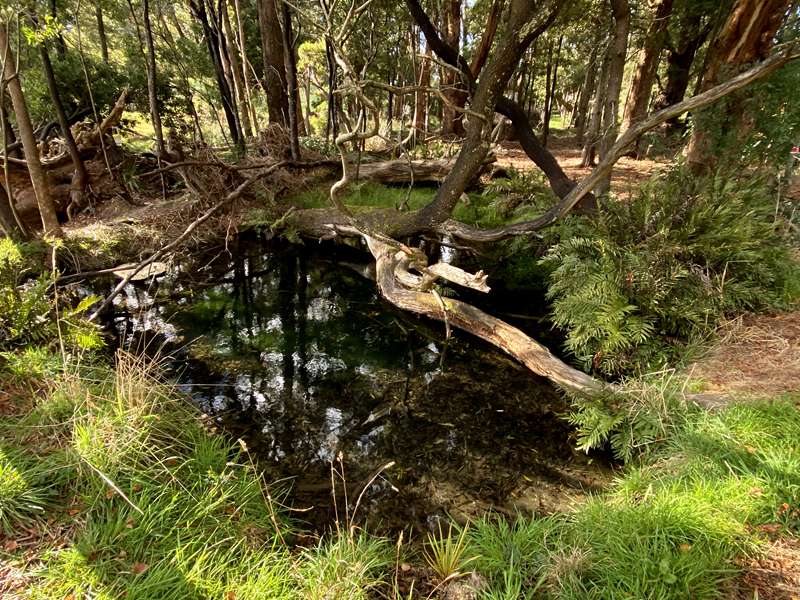
Chinese Spring
In the nineteenth century the majority of Chinese immigrants to Victoria came during the gold rush (from about 1851).
Chinese names appear in our local records from the early 1860s and from this time it was not long before Chinese migrants became gardeners and were supplying food to the miners and the local community. Kim Sing was one of a small number of Chinese gardeners who lived and worked in this vicinity. His name appears in the records from 1896–1915.
River flats were the usual site for Chinese market gardens. Water from this spring-fed pool was used to irrigate the market gardens in the area immediately behind you.
Dancing a Jig with Dad Sculpture
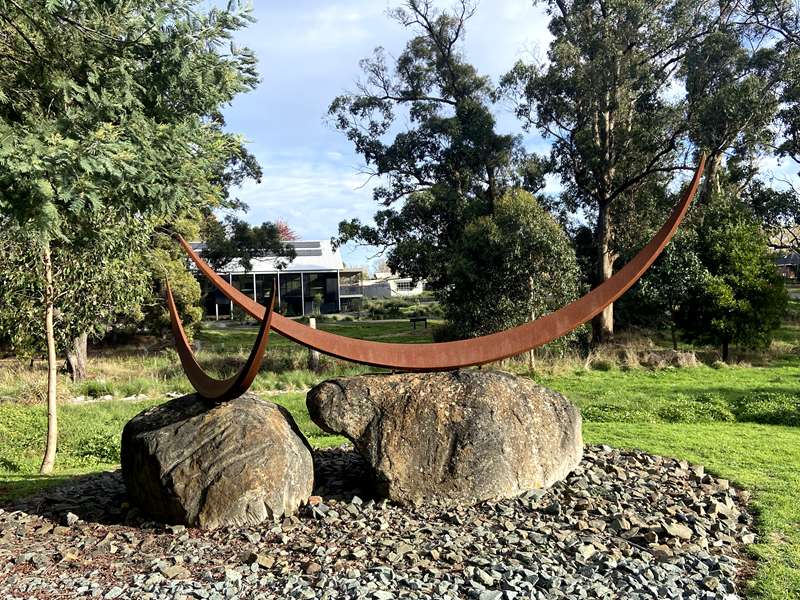
‘Dad’ is the internationally renowned metal, wood and stone sculptor, Matthew Harding
(31/03/1964 – 22/02/2018)
Tragically, Matthew ended his life in February 2018, leaving behind his beloved partner and their four young children.
Matthew Harding was a superb craftsman with an extremely creative mind. His works ranged from small pieces to large installations and can be found in a number of Australian cities, as well as Japan, Southeast Asia, Europe and North America.
The jigs in this installation were crafted by Matthew and used in the formation of some of his major sculptures.
Matthew lived and worked in Trentham and was an active member of our community.
As well as acknowledging the high regard with which the local community held Matthew, Dancing a Jig with Dad is to serve as a reminder of the high rate of suicide among men, especially in regional areas. We must look out for those who are suffering but feel unable to ask for help. Matthew is fondly remembered by his family, friends, art colleagues and the Trentham community.
Review:
A really interesting and enjoyable walk which is very well sign-posted and maintained. Be prepared to be surprised by the racecourse. We expected an open grassy area but it was actually a forested area reclaimed by the bush which requires a rich imagination to see the former racecourse.
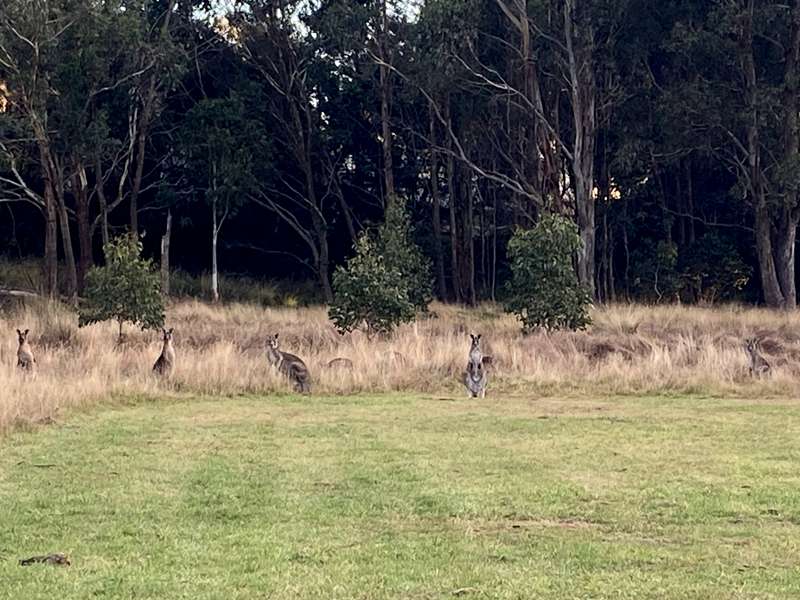
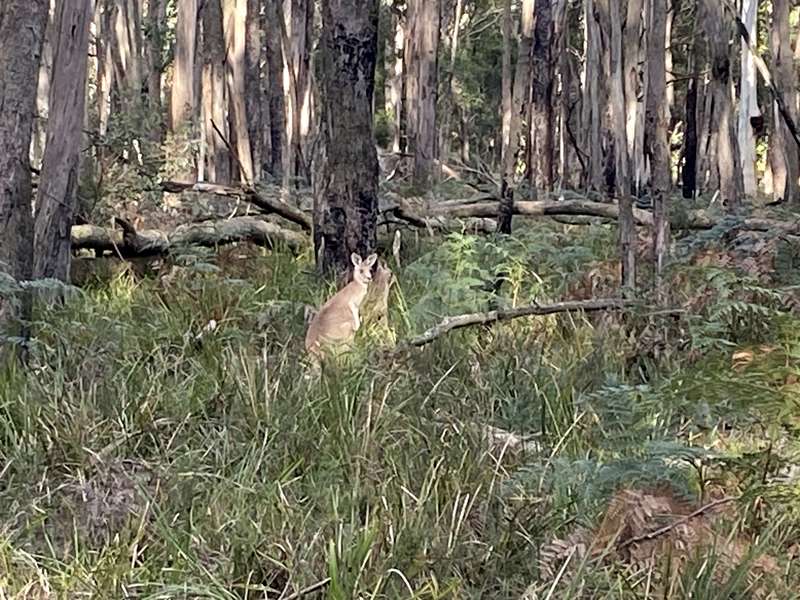
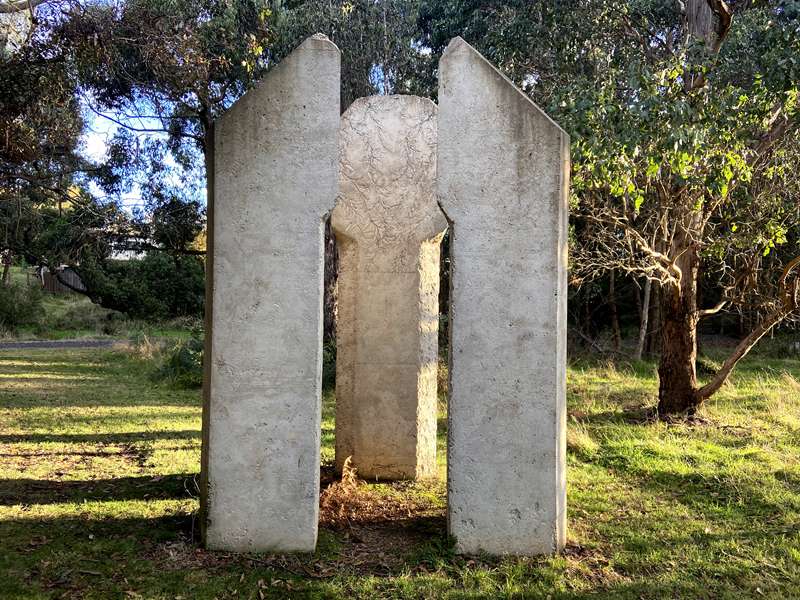
When the trail passes through Stoney Creek Reserve there is a good chance of spotting some kangaroos, especially early and late in the day. This reserve also has the Inter-stelae sculpture by Michael Needham.
There are many interesting interpretative panels along the route.
Access for Dogs:
Dogs are permitted on leash.
Photos:
Location
Quarry Street, Trentham 3458 View Map
Web Links
→ Wombat Trail, Trentham (Walking Maps)


