Smeaton - Anderson's Mill


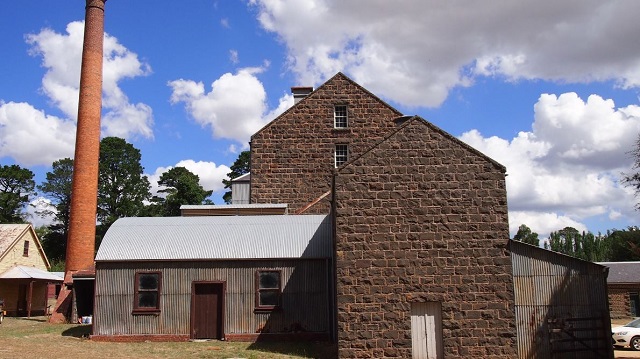
Fancy a picnic by a trickling creek next to a hundred year old mill? Anderson's Mill sits in a picture-postcard setting on the banks of Birch's Creek at Smeaton. Classified by the National Trust, it's a magnificent five-storey bluestone building featuring a grand iron water wheel standing today much like it was over a hundred years ago. It's the perfect place for a picnic.
Anderson's Mill in Smeaton is an outstanding example of Victoria's industrial history. The flour and oat mill was built by the Anderson Brothers in 1862 and is the largest surviving bluestone mill in Victoria. The complex includes the bluestone office, stables, granary and blacksmith buildings.
The mill was powered by a waterwheel which is 853 metres in diameter, weighs 25 tonnes and still turns today with a small flow of water.
The Anderson's used the profits they made from gold mining to establish timber mills in the Bullarook forest and in 1856 to acquire land in Smeaton for agriculture.
Within six years Smeaton became a prosperous agricultural district. The Anderson's built the flour and oat mill and became one of the major industrial and commercial enterprises of rural Victoria due to the strength of the demands of the booming goldfields towns.
Opening Hours and Cost:
Anderson's Mill is open on the first Sunday of each month from 12 noon until 4 pm (entry and guide by donation). The Mill grounds may be enjoyed at any time.
Self-Guided Walk
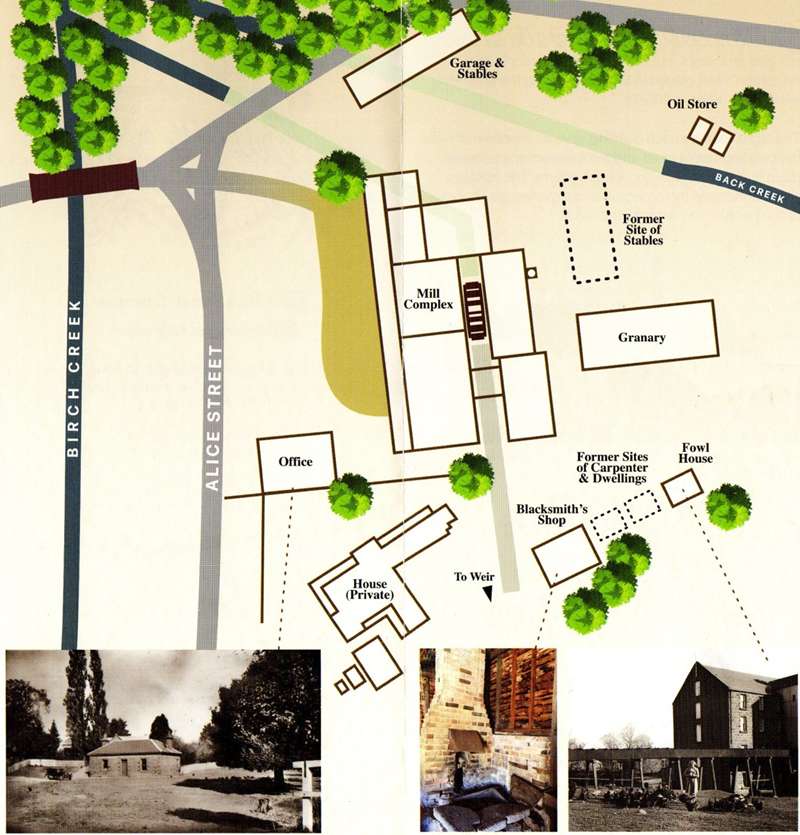
The signs on the Self-Guided Walk will give an insight into the role the Anderson's and Anderson's Mill played in Smeaton during the goldfields era and up until the 1950's.
The signs identify each building, give an overview of how the buildings were used and the connections between them and the surrounding infrastructure. The heritage site is enhanced by the words and experiences of some of the people who worked at the mill.
Access for Dogs
Dogs are allowed but must be on a leash.
Getting there
Andersons Mill is north of Creswick (near Smeaton), 120km north-west of Melbourne. From Creswick travel on the Clunes to Creswick by turning 2km out of Creswick following the signs to Smeaton/Castlemaine.
About the mill
The Mill celebrated 150 years on April 1, 2012. The Anderson Family owned and operated the Mill for all its working life. Andersons's Mill is in an area well known for its goldmining past and fertile volcanic soils.
Construction of the mill commenced in 1861, and was operational within six months, opening April 29, 1862. The oat section of the mill was completed by following harvest.
Outbuildings such as the stables, grain store and bluestone office were added later as the operation expanded.
The water wheel was developed from designs by John Seaton and the patterns were cast in Ballarat at Hunt and Opie's Victoria Foundry. Water to drive the wheel was collected from Hepburn Lagoon about 5km from the mill.
The amount of water required depended on the product being processed. The person operating the release gates at Hepburn Lagoon would be asked to release 'half oats water' or 'full flour water' for the shift's operation.
The Anderson family
The Anderson brothers arrived on the goldfields from Scotland in 1851. After success as diggers on the Goldfields they became saw-millers, supplying timber for the booming local gold industry from their Wombat Forest sawmills. You can see this reference depicted by the blade in their mill logo.
In 1861, as the available timber supply shrank, the brothers identified the growing needs of the expanding local agricultural industry and towns and they used their money, from the gold and timber industries to build Anderson's Mill.
The building was designed by John Anderson, who had trained as a millwright in Scotland. The height of the building reflected the need to use gravity in the milling process, and the siting to utilise the water from Birch Creek.
End of an era
The Andersons had worked the mill through boom times, depression and war. But despite its impressive beginnings, its prosperity was short lived.
Railway lines bypassed Smeaton and the centre of wheat growing shifted north and west. Wide annual variations in wheat harvests also made it difficult for small-scale local millers to obtain regular supplies.
After the mill closed in 1959, most of the machinery was sold for scrap. For almost twenty years the building stood unused.
In 1974 it became one of the first buildings to be included on the Historic Buildings Register. Much needed repairs were made and the mill was finally purchased by the State Government in 1987. Restoration then began in earnest to preserve the history and beauty of the mill.
What you see today is the culmination of hard work and dedication from conservation professionals, local groups and government departments involved in the restoration program.
Location
9 Alice Street, Smeaton 3364 View Map
Web Links
→ Andersons Mill (Parks Victoria)
→ Andersons Mill - Park note (PDF)
→ Andersons Mill - Celebrating 150 years (PDF)
→ Anderson's Mill on Facebook


