Olinda Heritage Walk


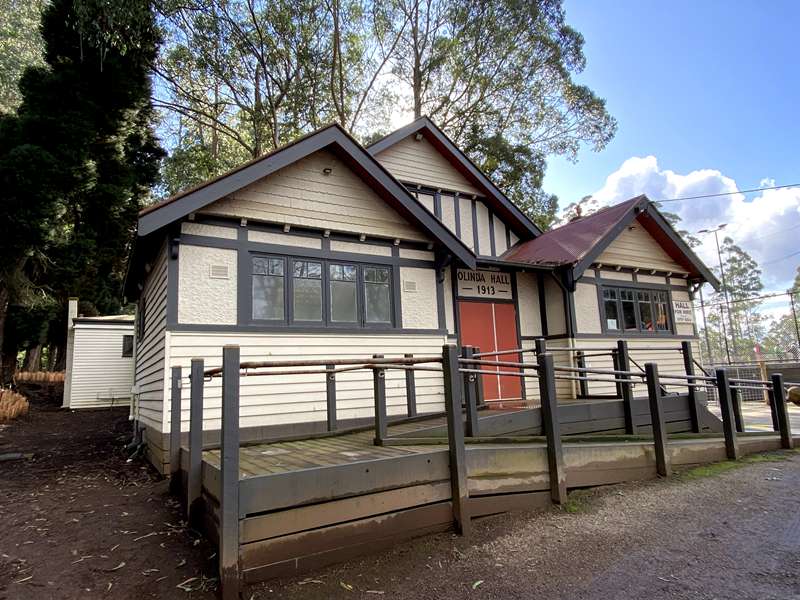
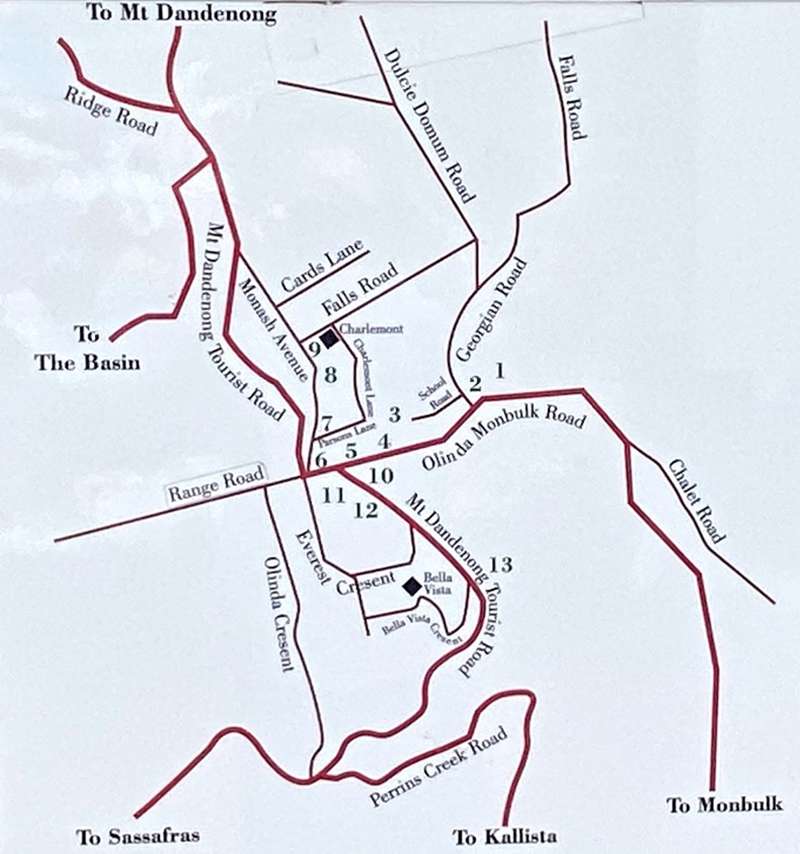
The Olinda Heritage Walk provides a lasting record of the beginnings and development of the Olinda Township. Thirteen pre-1915 sites, including the Olinda Mechanics Institute Hall, have been identified with plaques placed in close proximity to the original sites.
The Olinda Heritage Walk gives a snapshot of Village life in the Dandenong Ranges during the early 1900's - a time of hard work, great initiative and relative prosperity.
The Olinda Heritage Walk highlights the transformation of Olinda from a small mountain settlement into one of the Dandenong Ranges' best-known villages. The plaques mark sites associated with education, religion, commerce, tourism and community life, providing a fascinating glimpse into how residents lived, worked and socialised during the early 1900s. Together, these locations tell the story of a resilient hill community shaped by forestry, farming, tourism and strong local connections.
The walk is on paved paths and is accessible to wheelchairs and prams. It takes roughly an hour to leisurely walk it, longer if you decide to browse the shops.
Olinda Heritage Walk Map
1. OLINDA FOOTBALL SPORTS GROUND 1914
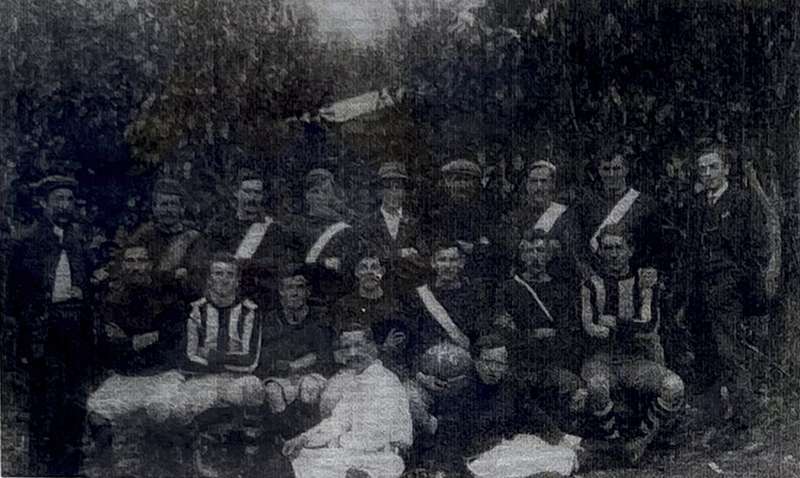
The Olinda Football Sports Ground was established as a community recreation reserve for local residents. Football, cricket and community events played an important role in bringing together the small but growing township. The reserve remains an important sporting hub more than a century later.
2. MECHANICS' INSTITUTE HAIL 1913
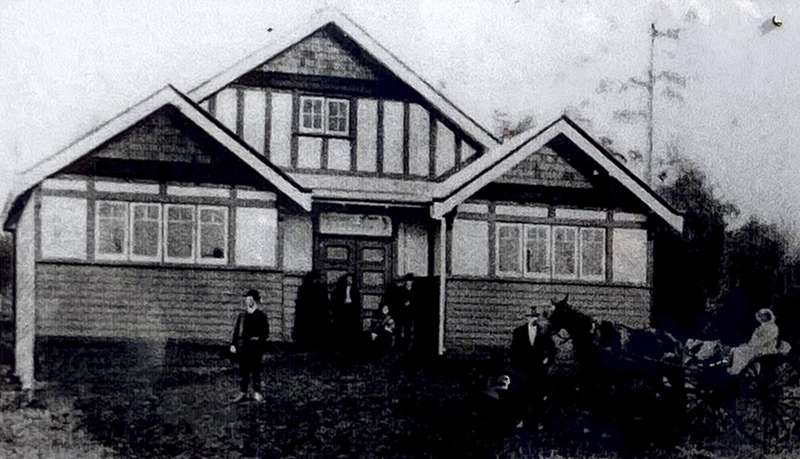
The official opening of the Olinda Mechanics' Institute Hall took place on December 20th, 1913. Since the 1850s, Mechanics' Institutes and Free Libraries had been the means of officially providing a meeting hall and a free library to Victorian townships on a co-operative basis of government land, a Council loan and local labour.
From its earliest days, the Olinda Hall was the centre of social activities in the Olinda Community. Old letters refer to dances at the time of WW1 and football club celebrations held at the hall. A bio-cabin in the upper gable enabled films to be shown but it was the regular dances and balls that were most popular.
In 1952 the Hall was the centre of attention when Olinda was chosen as the location for the first Melbourne Film Festival held over the Australia Day weekend that year.
Over the years extensions and alterations have been made to the original building. Olinda Mechanics' Hall continues to be used regularly for community activities and events.
3. OLINDA STATE SCHOOL No. 3494
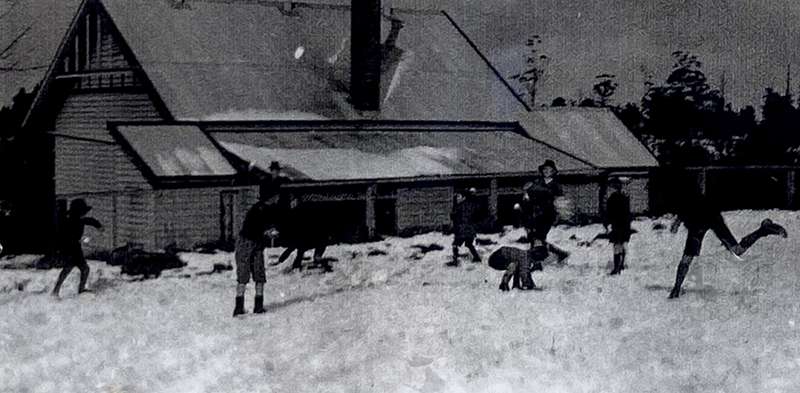
Opening in 1891, Olinda State School served the children of timber workers, orchardists, tradespeople and other local families. The school became a focal point of village life and helped establish Olinda as a permanent settlement rather than a seasonal holiday destination.
4. THE MISSION HALL
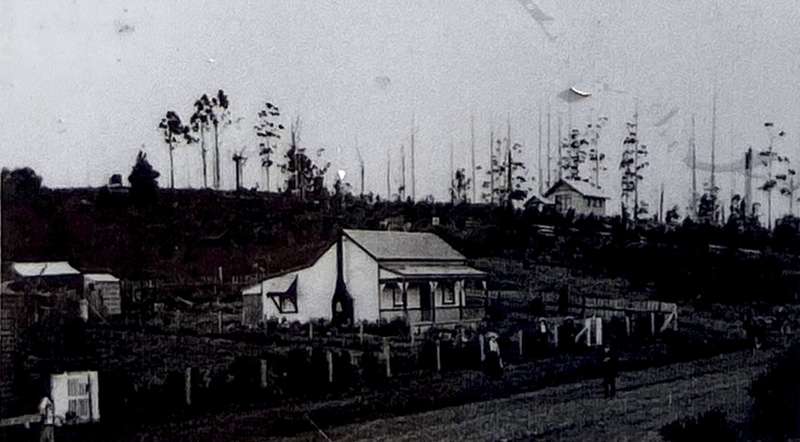
The Mission Hall provided a venue for religious services, Sunday school classes and community gatherings before permanent church buildings became established in the township. It reflects the importance of faith-based organisations in supporting early hill communities.
5. FRANK HODGE - BIACKSMITH THE CENTRAL STORE
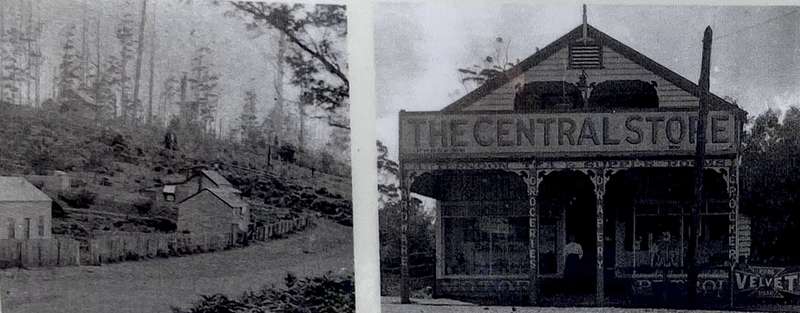
Frank Hodge set up his forge in Olinda Township in 1900. The smithy's trade was an ancient one, with a seven year apprenticeship necessary to acquire the essential skills to supply a community with the metal components of equipment used in transport, building, cooking and agriculture. The early Olinda settlement had two working blacksmiths serving the needs of the farming community. Many settlers found they were unable to make a living from the land and left their 10 acre allotments, so gradually the use and needs of the area changed. Over time, increased motor transport made blacksmithing a waning industry. By 1914 Frank Hodge had closed his smithy. The site was quickly acquired for a new construction offering retail goods to interested customers.
Joseph Gutmann built The Central Store around 1914 on the site of Frank Hodge's demolished smithy. It was an impressive two storey building with a balcony over the downstairs front entry. Its lengthy roofline could be seen above those of other Olinda stores. It had a European charm not usually present in the bush-carpenter style of local buildings. Goods for sale were advertised discreetly on the façade and on the carved veranda posts. The Gutmann family moved from the Wine Hall and Post Office to the larger residence and shop of The Central Store. Over the years ownership changed. A small library of quality books was added, handsomely stamped "The Central Library". The Central Store was destroyed by fire in 1939.
6. DODD'S GENERAL STORE c1910
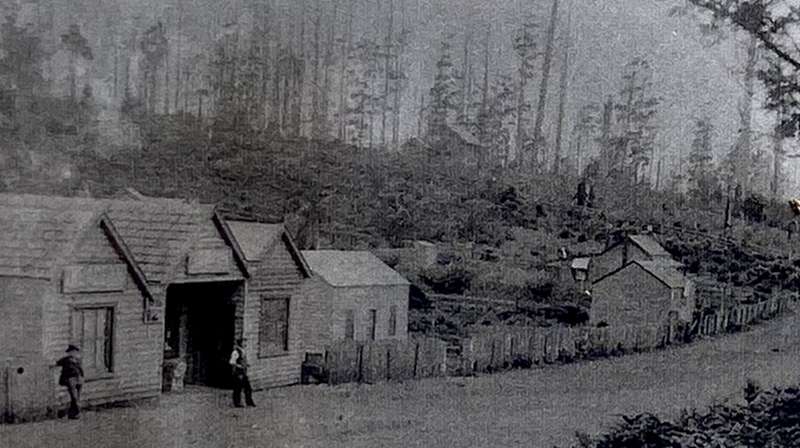
Dodd's General Store was one of the township's principal retailers during the early twentieth century. Like many country stores of the era, it stocked a wide range of goods including food, clothing, farming supplies and household necessities, often serving as a social meeting place as well as a shop.
7. MONASH AVENUE
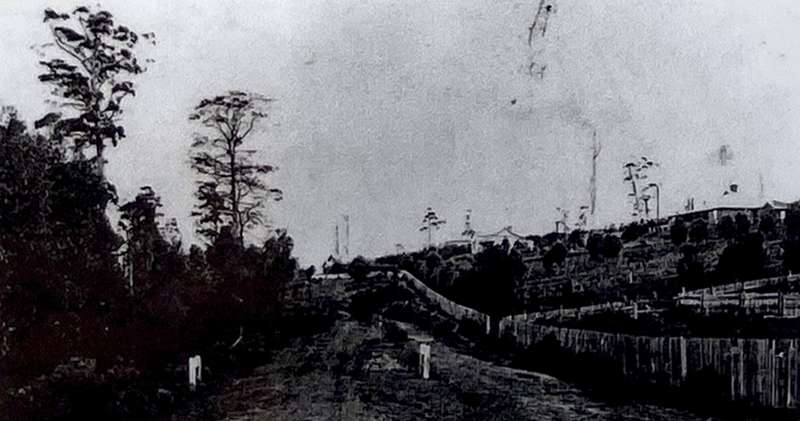
Named after Sir John Monash, one of Australia's most respected military leaders and engineers, Monash Avenue became one of Olinda's key streets. The avenue reflects the township's growth during the early twentieth century and its increasing popularity as a residential and tourist destination.
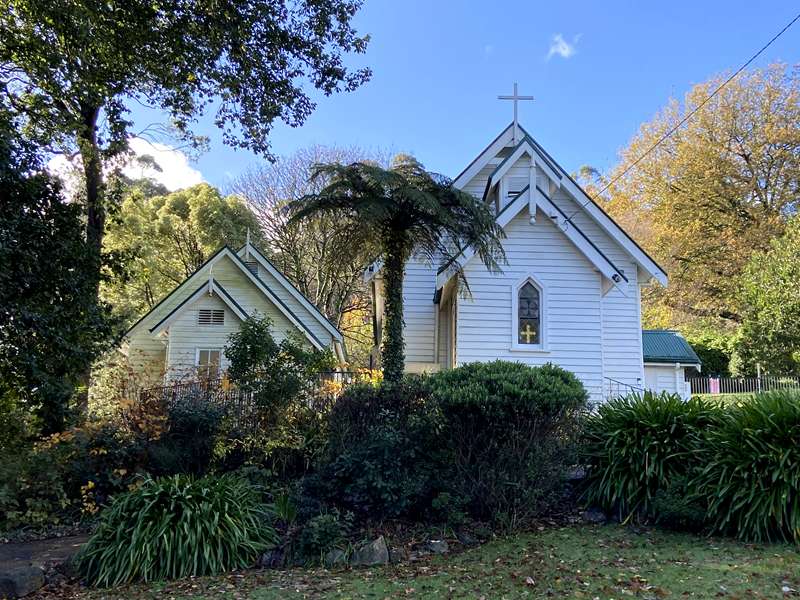
8. ST MATTHEW'S CHURCH OF ENGLAND
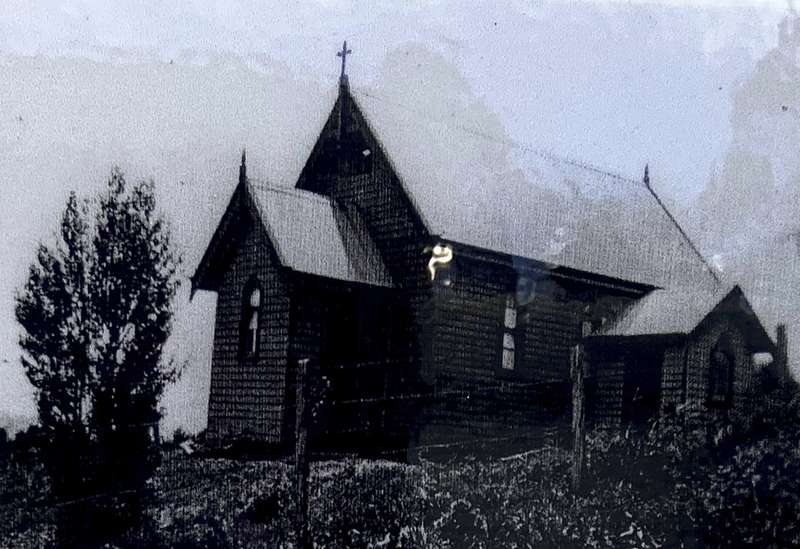
St Matthew's Church became an important spiritual and social centre for the Anglican community in Olinda. Churches played a significant role in village life, providing not only religious services but also social events, fundraising activities and community support.
9. ST MATTHEW'S CHURCH HALL (MERNDA METHODIST CHURCH)
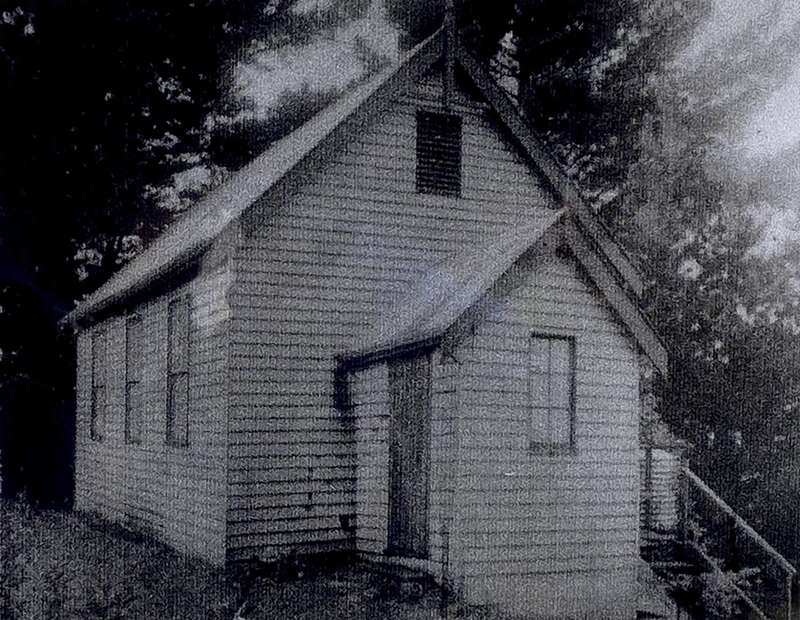
This building has an unusual history, having originally served as a Methodist church at Mernda before being relocated to Olinda. Relocating buildings was not uncommon in early Victoria and demonstrates the resourcefulness of growing communities seeking affordable public facilities.
10. THE WINE HALL OLINDA POST OFFICE
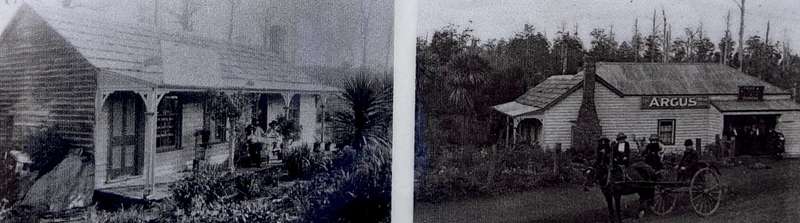
The Wine Hall was a prominent community venue that hosted social functions, meetings and entertainment. Nearby, the Post Office served as a vital communication link, connecting residents with Melbourne and the wider world through mail, telegrams and government services.
11. EASTERN SLOPE of MOUNT OLINDA
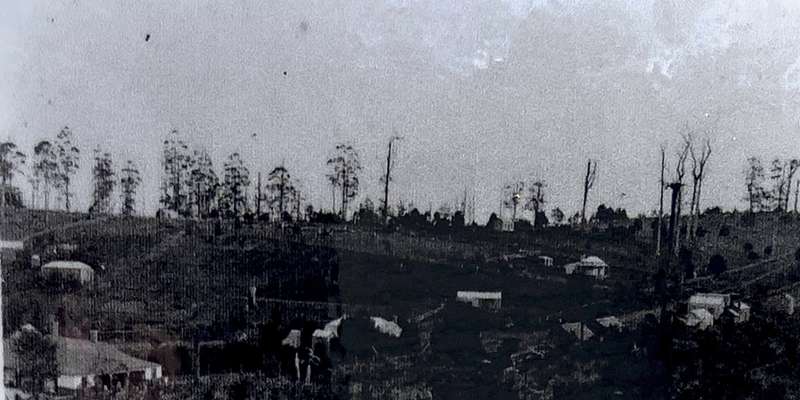
The eastern slopes of Mount Olinda were originally covered by dense mountain forests. Early settlers cleared sections for homes, orchards and small farms, while the spectacular views and cool climate attracted visitors seeking recreation and relaxation in the Dandenong Ranges.
12. PETER WITT, BLACKSMITH
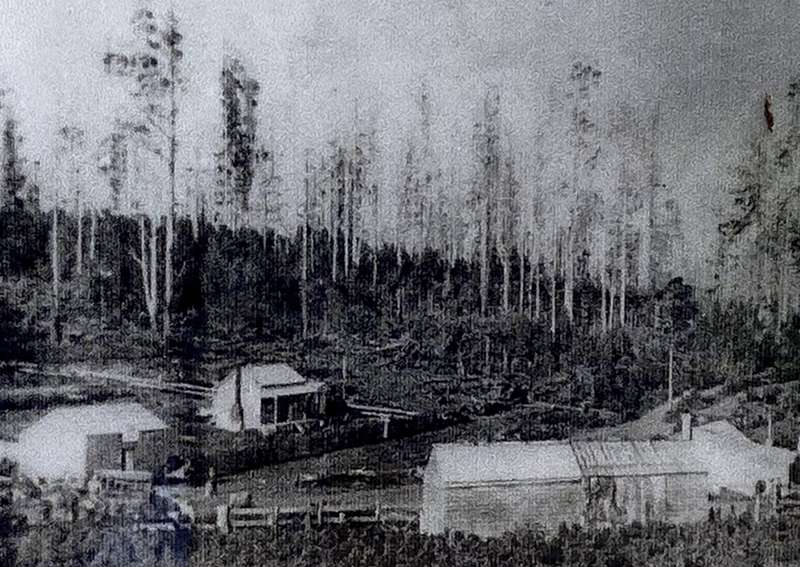
Peter Witt was another of Olinda's early blacksmiths, operating during a period when horses remained the primary form of transport. Blacksmiths were among the most important tradespeople in rural communities, producing and repairing tools, equipment and transport vehicles.
13. QUAMBY TEA ROOMS
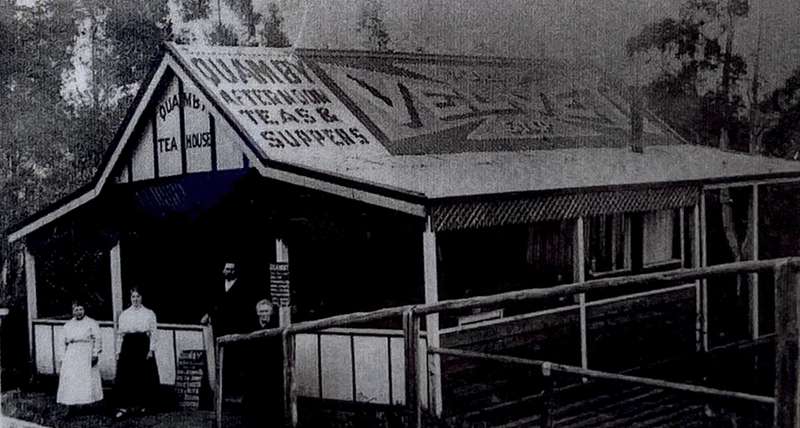
Quamby Tea Rooms were built in 1914 by Edwin and Martha Dorey with a residential cottage nearby. It was a family enterprise with Martha and their daughters Mary, Alice and Iris managing the tea room and Edwin opening a greengrocery store at Sassafras as well as helping with the Quamby premises. Most of the Quamby clientele were patrons of Sassafras and Olinda guest houses who, having enjoyed a country walk, were ready for refreshment. Quamby provided tea and coffee but quickly became noted for their home-made hot scones with jam and cream. The Doreys kept their own cow. By 1928 Quamby had been extended to cater for wedding parties of up to 100 guests. Quamby's popularity grew to something resembling restaurant fame. After several less successful owners, the tea rooms were sold in 1958 to Karin and Willi Koeppen and Quamby became the now famous Cuckoo Restaurant.
Guest House Era
Bella Vista Guest House was built by Edmund Boulter in 1903. While it was not the first guest house in Olinda, it was certainly the most magnificent. Able to accommodate 80 guests, it comprised two large buildings with a walkway linking the balconies at second storey level. Views of Westernport and Port Phillip Bays could be seen from the rooftop lookout. The interior featured a ballroom while outdoors there were extensive sporting facilities. Renamed Hayden Park and still accommodating guests, the building was destroyed by fire in 1956.
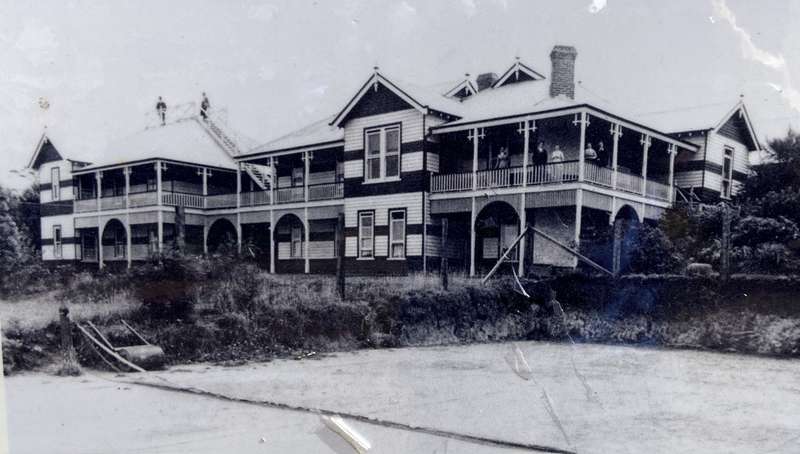
Charlemont Guest House, which features clearly in many early photos of Olinda Township, was originally built c1895 as a private home by W.B. Parsons. Charlemont became a guest house c1905 and consisted of two separate buildings that were joined together. Despite its apparent size, Charlemont only accommodated about 8 guests. Charlemont burned down in 1923 with guests being relocated to Bella Vista.
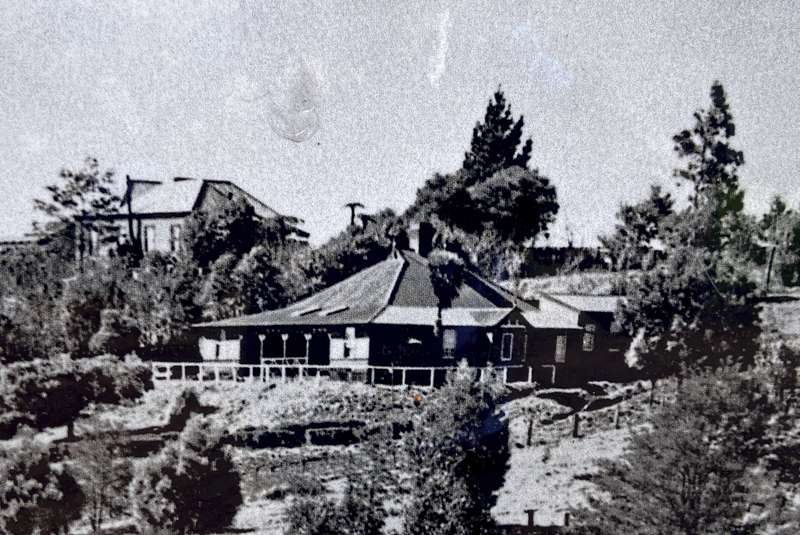
History of the Olinda Settlement
Timber cutter George Holden with his sons Mark and Luke had been making a living felling great tracts of forest trees in and around the area of present day Olinda. At some time around 1855 they set up camp on the site of the current township, the locality becoming known as Holden's Hut.
In 1858 Running Creek was renamed Olinda Creek after Alice Olinda Hodgkinson, the daughter of Victoria's Acting Surveyor General, Clement Hodgkinson. It is from Olinda Creek that the township took its name. In the early 1870's the first settlement of the district took place with settlers taking up allotments of about 100 acres, generally along the western face. In 1893, the Settlement Lands Act opened up 10 acre lots for settlement. The township of Olinda had its beginnings in 1895, when the first lots in the Olinda Township Reserve were offered for auction. Although only five lots sold at the initial auction the township grew and became the heart of the area. In a short space of time the Olinda Township housed businesses such as a general store, blacksmith, butcher, baker, bank as part of post office service, telephone service and wine hall. Coach services to the township, first horse and buggy then motorised, provided transport for both locals and visitors. A school, churches, Mechanics' Institute Hall and sports ground were established to service the growing community.
By 1910 large tracts of land had been cleared for horticulture including berry farms, orchards and vegetable crops. Guest houses started up, the first in 1896, to house visitors to the area seeking the fresh mountain air and glorious views. Tourism became a major source of income for the area and soon there were many guest houses, several of them magnificent structures, dotted around the landscape.
World War I saw many local men signing up to serve their country and the injuries, loss of life and disruption to families during and after the war had an adverse impact on community life. Settlers working the land were greatly reduced in number and flower nurseries and small dairy herds to supply guest houses replaced the unproductive berry fans and orchards. Abandoned settler blocks were purchased by Melburnians seeking holiday homes with forest feel and a panoramic view.
Photos:
Location
29 Olinda-Monbulk Road, Olinda 3788 View Map


