Noorat - Alan Marshall Discovery Trail


The 1.5 km Alan Marshall Discovery Trail is a fascinating self-guided heritage walk through the tiny township of Noorat, celebrating the childhood of one of Australia's best-loved authors, Alan Marshall. Best known for his classic autobiography I Can Jump Puddles, Marshall was born in Noorat in 1902 and spent his early years exploring the town and surrounding countryside that later inspired many of his stories.
The trail links 18 locations that played an important role in Marshall's early life. A map and interpretive information are displayed opposite the historic Bee Hive Store, where Marshall was born and where his parents operated the family business. From there, the easy walk follows quiet streets to a series of plaques and historic buildings, allowing visitors to discover both Marshall's story and the rich history of Noorat.
Highlights along the trail include the Noorat Public Hall, which was once used by Marshall's father as a grain store, the commemorative boulder unveiled by Alan Marshall himself in 1979, a memorial tree planted by his daughter Cathy McCallum during the first Alan Marshall Festival in 1996, the historic Bills horse trough, the former Noorat State School, churches, the Presbyterian Manse and picturesque Lake Lolly. Each stop provides an insight into life in the Western District during the early 1900s and the people and places that shaped Marshall's writing.
The walk is mostly flat and follows footpaths and quiet local streets, making it suitable for families and anyone interested in local history. Allow around 45–60 minutes to complete the trail, although many visitors combine it with a climb up nearby Mount Noorat via the separate Alan Marshall Discovery Trail to the volcanic crater and summit.
At a glance
The Alan Marshall Discovery Trail is a self-guided touring route through Noorat and the surrounding district. The central Noorat locations can be explored on foot, but the outlying sites at Glenormiston, Lake Keilambete, Mount Emu Creek, Kolora and along Terang–Mortlake Road require a vehicle.
Trail type: Self-guided driving trail with short walks at selected locations
Distance: No fixed circuit; the locations are spread across Noorat and the surrounding district
Time: Allow several hours to visit the complete trail, with additional time required for the Mount Noorat walk
Suitable for: Drivers, history enthusiasts and visitors interested in Alan Marshall’s life and work
Alan Marshall Discovery Trail Map
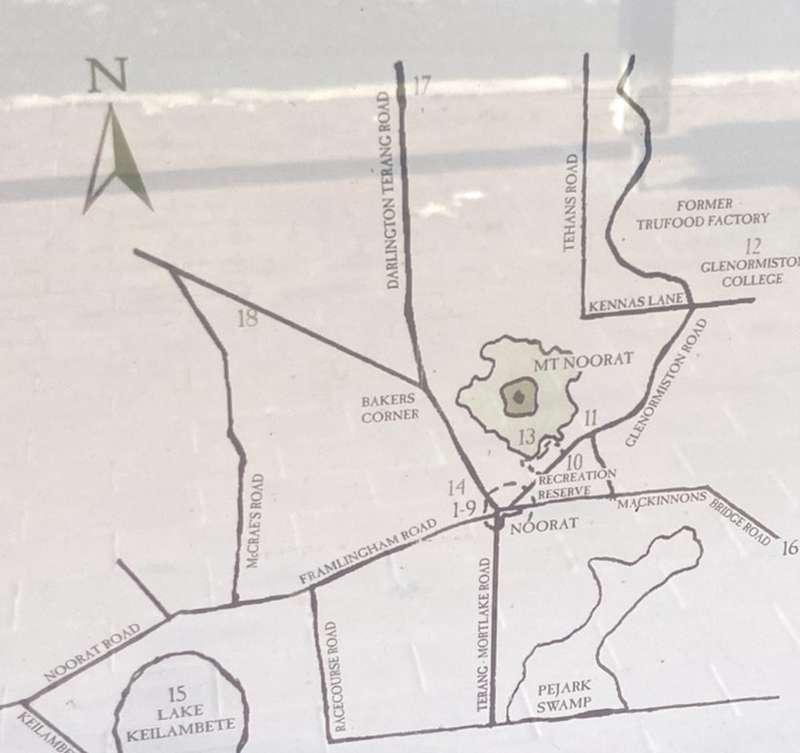
Trail highlights include:
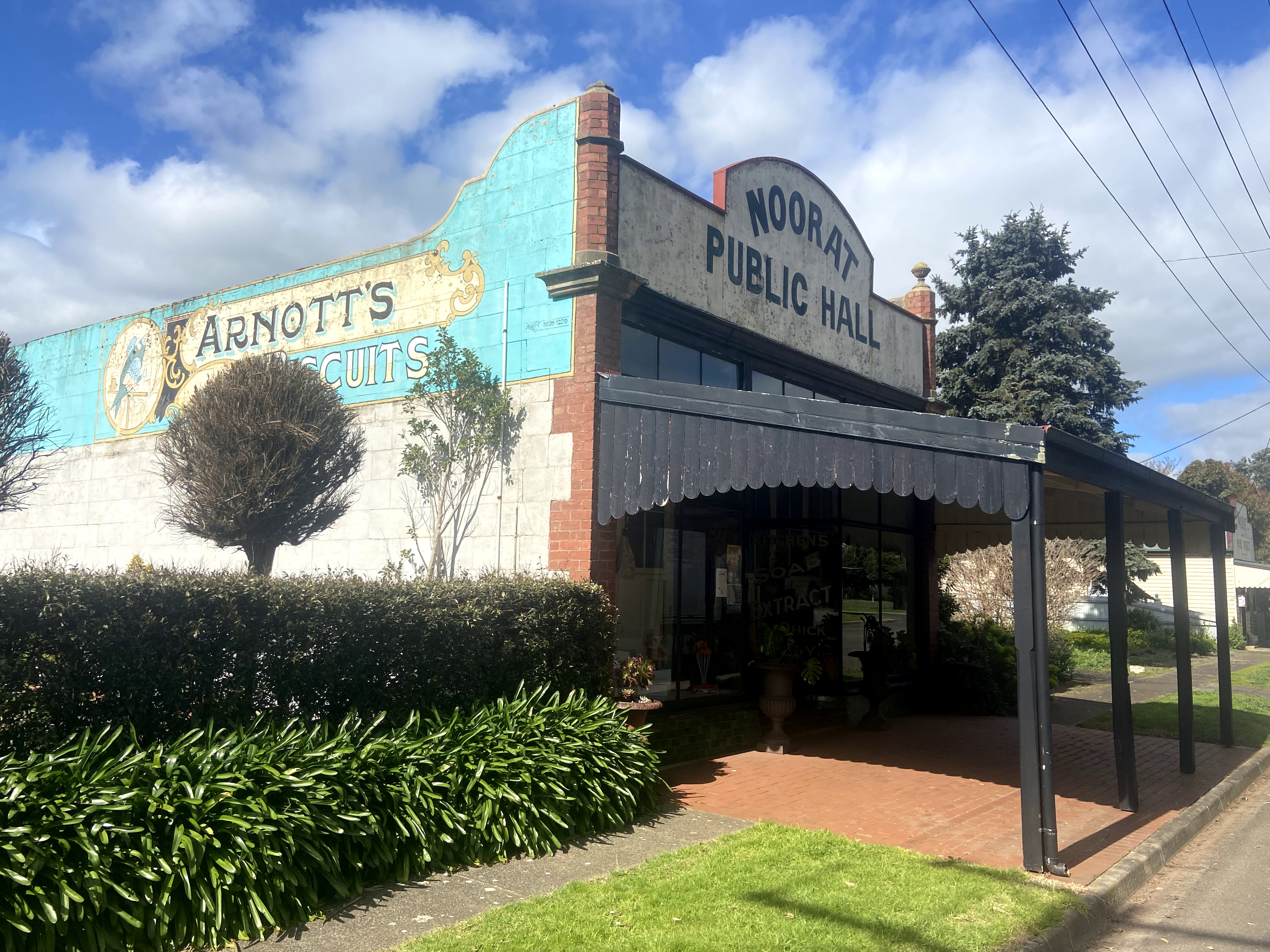
- Noorat Public Hall: Alan Marshall’s father, William, in partnership with George Neale, used this building as a grain store while operating the Beehive Store nearby.
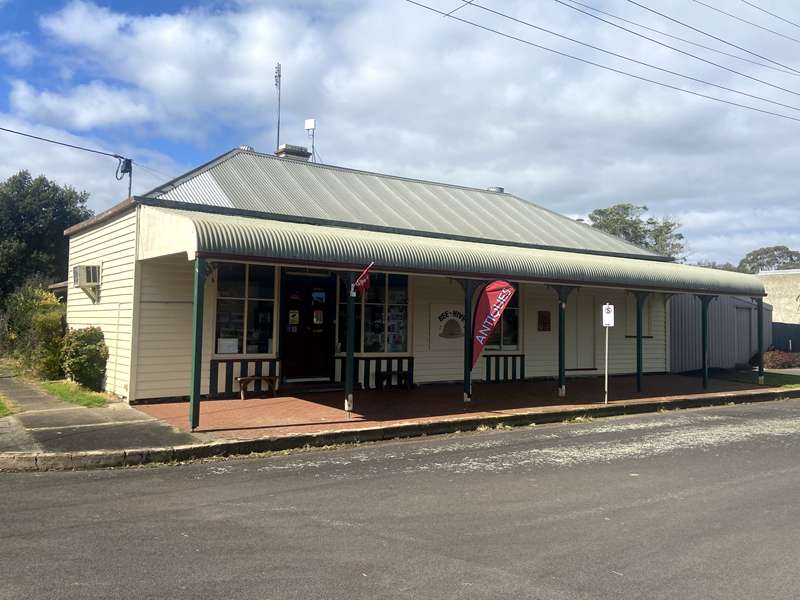
- Beehive Store: Alan Marshall’s birthplace and home throughout his childhood.
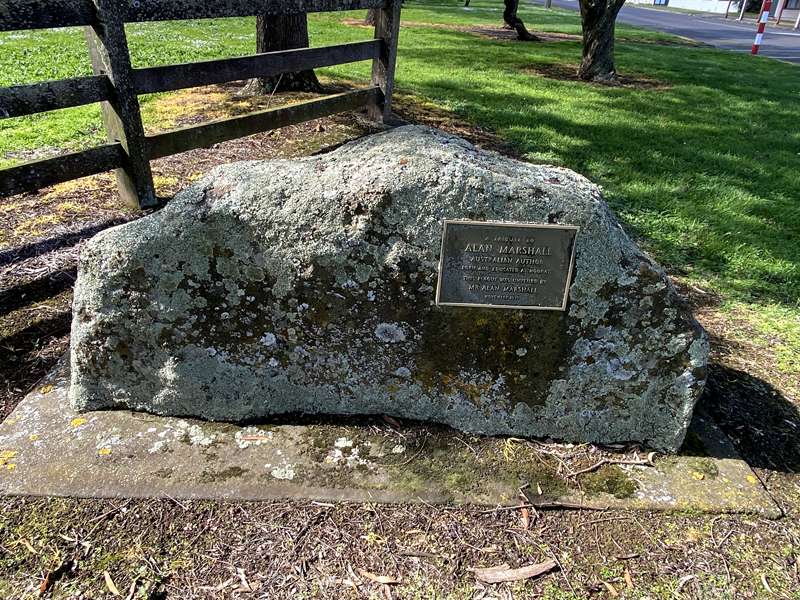
- Commemorative Boulder and Plaque: Unveiled by Alan Marshall in 1979.
- Manna Gum and Memorial Plaque to Alan Marshall: The tree was planted and the plaque unveiled by Cathy McCallum, Alan Marshall’s daughter, at the first Alan Marshall Festival in 1996.
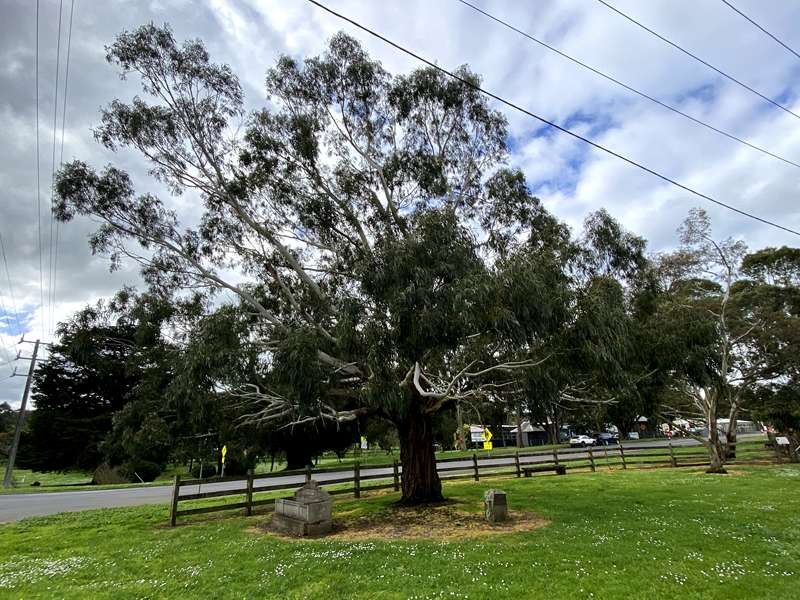
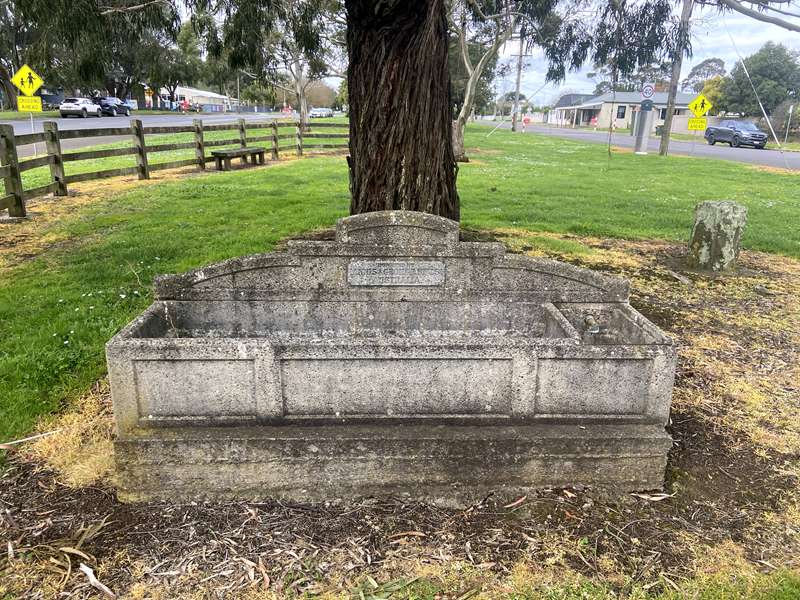
- Horse Trough: One of the many erected nationwide through the generosity of Annis and George Bills, providing fresh water for working horses.
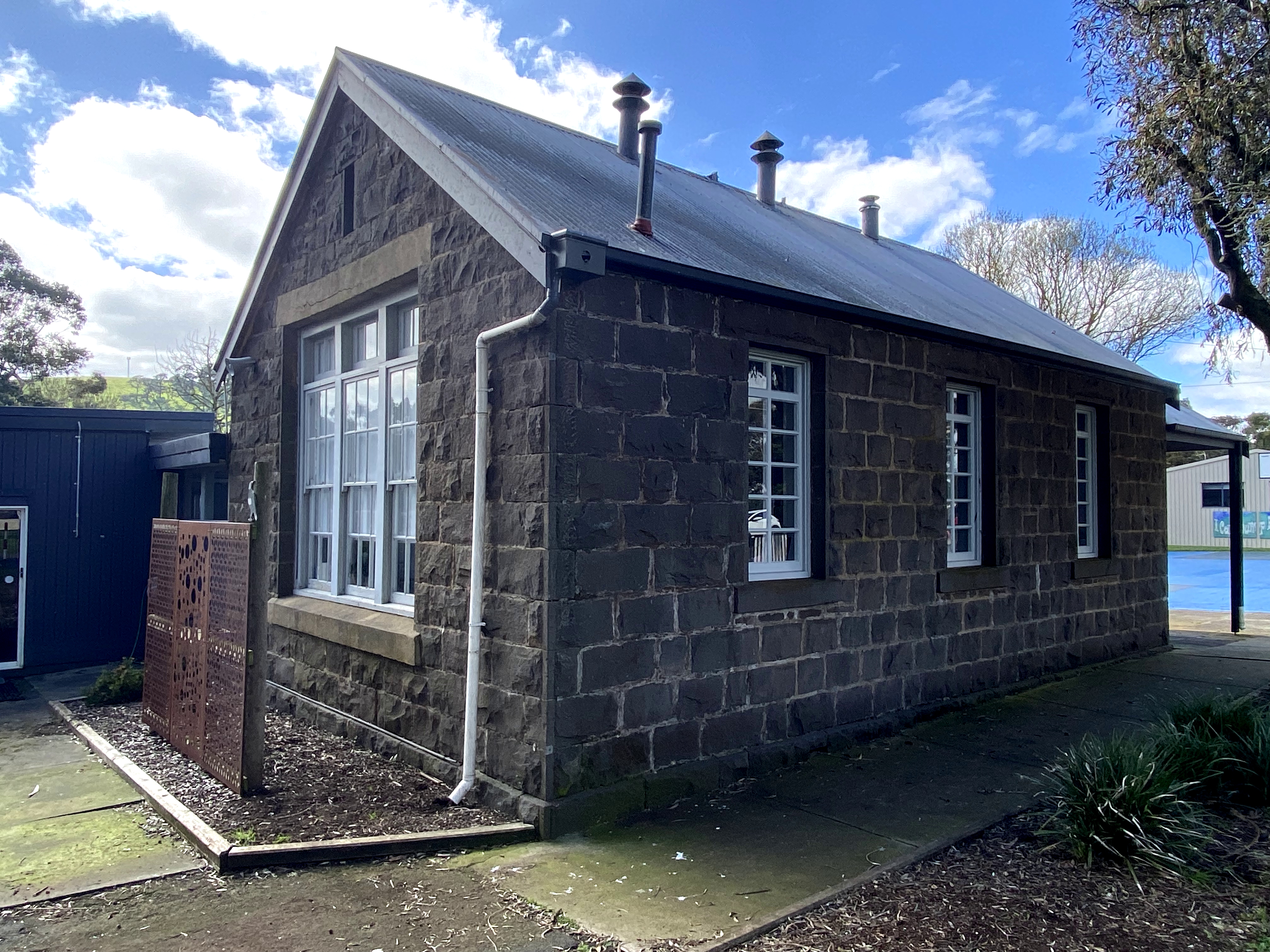
- Noorat Primary School: Alan Marshall attended school here and relates events from his early school days and the people he met in the book I Can Jump Puddles.
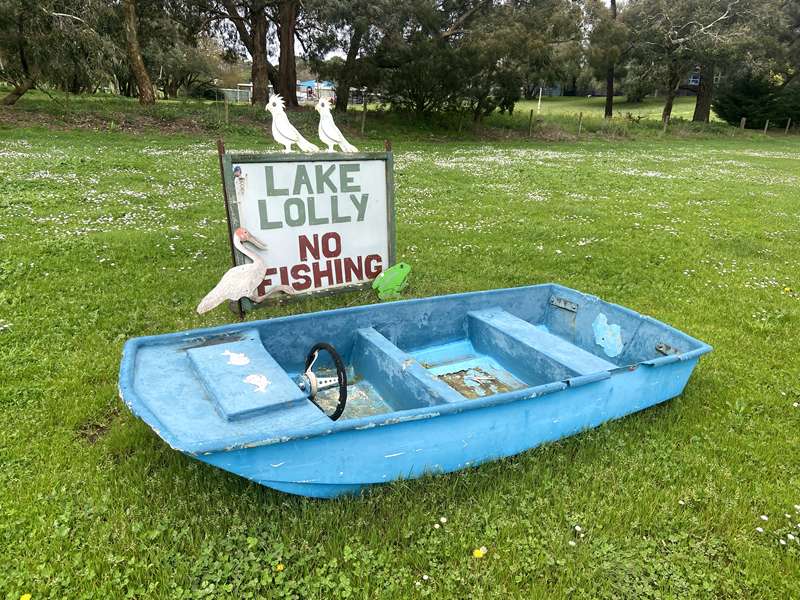
- Lake Lolly: Site of a pond called Lake Lolly by the local children. Alan Marshall and his best friend used to sail salmon tins across the pond with ants for crew, trying to sink them by throwing stones.
- Niel Black Memorial Presbyterian Church: Built in 1883 in memory of Niel Black (1804-1880). The Marshall family attended church here and Alan Marshall attended the Sunday School.
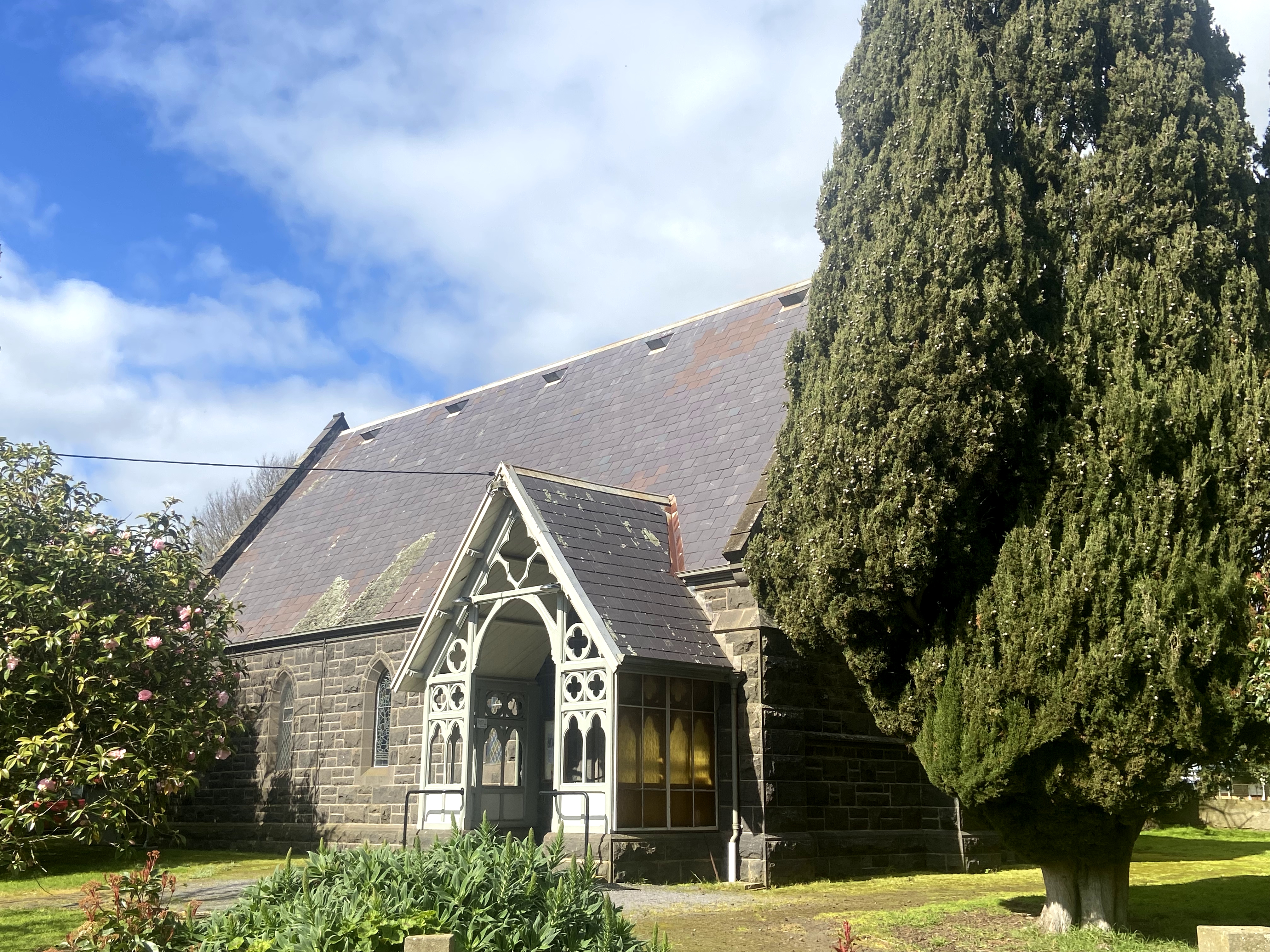
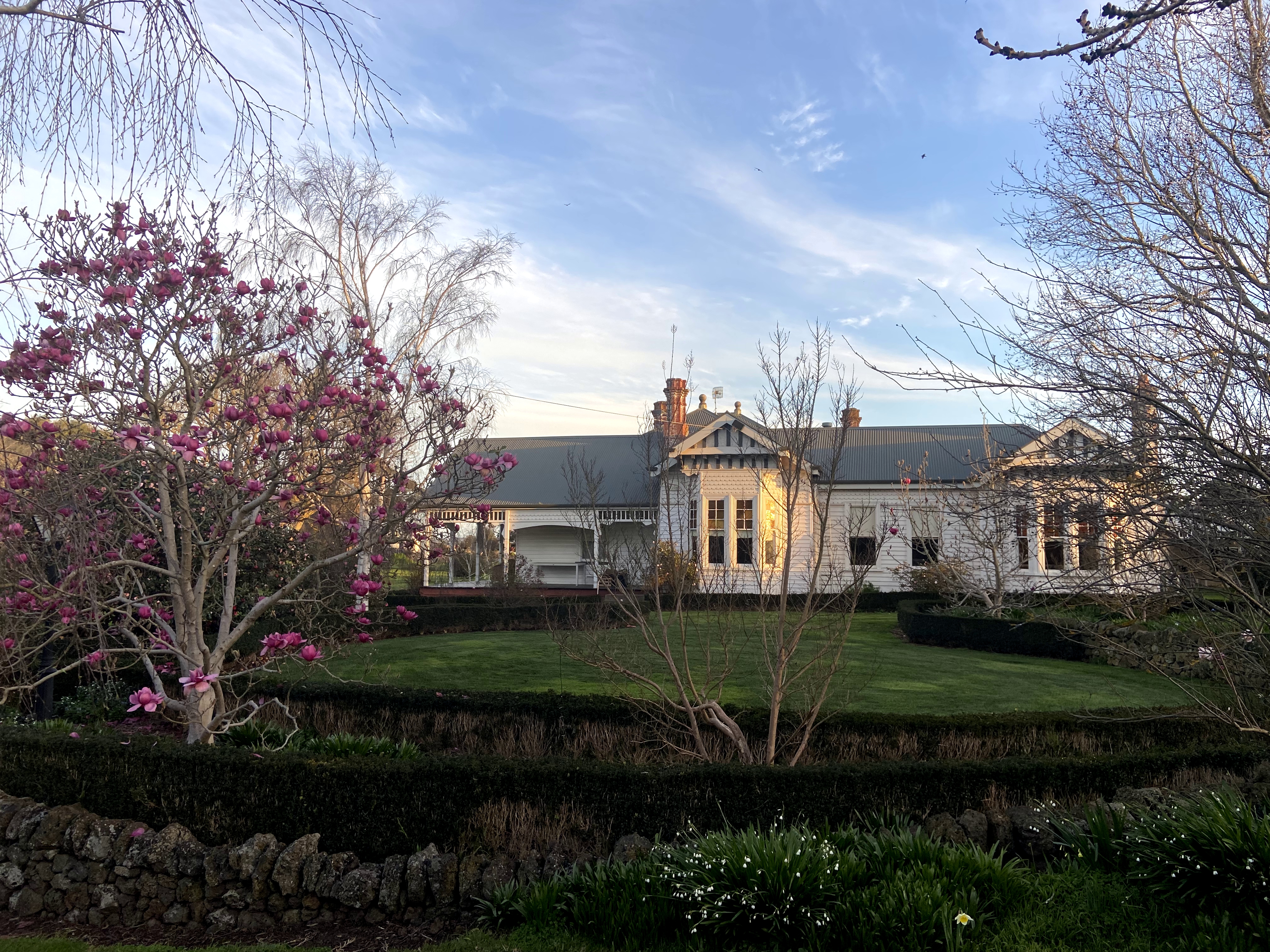
- The Old Manse: Two Presbyterian ministers who lived at the Manse were notable mentors of the young Alan Marshall.
- Noorat Recreation Reserve: Alan Marshall loved country shows and travelled to many as a fortune teller and palm reader.
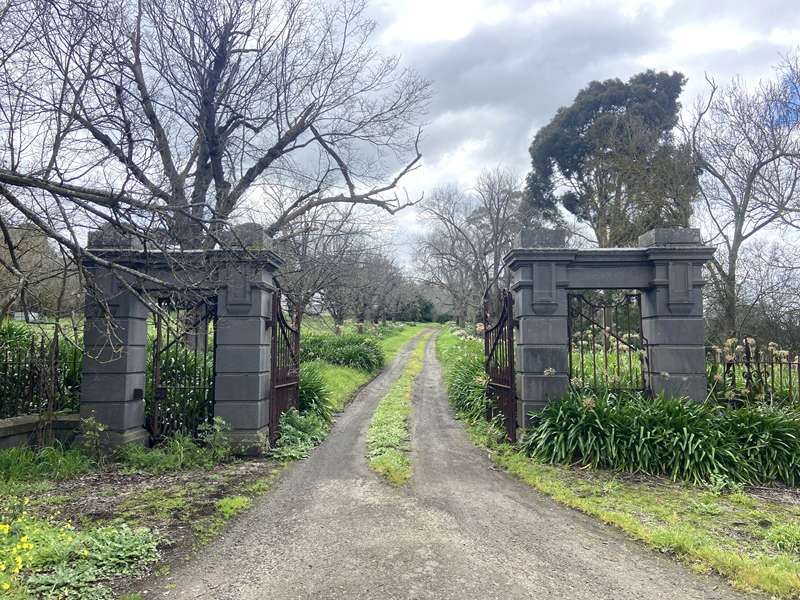
- Black’s Gates: Noorat’s history is linked to the settlement of the area by the Black family after Niel Black took up the Glenormiston run in 1839. Mount Noorat is a portion of the Glenormiston property still operated by family members. The Carruthers family in Alan Marshall’s I Can Jump Puddles is based loosely on the Black family.
- Glenormiston College and Former Trufood Factory: Alan Marshall worked in the office of the Trufood Factory in 1923. The factory is now an indoor equestrian centre at Glenormiston College, formerly the Glenormiston property. The historic building is located within the Glenormiston College property and is not generally accessible to casual visitors or readily visible from the public road. Contact Glenormiston College in advance if you wish to arrange access.
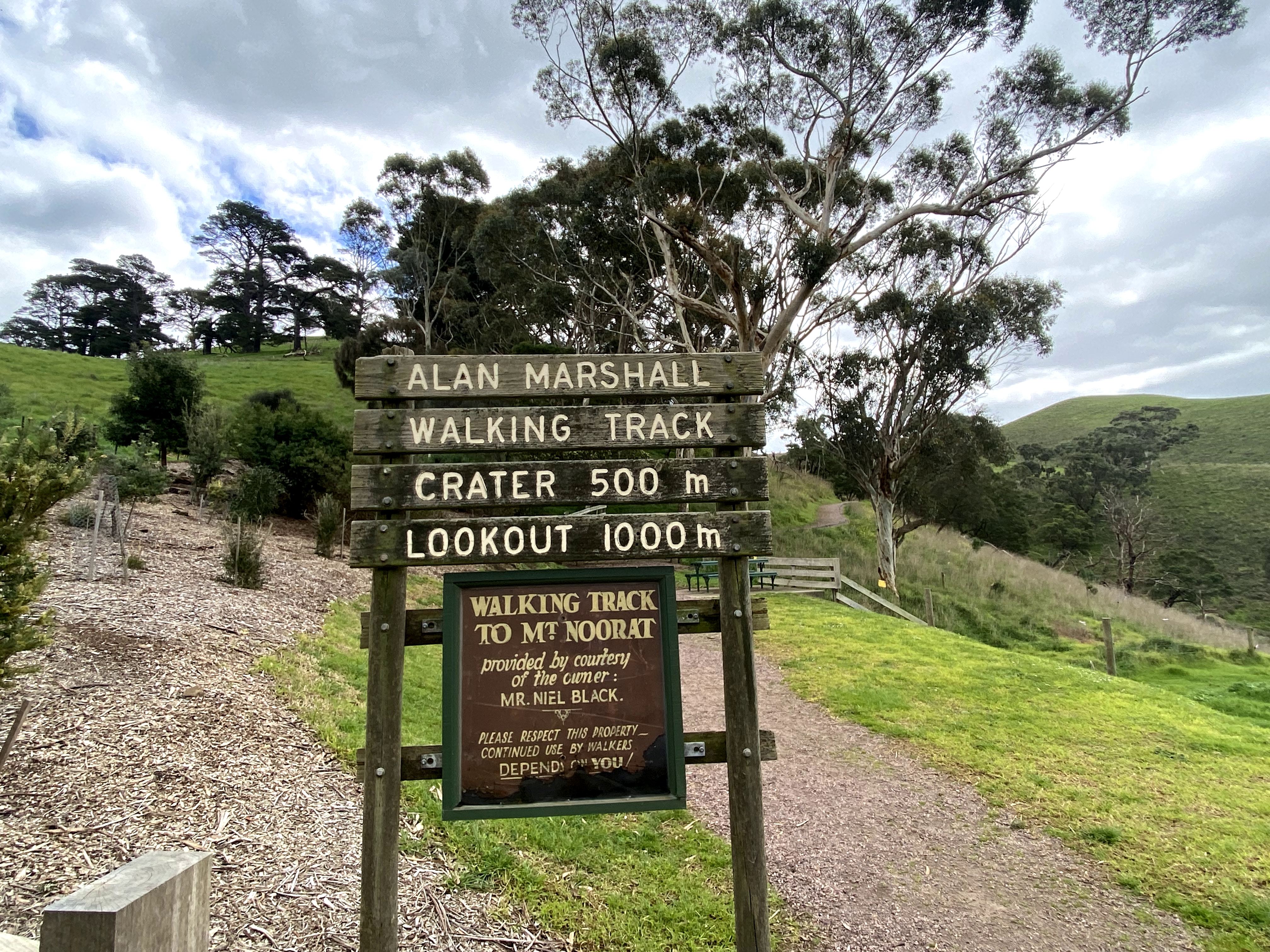
- Mt. Noorat and the Alan Marshall Walking Track: A traditional meeting and bartering place for Aboriginal tribes of the district. Known as Mount Turalla in I Can Jump Puddles, the volcanic crater was the site of childhood adventures for Alan Marshall and his friends. The Alan Marshall Walking Track leads from Carroopook Street to the crater rim.
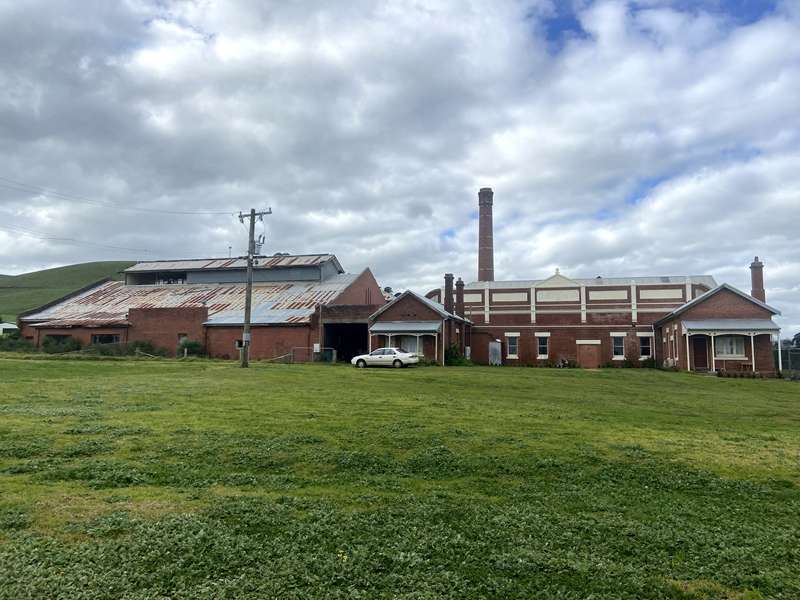
- Former Glenormiston Butter Factory: The Glenormiston Butter and Cheese Factory was an integral part of the economic, social and cultural history of the Noorat-Glenormiston district. Originally established in 1895 on the site of the bluestone wool shed at Glenormiston, production was transferred to Noorat in 1910. After a series of amalgamations, it ultimately became part of Bonlac Foods Ltd. The factory ceased operation in 1970 and Bonlac Foods sold the building in 1998.
- Lake Keilambete: Alan Marshall learnt to swim at Lake Keilambete, a tale recounted in I Can Jump Puddles, in which the lake was called Lake Turalla.
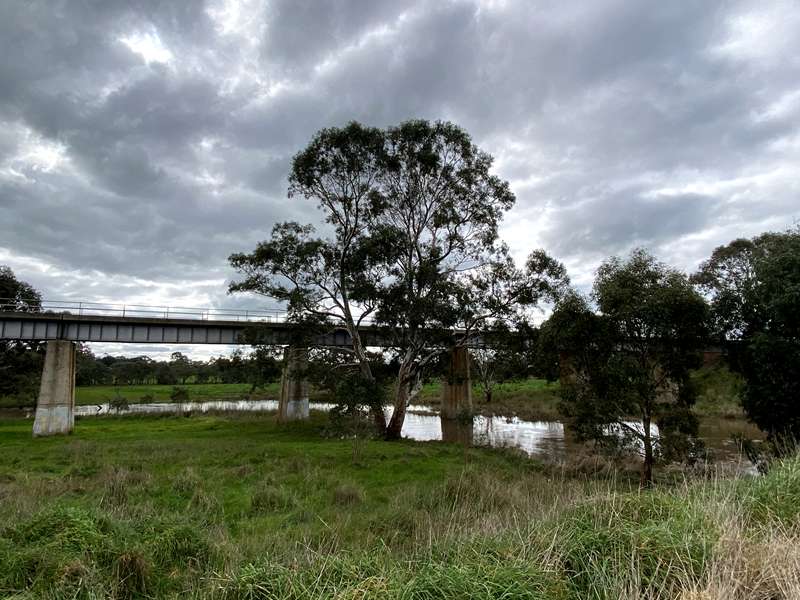
- Mount Emu Creek: A conspicuous watercourse through the district, Mount Emu Creek was the favoured spot for fishing for eels by Alan Marshall and his friends.
- Consumption Dyke: Alan Marshall believed that the stone walls at Noorat and Kolora were the best in the country. He wrote an account of them, “The Walls in the West”, included in If These Walls Could Talk: The Report of the Corangamite Dry Stone Walls Conservation Project 1995.
- Terang-Mortlake Road Wall: As a boy, Alan Marshall and his friends used ferrets to catch rabbits in the stone walls at Noorat and Kolora. This wall is number 7 on the Corangamite Dry Stone Walls Heritage Trail.
Access for Dogs:
Permitted on leash on public streets.
NOORAT
Mount Noorat, which dominates the town and the surrounding countryside, was named after a local Aborigine elder, Ngoora. The Mount was a traditional meeting and bartering place for the Aborigines of the district, the Kirrae Wuurong people.
The settlement and history of Noorat is linked to the settlement of the Black family after Niel Black took up the Glenormiston run in late 1839. A number of the early residents of Noorat either immigrated with Niel Black or worked on Glenormiston. These include the Ellis, Scally, Brennan, Carson, Beechey and MacDonald families.
When Alan Marshall lived here, during the first twenty years of the 20th century, Noorat was a thriving lively town due to the rapid growth of the dairy industry and the operations of Glenormiston Butter and Cheese and the Trufood Factories. It was a busy service centre with three blacksmiths, two stores, a hotel, a saddler, a barber, a plumber, two fruiterers, a butcher, a bootmaker, a Mechanics Hall and a Post Office.
Noorat is conveniently located in the heart of Victoria's Western District, 6km north of Terang. It is easily accessible from the Great Ocean Road at Port Campbell or Peterborough, Warrnambool, The Grampians and the Central Goldfields.
ALAN MARSHALL 1902 - 1984
Alan Marshall, writer, story teller and social documentor, was born in Noorat on May 2, 1902. His best known book 'I Can Jump Puddles' (1955), is the first of a three-part autobiography. The other two are 'This Is The Grass' (1962) and 'In Mine Own Heart' (1963).
When he was six he contracted polio which left him with a physical disability that worsened as he grew older.
From an early age, Marshall resolved to be a writer and in 'I Can Jump Puddles' he demonstrated almost total recall of his years at Noorat, the years that influenced his perceptions, values and writing for the rest of his life. Not deterred by disability he rode a pony; caught eels in Mount Emu Creek; climbed Mount Noorat; rolled down to the bottom of the crater and clawed back up again on his hands and knees; swam in Lake Keilambete; tried to play football; played cricket; kept the books for the store and with his friend Leo Carmody caught and sold rabbits.
The characters in 'I Can Jump Puddles' are thinly disguised, actual people or a blend of local personalities. Turalla in 'I Can Jump Puddles' is Noorat, Mount Turalla is Mount Noorat, Lake Turalla is Lake Keilambete, the Carruthers are the Black family, his mate Joe is Leo Carmody, and the portrait of his father is partly drawn from East Driscoll, a well-known horse trainer at the time. The people in the story are real to the author, who has mastered the craft of characterisation in order that they become real to the reader.
Alan Marshall wrote numerous short stories, mainly set in the bush as well as newspaper columns and magazine articles, He travelled widely in Australia and overseas and was a true humanitarian. He was one of the first non-Aboriginal writers to publish stories about Aborigines and to transcribe their legends. He was a staunch supporter of the underdog, the poor, the weak and the vulnerable. He loved people and enjoyed talking to them, particularly children.
Alan Marshall died in Melbourne on January 21, 1984.
Photos:
Location
1 Terang-Mortlake Road, Noorat 3265 View Map


