Montrose Brickworks Heritage Trail


The Montrose Town Centre is surrounded by landscaped gardens that feature a war memorial and Robert Riddett's cottage which was built nearby in 1877 and relocated to its present site.
The Montrose Brickworks Heritage Trail extends through the gardens and pays homage to the town's only main industry in the 1920s - the brickworks. The bricks originally manufactured here have been used to create a series of educational signs along the trail.
Signage
Montrose Brickworks
Walking through Montrose Town Centre today many of the bricks you see were made at the historic Montrose Brickworks. In the 1920s the brickworks was Montrose's only major industry. It was located on the corner of Montrose and Cambridge Roads, where the Flora Reserve is today.
The brickworks was first established by David Mitchell - renowned builder, businessman, owner of Cave Hill Quarry in Lilydale and father of Australia's first diva Dame Nellie Melba. Mitchell purchased the land in 1904 and started the Darley Firebrick Company. This business survived until 1920 when Clarence 'Clarrie' Button purchased the brickworks.
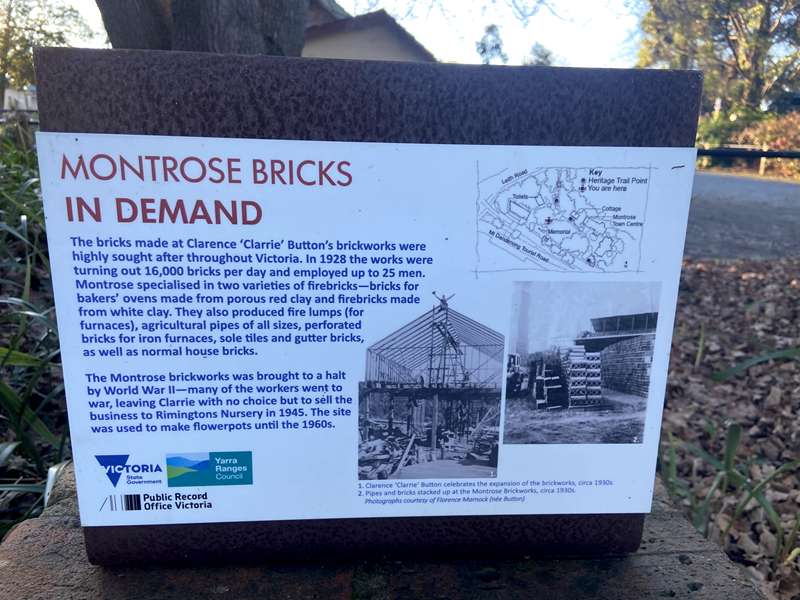
Montrose Bricks in Demand
The bricks made at Clarence 'Clarrie' Button's brickworks were highly sought after throughout Victoria. In 1928 the works were turning out 16,000 bricks per day and employed up to 25 men. Montrose specialised in two varieties of firebricks—bricks for bakers' ovens made from porous red clay and firebricks made from white clay. They also produced fire lumps (for furnaces), agricultural pipes of all sizes, perforated bricks for iron furnaces, sole tiles and gutter bricks, as well as normal house bricks.
The Montrose brickworks was brought to a halt by World War II—many of the workers went to war, leaving Clarrie with no choice but to sell the business to Rimingtons Nursery in 1945. The site was used to make flowerpots until the 1960s.
Robert Riddett's Cottage
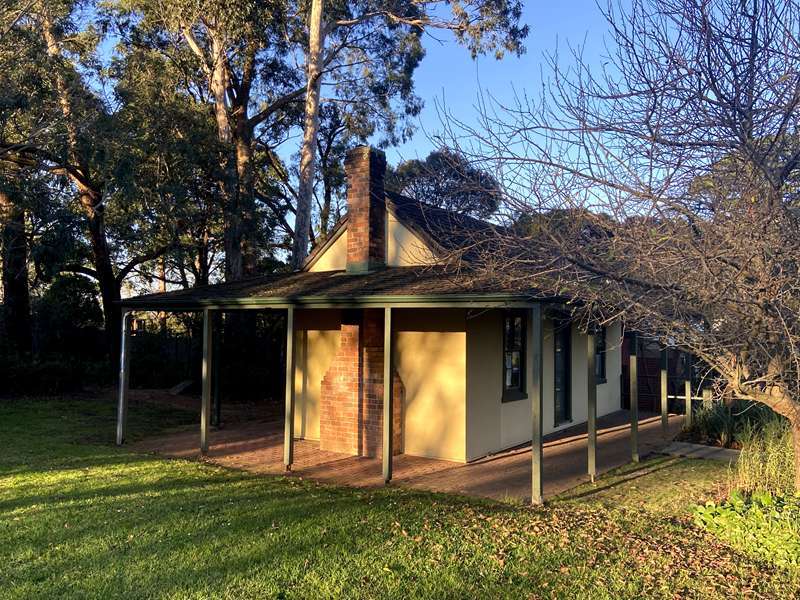
In 1877 plasterer Robert Riddett selected 134 acres of heavily timbered land on Mt Dandenong Road. He cleared 3 acres and set to work planting potatoes and English grasses and constructed a cottage 29 by 25 feet out of sawn timber with a shingle roof. Robert lived in the cottage with his wife Emma and their children.
Robert passed away in 1892 and Emma sold the property to Harriet and William Yeaman in 1903. The Yeamans extended the cottage to house their family and later to operate it as a guesthouse for ladies called 'Mountain Rest'.
In 1980, the original four-room Riddett cottage was discovered during the demolition of the guesthouse. With the help of the Lilydale Shire Council and Montrose Rotary Club the cottage was moved from its original location at 894 Mt Dandenong Road to its present site, where it has been restored.
Sister Edith Wilson Yeaman
There is also a statue honouring Sister Edith Wilson Yeaman in the Gardens.
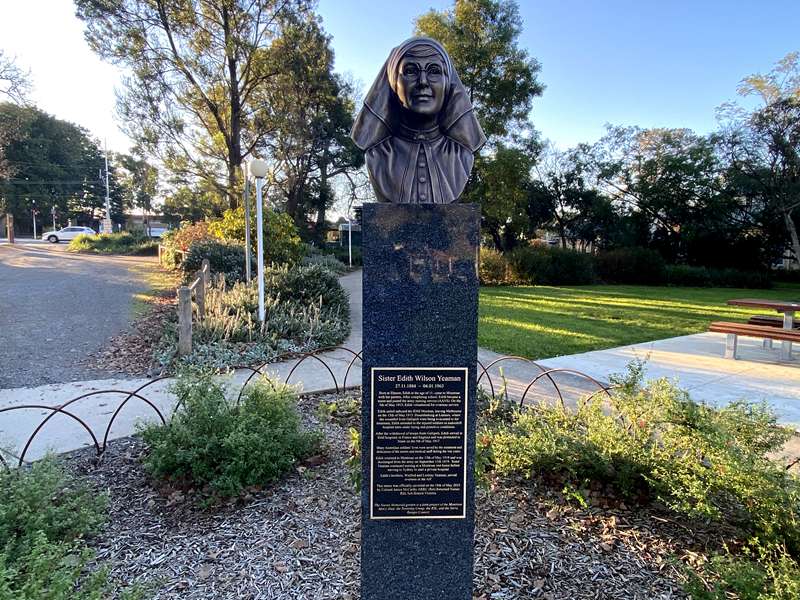
Sister Edith Wilson Yeaman
27.11.1884 – 04.01.1963
Born at Elmore, Edith at the age of 11, came to Montrose with her parents. After completing school, Edith became a nurse and joined the army nursing service (AANS). On the 5th of May 1915, Edith volunteered for overseas service.
Edith sailed onboard the RMS Mooltan, leaving Melbourne on the 15th of May 1915. Disembarking at Lemnos, where the wounded from Gallipoli were being evacuated to for treatment, Edith attended to the injured soldiers in makeshift hospital tents under trying and primitive conditions.
After the withdrawal of troops from Gallipoli, Edith served in field hospitals in France and England and was promoted to Sister on the 5th of May 1917.
Many Australian soldiers' lives were saved by the treatment and dedication of the nurses and medical staff during the war years.
Edith returned to Montrose on the 15th of May 1919 and was discharged from the army on September 13th, 1919. Sister Yeaman continued nursing at a Montrose rest home before moving to Sydney to start a private hospital.
Edith's brothers, Winfred and Lindsay Yeaman, served overseas in the AIF.
Location
935 Mount Dandenong Tourist Road, Montrose 3765 View Map


