Lismore Discovery Trail


The Lismore Discovery Trail is a series of walking routes through Lismore which explore the town's history, natural environment and places of interest.
Interpretive signs are located along the trail and tell stories about the people, buildings, geology and natural features of the district.
Trail options include:
- Township Route - 2.5 km, approximately 50 minutes
- Recreational Route - 2 km, approximately 30 minutes
- Cemetery Route - 1.1 km, approximately 15 minutes
Interpretive sites along the Discovery Trail include:
- Browns Waterholes and the geology of the area
- Grimwade Park and its bird life
- Wadawurrung history and early settlement
- Presbyterian Bluestone Church
- Masonic Hall
- Mechanics Hall
- Former flax mill
- Lismore Cemetery
- Historic locomotive at Grimwade Park
- Avenue of Honour
- Lismore's historic precinct
The trail also passes through areas where native birds and other wildlife can be seen. Fruit trees forming Lismore's Gathering Trail can also be found along parts of the route, with fruit available seasonally.
A new footbridge beneath the Hamilton Highway opened in June 2026. The bridge restores an important section of the Discovery Trail and allows walkers to pass beneath the busy highway rather than crossing the road. It also reconnects the walking route between Browns Waterholes and the Lismore Cemetery.
Access for Dogs:
Dogs can be walked along the trail. Keep dogs under effective control and obey any signed leash requirements.
Location:
Suggested starting point: Prospect (Broken Axle) sculpture, Cnr High Street and Heriot Street, Lismore.
Lismore Discovery Trail Map
Discovery Trail Markers:
Markers along the trail are:
Browns Waterholes - Geology: Browns Waterholes pedestrian bridge, accessed from Gray Street, Lismore
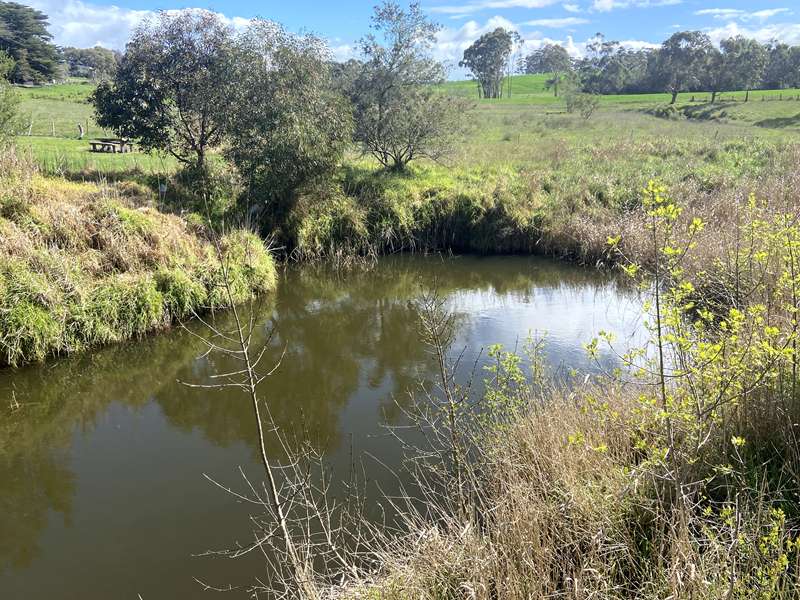
Discover the unusual geology beneath Lismore. Browns Waterholes has cut through to granite around 360 million years old. The nearby Boomerang Ridge is formed from much younger laterite, while basalt lava flows created the rich volcanic plains further west. The marker also tells how John Brown settled here in 1840 after the axle of his bullock dray broke while crossing the creek.
Grimwade Park - Bird Life: Cnr Hamilton Highway and Gray Street, Lismore
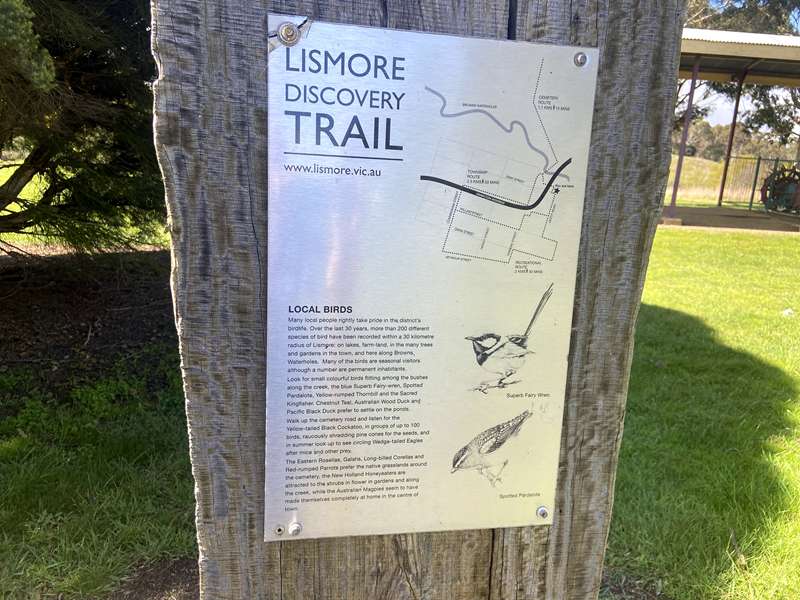
Learn about the variety of native birds found around Grimwade Park and the Browns Waterholes waterway. The park and creek provide habitat for numerous species and are good places for birdwatching.
First Settlement - Waddawurrung: Browns Waterholes walking track, accessed from Grimwade Park, Cnr Hamilton Highway and Gray Street, Lismore
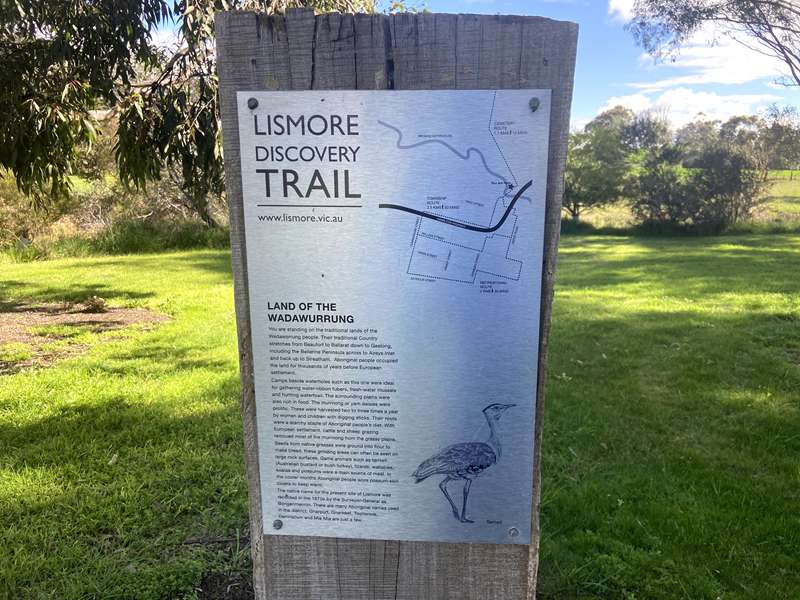
Learn about the Waddawurrung people, the Traditional Custodians of the area, and the early history of settlement around Browns Waterholes.
Presbyterian Bluestone Church: 58-60 High Street, Lismore
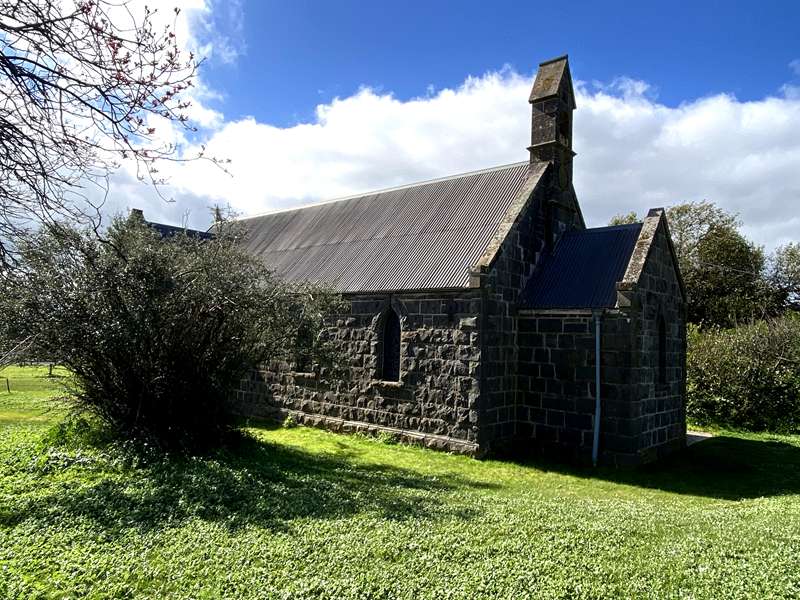
The Lismore Presbyterian Church opened in 1864 and reflects the strong Scottish Presbyterian influence among the district's early settlers. The bluestone used for the church was quarried locally.
Masonic Hall: 56 William Street, Lismore
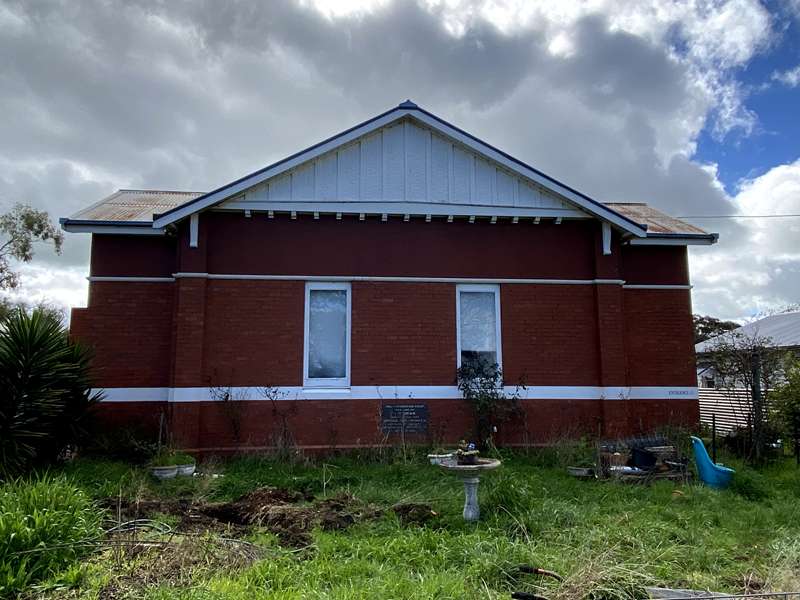
Discover the history of Lismore's Masonic Hall and the role the Masonic Lodge played in the social life of the early township.
Mechanics Hall: 54 William Street, Lismore
Learn about Lismore's former Mechanics Hall, which was built around 1880 and served as an important community meeting place. The original hall was eventually removed in the 1990s.
Flax Mill: Ferrers Street, south of William Street, Lismore
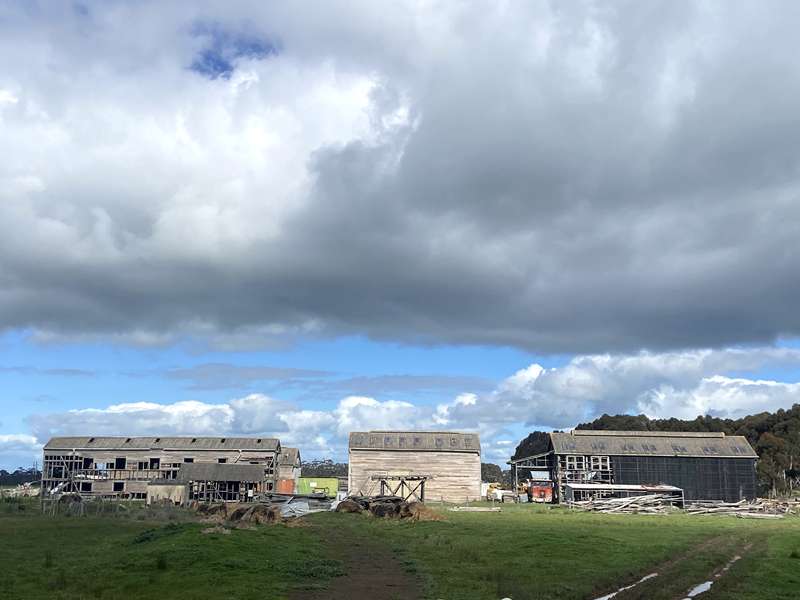
The Lismore Flax Mill was built in 1943 during World War II to process locally grown flax used for items such as parachute webbing, bags, straps, leggings and puttees. At its peak the mill and associated work employed about 90 people, including up to 50 Women's Land Army workers.
Lismore Cemetery: Cemetery Road, Lismore
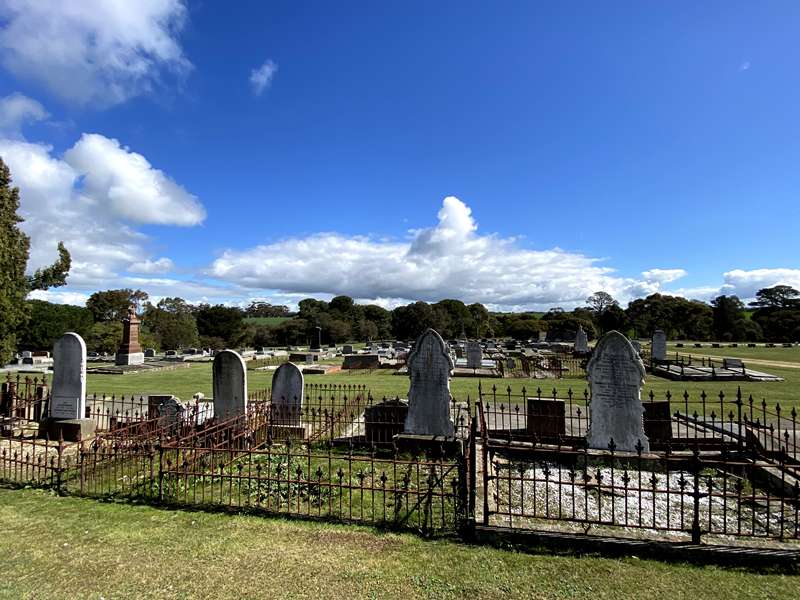
Explore the historic cemetery on the rolling hills north of Lismore. The cemetery overlooks the township and contains the graves of generations of local residents and pioneering district families.
Grimwade Park - Locomotive D3671: Cnr Hamilton Highway and Gray Street, Lismore
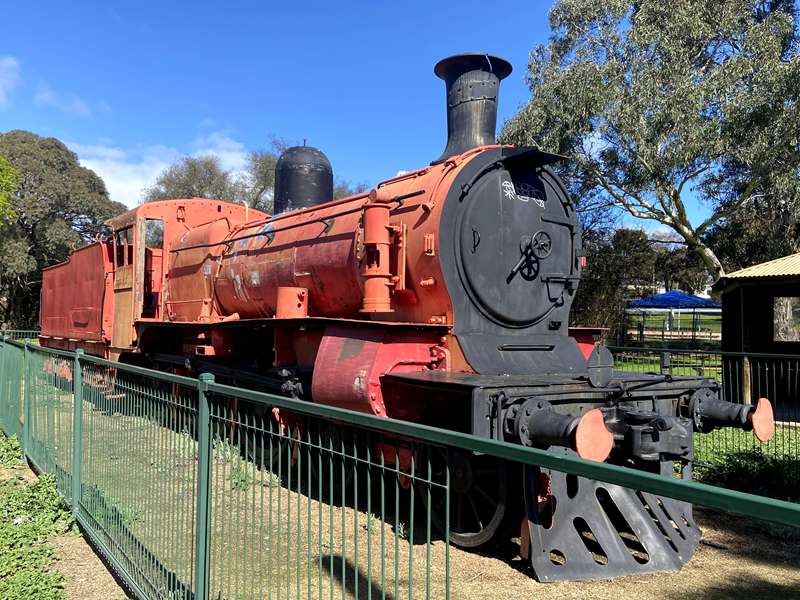
The preserved D3671 steam locomotive commemorates the importance of the Victorian Railways to Lismore and the surrounding district. The locomotive was built at Newport Workshops in 1917 and was brought to Lismore for preservation in 1965.
Avenue of Honour: William Street, between Cunningham Street and Heriot Street, Lismore
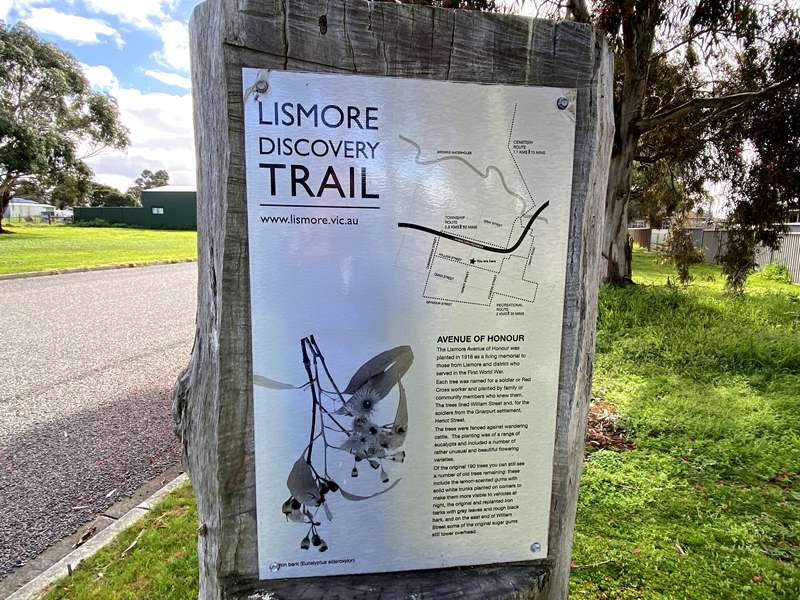
The marker tells the story of Lismore's Avenue of Honour and its role in commemorating local men and women associated with wartime service.
Historic Precinct: Around 1 High Street, Lismore

Discover Lismore's historic streetscape and surviving early buildings, including structures dating from the 1860s. The precinct provides an insight into the development of the township and its early commercial and community life.
Bills Water Trough: Near cnr Hamilton Highway and Heriot Street, Lismore
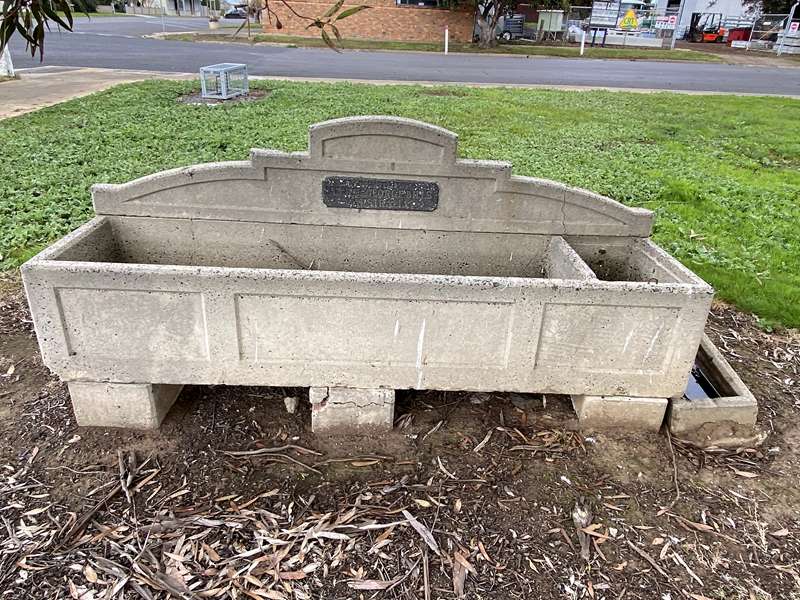
Troughs around Australia donated by Annis and George Bills.
Lone Pine Memorial: Near cnr Hamilton Highway and Gray Street, Lismore
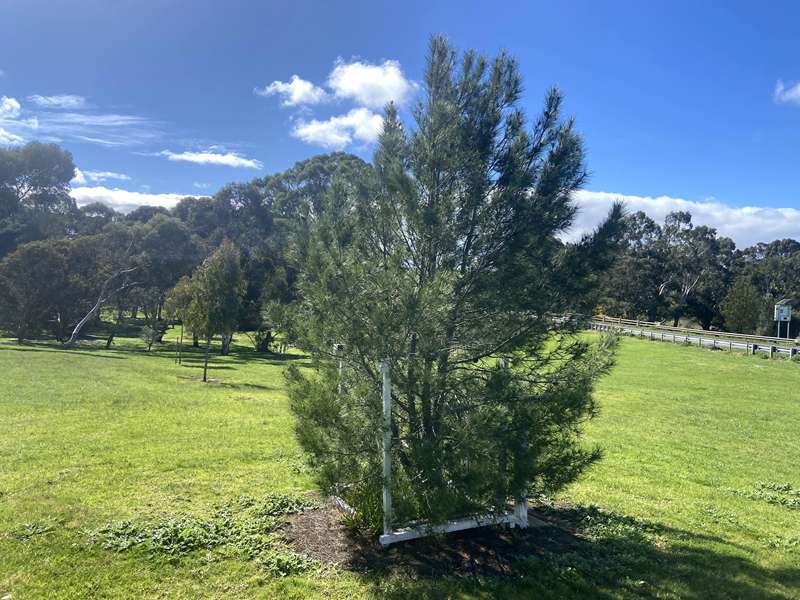
A "lone pine" P.brutia from seed from Warrnambool gardens which came from Gallipoli in 1915.
Neighbourhood Centre Mural: 104 Hamilton Highway, Lismore
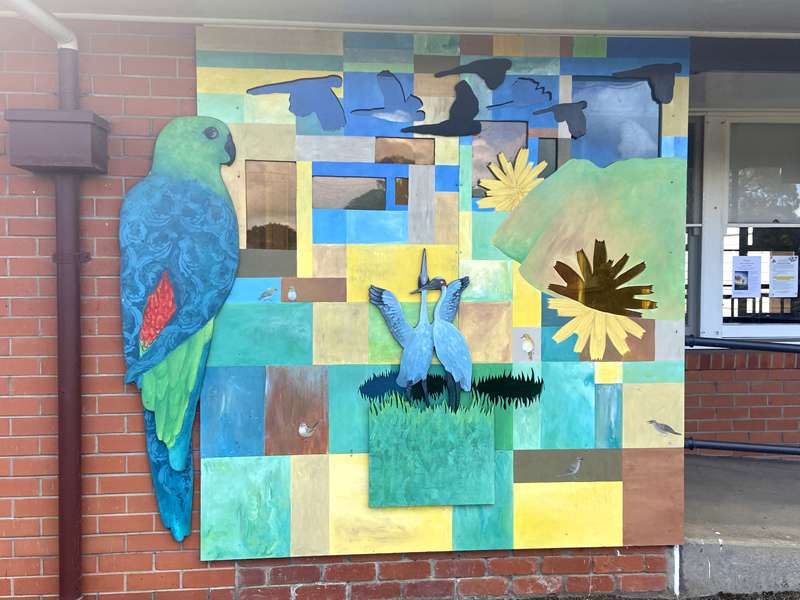
Mural installed by Becki Nevin-Burger in 2020.
"Prospect" Broken Axle: Near cnr Hamilton Highway and Heriot Street, Lismore
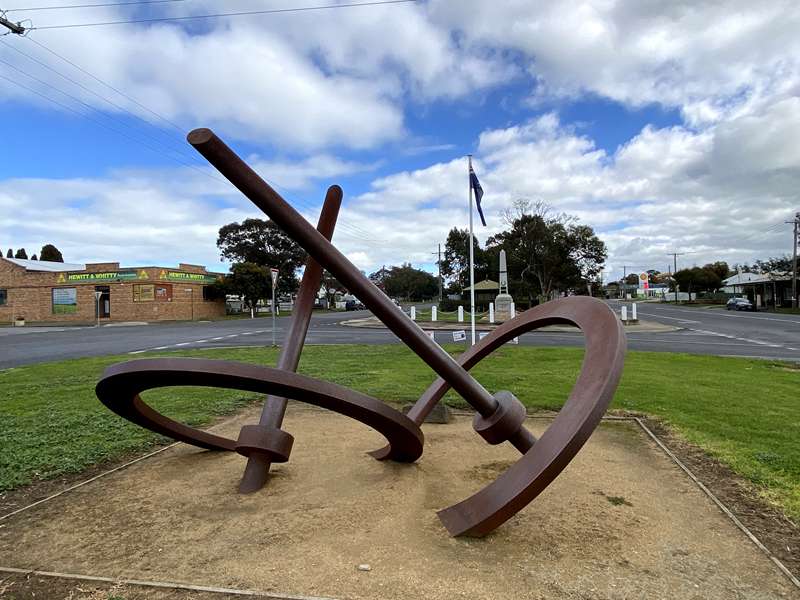
Artwork installed in 2011.
Tom Seymour Gates: Cnr Seymour Street and Heriot Street, Lismore
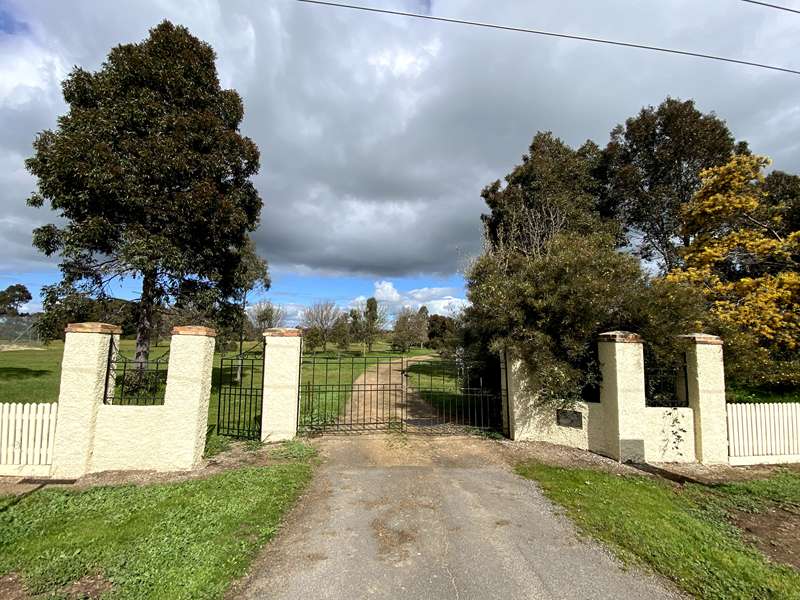
In memory of Tom Seymour who secured the grounds for recreation in 1876
War Memorial: Cnr Seymour Street and Heriot Street, Lismore
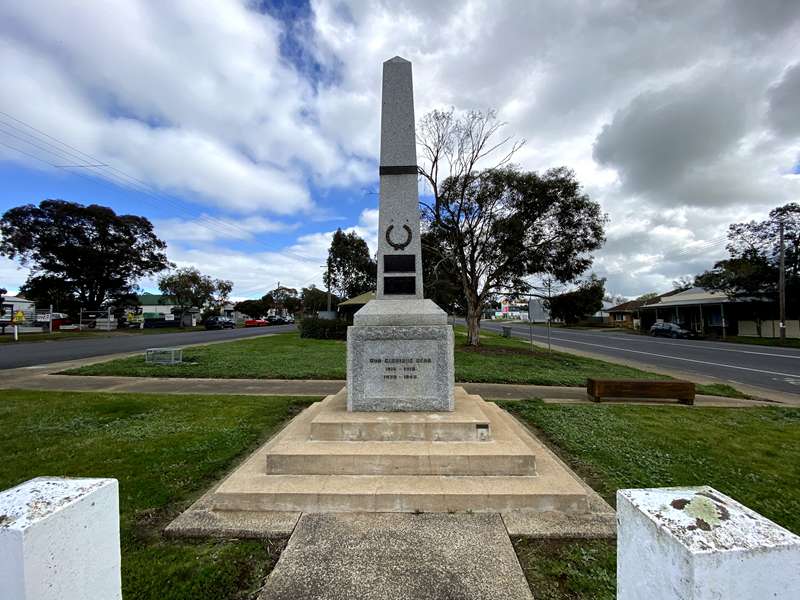
Erected by Commonwealth Government in memory of those who died in all wars.
Water Tower Mural: Cnr Seymour Street and Heriot Street, Lismore
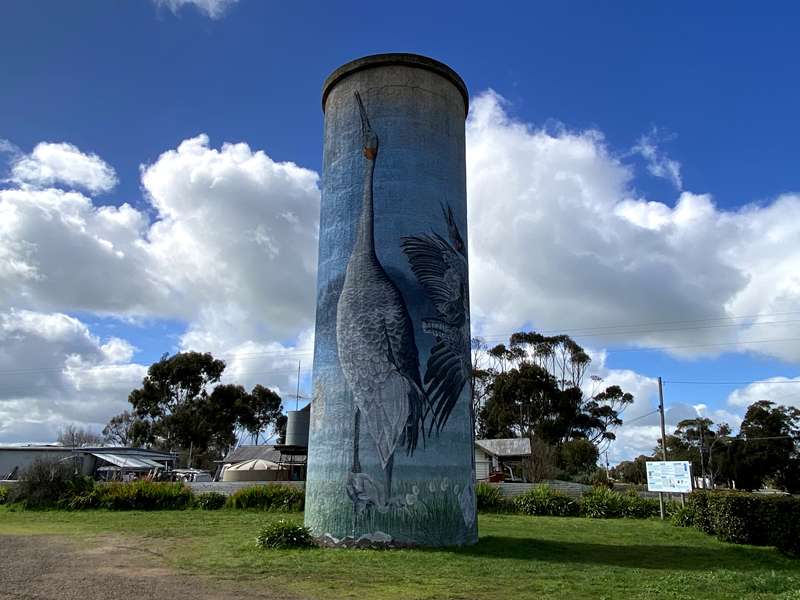
Mural painted in 2020 by Jimmi Buscombe.
Photos:
Location
Cnr High Street and Heriot Street, Lismore 3324 View Map
Web Links
→ lismore.vic.au/discovery-trail.html


