Kurnai Trail


The Kurnai Trail travels across five reserves that were affected directly or indirectly on Black Saturday. You can learn about Kurnai Brabraloong culture, appreciate art created by local artists and enjoy these natural areas.
Welcome to Kurnai country
The Kurnai have been occupying this section of land from the time Tasmana was joined to the mainland of Australia.
Archaeological excavations in Gippsland have discovered that the Kurnai have lived in the region for over 20,000 years. Due to Gippsland’s difficult terrain and climatic weather the Kurnai were the last tribe in Victoria to come in contact with Europeans in 1830.
The Kurnai clan are made up of five clans named after the location of where they lived. The south-west people are called Brayakooloong, the north people Bratwooloong, the central clan Tatungooloong, the south people Brabraloong and the east clan Krauatungalung.
Brayakooloong tribal boundaries include Matlock, Jamieson, Mt Baw Baw, Drouin, Warragul, Licola, Lake Moe, Morwell, Garfield, Tominbul, Yynong and Bunyip.
The land, food, and water resources were important for survival and existence. Techniques for caring for country were managed by each clan member.
Kurnai customs and laws are completely different to other tribes in Victoria. Each tribe member is given a name of an animal, a plant or a place in the landscape or mountain. Groups of Kurnai people would visit each cultural site in their territories during the seasons to perform initiations, story telling, songs, dance and arts.
The Kurnai dialect is split into three languages. Different customs and laws involved marriages, land management, food and water resources.
Sandra Mullett
Descendant of the Kurnai tribe
Kurnai Brayakooloong Country
The superb fairy-wren is the totem of the Kurnai Brayakooloong people. You can see him on each sign of the Kurnai Trail.
The male superb fairy-wren in the Kurnai language is named Yeerung and the female superb fairy-wren bird is named Djeetgun.
On each sign is the shield symbol of the Kurnai Brayakooloong ancestral dreaming and like a logo represents the clan.
The linear and geometric patterns on traditional shields reveal a unique character related to ancestors, respected the roles of men and women and depicted time and distance.
The Kurnai Trail travels across five reserves that were affected directly or indirectly on Black Saturday. You can learn about Kurnai Brabraloong culture, appreciate art created by local artists and enjoy these natural areas.
The artwork and designs have been passed on by the Elder Uncle Jack Hood to the descendants of the Kurnai tribe.
The art on each sign have been completed by the local Brayakooloong Kurnai artists and we greatly appreciate their permission to include their art into the signs.
The 'Brayakooloong Men’s Art' group members are Dale Hayes, Ian Harrison, Chris Rose and Lionel Rose Jnr.
Kurnai Trail Map
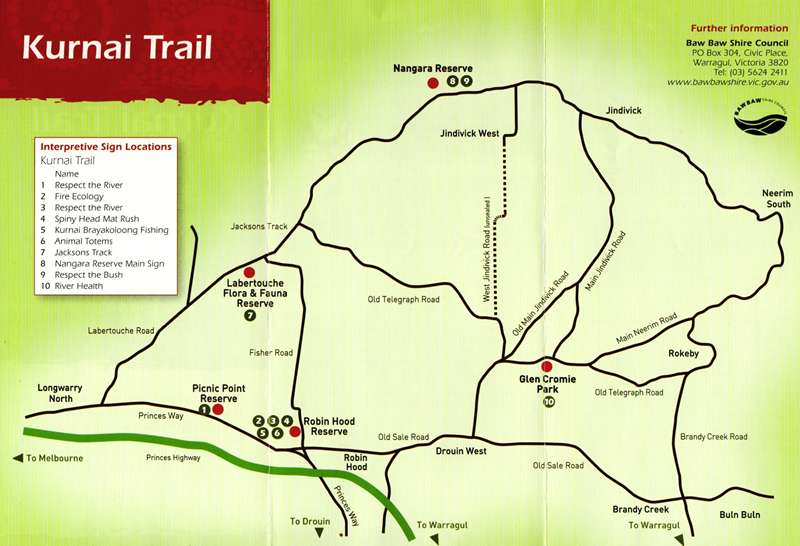
Interpretative Sign Locations
Picnic Point Reserve
1. Respect the River
Robin Hood Reserve
2. Fire Ecology
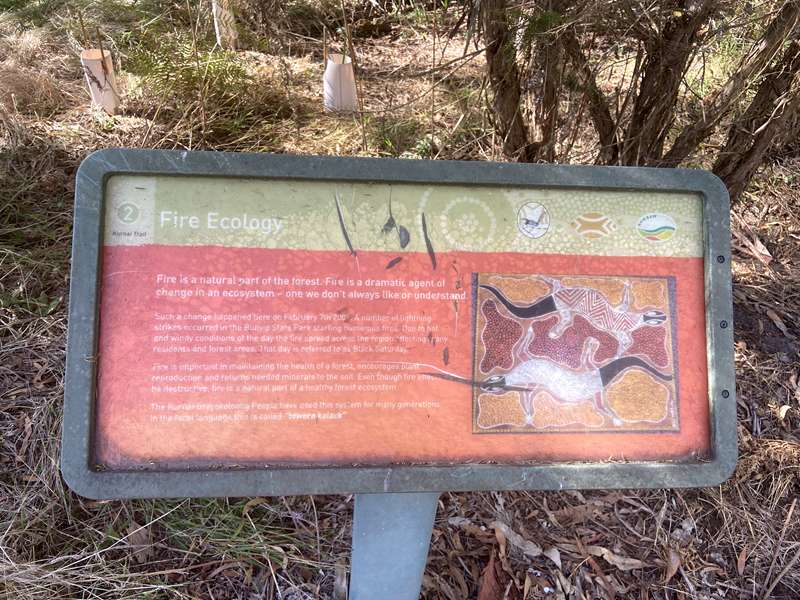
Fire is a natural part of the forest. Fire is a dramatic agent of change in an ecosystem - one we don’t always like or understand.
3. Respect the River
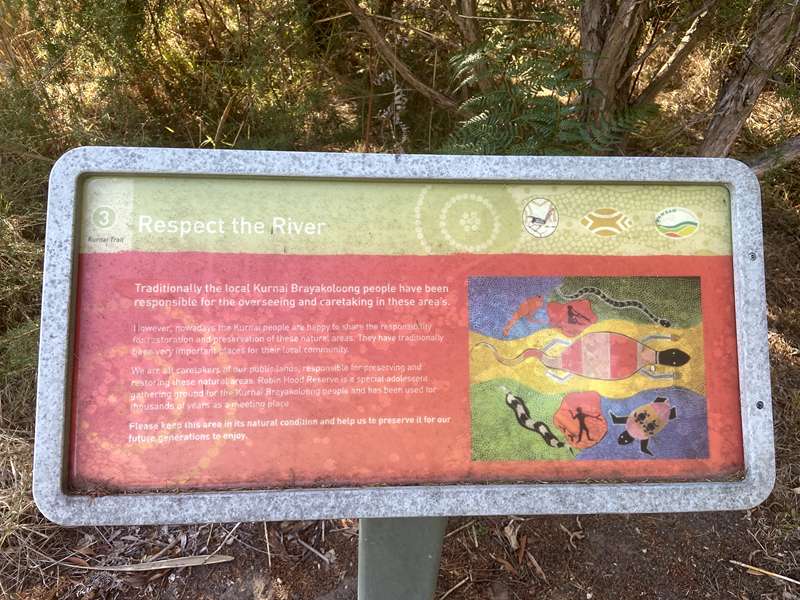
Traditionally the local Kurnai Brayakooloong people have been responsible for the overseeing and caretaking in these area’s.
If however, broader Kurnai people are happy to share the responsibility for conservation and preservation of these natural areas. They have traditionally done so? respect these areas for their local community.
We are all consumers of our natural areas, responsible for preserving and restoring these natural areas. Robin Hood Reserve is a special ceremonial gathering ground for the Kurnai Brayakooloong people and has been used as a meeting and gathering place.
Please leave this area in its natural condition and help us to preserve it for our future generations to enjoy.
4. Spiny Head Mat Rush
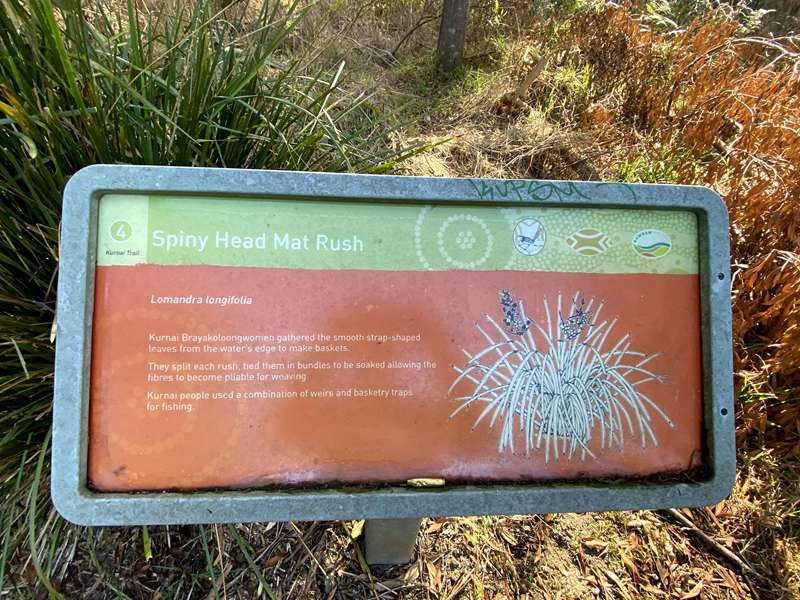
Lomandra longifolia
Kurnai Brayakooloong women gathered the smooth strap-shaped leaves from the water’s edge to make baskets.
They split each rush, tied them in bundles to be soaked allowing the fibres to become pliable for weaving.
Kurnai people used a combination of weirs and basketry traps for fishing.
5. Kurnai Brayakooloong Fishing
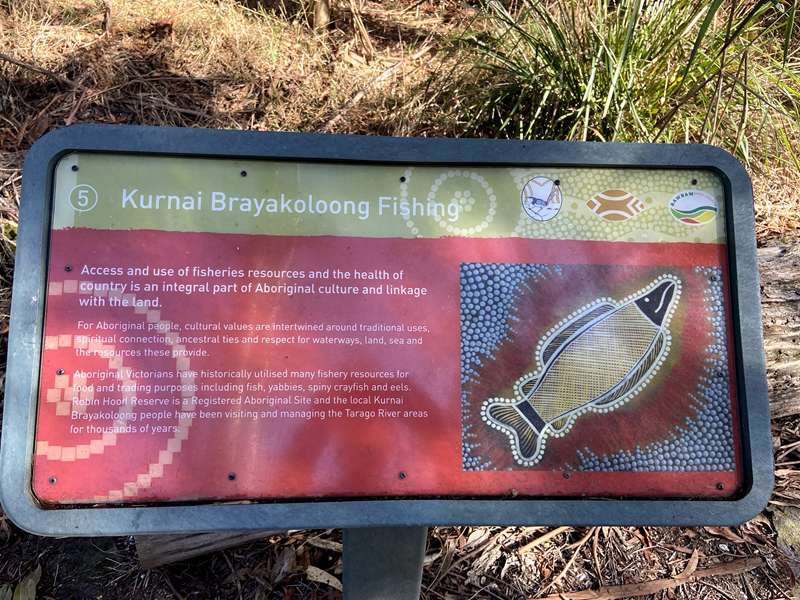
Access and use of fisheries resources and the health of country is an integral part of Aboriginal culture and linkage with the land.
For Aboriginal people, cultural values are intertwined around traditional uses, spiritual connection, ancestral ties and respect for waterways, land, sea and the resources these provide.
Aboriginal Victorians have historically utilised many fishery resources for food and trading purposes including fish, yabbies, spiny crayfish and eels. Robin Hood Reserve is a Registered Aboriginal Site and the local Kurnai Brayakooloong people have been visiting and managing the Tarago River areas for thousands of years.
6. Animal Totems
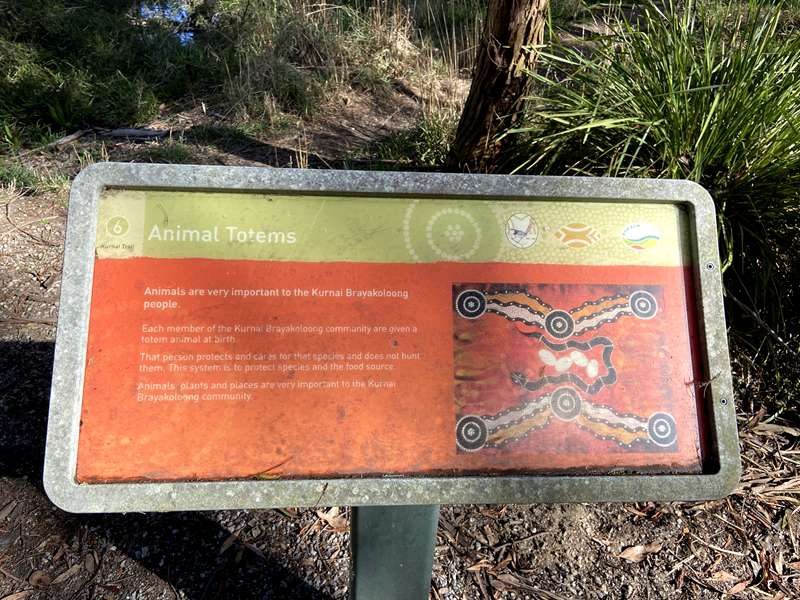
Animals are very important to the Kurnai Brayakooloong people.
Each member of the Kurnai Brayakooloong community are given a totem animal at birth.
That person protects and cares for all of that species and does not hunt them. This ensures to protect species and their food source.
Animals, totems and places are very important to the Kurnai Brayakooloong community.
Labertouche Flora & Fauna Reserve
7. Jacksons Track
Nangara Reserve
8. Nangara Reserve Main Sign
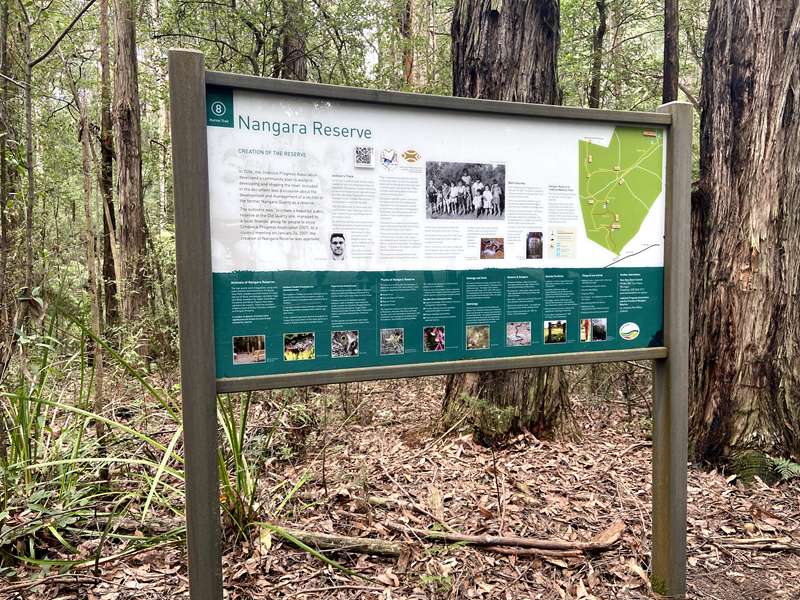
In 2006, the Jindivick Progress Association developed a community plan to assist in developing and shaping the town. Included in the document was discussion about the development and management of a section of the former Nangara Quarry as a reserve.
The outcome was “to create a beautiful public reserve at the Old Quarry site, managed by a local ‘friends’ group for people to enjoy” (Jindivick Progress Association 2007). At a council meeting on January 24, 2007, the creation of Nangara Reserve was approved.
9. Respect the Bush
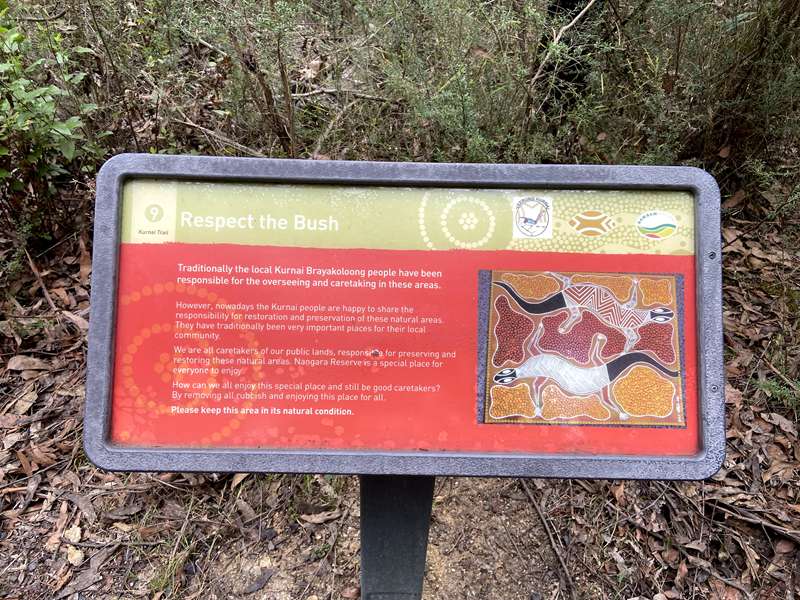
Traditionally the local Kurnai Brayakooloong people have been responsible for the overseeing and caretaking in these areas.
However, nowadays the Kurnai people are happy to share the responsibility for restoration and preservation of these natural areas. They have traditionally been very important places for their local community.
We are all caretakers of our public lands, responsible for preserving and restoring these natural areas. Nangara Reserve is a special place for everyone to enjoy.
How can we all enjoy this special place and still be good caretakers? By removing all rubbish and enjoying this place for all.
Please keep this area in its natural condition.
Glen Cromie Park
10. River Health


