Horsham Botanic Gardens


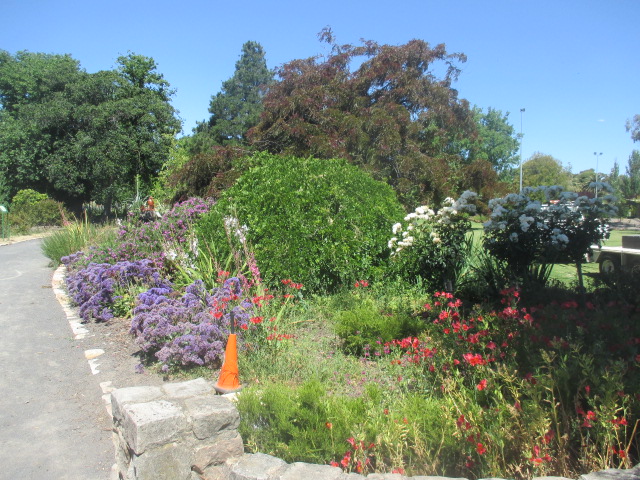
Designed by William Guilfoyle in the 1870s this was originally a reserve of 37 acres, but only eight acres remained by 1982. Clubs and individuals have donated trees and shrubs over the years and several thousand thrive in this peaceful haven. There is a children's playground and picnic facilities amongst trees, lawn areas, rose gardens and floral displays beside the Wimmera River.
The Horsham Botanic Gardens are an ideal place to explore. Situated alongside the banks of the Wimmera River, the gardens are a perfect place to enjoy a relaxed and natural bushland setting. Playgrounds and BBQ facilities make the gardens a great place for family and friends to enjoy a delightful picnic lunch.
Take a peaceful walk through the gardens observing an array of native plants, trees, herbs and birds. The walkways are wheelchair and pram friendly for the whole family to enjoy.
A sculpture can be found in the gardens to acknowledge the curator that worked on designing the original layout.
History
he early history of the Horsham Botanical Gardens is somewhat vague, but it is known the Council assumed control in April of 1883 and Mr J Venns was the caretaker at that time. The design of the gardens was undertaken by the curator of the Royal Botanic Gardens in Melbourne – Mr William Guilfoyle, somewhere between 1873 and 1880.
Mr Skelton Parks was then appointed to caretaker for a salary of 100 pounds plus a cottage of 4 rooms and a garden. His successor in 1890 was Mr A McFarlane. The position of curator now covered the care of street trees. Mr J Veasey followed Mr T Brown until 1935. The Horsham Botanical Gardens were much admired and used frequently. In 1908 it was decided to extend the gardens with small lakes and bridges.
Ernest E Lord has given much inspiration to the development of the gardens and public areas. He included annuals, perennials, shrubs, natives and introduced fruit trees. With funds from the closed ANA branch they were able to develop wild life enclosures, camping facilities, grass tennis courts and croquet lawns.
The original land was believed to be 37 acres, it now covers 8 acres.
Alby Elbourne began in 1946 and when he retired there were over 7000 trees, planted by E E Lord. Stan Kemp became curator in 1974. It has a wonderfully varied past with emus, brolgas and kangaroos being residents at certain times in its history.
The lawns being used by the gentlemen and ladies of the day for coquet and tennis. The gardens have always been the pride and joy of their succession of curators and enjoyed by the local community and visitors alike.
Review:
A lovely spot to visit. The Gardens are divided into walks and common areas e.g. big desert collection, Tasmania Garden, South Africa Collection. There are labels on the trees and plenty of information boards for added interest. There are nice shaded tables and toilets and an excellent playground at the eastern end.
There is a steel and stone sculpture by Ben Gilbert which is an allegory of the intimate relationship between water, trees and sustainable land use. In the playground is a wooden sculpture, Bunyip, by artist Kevin Gilders who was commissioned to carve two sculptures out of an old sugar gum which had to be removed from the gardens for safety reasons.
Access for Dogs:
No pets are permitted in the gardens.
Photos:
Location
Eastgate Drive, Horsham 3400 View Map


