Victoria's Best Accessible Shipwrecks: 9 Historic Wrecks You Can Still See Today


Victoria's coastline is home to hundreds of historic shipwrecks, from famous maritime disasters such as the Loch Ard to rusting wreckage still visible on beaches today. While many shipwrecks lie hidden beneath the waves, several can be explored from shore, offering a fascinating combination of history, adventure and spectacular coastal scenery. Heritage Victoria estimates there are around 660 historic shipwrecks around the Victorian coast, with only about half having been located.
Before setting out to explore Victoria's shipwrecks, consider visiting Flagstaff Hill Maritime Village in Warrnambool. Overlooking Lady Bay, this living museum tells the stories of the Shipwreck Coast through historic buildings, maritime exhibits and artefacts recovered from famous wrecks. Highlights include relics from the Loch Ard and the world-famous Loch Ard Peacock, one of Australia's most treasured shipwreck artefacts. The village also serves as a gateway to the Historic Shipwreck Trail, which commemorates more than 50 wrecks along Victoria's south-west coast.
Shipwreck artefacts can be seen at the Gippsland Regional Maritime Museum in Port Albert, Gippsland.
Best Shipwrecks at a Glance
- Best overall: Loch Ard Gorge
- Best visible wreck remains: Trinculo Shipwreck (Golden Beach)
- Best low-tide adventure: SS Speke (Phillip Island)
- Best shipwreck walk: Wreck Beach (Fiji and Marie Gabrielle)
- Best shipwreck story: Loch Ard Gorge
- Best for families: Loch Ard Gorge
Quick Reference Guide to Victoria's Accessible Shipwrecks
| Shipwreck | Location | Highlights | Visibility |
| Loch Ard | Loch Ard Gorge | Shipwreck site, gorge and lookouts. The wreck itself is underwater. | Underwater |
| Fiji | Wreck Beach, Gellibrand Lower | Historic anchor visible at low tide. | Anchor |
| Marie Gabrielle | Wreck Beach, Gellibrand Lower | Historic anchor visible at low tide. | Anchor |
| Eric the Red | Cape Otway | Anchor and occasional wreck remains. | Anchor / Occasionally Exposed |
| SS Casino | Apollo Bay | Memorial anchor and displays. | Memorial |
| Ocean Grove Beach Shipwreck | Ocean Grove | Occasionally exposed timber wreck remains. | Occasionally Exposed |
| SS Speke | Kitty Miller Bay, Phillip Island | Visible wreck remains at low tide. | Visible Wreck |
| Amazon | Inverloch Surf Beach | Occasionally exposed timber wreck remains. | Occasionally Exposed |
| Trinculo | Golden Beach | Large iron wreck remains usually visible. | Visible Wreck |
Map of Victoria's Accessible Shipwrecks
Use the map below to locate shipwreck sites across Victoria, from the Shipwreck Coast and Great Ocean Road to Phillip Island, Inverloch and Gippsland.
Sites where visitors can see wreckage, anchors, memorials or significant shipwreck-related features include:
Great Ocean Road & Shipwreck Coast
Loch Ard Shipwreck (Loch Ard Gorge, just off the Great Ocean Road in Port Campbell)
For many visitors, Loch Ard Gorge is considered the most beautiful stop on the Great Ocean Road because it combines dramatic scenery, fascinating geology and one of Australia's greatest shipwreck stories in a single location.
Loch Ard Gorge is named after the clipper ship Loch Ard, which was wrecked nearby on 1 June 1878. The vessel struck reefs near Mutton Bird Island after a three-month voyage from England to Melbourne. Of the 54 passengers and crew aboard, only two survived: Tom Pearce and Eva Carmichael, both 19 years old. Their remarkable survival story has become one of Australia's most famous maritime legends.
Although visitors cannot see the wreck itself, which lies submerged offshore, they can view the coastline where the disaster occurred and the gorge where survivors Tom Pearce and Eva Carmichael came ashore after the shipwreck in 1878. Follow the tragic story of the Loch Ard shipwreck site to the cemetery on a 1.4km walk.
Fiji and Marie Gabrielle Shipwrecks (Wreck Beach, Gellibrand Lower)
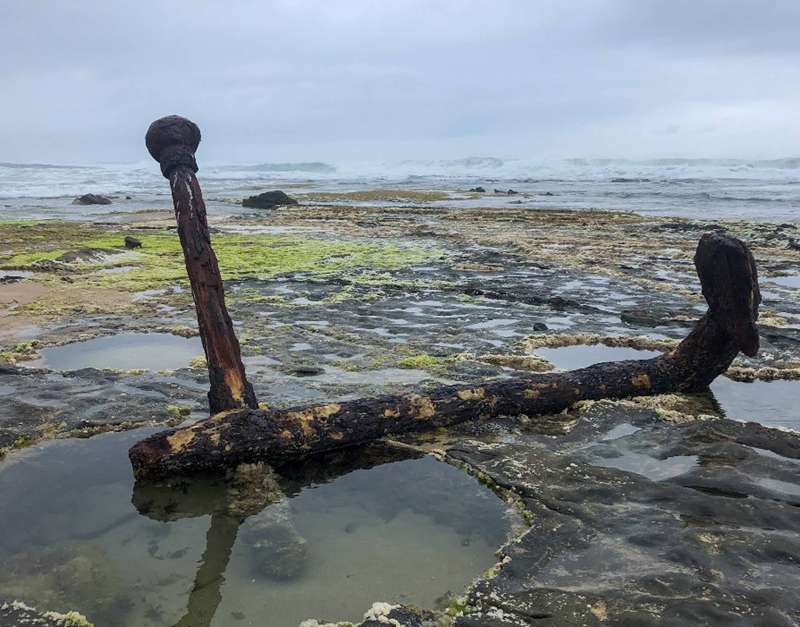
Hidden beneath the towering cliffs of the Shipwreck Coast, Wreck Beach preserves the remains of two maritime disasters. The rusted anchors of the Marie Gabrielle (1869) and Fiji (1891) stand among the rocks as reminders of the treacherous seas that claimed hundreds of vessels along Victoria's coastline. Visible at low tide, these relics make Wreck Beach one of the most evocative shipwreck sites on the Great Ocean Road.
Eric the Red Shipwreck (Parker Inlet, west of Cape Otway)
The Eric the Red is one of the most significant shipwrecks associated with Cape Otway. The American three-masted wooden barque was sailing from New York to Melbourne and Sydney in 1880, carrying exhibits for the Melbourne International Exhibition along with more than 3,000 tonnes of cargo. After an 85-day voyage, the ship struck Otway Reef near Cape Otway in the early hours of 4 September 1880.
The vessel broke apart and sank within minutes. Of the 26 people on board, four lost their lives, while the survivors spent the night clinging to wreckage before being rescued by the passing steamer Dawn.
The wreck had a lasting impact on maritime safety. Following the disaster, an additional warning light was installed at Cape Otway to help prevent ships from sailing too close to the dangerous coastline. The shipwreck is regarded as one of Victoria's major nineteenth-century maritime disasters.
Most of the wreck lies buried beneath sand near Parker Inlet, west of Cape Otway. After storms and erosion, parts of the ship's timber hull are occasionally exposed, although sightings are rare and unpredictable. Parker Inlet can be accessed by the Parker Hill & Inlet Walk.
An Eric the Red anchor is permanently displayed at the Cape Otway Lightstation grounds. A second anchor from the Eric the Red remains on the rocks at Point Franklin and can be reached via the coastal walking tracks around Parker Hill and Point Franklin.
SS Casino Shipwreck (Apollo Bay in South Western Victoria)
On 10 July 1932, the SS Casino attempted to berth at the Apollo Bay jetty during heavy seas and a strong south-easterly gale. The ship struck the bottom several times, suffered serious damage and began taking on water. An attempt was made to beach the vessel, but it capsized approximately 400 metres offshore. Ten people, including Captain John Middleton, lost their lives in the disaster.
The wreck lies in about 9 metres of water off the northern end of Apollo Bay and has become a popular dive site. The wreck itself cannot be seen from shore under normal conditions. Visitors can, however, see several memorials including the SS Casino Anchor Memorial, interpretive displays explaining the sinking, the ship's wheel displayed at the Apollo Bay Hotel and the propeller and bell are preserved in Port Fairy as part of memorial displays.
Bellarine Peninsula
Ocean Grove Beach Shipwreck (Ocean beach between Ocean Grove and Point Lonsdale on the Bellarine Peninsula)
Hidden beneath the shifting sands of Ocean Grove's ocean beach lies a mysterious historic shipwreck. First exposed by storms in 2025, the timber vessel is believed to date from the late nineteenth or early twentieth century. Although its identity remains unknown, the discovery provides a fascinating reminder of the treacherous waters and rich maritime history of Victoria's Bellarine coast.
The Ocean Grove wreck is not permanently visible. It only appears when storms, tides and erosion expose parts of the timber structure. Most of the time it remains buried beneath the sand.
Phillip Island & Bass Coast
SS Speke Shipwreck on the Kitty Miller Bay Walk (Phillip Island)
.jpg)
Built in Wales in 1891, the Speke was an enormous three-masted steel sailing ship and was regarded as one of the largest vessels of its type in the world. In February 1906, while sailing from Sydney to Geelong to load wheat, the ship ran aground on reefs near Kitty Miller Bay after the captain mistakenly navigated by a bushfire or other lights on Phillip Island. All but one crew member survived the wreck.
Powerful Bass Strait seas gradually broke the vessel apart, and today only sections of the wreck remain. The most recognisable remnant is part of the ship's bow, which can still be seen resting on the rock platform east of Kitty Miller Bay when tides are low.
Amazon Shipwreck at Inverloch Surf Beach, South Gippsland.
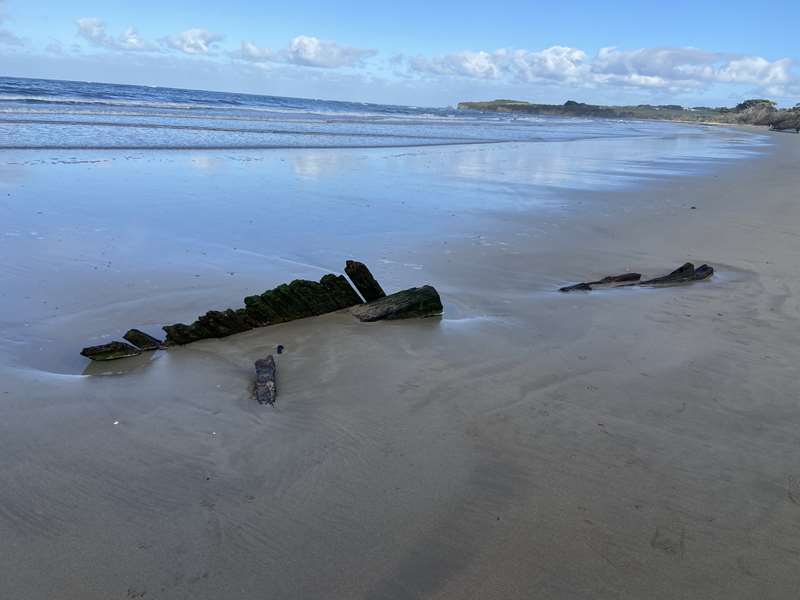
The Amazon was a three-masted barque built in 1855 at St Helier on the island of Jersey in the English Channel. For eight years she traded internationally, carrying cargoes around the world.
On 12 December 1863, the vessel departed Melbourne bound for Mauritius carrying salted meat. After encountering severe storms, the ship was driven east along the Victorian coast. Unable to regain control, Captain Ogier deliberately beached the vessel near present-day Inverloch to save the crew. All aboard survived.
Most of the wreck remains buried beneath the beach sand near the Inverloch Surf Life Saving Club. Depending on tides, storms and beach erosion, sections of timber hull, ribs and other structural components occasionally become exposed. At other times, little or nothing is visible.
Gippsland
Trinculo Shipwreck (near Golden Beach, Gippsland)
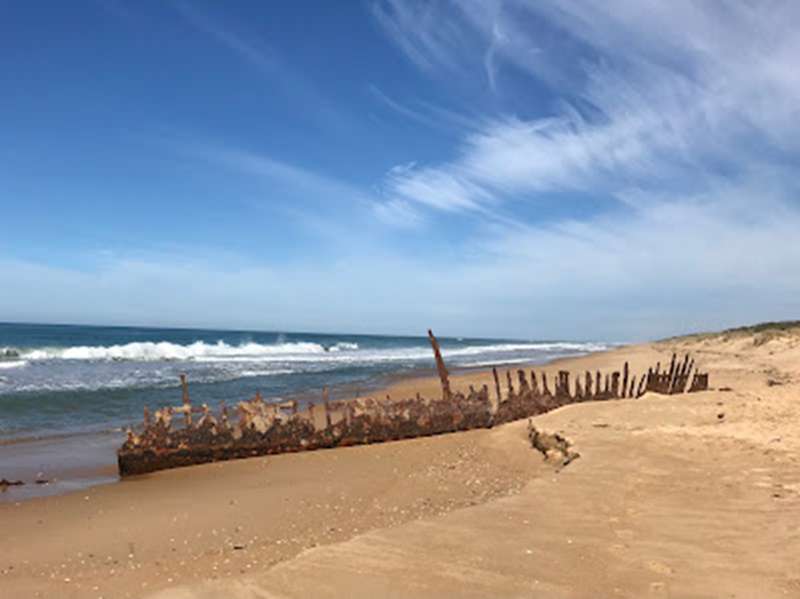
The Trinculo Shipwreck is one of the most accessible and visible shipwreck relics in Victoria. The rusting remains of the iron barque protrude directly from the sand, providing a rare opportunity to see a historic shipwreck above ground rather than underwater. The amount visible varies considerably depending on tides, storms and shifting beach sands. Sometimes only small sections are exposed, while at other times a substantial portion of the wreck can be seen.
The Trinculo was an iron barque built in Bristol, England, in 1858. In September 1879, after delivering cargo to King George Sound (Albany, Western Australia), the vessel was sailing towards Newcastle when it encountered severe south-easterly gales in Bass Strait. Unable to escape the storm, the ship was driven ashore on the exposed coastline near present-day Golden Beach. Despite the dangerous conditions, everyone on board survived. Seaman Thomas Lefevre famously swam ashore with a line, enabling the crew, captain's wife and young child to reach safety.
Best Shipwrecks for Families
The best shipwrecks for young children are Loch Ard Gorge which has a wonderful emotive story, SS Casino Memorial and the Amazon Shipwreck. The best actual wreck remains which are consistently visible are the Trinculo and SS Speke. For an adventurous walk try Wreck Beach (Fiji & Marie Gabrielle wrecks) and Eric the Red. It is recommended to visit the wrecks at low tide and be alert for incoming tides.
Whether you're interested in maritime history, photography, coastal walks or family adventures, Victoria's accessible shipwrecks provide a fascinating glimpse into the state's maritime past while showcasing some of its most spectacular coastal scenery.


