Derrinallum Discovery Trail


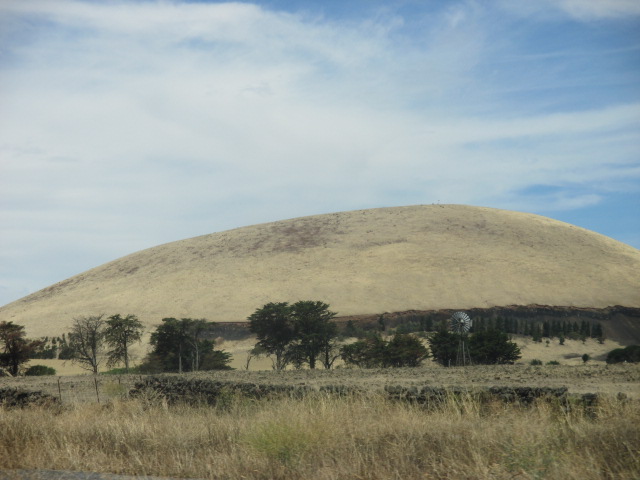
The Derrinallum Discovery Trail explores the history, landscapes and community landmarks of Derrinallum and the surrounding district.
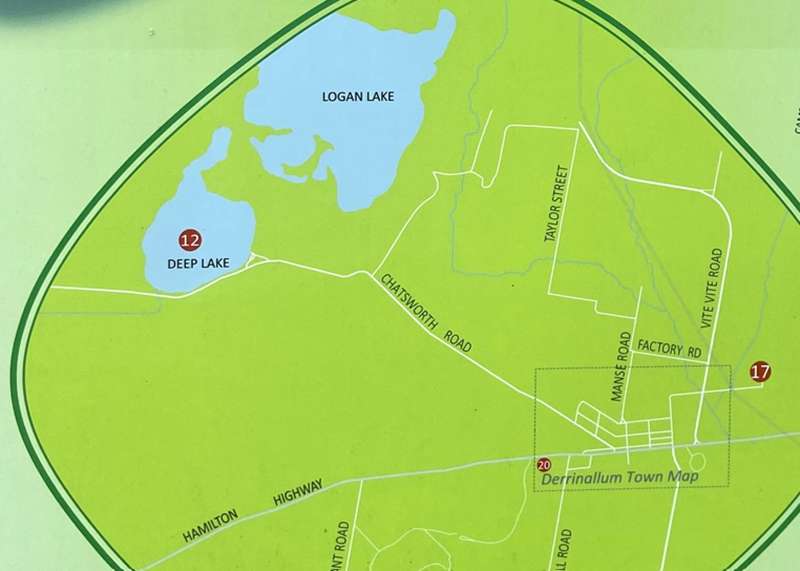
The highlighted locations include historic buildings, memorials, churches, sporting facilities, Mount Elephant, Deep Lake, the cemetery and the district’s distinctive volcanic stone walls. Because several locations are outside the township, including Deep Lake and the cemetery, the complete trail is best explored using a combination of walking and driving.
Derrinallum History:
Derrinallum was known as the The Swamp in the 1800s, though Aboriginal people had already named the locality Djerrinallum, meaning sea swallow or tern, great numbers of which were apparent in those days. Mount Elephant was known to Aboriginal people as Terring Allap.
An area of Derrinallum was surveyed in 1866 following an application to build a rural store. In 1867 the village of Tooliorook was proclaimed, and in October the first land sale of town blocks was held at Camperdown. In 1872 the inhabitants applied for a name change to either: Derrinallum, Tarrinallum, Dunwall or Dunstone. In 1873 the township became Derrinallum. By 1901 there were ‘still only a mere seven dwellings in the town’.
The railway line which crosses through Derrinallum was constructed in the 1890s and completed in 1913; it carried passengers and goods from Geelong to Ararat. Closer settlement following World War 1 increased the farming community and the population jumped from 69 to 155. Derrinallum sprang up to serve the surrounding pastoral district. A cooperative butter factory operated from 1914-1964. A tree reserve was gazetted in the median strip of the main road in the 1920s and an avenue of elms planted. A town traders’ association was formed in 1961 and a motel built in 1965. Soldier Settlement following World Wars One & Two was extensive in the district.
A disastrous fire swept through on 14 January 1944 leaving only the Mechanics Hall, two churches, three business premises and about five dwellings. Despite being in the midst of a war with materials in short supply, the town set about rebuilding and as a result, is dominated today by post-war-style buildings.
The town's growth and early pastoral history are connected to the wool industry, with Derrinallum an important stop on the historic Wool Track between Hamilton and the Port of Geelong.
Today, Derrinallum and nearby lakes including Deep Lake and Lake Ettrick (or Tooliorook) support a wide range of social and sporting pursuits. The town is a service centre for surrounding farming activities including wool production, sheep, beef, dairy, grazing and cropping.
At the 2016 census, Derrinallum township population was 246, and the wider district 425.
Derrinallum Discovery Trail Overall Map
Derrinallum Discovery Trail Township Map
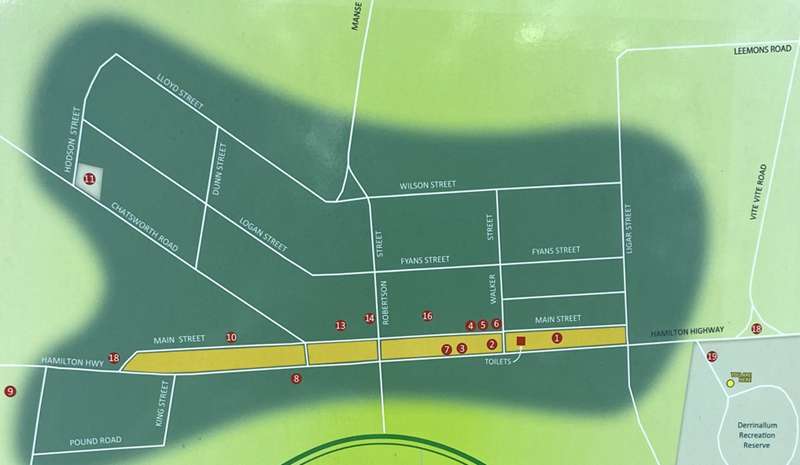
Locations Along the Trail:
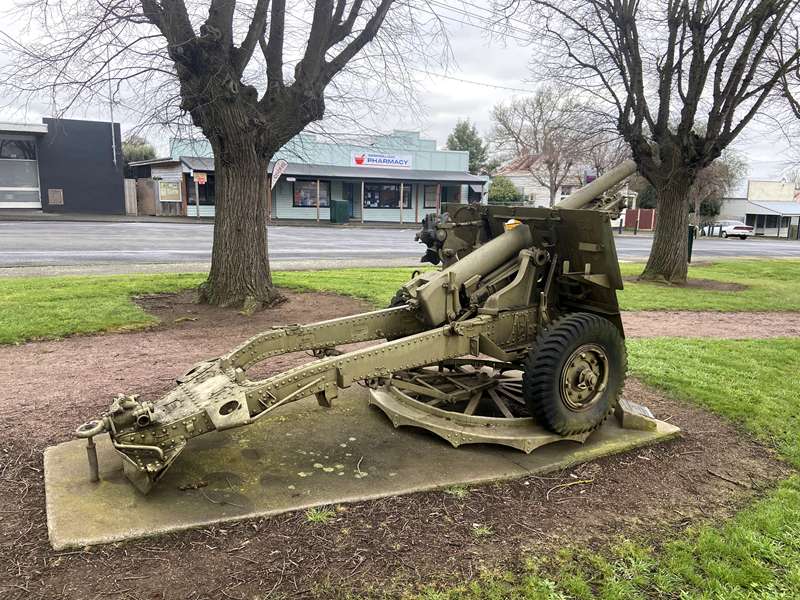
1. World War II Artillery Field Gun: A 25-pounder Mark II WW2 artillery trophy gun presented to the Derrinallum Returned and Services League in 1976 by the RSL Victoria.
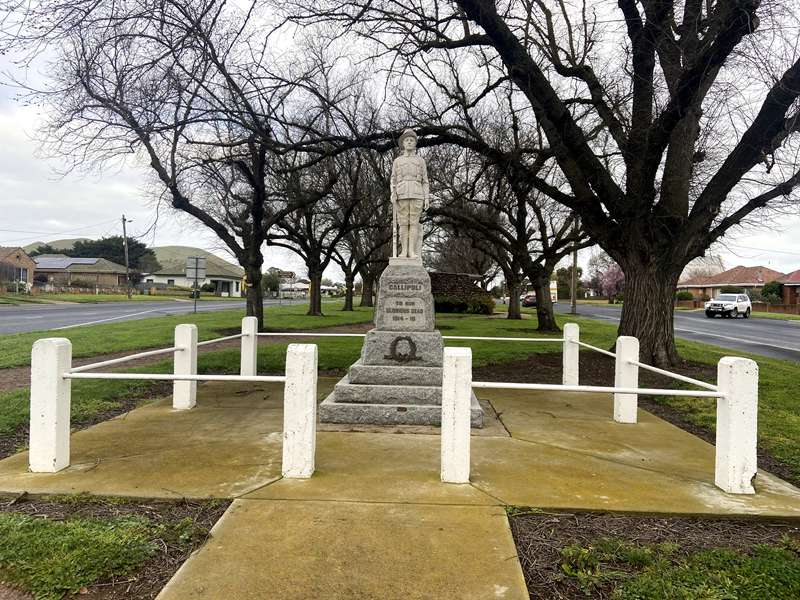
2. Derrinallum War Memorial: Erected in 1932, the memorial was unveiled in memory of those from the district who served in World War One, but now commemorates all who served in conflicts. Crafted in Harcourt granite, four panels are engraved with names of those from the local area who served at significant battle scenes - Gallipoli, France, Egypt and Palestine. The monument is surmounted with a pure white marble statue of a typical Aussie soldier.
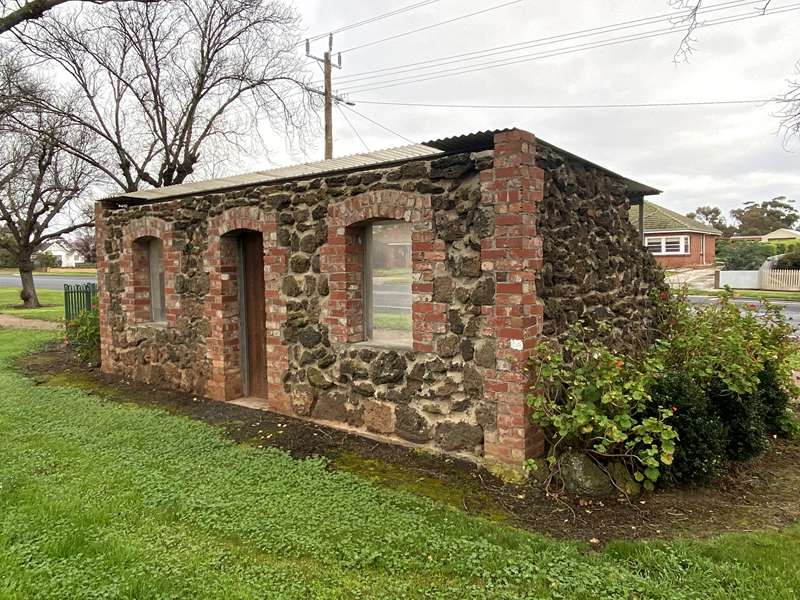
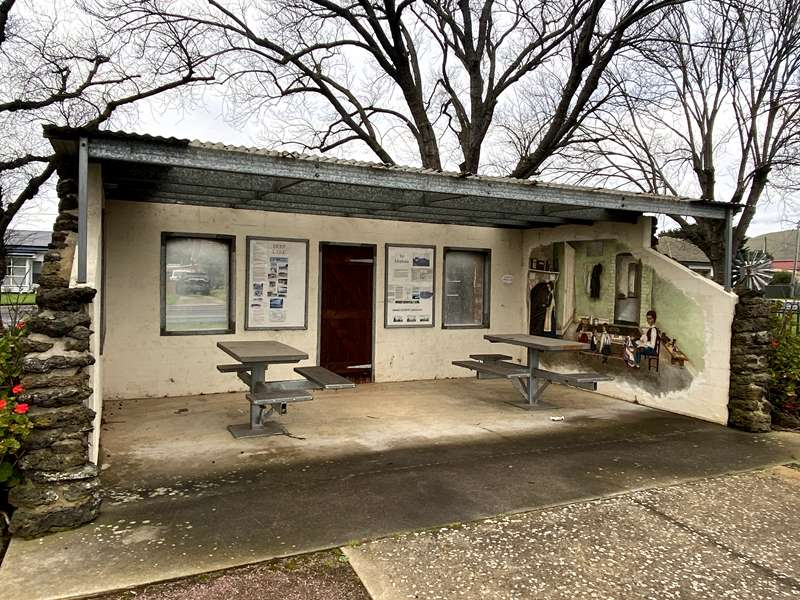
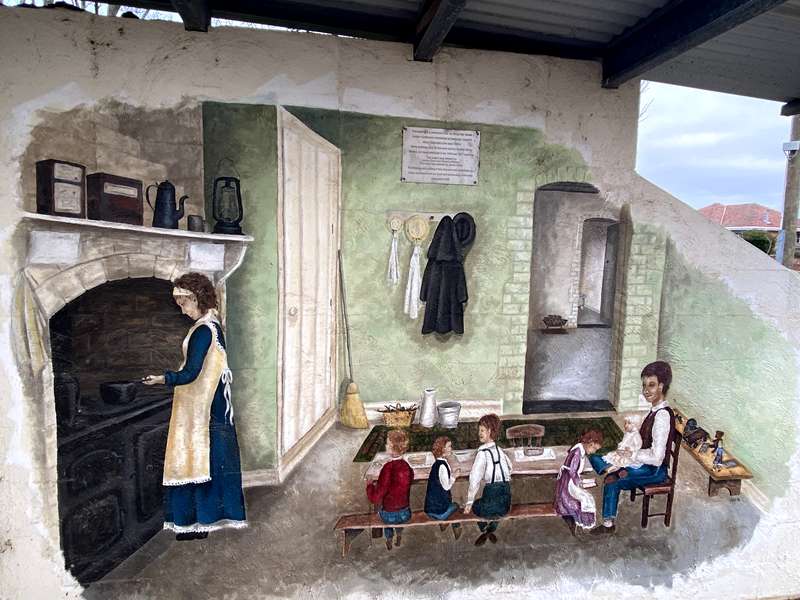
3. Stone History Building Replica: A replica of houses built by skilled Scottish stone wallers after the First World War as part of the Soldier Settlement Scheme. Many were built on the Geelengla settlement just south of Mount Elephant, and many were destroyed by bush fires in 1944 and 1977. Features seating, historic information boards, and a mural depicting a typical family scene.
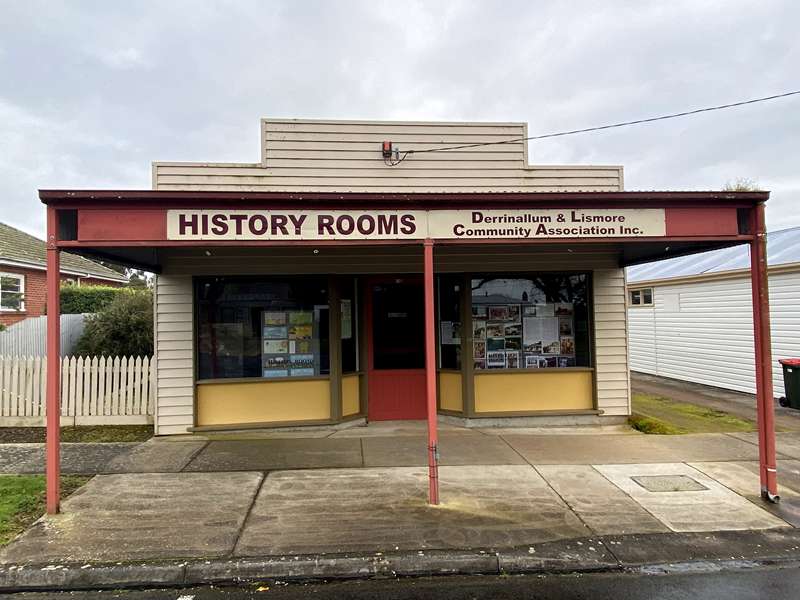
4. Derrinallum Lismore Community Association (DLCA) History Rooms: The Derrinallum Lismore Community Association Inc History Group is a volunteer community organisation formed in 2002 to promote and support the Derrinallum and Lismore communities through the preservation, collection and research of local history. Our mostly paper-based collection is archived at the History Rooms and includes newspapers, recollections, photos, school records, cemetery records, minute books, family history and local history library.
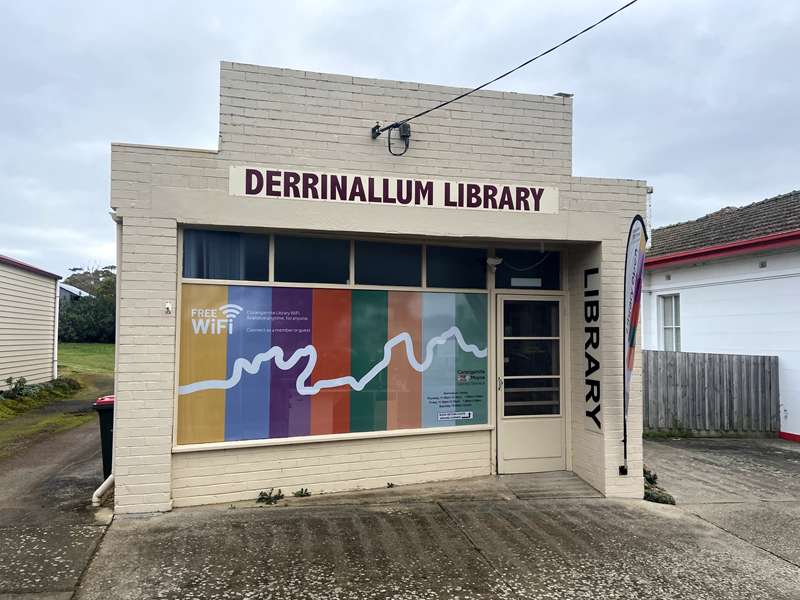
5. Derrinallum Library: Operated by the Corangamite Regional Library Corporation, provides resources for children, teenagers and adults including books, CDs, talking books, wifi connection, computer access, events and learning programs.
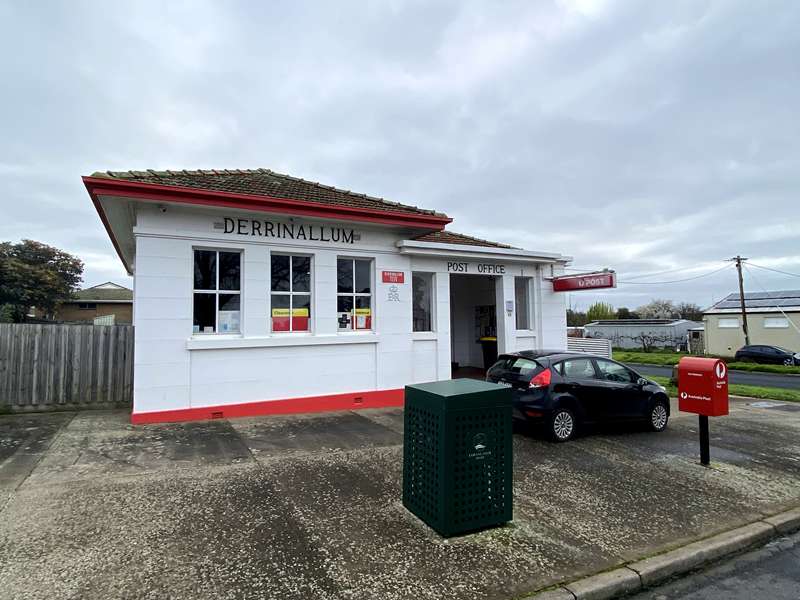
6. Derrinallum Post Office: In 1867 the village of Tooliorook was proclaimed and the Post Office opened on 7 December 1868. In 1872 the inhabitants applied for a name change and in 1873 the township became Derrinallum. This building was destroyed in the 1944 bush fires. New premises were officially opened in 1926 as a home to the telephone exchange, telegraph and postal services. A weather station operates from the post office for recording rainfall. Today, postal services are provided for the surrounding area, and mail is delivered daily to properties within a 40km radius.
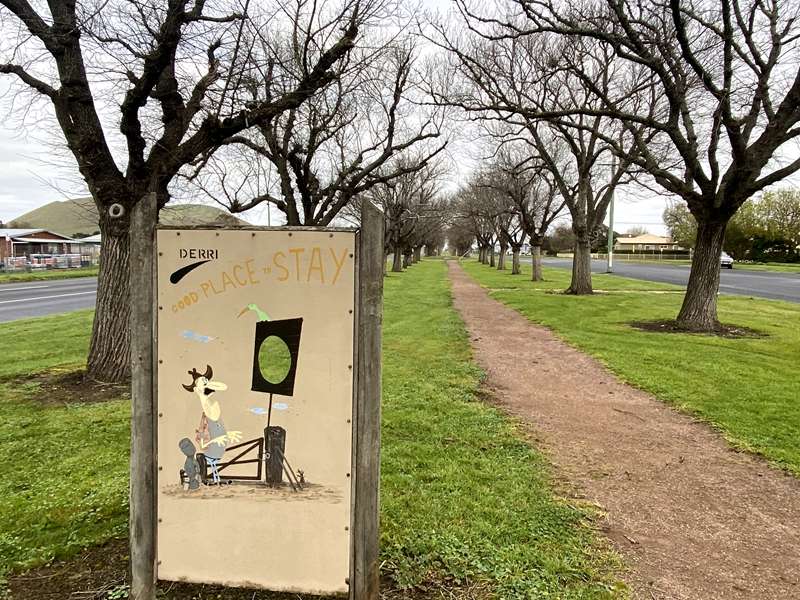
7. Walking Path to Mount Elephant: Opened in 2014, a walking path extends from the town centre through the Avenue of Elms to the stone wall entrance to Mount Elephant.
8. St Josephs Catholic Church: Built for a cost of 700 Pounds, the Catholic Church of St Joseph opened in April 1923, with the foundation stone laid on 17 December 1922. The Church was extended in 1964 and opened on 15 July 1964.
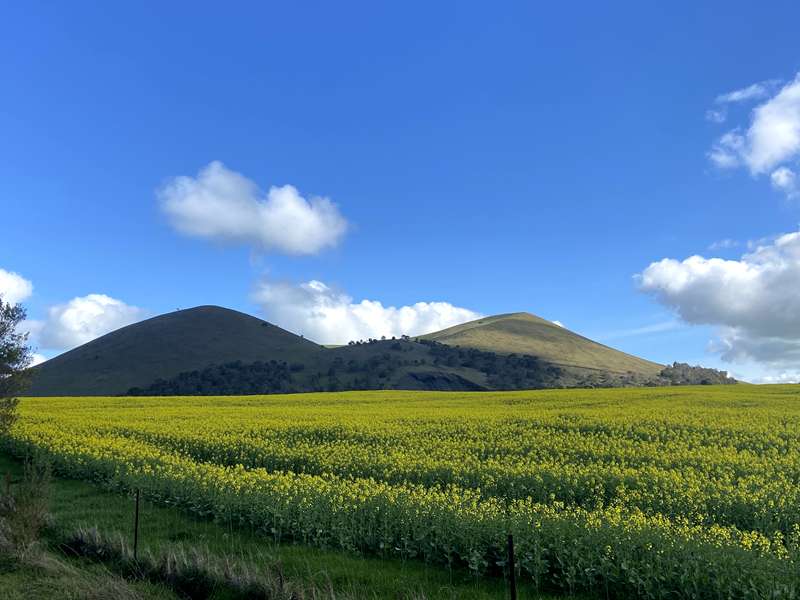
9. Mount Elephant: A perfect breached scoria cone that erupted maybe 180,000 years ago, and part of a suite of volcanoes formed on the basalt plains of south west Victoria - from 30,000 to several million years old. Privately owned up to the year 2000 when the Mount was purchased by the community, together with Trust for Nature. A Visitor Centre featuring rammed earth walls, off grid power and large north facing windows was opened in 2016. Revegetation, pest and weed control programmes are regularly undertaken and it is open to visitors to enjoy walking tracks and the wonderful views.
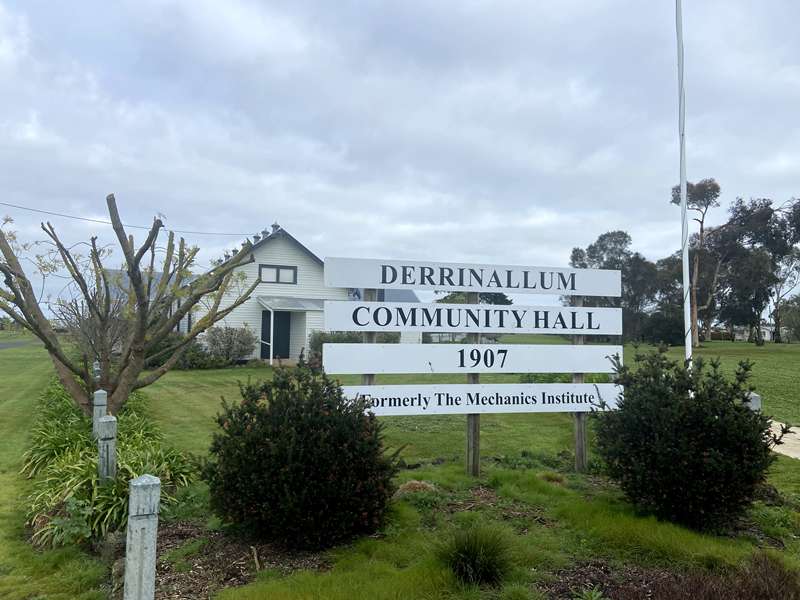
10. Derrinallum Community Hall: Built in 1907, the timber Mechanics Institute housed a free library which opened two days per week. By 1914 the library held 380 books; it closed in 1926. In 1910, a stage and dressing rooms were added and fund-raising efforts included fancy dress balls, skating nights, card playing and performances. The picture boom was emerging, and the touring Star Pictures showed their first film in 1925, and in 1931 the first talkie film. Building improvements continued. Renamed the Derrinallum Community Hall in 1997, the Hall is available for hire.
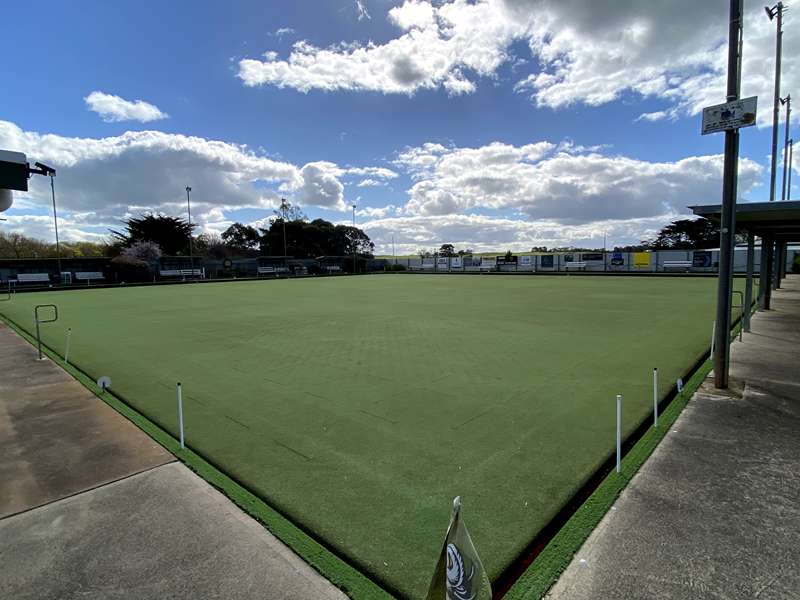
11. Derrinallum Bowling Club: Established in 1956, an artificial all-weather turf was laid in 2010. Regularly used by club members and hosts many local and regional tournaments. New members always welcome.
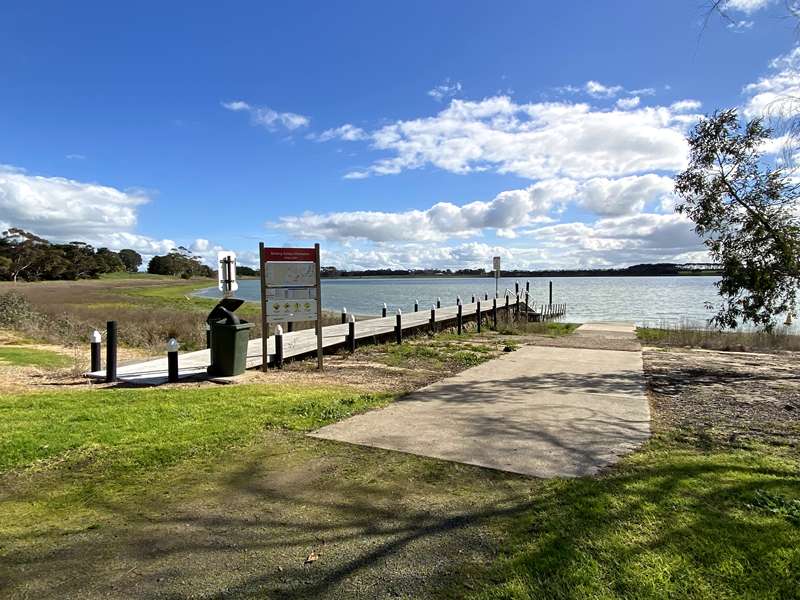
12. Deep Lake: Situated 5km west of Derrinallum, Deep Lake is popular for camping, fishing, and water sports and features a boat ramp, floating jetty, picnic tables, fireplace, undercover bbq area, toilets, hot showers. Home to local clubs such as Derrinallum Anglers Club, Derrinallum Yacht & Power Boat Club and the Deep Lake Foreshore Committee.
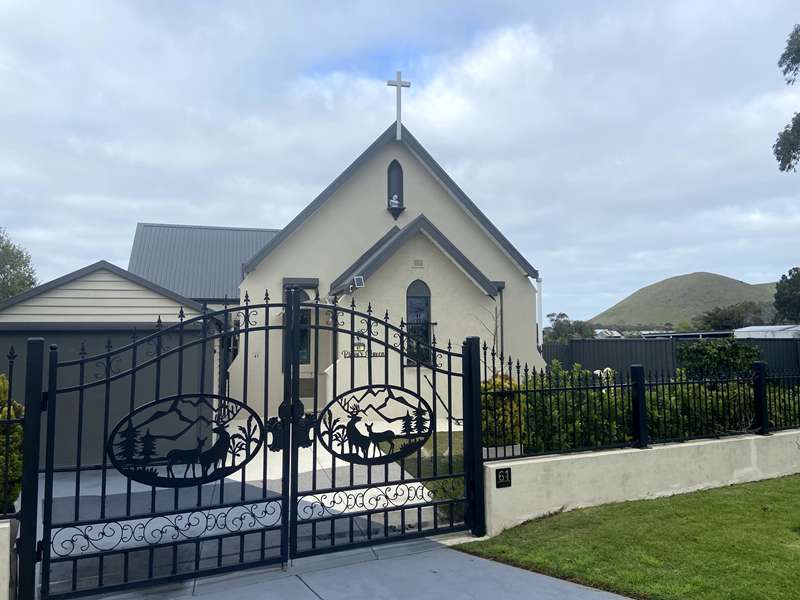
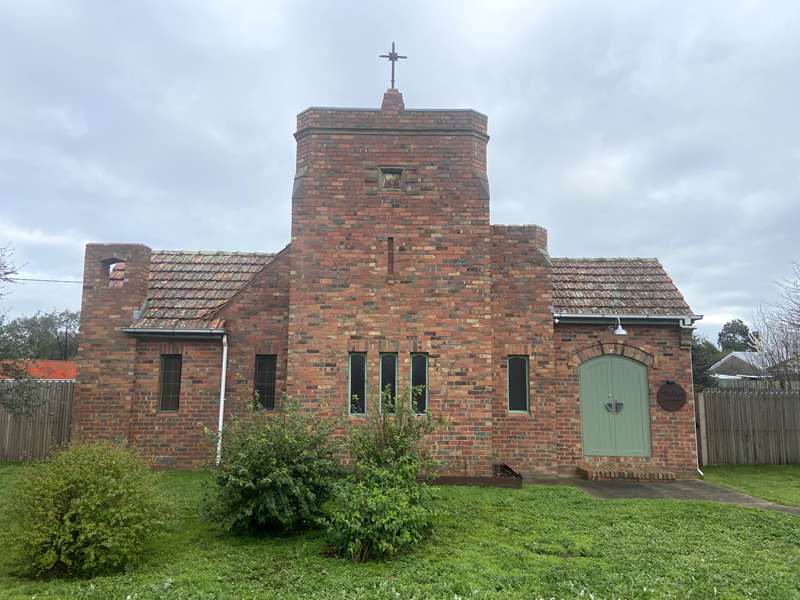
13. Church of England: Originally built and opened in 1925 but destroyed, along with most of the town, in the devastating bush fires of January 1944. In 1947, the Ministry of Housing approved a building permit for a new Anglican Church and the Church, dedicated to St James, was constructed by a local builder, architect unknown, and opened in 1953 as All Saints’ Anglican Church. Built with clinker brick, with small scale interpretation of Gothic style, the building is now privately owned.
14. Western Plains Mobile Pre School and Kindergarten: Opened in 1964 under the authority of the Health Department and Corangamite Shire, the centre operates on a part time basis with students coming from surrounding areas. Lismore built their own pre-school in 1968. The Western Plains Mobile Pre-School & Kindergarten is now shared jointly by the Derrinallum and Lismore communities with attendance six months in each facility.
15. Derrinallum P-12 College: Established in 1963 as a high school, the primary and high schools amalgamated in 1994 to form the P-12 College. Set in 5 ha of land, the College features a library and resource centre; music, student welfare and specialist science rooms; technical workshop; indoor sports centre and gymnasium; technology studies areas for textiles, food and wood. The grounds encompass gardens, ovals, athletics track, hockey field, cricket pitches and nets, basketball, netball and tennis courts, a playground, mini-farm, greenhouse and bicycle path to the township. Serviced by buses for student transport.
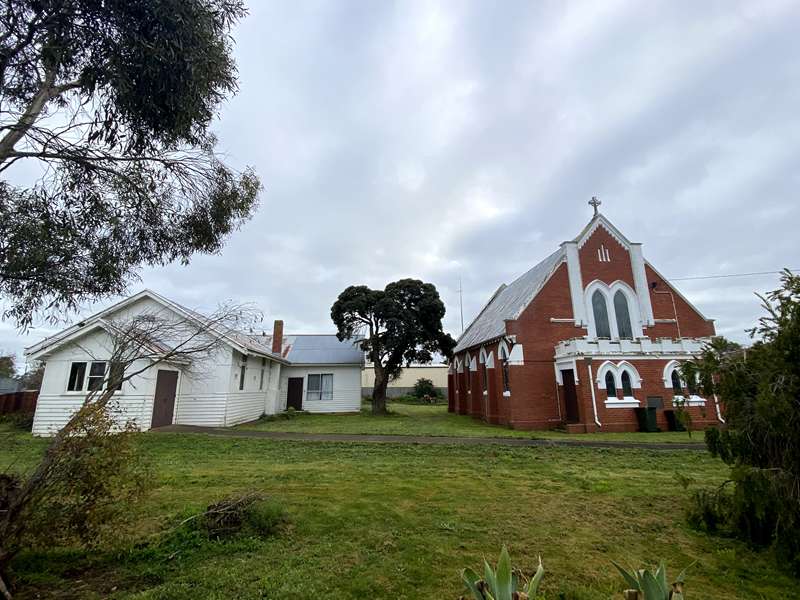
16. Derrinallum Uniting Church & Hall: In 1888, Presbyterian Scottish settlers who used the Wesleyan Church (at the school) wanted their own church. The first Presbyterian Church was built on a two-acre site and the first public service held in the Tooliorook Church in 1889. In 1913, it was decided to erect a new brick and concrete church. The inscribed foundation stone of the Jubilee Memorial Church was set in February 1914; the adjacent manse was lost in the 1944 fires. The current church hall was constructed in 1946.
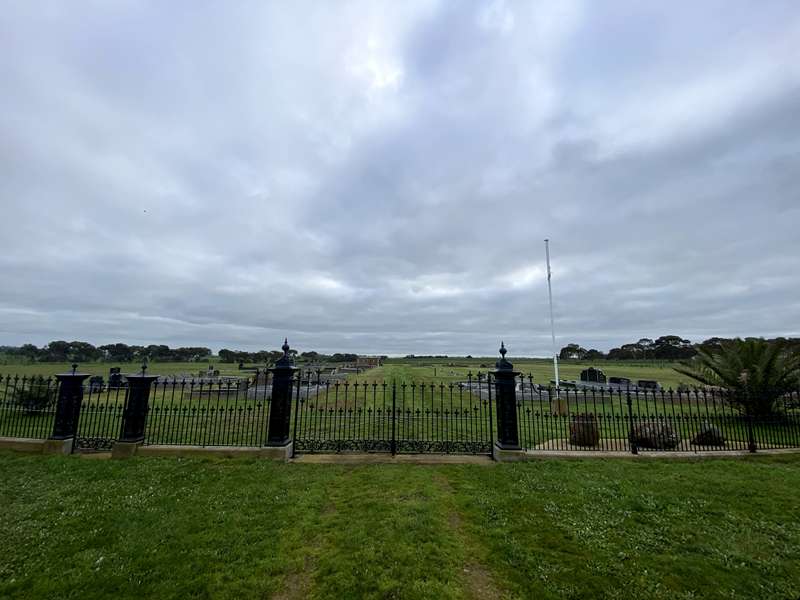
17. Derrinallum Cemetery: For reasons of hygiene and convention, cemetery reserves were selected at a suitable distance from settlement, away from anticipated growth areas, and on sites with adequate drainage; convention dictated one mile from human habitation. The five-acre cemetery reserve at Derrinallum was gazetted in 1872 but little used until the 1930s following the impact of closer settlement; first recorded burial was in 1880. The Cemetery features wrought iron entrance gates, a memorial cremation wall and RSL commemorative plaques.
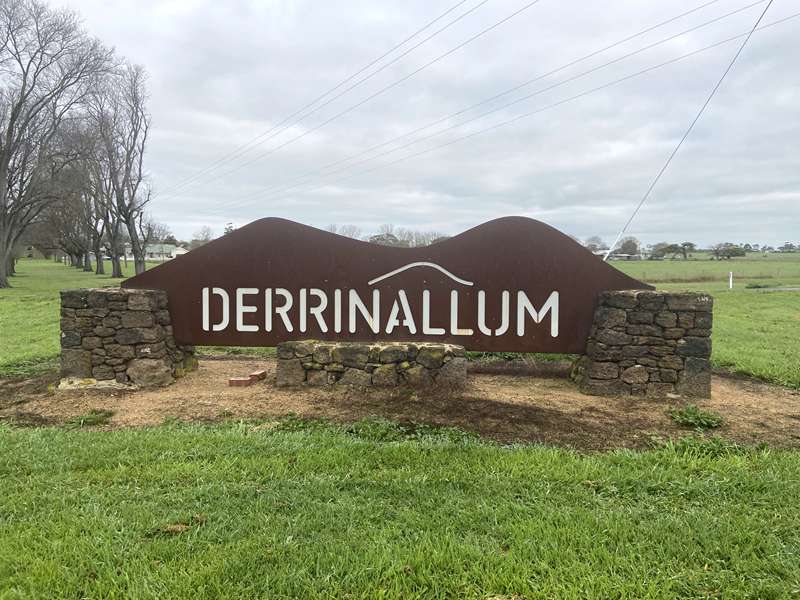
18. Derrinallum Gateway Signs: Located at each end of town, featuring local volcanic stone and the iconic shape of Mount Elephant; created in 2014 as an initiative of the Derrinallum Community Plan.
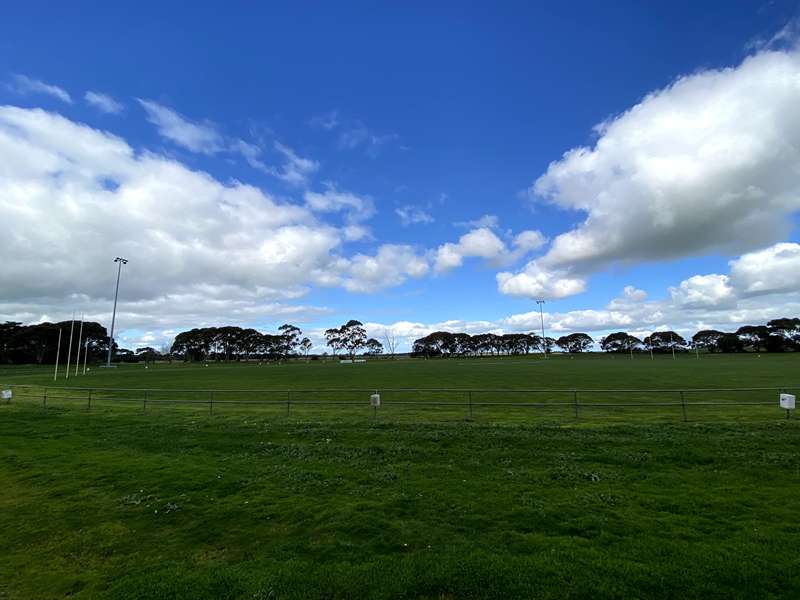
19. Derrinallum Recreation Reserve: Sporting facilities, playground and overnight camping; plenty of space and views of Mount Elephant; established in 1920 by the local community.
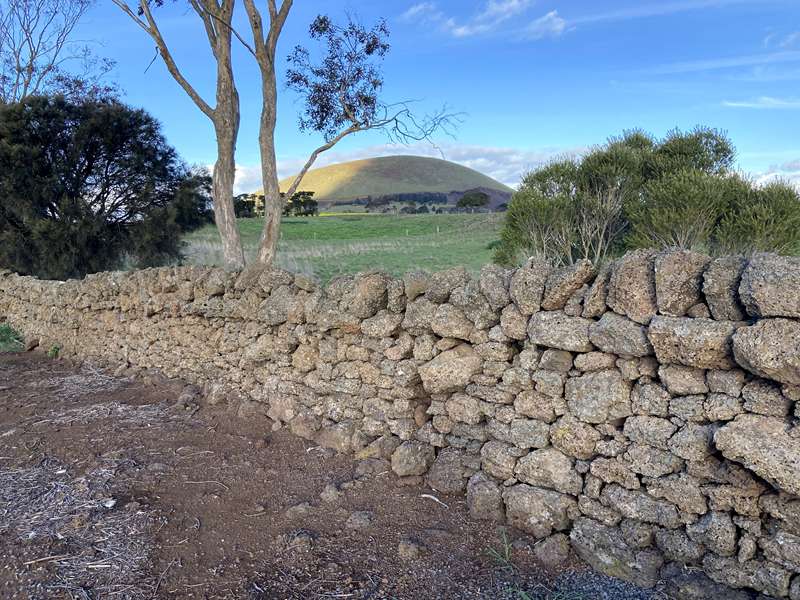
20. Stone Walls: In the late1800s, stone walls were built by skilled Scottish, Irish and English stone wallers using readily available volcanic rock littering paddocks. These walls are a feature of the area, and there are several along the Hamilton Highway west of Mount Elephant, and to the south of the Mount. Various styles are described on information plaques along the stone wall trail. Many of the walls have tumbled, a result of pulling out stones on the chase after rabbits, rubbing by cattle and horses, or pressure from nearby trees.
Facilities:
Facilities available across the trail include:
- Public toilets, picnic tables, a playground and sporting facilities at Derrinallum Recreation Reserve
- Boat ramp, floating jetty, picnic tables, fireplace, undercover barbecue area, toilets and hot showers at Deep Lake
- Visitor Centre, toilets and light refreshments at Mount Elephant
- Information boards at the Recreation Reserve, beneath the Main Street elms and at Deep Lake
- Overnight camping at Derrinallum Recreation Reserve and Deep Lake
Cost:
The trail is free. Camping fees may apply at Deep Lake and Derrinallum Recreation Reserve.
Location:
Suggested starting point and main trail information board: Derrinallum Recreation Reserve, 1033 Hamilton Highway, Derrinallum
Photos:
Location
1033 Hamilton Highway, Derrinallum 3325 View Map
Web Links
→ visitgreatoceanroad.org.au/volcaniclakesandplains/derrinallum-discovery-trail


