Colac Botanic Gardens



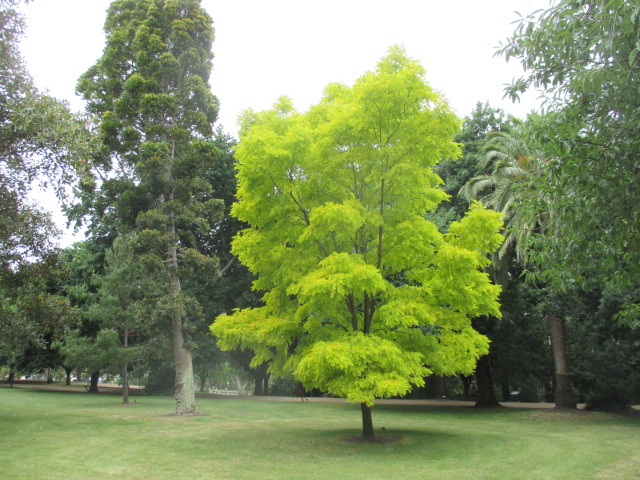
The Colac Botanic Gardens are considered one of Victoria's unique regional gardens. The 12 hectare Gardens and Recreation Reserve occupy a site at the northern edge of Colac.
The gardens were developed as a Botanic garden through the second half of the 19th Century. The gardens are significant in a Victorian and Australian context, having been reworked from a plan by William Guilfoyle at the beginning of the 20th Century.
The reserve area is still used for different purposes focused on Lake Colac including rowing, sailing and fishing.
The Botanic Cafe sits to the west of the gardens, offering a nice setting for lunch or afternoon tea.
On the eastern point of the garden's overlooking the Barongarook Creek there is an extensive playground and barbeque facility.
Colac Botanic Gardens Map
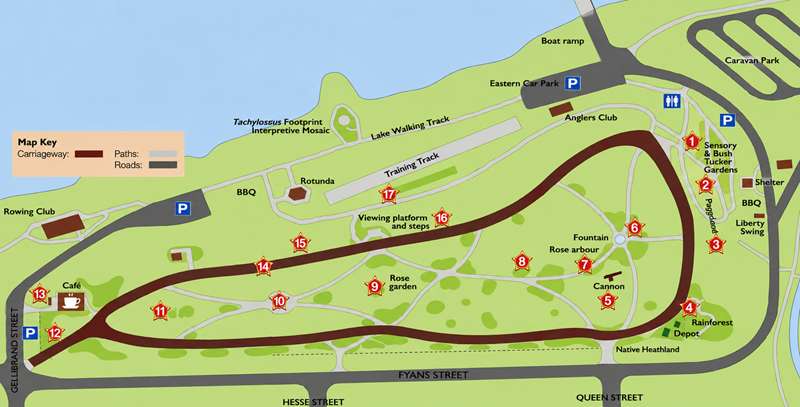
A Garden Walk beginning at the Eastern Car Park
1. Bush Tucker bed: Look for edible fruits, shrubs and tubers including yam daisy (Murnong), chocolate and vanilla lilies. Avoid taste testing as many of these plants require preparation before becoming edible.
2. Sensory Garden: Enjoy the aroma and texture of the foliage as you head towards the carriageway.
3. Playground: Integrating plants and play for family fun and BBQs. Find the ‘toadstool ring’ created by the Friends.
4. Rainforest and Heathland Beds: Colac is located between the Otway rainforest and the volcanic plains. These beds display the region’s diverse native plants.
5 Ancient Trees: In the historic cannon lawn, look for one of the oldest living tree species, the Ginko biloba, several Bunya Bunya pines, Araucaria bidwillii, one on the National Trust register. These are ancient giants of Gondwana with leaves tough enough to deter dinosaurs.
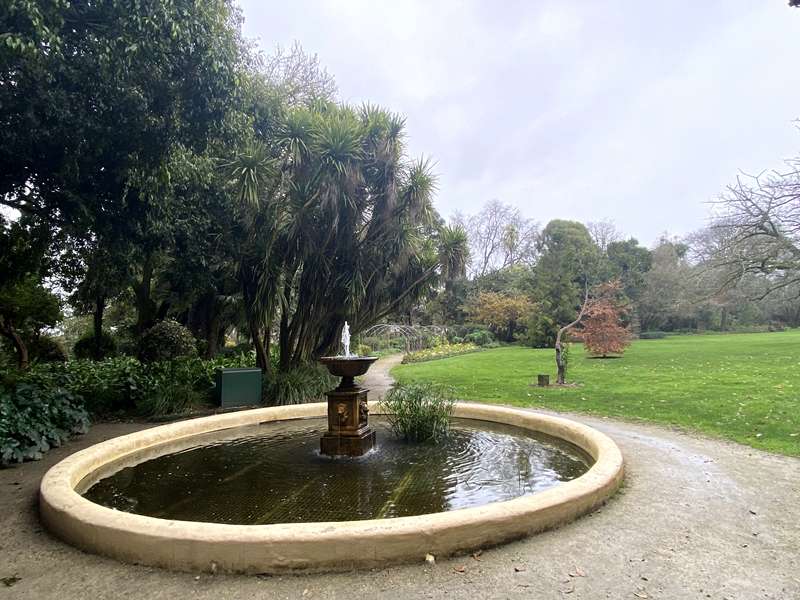
6. Fountain and Lily Pond: Rest a while under the trees, with the sound of falling water. A peaceful backdrop to the tranquillity of the gardens.
7. Rose Arbour: Refurbished by the Friends for the Garden’s 150th anniversary. It features roses from internationally renowned breeders. Alister Clark’s roses were named after Western District women.
8. Three of the National Trust Registered Trees: The Kohuhu, Pittosporum tenuifolium “Ella Keightley”, The Pagoda tree, Sophora japonica and the Huntingdon elm, Ulmus x hollandica ‘Vegeta’.
9. Rose Garden: A weeping white ‘Seafoam’ rose is surrounded by beds of pink & white Rugosa Scabrosa & outer beds of floribunda roses, Gold Bunny, Europeana, Remember Me & Charles de Gaulle.
10. Medlar Tree: Cultivated for its fruit since Roman times. It is surrounded by beds of herbs. Note the beautiful vistas to the lake.
11. Palm Bed: These are a common element in Guilfoyle’s gardens with their upright geometric shapes contrasting with softer surrounding plantings.
12. Ornamental Gardens: Inside the main entrance the lawn is bordered by a colourful display of rhododendrons, camellias and azaleas, bright annual beds and the beautiful Atlas cedar. This lawn is a favourite location for wedding photography.
13. Curators Cottage: Now the café, it was built for Archibald Campbell, the curator from 1911 to 1941. His work is commemorated by a copper beech Fagus sylvatica, planted near the fountain.
14. Oak Carriageway: Almost 100 oaks, predominantly Quercus robur, line the carriageway providing cool summer shade. Other oak species are scattered throughout the gardens. Near the Viewing Platform are the National Trust registered Tecate cypress, Cupressus forbesii.
15. Flowering Gums: Many are planted in the gardens as well as on the bank of Lake Colac. Corymbia ficifolia was a particular favourite of William Guilfoyle.
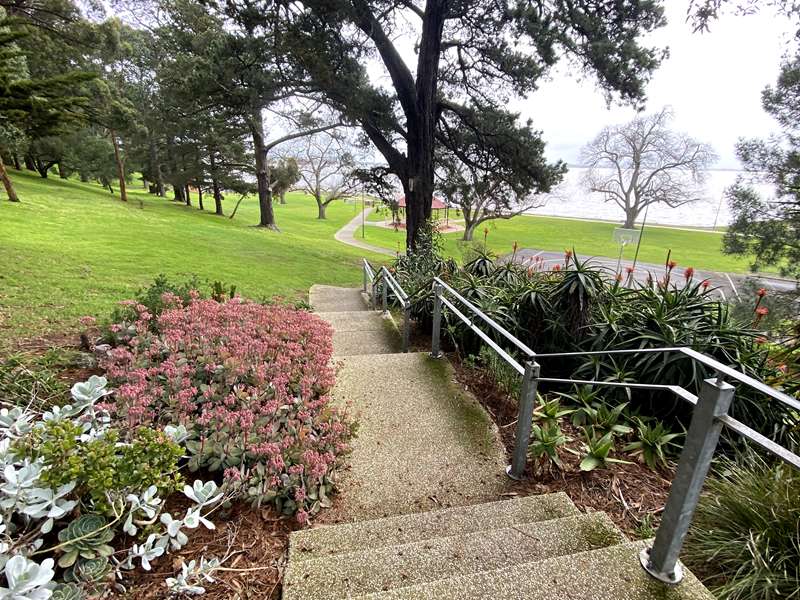
16. Viewing Platform: A joint project of the Friends and Council. Enjoy the expansive views across the lake to Red Rock’s volcanic complex.
17. Wattles: Return to the car park via the path at the base of the gardens to the most recent bed of wattles and other natives. These are in addition to over 34 varieties of Southern Australian acacias in the gardens. One is flowering every month of the year.
History of Colac Botanic Gardens
Colac Botanic Gardens was designed for the pleasure of the people.
The land, situated on an incomparable site overlooking Lake Colac, was set aside in 1865 at the call of the people.
The Gardens have been placed on the Victorian Heritage Register for their historical, aesthetic and scientific (botanical) significance to the State of Victoria.
They are one of regional Victoria’s largest botanic gardens.
The Gardens showcases 9 Living Plant Collections, 5 Significant Trees which are on the national trust register, as well as a beautifully landscaped selection of shrubs and trees in the various garden beds.
The Colac Botanic Gardens was initially laid out in 1868 by Daniel Bunce who was the curator of the Geelong Botanic Gardens.
In 1910 William Guilfoyle submitted a design for remodelling which was accepted by the Shire Council. He was the director of the Botanic Gardens in Melbourne from 1873.
Guilfoyle said “I have no hesitation in stating that in the event of the plan being carried out in its entirety the grounds will gradually become one of the most picturesque places of the kind in the state of Victoria.”
This design is held by the Royal Melbourne Botanic Gardens. A reproduction is held by the Friends.
Archibald Campbell was curator from 1911 to 1941. His fine work is commemorated by a copper beech (Fagus sylvatica) planted near the fountain. The home built for Mr Campbell is now a café.
Our wildlife
Tall trees, lush vegetation, wind protection and the lake attract a variety of birds and animals, including ducks, the majestic Whistling Kite, possums and bats.
Grey-headed flying-fox bats: Colac Botanic Gardens supports a large but fluctuating colony. Numbers can range from several hundred to more than 9,000 and are generally higher during summer. They roost in trees including elms and oaks.
The Living Plant Collections of the Colac Botanic Gardens
The 9 collections focus on flora of the Otway Ranges, foothills, volcanic plains, waterways and lakes.
- Southern Australian acacia
- Oaks (Quercus)
- Cypress (Cupressus)
- Pines (Pinus)
- Otway mountain flora
- Otway foothills/heathland flora
- Pittosporum
- Palms.
- The Pagoda tree,
- Pittosporum tenuifolium,
- Bunya Bunya pine,
- Huntingdon elm,
- Tecate cypress,
Cost:
Free
Review:
Lovely grass areas dotted with lots of interesting trees. Some features include a gun from HMVS Nelson, fountain, rose arbour, the trees are labelled with their name and origin, sensory garden, playground, jetty on side of Lake Colac, walking path beside the lake, cafe with indoor and outdoor seating, elevated viewing area across the lake, oak lined carriageway, palm bed and lily pond.
There is a Bush Tucker Bed where you can see different plants that the local Aboriginal people once ate. It's not a free lunch since they shouldn't be tasted since different foods have to be prepared in a certain way or eaten at a certain time so they aren't toxic.
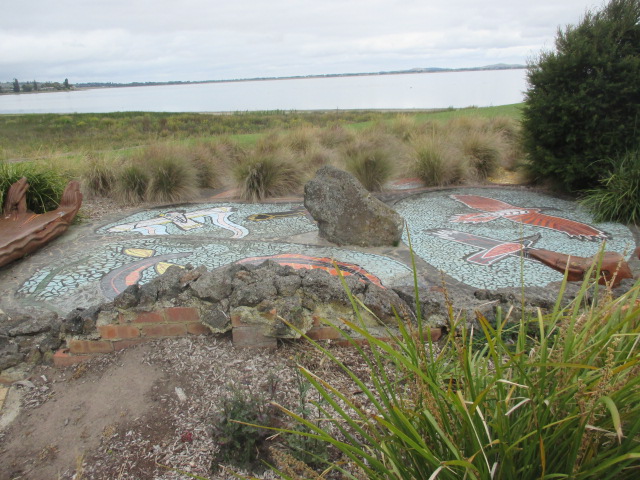
Along the side of the lake is the Lake Colac Foreshore Arts Project which is a beautiful mosaic based upon the left hind footprint of a Tachyglossus, an ancient ancestor to the echidna, who roamed the western basalt plains approximately 40,000 years ago. This area also has a lovely carved cyprus pine seat.
A number of walks pass through the Gardens. The Lakeside walk to Stodart Street is 1.7km (25 minutes) and along the shore of Lake Colac there is a 500m walk (7 min) to a Bird Reserve.
There is a huge amount of bird life on the lake and shore.
You could easily spend an hour or more wandering around the gardens. There are water taps and shaded seating scattered about plus tables and BBQs in two locations.
Photos:
Location
Cnr Fyans Street and Gellibrand Street, Colac 3250 View Map
Web Links
→ www.colacotway.vic.gov.au/Parks-Recreation/Colac-Botanic-Gardens
→ Colac Botanic Gardens Walk (Walking Maps)


