Buninyong Blue Plaques Walk


This walk around the township gives a good sense of the history, important buildings and the community 'feel' of this charming village. On the map below are more than 40 sites of interest dating from the mid-1800s. Each has a blue Historic Buildings of Buninyong plaque affixed to it. These provide interesting historical information about the building or location.
Start/finish - Old Library (Cnr Warrenheip Street and Forest Street). Time: 1.5 hours. Distance: 4 km. Conditions - mostly paved, gently undulating.

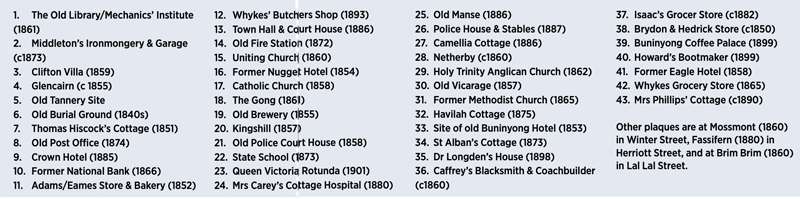
1. The Old Library/Mechanics' Institute (1861)
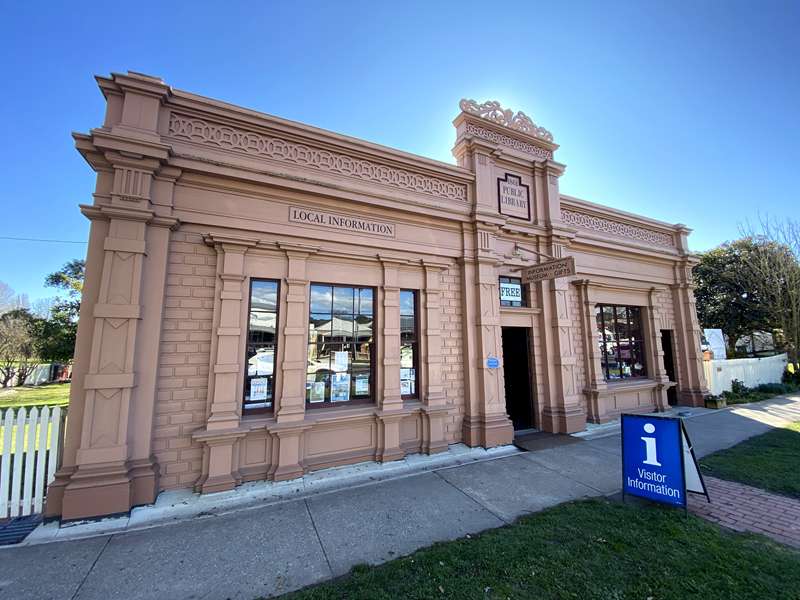
In August 1856, local mill-owner and five-times Mayor Robert Allen purchased a large block of land fronting Warrenheip St and subsequently erected this building as a gift to the people of Buninyong in 1861, to be used as a public library and Mechanics Institute. It functioned until 1926. After the building was restored in 1988, it became an information and heritage centre.
2. Middleton's Ironmongery & Garage (c1873)
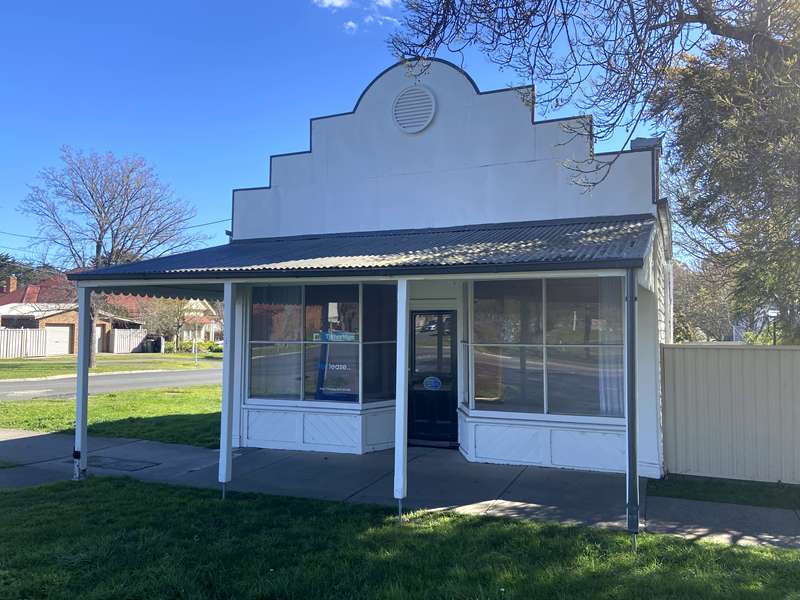
This shop was erected after 1873, and for many years was known as Middleton's ironmongery. In the 1920s the first petrol bowser in Buninyong was erected on the footpath. Since then it has had many different uses, as an antiques store, horse feed store and florist.
3. Clifton Villa (1859)
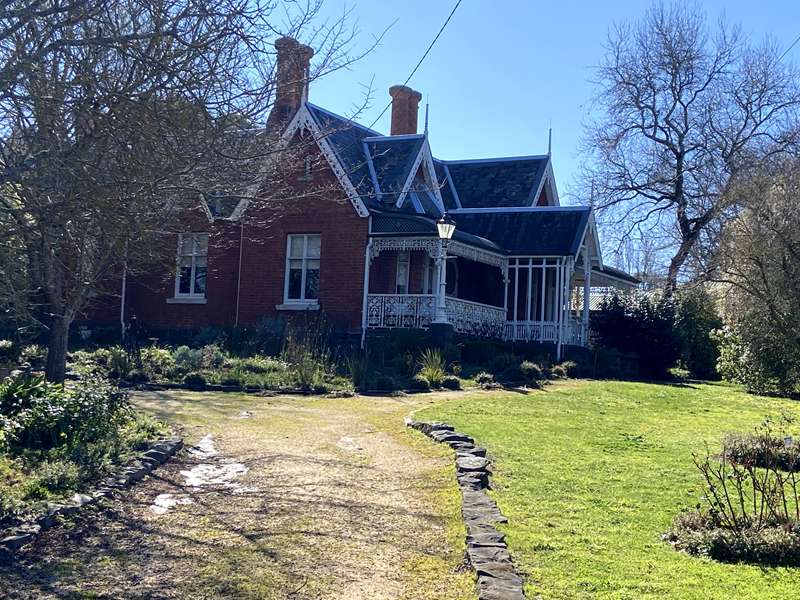
Built for the chemist Edward Newman, this house was based on the design of his wife's family home in Bristol, England. It is a fine example of pattern book Gothic architecture, with its decorative timber barge boards and distinctive brick twist chimneys. In 1881 it was purchased by grocer George Whykes who added a ballroom (since demolished). In 1968 Ian Smith, an architect, bought it and commenced extensive restorations. The huge iron gates are from Queens Grammar school (now ACU Aquinas campus), in Mair Street, Ballarat.
4. Glencairn (c 1855)
Robert Allen built this handsome brick house with its wide verandahs and steeply-pitched roof covered with thick iron sheets in 1857. Allen was Mayor of Buninyong from 1870 to 1876. The house and its large garden overlooked the township. In 1859 the artist Francois Cogne included an engraving of Buninyong from the front garden of the house in his Ballarat Album, published in Melbourne by Deutsch and Ferguson.
5. Old Tannery Site
6. Old Burial Ground (1840s), On Learmonth Street, 200m west of the old Post Office
Look for a detailed sign behind a white picket fence. Here is Buninyong's Old Burial Ground, the oldest in the Goldfields region. But you'd never know it was there unless you knew where to look. While the first burial took place in this cemetery around 1837, the site was abandoned in the 1850s and no record of who is buried here has survived. Look for the plaque on the stone and the memorial bunya bunya tree.
7. Thomas Hiscock's Cottage (1851)
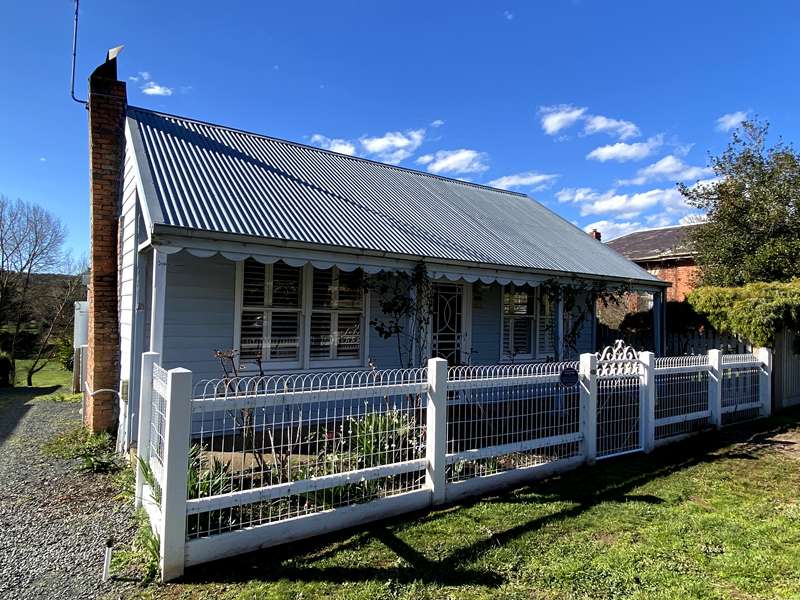
This land was purchased in 1851 by Thomas Hiscock, blacksmith, who settled at Buninyong in 1844. Here he resided beside his blacksmith's shop. On 8 August 1851 Thomas Hiscock discovered gold nearby in the area which would become known as Hiscocks. He was acclaimed as the Discoverer of the Ballarat Goldfield. Hiscock died of a chill on 25 July 1855, aged 46. The house subsequently had a number of owners, including George Selleck of the Crown Hotel, the blacksmith Thomas Fasham, Peter Hedrick and Simon Desoza.
8. Old Post Office (1874)
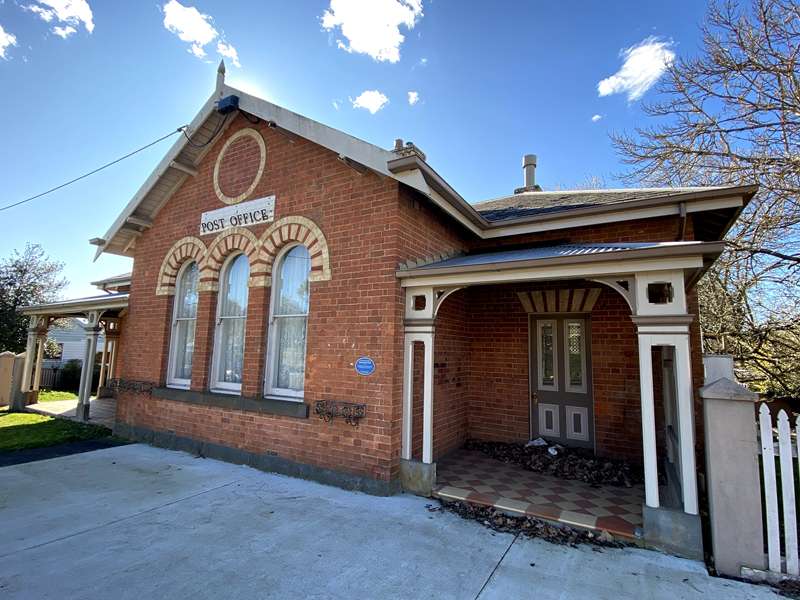
Buninyong's first post master was John Veitch, appointed on 1 January 1845. Non-official post offices operated from various Buninyong stores until this new post and telegraph office opened in October 1873, erected by the Public Works Department. It served as the post office until 2000.
9. Crown Hotel (1885)
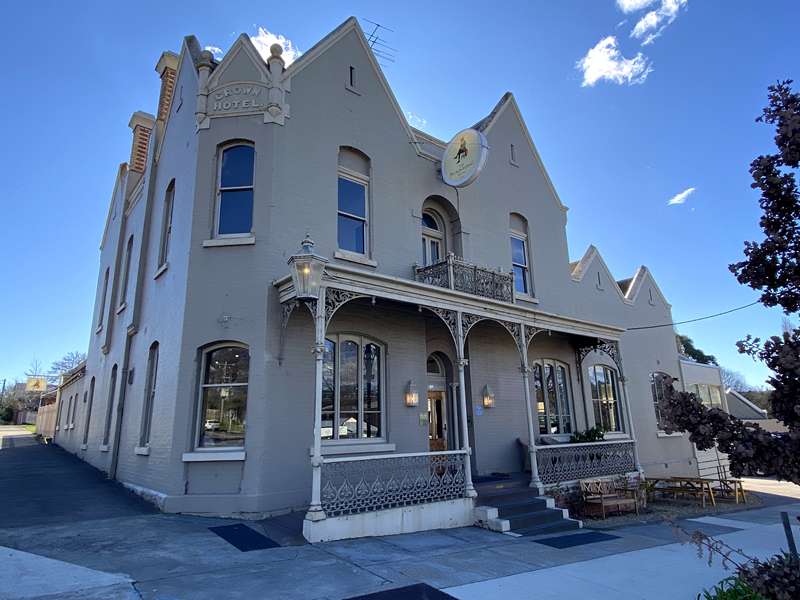
The original (1851) two story wooden hotel on this site was home to many civic events and meetings. But it was destroyed by fire in 1884. The present brick hotel was quickly rebuilt and has operated continuously since then.
10. Former National Bank (1866)
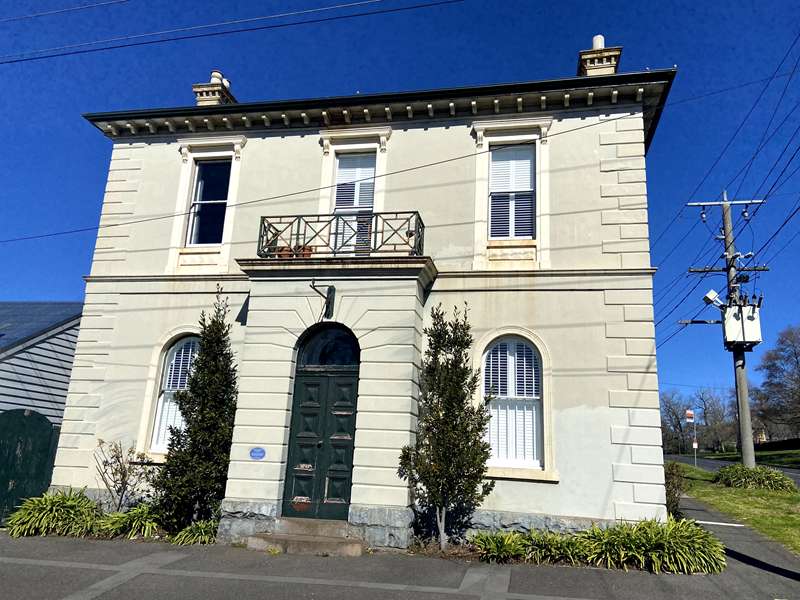
Following the formation of the National Bank of Australasia in 1858, a branch was opened in Buninyong in April 1859 by Robert Gillespie. The present brick building built on land purchased from John Adams, was completed in 1868, and served as the community's bank until 1974 when it was sold by the banking company to become a private residence. This handsome edifice is typical of many country banks built in the nineteenth century.
11. Adams/Eames Store & Bakery (1852)
When gold was discovered in August 1851, the Wesleyan John Adams arrived from Geelong and became a storekeeper at Golden Point. In January 1853 he was advertising his Buninyong store and bakery, and this building dates from that period. John Adams was. a devout Methodist, and before the Wesleyan chapel was built in Warrenheip Street, local, Wesleyans gathered at his shop-for their services. Other owners have been J W Wilson, Percy Lyne and the Eames Family who ran the store from 1930 until the 1980s.
12. Whykes' Butchers Shop (1893)
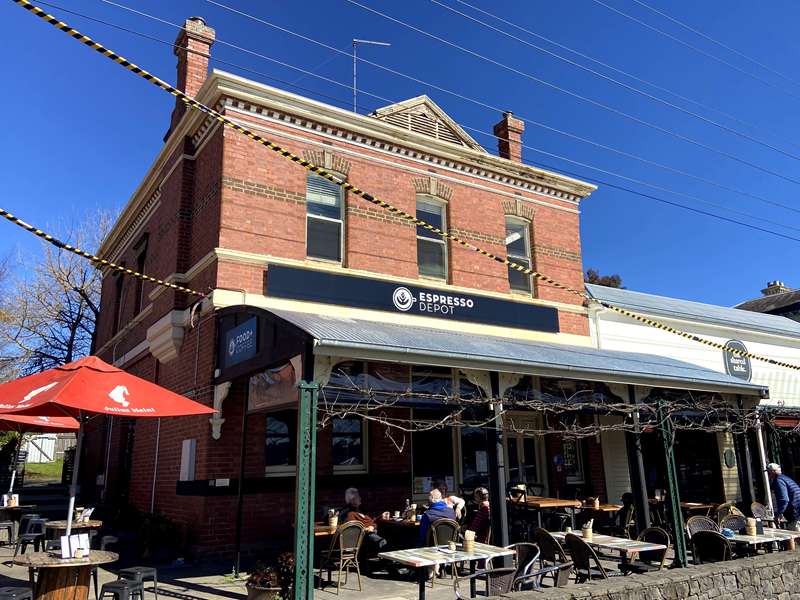
The Whykes family from Durham Lead commenced their butcher shop here in 1864. In 1893 this fine shop with residence was built by William Whykes (born Truro, Cornwall in 1843), and the Whykes family continued their business, slaughtering their own meat at Durham Lead, until 2000, when the family retired from business. Since then the building has been home to several restaurants.
13. Town Hall & Court House (1886)
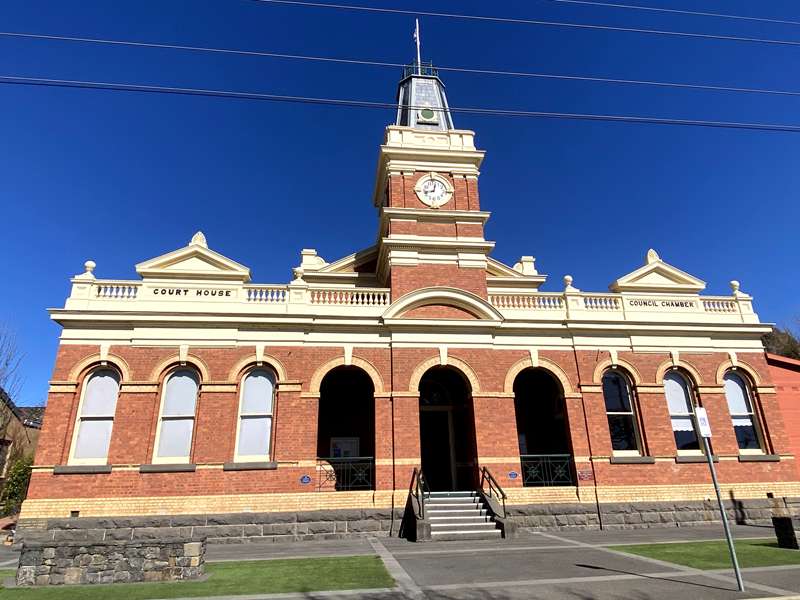
Municipal government came to Buninyong in 1858, and in the early years Council met in various hotels. In 1886 this complex was built to house the Buninyong Borough Council, the Town Hall and a Court House which replaced an earlier court building adjacent to the Gardens.
The Italianate Town Hall was built of locally produced bricks. The architects were Tappin, Gilbert and Dennehy of Melbourne. The builder was the local, Richard Rennie, and the interior was painted by the firm of Whitlaw and Ruddock. The Court closed in 1980, and the Town Hall moved to the control of the City of Ballarat in 1994.
14. Old Fire Station (1872)
15. Uniting Church (1860) Learmonth Street
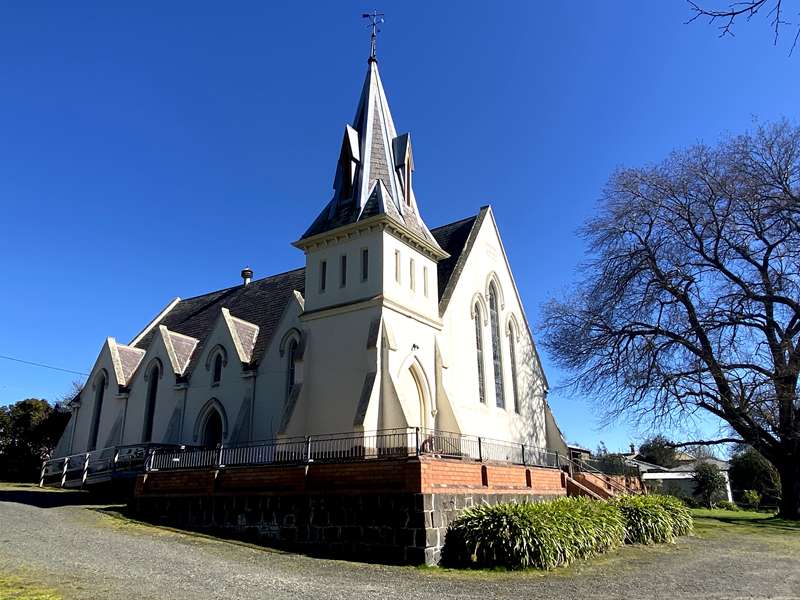
A landmark in Learmonth Street, originally this was the Presbyterian Church and was served by Buninyong's first Minister, the Rev Thomas Hastie from 1847 to 1888. Look for his commemoration in the church's beautiful stained glass window.
16. Former Nugget Hotel (1854)
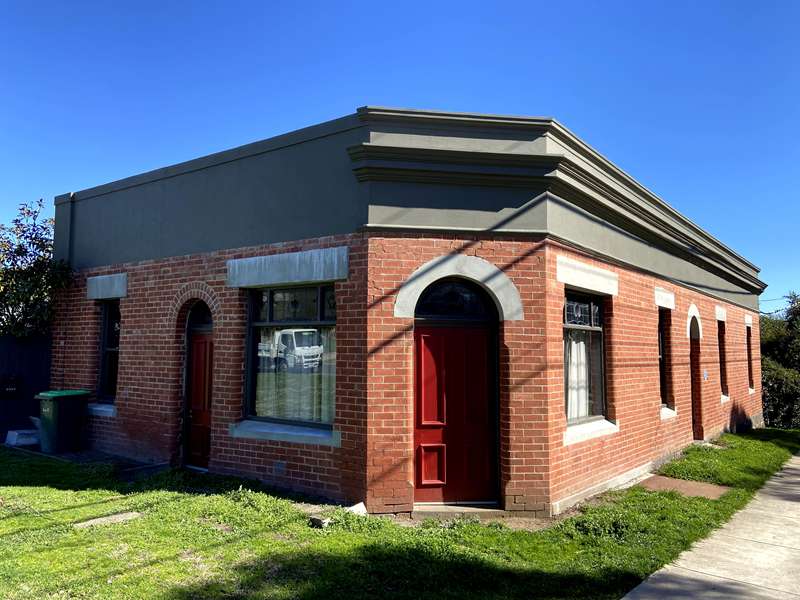
A hotel has existed on this site since the very early days of Buninyong. It was originally a two storey brick building erected by William Smith in 1854 as the Nugget Hotel. The attached assembly room was capable of holding 500 people. The hotel was de-licensed in 1917, and later owned by Doug Watkins who operated a poultry farm here in the 1940s.
17. St Peter and Paul's Catholic Church (1858), Fisken Street
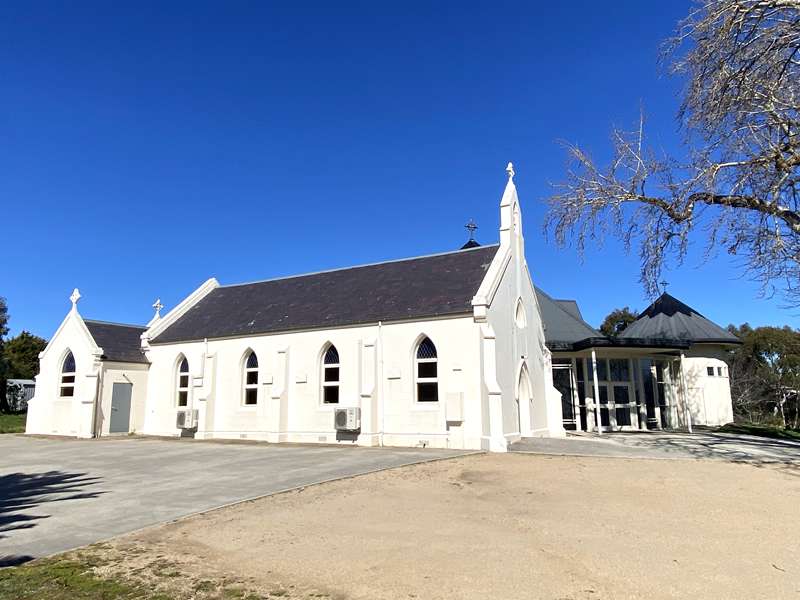
Tucked away on a knoll in Fisken Street is the oldest of Buninyong's existing churches with its foundation stone dated 1853. The area's first Catholic school, operated on the site from 1851. A new adjoining church, with brilliant modern stained glass was opened in 2014.
18. The Gong (1861)
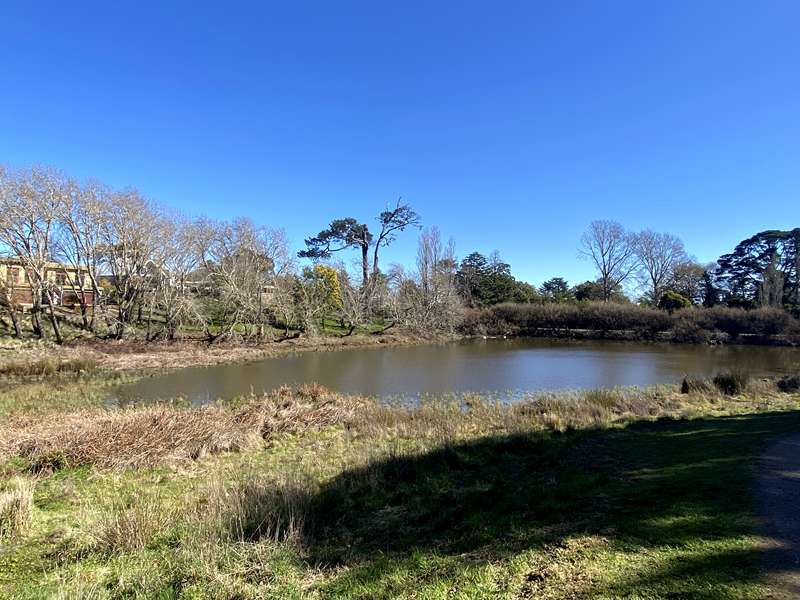
By 1842 a township was developing at the foot of Mt Buninyong. The 1850 town survey noted this area as 'tea tree and springs'. Following the discovery of gold at Buninyong in 1851 the town grew rapidly. An area for Public Garden Purposes was officially gazetted in 1861. The good mineral springs east of this upper garden reserve provided water for the township. This reservoir became known as the 'Gong'. Its capacity was greatly increased after a devastating fire in Buninyong in 1876. The informality of the Gong reserve contrasts with the more formal lower garden.
19. Old Brewery (1855)
This bluestone and brick structure was built for Robert Allen in 1855. From 1857 until his death in 1873 Thomas Sheppard operated Sheppard's Crystal Malt Brewery on this site using waters from the Gong. In 1859 Sheppard was the first Chairman of the Buninyong Borough Council. For almost 100 years it was used as a barn and for storage, and fell into disrepair. Since the 1970s it has been restored for use as a home and function venue by its present owner.
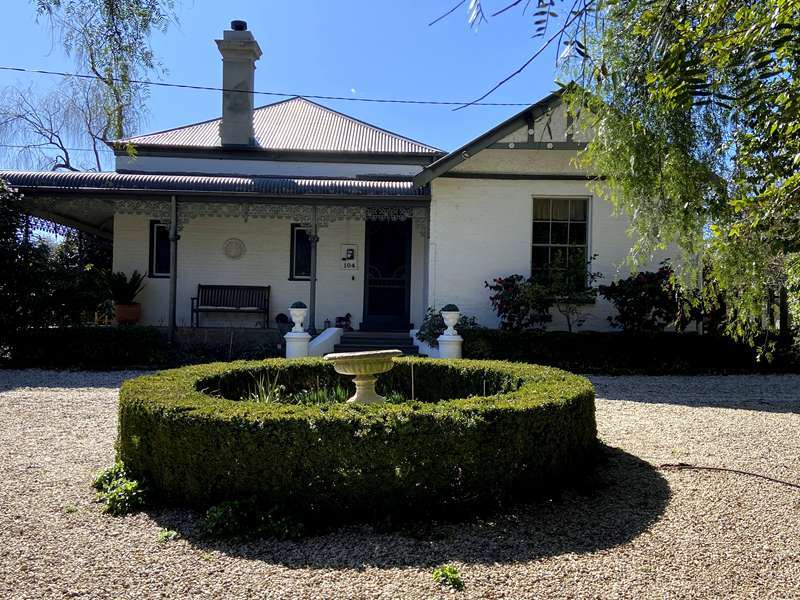
20. Kingshill (1857)
21. Old Police Court House (1858)
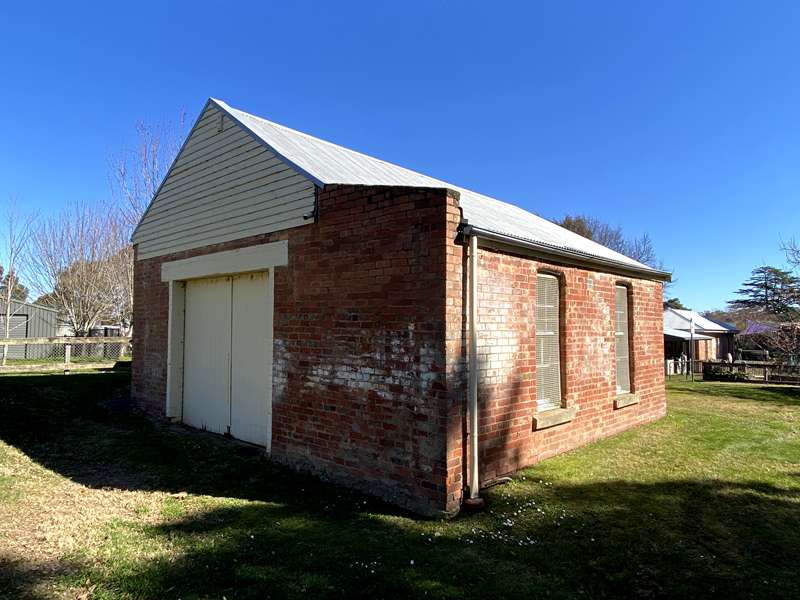
Following the discovery of gold in August 1851, Buninyong briefly became the administrative headquarters of the Ballarat goldfields. A Court of Petty Sessions was proclaimed on 3o September 1851 and a makeshift court house was built.
In 1858 this court house and Mining Warden's office was built of local sandstone. The nearby brick police station was built at the same time.
After a new Town Hall and Court House was built in 1886, this building was refitted as part of the Buninyong Butter Factory, which operated here from November 1892 until 1908.
Subsequently this building became the depot for the Shire of Buninyong, and from 1995 has been cared for by the Buninyong and District Historical Society.
22. State School (1873)
23. Queen Victoria Rotunda (1901)
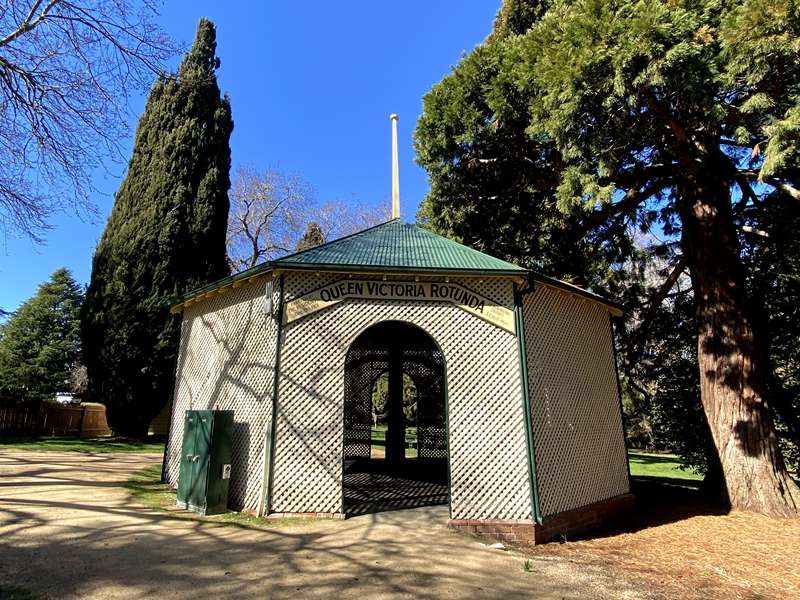
Buninyong Botanic Gardens, established in 1861, are one of the earliest botanic gardens in Victoria and contain a rotunda (1901) dedicated to Queen Victoria and an ornamental lake known as the Gong.
24. Mrs Carey's Cottage Hospital (1880)
25. Old Manse (1886)
26. Police House & Stables (1887)
27. Camellia Cottage (1886)
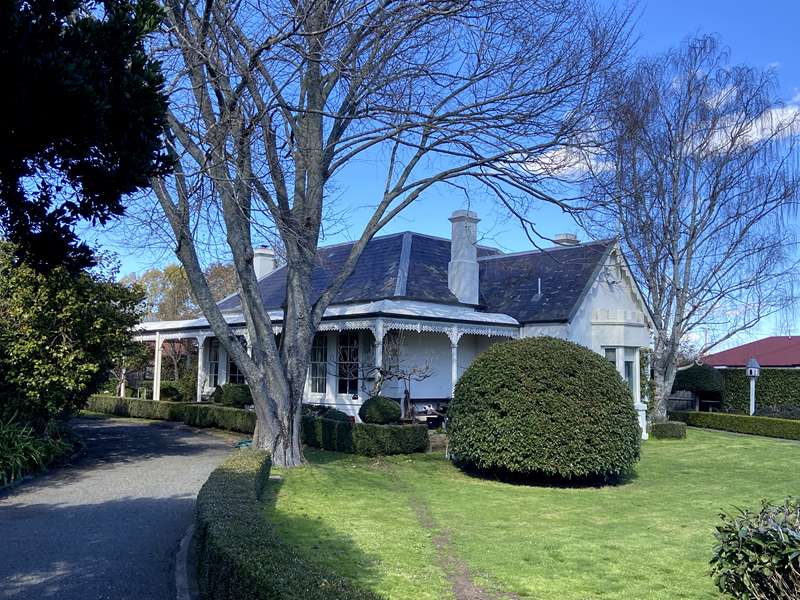
This pleasing Victorian residence was built for one of Buninyong's medical practitioners. In 1865 Dr C Gavin Casey was the local doctor living at this site. Later David Davies MLA lived here, followed, in the early 1900's, by the Town Clerk of the Shire, James Jordan From 1920, the popular Head Master of the Buninyong Primary School, Mr William Nagle lived here with his family, and the house was a social centre of Buninyong.
28. Netherby (c1860)
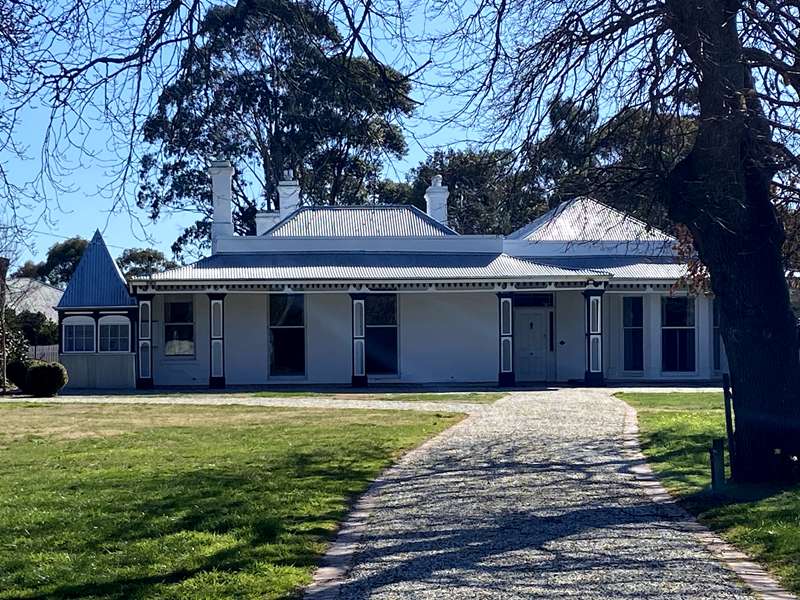
This gracious house was erected in the early 1860's and served as a residence for a number of Doctors over the years. Dr. Richard Sparling in early 1860, Dr. Scott in 1879 and Dr. Hardie in the 1880.'s. Later the Graham family from the tannery and the Howard family (1920's) from the Box Factory lived in this house. William Brown, from the local Dairy resided from 1936. Derick and Shirley Leather resided in the property from 1973 until Miranda and Andrew Donald purchased the property in 2013. This property was a finalist in the 2015 City of Ballarat Heritage Awards - Conservation of a Heritage Place.
29. Holy Trinity Anglican Church (1862), Warrenheip Street
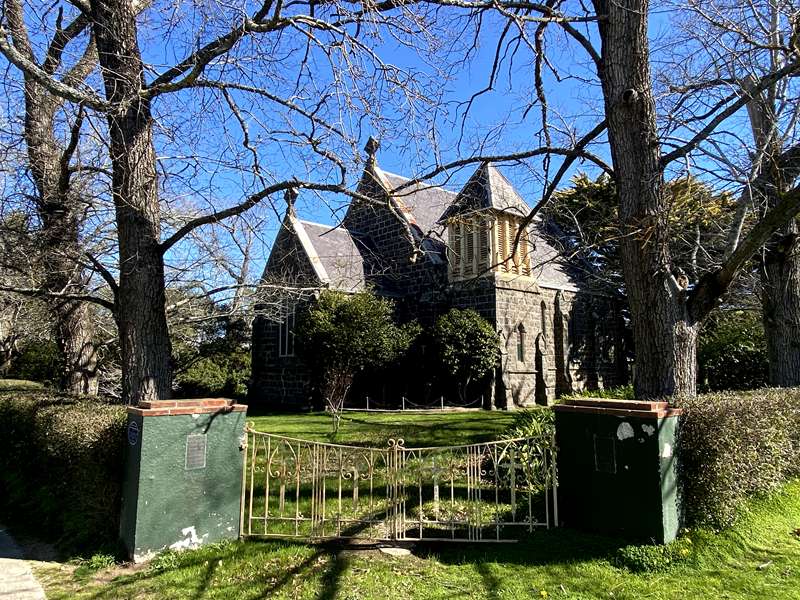
This classic village-style small bluestone church is located in a beautiful treed setting on the corner of Warrenheip and Scott Streets. Look for the marble memorial plaque dedicated to its first priest, the Rev Garrett Russell. The redbrick building to the rear was built in 1857 and operated as a denominational school until 1872.
When the Irishman Rev. Garrett Russell arrived at Buninyong in 1857 as the first minister, there was no church or school. The original brick church-school at the rear was ready for school and services on 3 September 1857. The foundation stone of the Holy Trinity Church was laid on 12 November 1861. The architect was Henry Caselli of Ballarat. It was constructed of locally quarried blue stone, with a slate roof, and timber ventilators on the tower, to the model of a small English country church. Holy Trinity was opened on Sunday 22 June 1862.
30. Old Vicarage (1857)
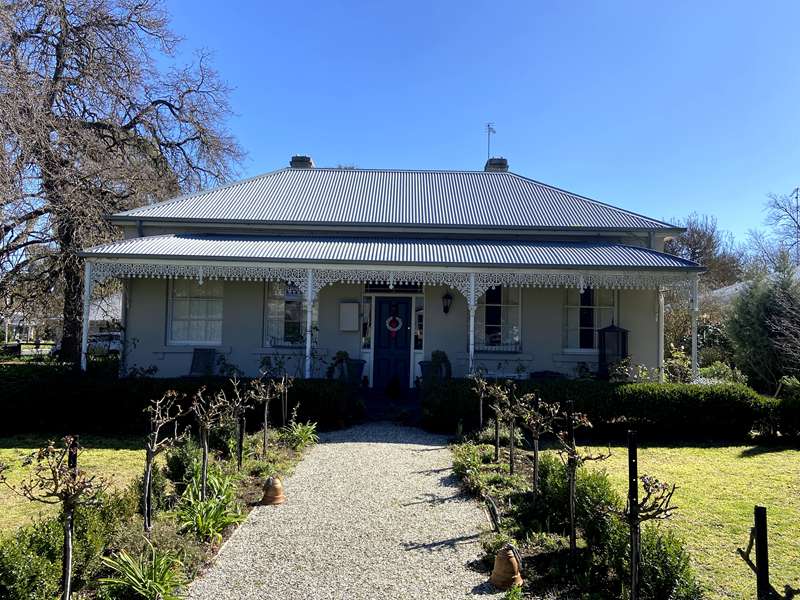
The vicarage was built in 1857 for the first Anglican minister, the Rev. Garrett Russell. The solid brick house with post-supported verandah featuring decorative frieze panels is one of early Buninyong's extant residences. Here the Rev. Russell and his wife Susan lived with their family of six sons and one daughter. A number of the sons became distinguished school teachers. He died on 10 February 1877 at the vicarage.
31. Former Methodist Church (1865), Warrenheip Street
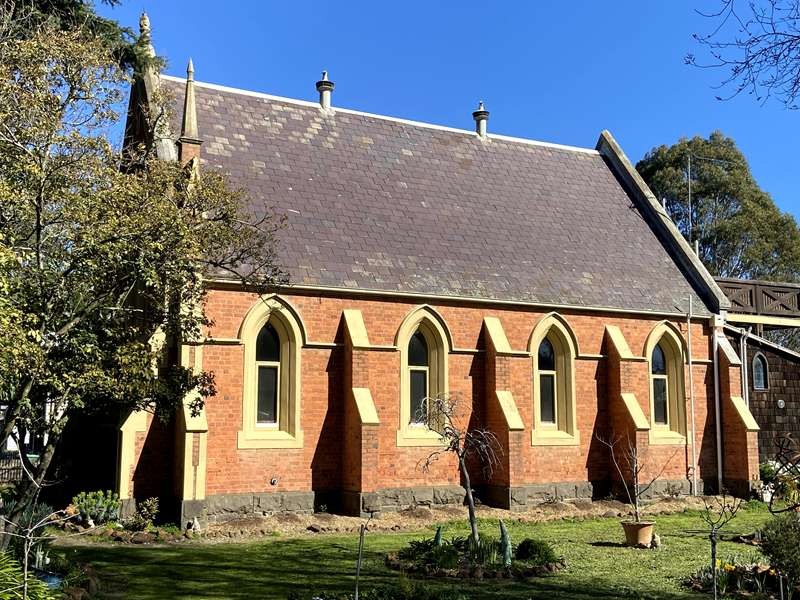
The red brick church replaced a wooden one built in 1853, and which operated until the establishment of the Uniting Church in 1974. It is now a private residence.
The first Methodist services were held in John Adams' shop from 1855. In 1866-7 this brick church was built by Richard Rennie at a cost of 774 pounds. It was designed by J A Doane, a Ballarat architect who designed many district Methodist churches. It operated until 1969, when the decision was taken to join with the Presbyterian Church as the Uniting Church. The timber Sunday school was built in 1870. Both buildings became private residences in the 1970s.
32. Havilah Cottage (1875)
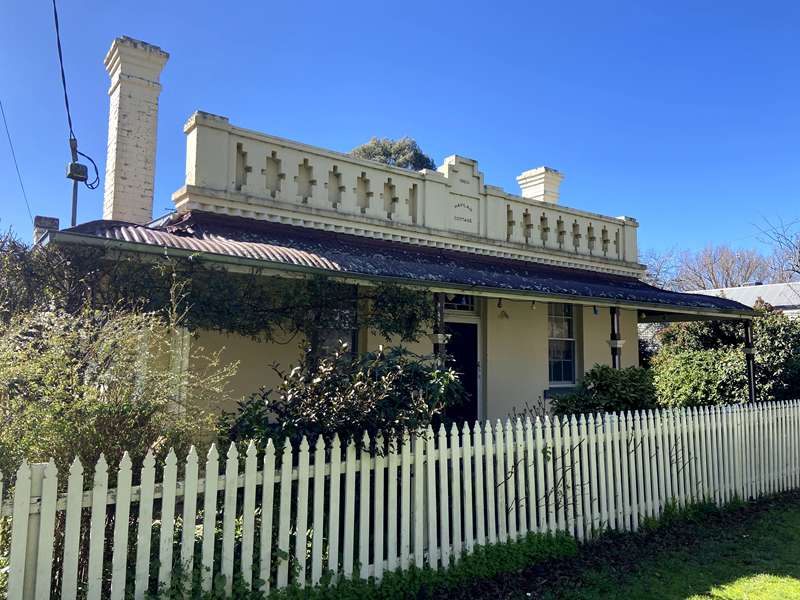
This Victorian era cottage was built for Thomas Trewhella. The house features an unusual battlemented parapet, and a distinctive curved post-supported verandah. Its name comes from the Book of Genesis, meaning 'the place where there was gold, and gold was good'. It is identified in the Coleman-Sutherland Heritage Study as being of local significance.
33. Site of old Buninyong Hotel (1853)
This unusual sandstone wall is a relic of the old two story Buninyong Hotel erected in 1853 by Margaret Jamieson. It was a white elephant that never succeeded, and her son built another Buninyong Hotel, of timber, on the RSL corner. 'Mother' Jamieson's folly was demolished in 1873 by Dr Sparling who, around the same time built the adjacent brick house as his home and surgery. al The stone comes from nearby Quarry Lead.
34. St Alban's Cottage (1873)
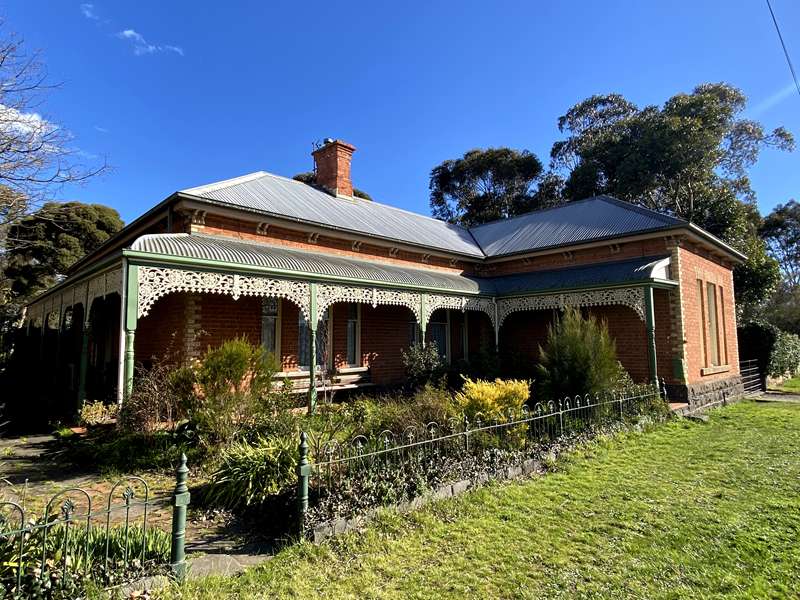
35. Dr Longden's House (1898)
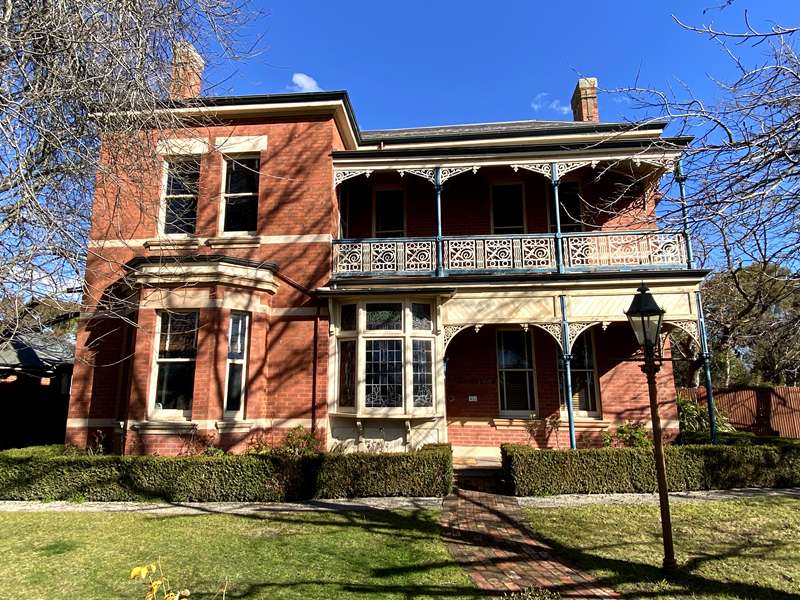
Dr. Frank Longden was appointed to Buninyong as a newly-graduated doctor in 1888. He served the people of Buninyong and district until his death in 1938. This house was built in 1892 as a wedding present from the bride's father to his daughter on the occasion of her marriage to Dr. Longden. The surgery was in the front room, and a dispensary was located in the garden.
36. Caffrey's Blacksmith & Coachbuilder (c1860)
37. Isaac's Grocer Store (c1882)
38. Brydon & Hedrick Store (c1850)
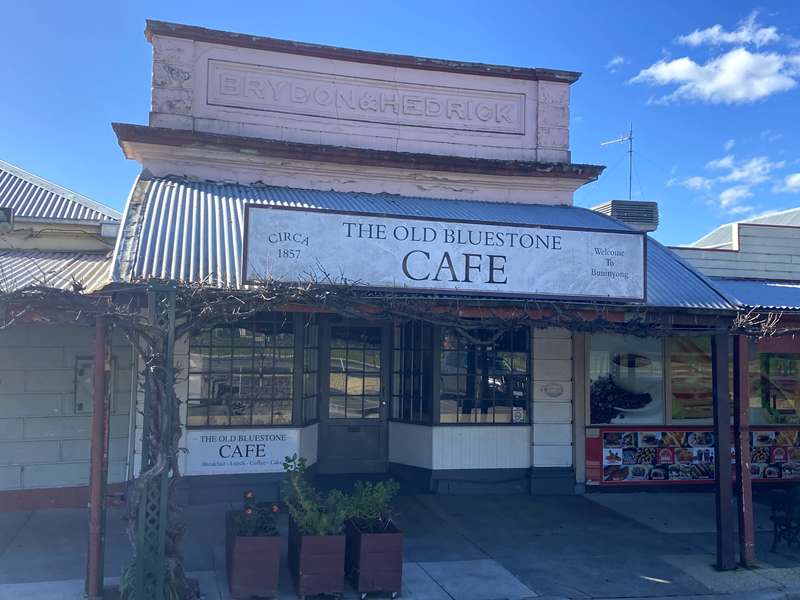
This was one of the earliest businesses in the village, established as a general store by Brydon and Hedrick from Geelong in the early 1850s. The names of the proprietors can still be seen on the facade. Peter Hedrick became the first Mayor of Buninyong in 1863, and was an outstanding contributor to civic affairs. Later it was operated by David Kerr and Ern Tonkin, also civic leaders. In the 1950s this became Buninyong's first milk bar, then a sweet shop and cafe.
39. Buninyong Coffee Palace (1899)
From the early 1850s, this as an important commercial site. In February 1899 there was a devastating fire which destroyed all the wooden shops in this vicinity. The building was quickly rebuilt as the Buninyong Coffee Palace. Later uses included a watchmaker, fruit shop, confectionary shop, gift shop, video store and beauty salon. The Thornton family are particularly remembered for their excellent sponges and pies in the 1930s and 1940s.
40. Howard's Bootmaker (1899)
The first shop on this site was destroyed in the devastating fire of February 1899, and rebuilt soon after. Mr. Howard was a bootmaker here in 1906, and in the 1920s Miss Nidschelin was a dressmaker. Later Thomas Jenkin operated a news agency and fancy goods store here, then a gift shop. Later it became a chocolate shop.
41. Former Eagle Hotel (1858)
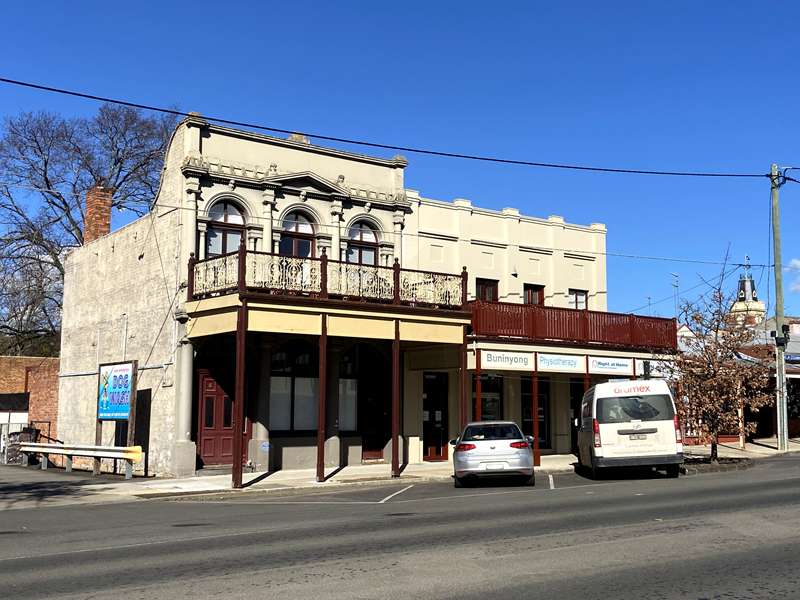
In 1854 the block was sold to Andrew Davies, a saddler, who built this impressive two-storey brick building. An application for a hotel license was made in 1856. One of the oldest buildings in Buninyong, it was classified by the National Trust. For many years from 1862 it was associated with the Wyatt family. In the fire of 1899, the Eagle Hotel was consumed by the fire, but was quickly rebuilt. The hotel was delicensed in 1917, and subsequently has had many commercial uses, including bootmaker, butcher, fishmonger, second-hand store, garden centre, medical rooms and private residence.
42. Whykes Grocery Store (1865)
This brick building was constructed in the 1860s by George Whykes. It has a cellar built for storage of butter, cheese and eggs. The Whykes family ran a grocery business from this site until the 1940s, when it continued under other hands until the 1960s. Then it became a second-hand store, gift shop, and a restaurant, before being threatened with demolition in 1993. A timely restoration ensures the continuing life of the building.
43. Mrs Phillips' Cottage (c1890)
It is unknown who built this cottage in the late nineteenth century, but it was certainly in existence by 1900. It was owned by the Whykes family for many years, then the Holland family, Murray Williamson and lastly Gordon and Betty Phillips, who operated the store next door in the 1960s. The old cottage was demolished in the 1970s and the site remained vacant until August 2010, when Buninyong's new Bendigo Community Bank was opened here.
Other plaques are at Mossmont (1860) in Winter Street, Fassifern (1880) in Herriott Street, and at Brim Brim (1860) in Lal Lal Street.
Photos:
Location
Cnr Warrenheip Street and Forest Street, Buninyong 3357 View Map


